Het wereldwijde magazine en verkoopplatform voor liefhebbers van klassieke auto’s, door liefhebbers.
Het wereldwijde magazine en verkoopplatform voor liefhebbers van klassieke auto’s, door liefhebbers.


Maak een keuze
- Auto's
-
Merk >>
-
Bouwjaar >>
-
-
Categorie >>


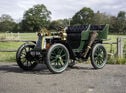
c1902 Clement Twin-Cylinder 8hp Tourer | Donington Auctions | 17 Oktober 2026
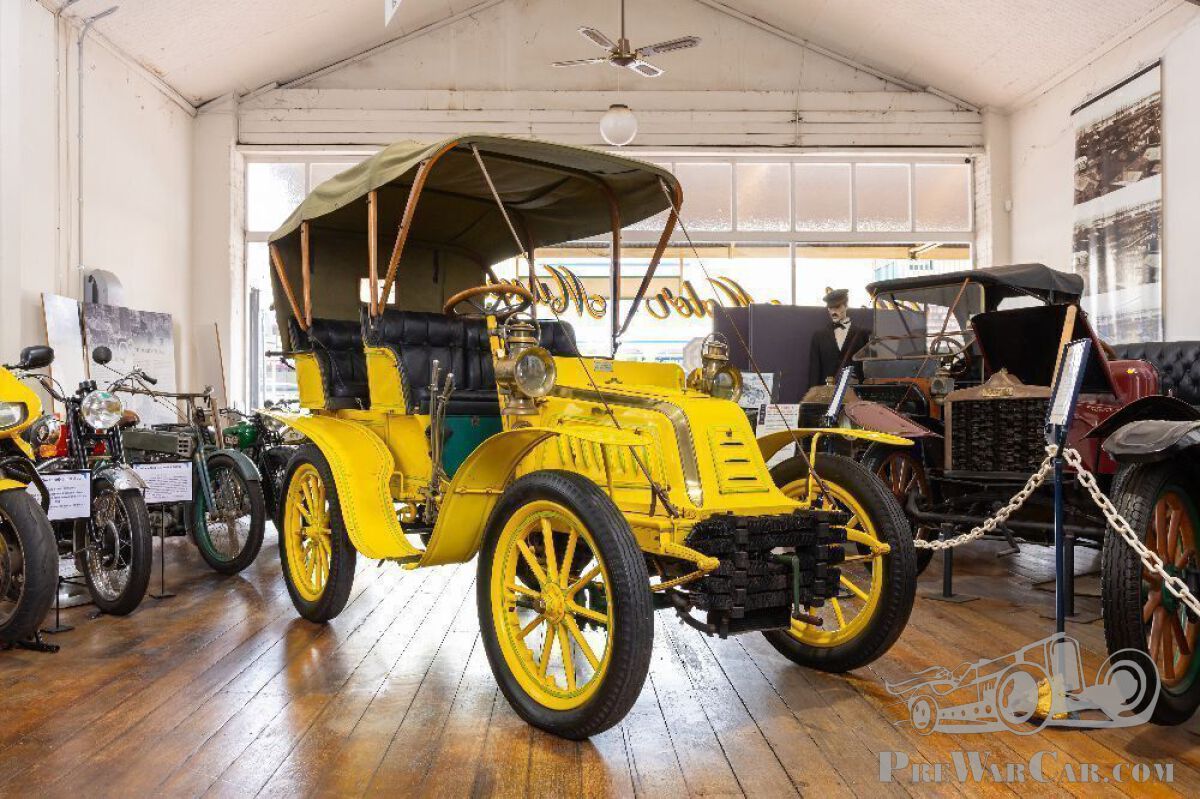

c1902 Clement Twin-Cylinder 8hp Tourer | Donington Auctions | 17 Oktober 2026
London to Brighton history
Imported here in c1902
Original body
45+ years of museum display
MODEL HISTORY:
Born in France in 1855, Gustave Adolphe Clement made his fortune building bicycles in a small workshop he set up in Paris.
Just before the turn of the century, in 1896, the 41-year-old Clement then established a Parisian factory for the production of the-then newfangled motor cars.
Soon Clement was producing a variety of cars, including a tiny 2.5hp Voiturette, or light car. By 1901, both single cylinder and twin cylinder vehicles were being produced to the design of Marius Barbarou, who soon left to go to the Benz company in Germany.
Just two years later in 1903, the Clement company was taken over by Harvey Du Cros of Dunlop Tyres and Clement left as well, at the same time losing the right to make cars under his own name.
Thinking laterally, Clement changed his name to Clement-Bayard and continued to produce and race cars under this name. Sadly, in 1903 one of his sons was killed driving a Clement-Bayard, practicing for the French Grand Prix.
Clement-Bayard also went on to build airships and aeroplanes.
Seized by the advancing German army in 1914 in World War I, motor car production at Clement-Bayard was suspended and turned over to war production, before the company was broken up in 1922, and the Paris factory taken over by Citroen.
VEHICLE HISTORY:
- Chassis number: T56 II 4P
- Engine number: 56
- Registration: 8ZF-749 (WA)
Imported around 1902 from France to Melbourne, this twin-cylinder 8hp 1300cc Clement is thought to have been brought here by the newly-appointed Governor of Victoria at the time, Sir Reginald Talbot.
Sir Reginald was a member of the famous Talbot family, responsible for manufacturing the Clement-Talbot cars, which were made from 1903.
Prior to that Clement was a stand-alone marque and, having been in the UK in 1902 between service in Egypt, Sir Reginald may well have purchased this car. The Late Peter Briggs certainly thought so, as does his historian Graeme Cocks.
Contemporary local newspaper reports of the time reported a month before Reginald took up his Australian posting (April 1904) that he had brought an undisclosed car with him from the UK. That claim was repeated in June 1904, when another report recorded that he had one car in Melbourne. Given this Clement is a c1902 model, on the balance of probabilities, this is indeed Sir Reginald’s car.
The Clement’s history subsequently saw it find its way to Melbourne-born Hobart (Tasmania) businessman Josiah Charles Eagle Knight, who is said to have driven it all around his home state until 1909, at which point it was replaced by a Daimler.
Instead of disposing of the French machine, however, the Clement was put up on blocks in Knight’s garage and, incredibly, remained there until 1955.
It was then rediscovered by Bob Young of Hobart, and purchased from the Knight estate.
Mr. Young restored the c1902 Clement and then sold it shortly after to another Tasmanian, Bern Cuthbertson, with whom it remained for 23 more years before being purchased by Peter Briggs in 1979 for display at the York Motor Museum.
In 1980 the Clement was airfreighted to the UK where, prepared by noted classic car expert Dick Crosthwaite, it successfully competed in the famous London-to-Brighton Veteran Car Run, driven by Mr. Briggs and with his family aboard.
Despite an electrical problem which had to be cured by the roadside, the Clement finished the 53-mile run, held in freezing conditions, in six hours, making it one of only 21 finishers from the 58 pre-1905 veterans that started.
The Clement was one of the first Australian-shipped cars to compete in the famous event, and the first West Australian car ever to be entered.
Upon its return to Australia, the Clement was used by Mr. Briggs for Veteran Car Club events, especially those for single and twin-cylinder vehicles.
Painted bright Yellow with Lime Green pinstriping, the Clement is hard to miss and today presents in overall good condition for a vehicle that was restored some time ago, and has been used in the interim.
This Clement is built on a wooden chassis – around this time Clement was switching to steel – so it is, quite possibly, one of the last to do so.
Importantly, it also has its original body, complete with sprag, which was a spike which prevented the Clement from rolling backwards, by being thrown over the side.
We’re advised that the wooden spoked wheels will need repair if the car is to be used for extended rallies, as they are loose.
This Clement remains London to Brighton eligible.
The c1902 Clement is being offered for sale here unregistered.
Meer advertenties in deze veiling
-
 1913 Peugeot 6HP Bebe Type BP1 | Donington Auctions | 17 Oktober 2026
-
 1923 Bentley 3-4.5 Litre Vanden Plas Style Tourer | Donington Auctions | 17 Oktober 2026
-
 BROOKLANDS/EDDIE HALL: A fine bronze and marble trophy PRESENTED TO E. R. HALL | Donington Auctions | 17 Oktober 2026
-
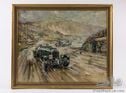 PAT NEVIN: Ulster T.T. 1929, oil on board, signed, depicting the Bentley Blower #63 of Sir Henry Tim Birkin and the eventual winner the Mercedes-Benz SS #70 of Rudolf Caracciola | Donington Auctions | 17 Oktober 2026
Meer advertenties van deze dealer
-
1913 Peugeot 6HP Bebe Type BP1 | Donington Auctions | 17 Oktober 2026
-
1923 Bentley 3-4.5 Litre Vanden Plas Style Tourer | Donington Auctions | 17 Oktober 2026
-
BROOKLANDS/EDDIE HALL: A fine bronze and marble trophy PRESENTED TO E. R. HALL | Donington Auctions | 17 Oktober 2026
-
PAT NEVIN: Ulster T.T. 1929, oil on board, signed, depicting the Bentley Blower #63 of Sir Henry Tim Birkin and the eventual winner the Mercedes-Benz SS #70 of Rudolf Caracciola | Donington Auctions | 17 Oktober 2026
Vergelijkbare advertenties Clément-Talbot Twin-Cylinder 8hp Tourer 1902 te koop
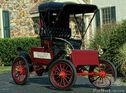 1902 Northern 5hp runabout
 1904 Clement-Talbot
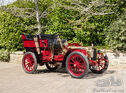 1903 Clément AC4R 12/16 HP Rear-Entrance Tonneau | RM Sotheby's | The London Auction
 1902 Renault Type G 8HP Rear Entrance Tonneau - INC ENTRY LONDON TO BRIGHTON 2026

Gebruiker:
Datum:
17-10-2026
Locatie:
Melbourne, Australië
Deel:
Facebook
LinkedIn
Twitter
WhatsApp
Email
Copy
Details Clément-Talbot Twin-Cylinder 8hp Tourer 1902 te koop
Jaar:
Merk:
Type:
Twin-Cylinder 8hp Tourer
Prijs:
Schatting A$ 100.000,- - A$ 110.000,-
Advertentie ID:
916653
Meer info:





- Alba
- Alcyon
- Amilcar
- Amédée Bollée
- Ariès
- Aster
- Augé
- Avions-Voisin
- BNC
- Ballot
- Barré
- Benjamin
- Benova
- Berliet
- Bignan
- Boyer
- Brasier
- Brouhot
- Bucciali
- Buchet
- Bugatti
- Bédélia
- C.G.V./ Charron
- Chenard Walcker
- Citroën
- Clement-Bayard
- Clément-Talbot
- Corre La Licorne
- Cottereau
- Cottin-Desgouttes
- D'Yrsan
- DB
- DFP - Doriot-Flandrin-Parant
- Darmont
- Darracq
- De Dion-Bouton
- Decauville
- Delage
- Delahaye
- Delaunay-Belleville
- Derby
- Donnet
- Elfe
- Fisson
- GAR
- Gendron & Michelot
- Georges Irat
- Georges Richard
- Georges Roy
- Gladiator
- Grégoire
- Guy
- Guyot Speciale
- Hotchkiss
- Hurtu
- La Buire
- La Nef
- Lafitte
- Laurin & Klement
- Le Zèbre
- Lion Peugeot
- Lombard
- Lorraine Dietrich
- Léon Bollee
- M.A.S.E.
- Marlborough
- Marot Gardon
- Matford
- Montier
- Mors
- Motobloc
- Niclausse
- O.P.
- Otto
- Panhard et Levassor
- Peugeot
- Phebus
- Philos
- Pilain
- Rally
- Rebour
- Renault
- Rochet-Schneider
- Rolland-Pilain
- Rosengart
- Salmson
- Schaudel Motobloc
- Schneider
- Senechal
- Sigma
- Sima-Violet
- Simca
- Simmons Laclede
- Sizaire Berwick
- Sizaire Freres
- Sizaire Naudin
- Sultane
- Talbot
- Turcat-Méry
- Unic
- Vermorel
- Vinot
- Voiturette Bertrand
- Wacheux
- Wills Sainte Claire
- Zedel
Anders Frans auto's te koop
Auto Clément-Talbot Twin-Cylinder 8hp Tourer 1902 te koop

Stuur bericht