Het wereldwijde magazine en verkoopplatform voor liefhebbers van klassieke auto’s, door liefhebbers.
Het wereldwijde magazine en verkoopplatform voor liefhebbers van klassieke auto’s, door liefhebbers.


Filter
Maak een keuze
- Auto's
-
Merk >>
-
Bouwjaar >>
-
-
Categorie >>
- Motorfietsen
- Onderdelen
-
Automerk >>
-
Fabrikant >>
-
Categorie >>
- Fietsen
-
Bouwjaar >>
-
Landen


A Fiat for the future

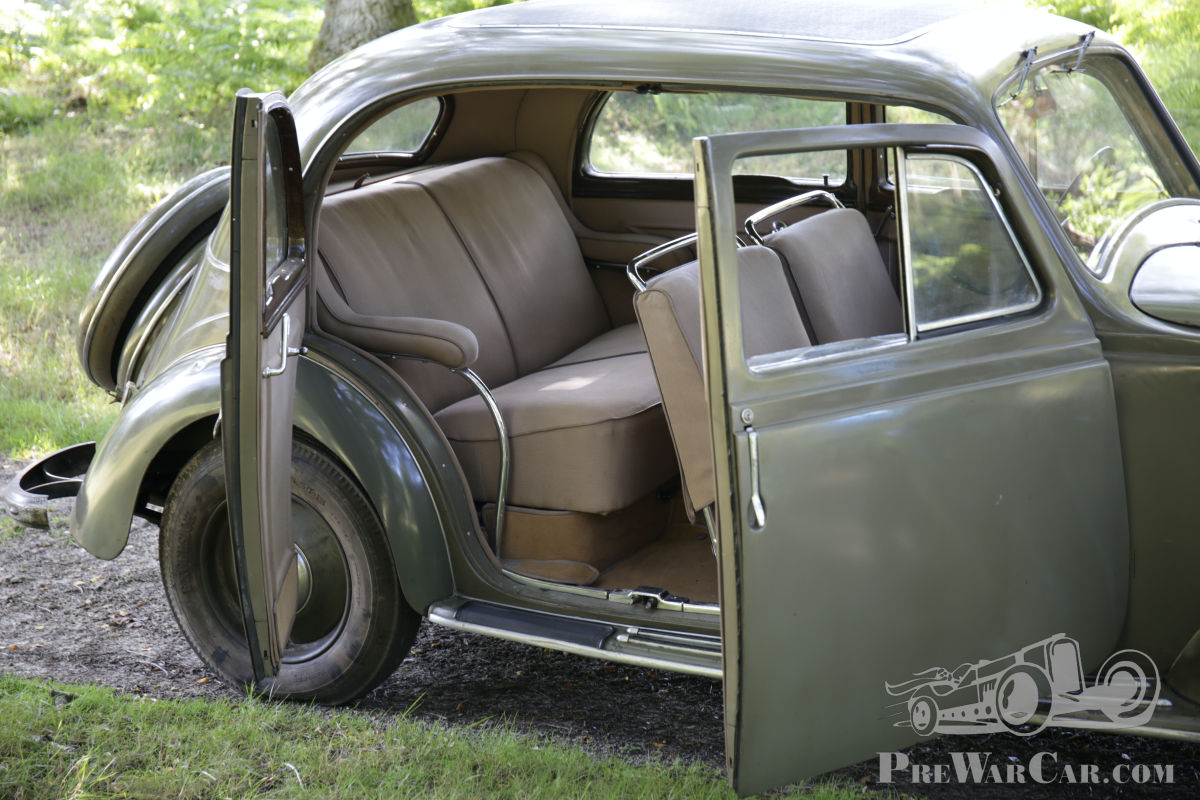
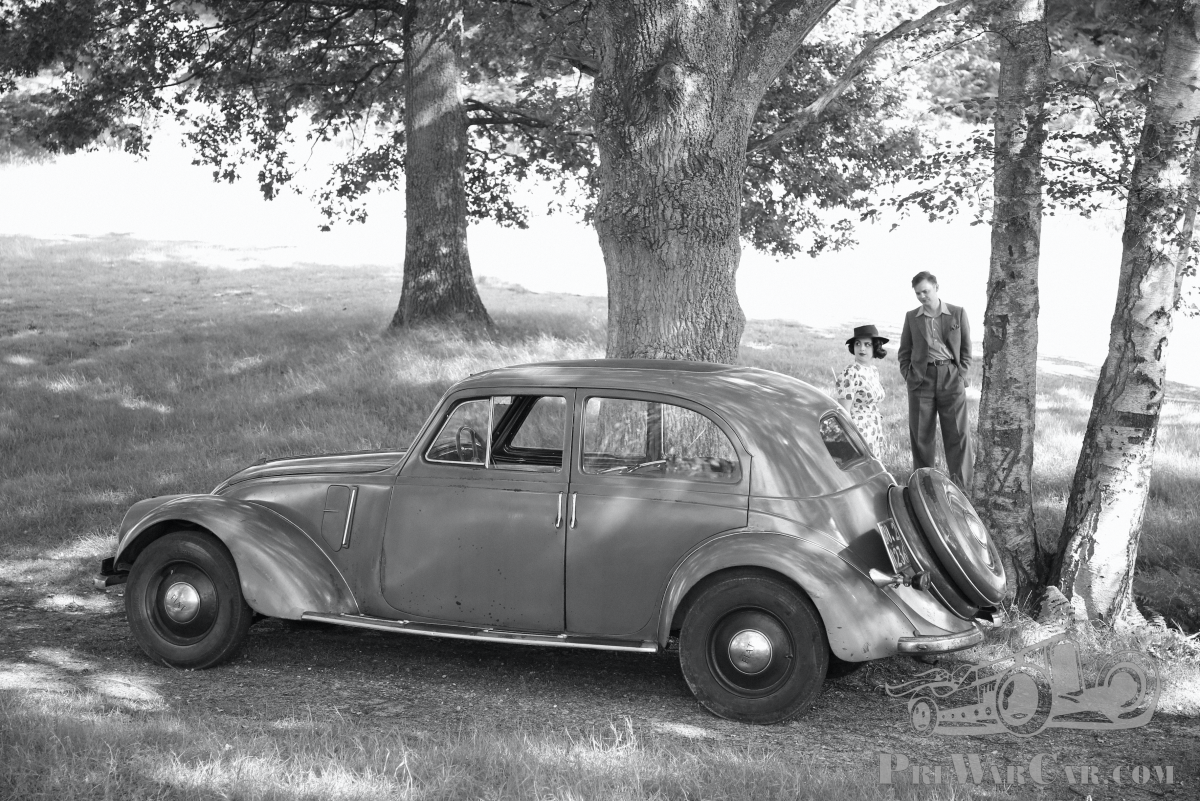


History, quite rightly, does not look favourably on Benito Mussolini, but since he and his party almost single-handedly dictated the course of Italy’s fortunes over a period of 20 years, his influence and legacy must be acknowledged. Wielding a domineering influence over Italian manufacturing, his Modernist outlook for industry became firmly impressed on those beneath him.
Fiat 1500
So it was that Giovanni Agnelli could not help but aim to be at the forefront of mass-market automobile design and, by the mid-1930s, that meant embracing streamlining. Thus, when Fiat’s styling consultant Count Mario Revelli di Beaumont revealed his radical streamline design which would become the Fiat 1500, Agnelli did not hesitate to give his seal of approval.
With its heavily raked front end and teardrop-shaped lights, the result not only looked unlike anything else in a typical Italian traffic jam, it also boasted the extraordinary and almost unprecedented aerodynamic efficiency of 0.50 Cd. But it should have been good, because the 1500 was the first Italian car to be developed in a wind tunnel. This, combined with its six-cylinder, 1½-litre overhead-valve engine, helped it on its way to 70mph, a most impressive achievement for a prewar family car.
Enchanted by its advanced design, Delwyn Mallett offers his appraisal of the 1500 to readers of the December issue of The Automobile, available now.
Words by Zack Stiling. Photographs by Nick Clements.
Originally published: Friday December 3rd, 2021
Gepubliceerd:
donderdag december 16th, 2021
Facebook
LinkedIn
Twitter
WhatsApp
Email
Copy
Reacties
Alexander Vonow
18 December 2021, 12:30
David Scott
06 December 2021, 12:37
Prior to the Airflow, I understand Walter Chrysler had a conventional american "sedan" installed in a wind tunnel for testing, it was found that the drag coeffecient was lower if it was turned back-to-front! Most "aerodynamics", especially today, is just gimmicky styling, the Alfa Romeo Giulia berline looked boxy, frumpy and old fashioned, but was crafted in a wind tunnel and the drag coefficient wasn't matched by regular cars until Audi in the 80s, aerodynamics isn't just "Buck Rogers" styling, as Kamm showed?
Lees verder
David Scott
06 December 2021, 12:30
I too was a great admirer of the Traction, Citroen and Panhard, in general, having had many Deuche, Ami, BX, AX , XM, Visa etc and living here in Normandie. Despite my preference for Italian cars ( and Lancia pioneered the monocoque body with the Lambda?) I seriously considered buying one, until that is, I bought the definitive Traction tome and discovered the many serious defects in the Traction, monococque cracking, brake problems, driveshaft problems, gearbox problems, I already knew the engine was archaic, even for the 30s, asthmatic, and rough and the three speed box was an anachronism for any kind of "advanced " car, so £20 spent on the book saved me many thousands. I understand the demon tweek ,is to replace the box with an ID box, but why did Citroen not do this in the forties and early fifties, every test condemned the three speed gearbox? So no, we don't build air-cooled V8 rear engined cars, but that's not to say they weren't advanced in the Thirties, just progress took a different route, and it didn't seem to harm the 911 much?
My first ride in a Traction came when I was hitchhiking in France in 1969, toiling up a Normandie hill in the spring sunshine, I heard a vehicle climbing the hill behind me, and a strange organ music, when it drew level I saw it was a Tube (HY) driven by a guy my age (20) and the music was emanating from the back, where his chum was playing an organ they were transporting somewhere, with the "cat flap" open He gave me a lift to Rouen, still with the organ playing from the open rear door, where he swapped the Tube for his Traction, gave me lunch and a guided tour of Rouen! If onlyFrench cars still had that charisma and engineering, even if it wasn't always perfect, now they are just gimmick-laden junk. My Polish uncle had a new DS every year and loved them, the XM was a superb car but ruined even then by crap electronics?
Lees verder
My first ride in a Traction came when I was hitchhiking in France in 1969, toiling up a Normandie hill in the spring sunshine, I heard a vehicle climbing the hill behind me, and a strange organ music, when it drew level I saw it was a Tube (HY) driven by a guy my age (20) and the music was emanating from the back, where his chum was playing an organ they were transporting somewhere, with the "cat flap" open He gave me a lift to Rouen, still with the organ playing from the open rear door, where he swapped the Tube for his Traction, gave me lunch and a guided tour of Rouen! If onlyFrench cars still had that charisma and engineering, even if it wasn't always perfect, now they are just gimmick-laden junk. My Polish uncle had a new DS every year and loved them, the XM was a superb car but ruined even then by crap electronics?
Larry Lewis
07 December 2021, 21:05
I will say that the earliest Tractions had a LOT of teething troubles, just as you described. The postwar Tractions are bulletproof and can be driven daily.
Lees verder
Joop Terpstra
05 December 2021, 21:56
The Lancia Aprilia Tipo 97 has a 1.4 liter V4 engine with a respectable 46.5 hp and a topspeed of 129 kmh or 80 mph. So it's not so slow after all. Weight is only 850 kg so that helps the car being relatively fast (for that time, but even today it's quick for a 1937 car.
Lees verder
Joop Terpstra
05 December 2021, 11:25
I would prefer the Lancia Aprillia of halfway the 30's it's much more pretty from the front and from the back. Sorry but that Fiat nose is out of balance. Ofcourse the Lancia has no 6 cylinder engine but heey performance isn't everything right?
Lees verder
David Scott
04 December 2021, 16:35
But the Peugeot 402 series had archaic, primitive mechanics, beam axle, cable brakes etc, so the engineering was only skin deep?And, like the Pug and Chrysler, they back-pedalled later in the Thirties to a more conventional front end? I think the" beauty" of the Airflow bodies was greatly overrated, like Riley with those hideous "fastback" bodies that replaced the vastly more attractive earlier models, people voted with their cheque books and didn't buy these "more advanced" cars? Now the Tatra, that really was advanced!!!
Lees verder
Larry Lewis
05 December 2021, 19:43
You want advanced engineering? Try a Citroen Traction Avant. As far as the Tatra is concerned, do we today drive rear-engined air cooled V8 powered cars? No, we don't. But we do drive cars with monocoque body. front wheel drive, overhead valves, hydraulic brakes and rack and pinion steering all of which the Traction had in 1934.
I'll admit I am biased as I own two Tractions and did drive a friend's Tatra T87 which seemed like a 1953 Volkswagen from hell.
Lees verder
I'll admit I am biased as I own two Tractions and did drive a friend's Tatra T87 which seemed like a 1953 Volkswagen from hell.
John Bates
04 December 2021, 14:39
It's hard to believe that this Fiat was so slow compared with MG saloons of the time (some with smaller engines, too). The pre-war one and a half litre MG VA was capable of 80 mph with no pretence at aerodynamics. Was this Fiat really only capable of 70 mph?
Lees verder
Michael Schlenger
05 December 2021, 00:10
Indeed, the Fiat 1500 was capable of "just" 115 km/h (=71 mph) which was more than sufficient for road use when the car appeared in 1935. Obviously, maximum speed was not the priority, and aerodynamics were hardly decisive in this speed range. Superior roadholding and the spacious interior were more important. By the way, I doubt that anyone would have usually gone faster than 60 mph on the narrow country roads in England, back then.
Lees verder
Duncan Millar
04 December 2021, 11:58
The pillar-less FIAT looks remarkably like a Lancia. The Lancia predates the FIAT and this 1500 in the use of unibody construction by a good decade.
Lees verder
Michael Schlenger
05 December 2021, 00:12
Which Lancia exactly are you referring to?
Lees verder
Nick Simpson
03 December 2021, 14:33
Shades of the French Peugeot's of that era, the 202, 402 etc - the continental stylists were way ahead of the UK stylists in terms of modernity!
Lees verder
Lance Milne
03 December 2021, 09:18
It is interesting that its fellow Italian sedan the Lancia Aprilia managed an efficiency of 0.47 and a better top speed, the Fiats externally mounted tyre is probably the cause of its higher cd.
Lees verder
Michael Schlenger
05 December 2021, 00:17
Correct- but let's not forget that the Lancia Aprilia appeared two years later, had 5 extra hp and had a body that was optimized in the wind-tunnel. The Fiat 1500 with its smooth six-cylinder engine and much better looks (in particular from behind) was a much larger commercial success - which is the crucial point.
Lees verder
Michael Schlenger
03 December 2021, 00:17
I had the pleasure to come across this magnificent survivor on the occasion of the "Classic Days" at the moated castle of "Schloss Dyck" in the lower Rhine area in Germany in 2018. The Fiat 1500 sold rather well in Germany in the 1930s and to me it was - in almost every respect - one of the best cars of its class available on the European market, back then.
Lees verder
During this period, our Grand Children had fun with the old FIAT 1500.
After an entire restauration we participated in the 2014 Mille Miglia and a few years ago we found a new younger owner who enjoys it as we did.