Het wereldwijde magazine en verkoopplatform voor liefhebbers van klassieke auto’s, door liefhebbers.
Het wereldwijde magazine en verkoopplatform voor liefhebbers van klassieke auto’s, door liefhebbers.


Maak een keuze
- Auto's
-
Merk >>
-
Bouwjaar >>
-
-
Categorie >>
- Motorfietsen
- Onderdelen
-
Automerk >>
-
Fabrikant >>
-
Categorie >>
- Fietsen
-
Bouwjaar >>
-
Landen


De verkoopomgeving: alle vooroorlogse auto's te koop
Overzicht van gerelateerde advertenties 1909 Ford Model T
-

1905 REO Five-Passenger Detachable Tonneau | Estate of Mark Smith Auction | Gooding & Company | April 7, 2023
Ransom E. Olds may have left Olds Motor Works in January 1904, following a dispute with controlling shareholders who sought an end to Curved-Dash Runabout production, but he triumphantly re-emerged with his new REO marque that summer. Riding an 88" wheelbase chassis, this two-cylinder, 16 hp Five-Passenger Detachable Tonneau marks the top of the..1905REOFive-Passenger Detachable TonneauVERKOCHTLocatie: Verenigde Staten -
1907 Packard Model 30 Town Car | Estate of Mark Smith Auction | Gooding & Company | April 7, 2023
By the time Packard’s Model 30 was introduced for the 1907 model year, the company had built its reputation for producing automobiles of the highest quality and performance, with highly publicized endurance and speed records. Its most successful model to date, the Model 30 remained Packard’s flagship offering for six model years, with most recei..1907PackardModel 30 Town CarVERKOCHT -
1934 Ford Model BB House Car | Estate of Mark Smith Auction | Gooding & Company | April 7, 2023
In the early 20th century, prior to the advent of the modern motorhome or RV, house cars were built by enterprising individuals who wanted to enjoy the comforts of home while they toured America’s highways and byways. Like automotive travel trailers, house cars became popular post-WWI and boomed throughout the Great Depression, as those seeking ..1934FordModel BB House CarVERKOCHT -
1916 Pierce-Arrow Model 38 C-4 Five-Passenger Touring | Estate of Mark Smith Auction | Gooding & Company | April 7, 2023
Pierce-Arrow was one of “The Three Ps” of American motoring; along with Packard and Peerless, they were considered among the finest American-made automobiles of the early 20th century. Built without regard to expense, Pierce-Arrows were aimed at an elite clientele and renowned for their exceptional build quality. A 1916 advertisement from the Sa..1916Model 38 C-4 Five-Passenger TouringVERKOCHT -
1924 Ford Model T Speedster | Estate of Mark Smith Auction | Gooding & Company | April 7, 2023
In 1915, Louis Chevrolet, race car driver Joe Boyer, Indianapolis car dealer William Small, and Zenith Carburetor president Victor Heftler established the Frontenac Motor Corporation with the expressed purpose of engineering, building, and racing high-performance automobiles. Frontenac cars went on to capture back-to-back wins at the Indianapoli..1924FordModel T SpeedsterVERKOCHT -
1910 Cadillac Model 30 Four-Passenger Demi-Tonneau | Estate of Mark Smith Auction | Gooding & Company | April 7, 2023
Having become a division of General Motors in July 1909, Cadillac was one of the first manufacturers to achieve true standardization of replacement parts throughout a model year, which greatly enhanced the value and notoriety of the brand. The sole model from Cadillac in 1910 was the Model 30, which saw 8,008 units built in a variety of open and..1910CadillacModel 30 Four-Passenger Demi-TonneauVERKOCHT -
1917 Ford Model T Town Car | Estate of Mark Smith Auction | Gooding & Company | April 7, 2023
Building upon the succession of updates and improvements applied to Ford’s wildly successful Model T since its introduction, changes for 1916–1917 most visibly included a change to a black radiator-shell finish, new rounded fenders, and a revised hood design. Formerly brass-finished components now sported nickel plating. Catalogued since 1909, t..1917FordModel T Town CarVERKOCHT -
1934 Ford V8 Pickup | Estate of Mark Smith Auction | Gooding & Company | April 7, 2023
While Ford’s first truly dedicated light-duty pickups were based on 1928–1931 Model As, the new V8 models for 1932 revolutionized the concept and trumped archrival Chevrolet’s six-cylinder offerings. Ford’s V8 truck lines soon proved so popular that the long-running four-cylinder engine was cancelled in 1934. Accompanied by a copy of th..1934FordV8 PickupVERKOCHT -
1907 Ford Model K Touring | Estate of Mark Smith Auction | Gooding & Company | April 7, 2023
Progressing beyond the light and relatively affordable, two-cylinder Model A of 1903–1904, the fledgling Ford Motor Company soon offered several four-cylinder models and by late 1905, the range-topping, six-cylinder Model K. While Henry Ford was primarily focused on his concept for an inexpensive “people’s car,” which would soon manifest as the ..1907FordModel K TouringVERKOCHT -
1934 Ford V8 Model 40 Sport Saloon | Estate of Mark Smith Auction | Gooding & Company | April 7, 2023
As recounted by Mark Smith in a document on file, this fascinating 1934 Ford V8 is believed to have been constructed for the 1934 Olympia Motor Show in London. Built at considerable expense with coachwork by Holbrook of Wolverhampton, UK, the Ford features a well-preserved full-leather interior and a large sunroof over the front-passenger seats...1934FordV8 Model 40 Sport SaloonVERKOCHT


Uitgelicht

Gezocht: Peugeot 163 BR uit 1923 – wormwieldifferentieel, cardanbuis (torque tube) en voorruitframe
Hallo, ik ben op zoek naar een wormwieldifferentieel en een cardanbuis (torque tube) voor een Peugeot 163 BR uit 1923, evenals een voorruitframe. M..
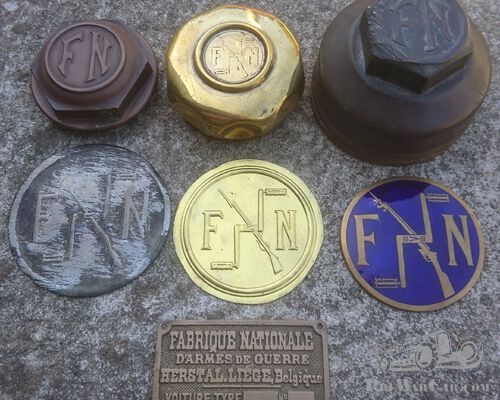
WANTED Fabrique Nationale (FN) car & motorcycle parts 1907 - 14
Interested in parts or info for 1907 - 1914 FN cars. Shown in the second photo are the brass steering column flange, aluminium 5 spoke steering wheel ..
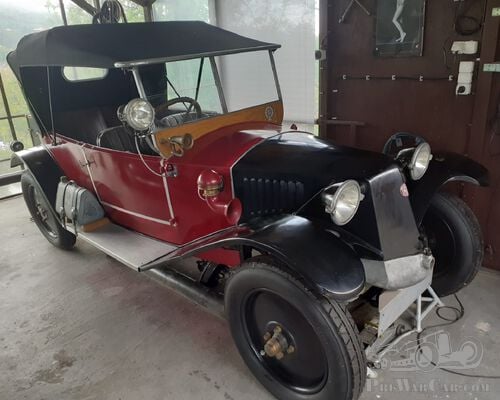
1924 Tatra 11 Roadster
Een uitzonderlijk stuk autogeschiedenisTe koop aangeboden: een bijzonder zeldzame Tatra 11 Roadster uit 1924, één van de belan..