Het wereldwijde magazine en verkoopplatform voor liefhebbers van klassieke auto’s, door liefhebbers.
Het wereldwijde magazine en verkoopplatform voor liefhebbers van klassieke auto’s, door liefhebbers.


De verkoopomgeving: alle vooroorlogse auto's te koop
Overzicht van gerelateerde advertenties 1923 Bentley 3 Litre
-

Lanchester 21 HP Coupe 1924
Supplied new in 1924 to a Doctor who spent 40 driving the car on his rounds daily. It returned to Europe 10 years ago and underwent a full mechanical re-build by Arthur Archer in Great Dunmow Essex. A vast amount time, effort, and money has been invested in this vehicle and it is mechanically excellent. -
Lancia Dilambda Tourer 1930 for sale
Unlike its revolutionary Lambda V4 predecessor, the Dilambda did not use a stress-bearing body but reverted to a separate chassis. A new design, the latter possessed exceptional torsional rigidity, a virtue necessitated by its independent front suspension. Narrow-angle vee-configuration engines were a Lancia speciality, the Dilambda’s 3,960cc ove.. -
Aston Martin International 2/4 ,1 1/2 Litre Sports Tourer 1930 for sale
The ‘matching numbers’ International had remained in highly original condition and great pains were taken to preserve this originality during restoration. Still containing its original crankshaft, the engine was fully stripped and rebuilt. An exceptionally well presented motor car, meticulously restored by father and son International specialis.. -
Rolls-Royce Phantom I, 40/50 HP Cabriolet 1928 for sale
Phantom I chassis number ‘94FH’ was originally delivered with ‘faux cabriolet’ coachwork by Thrupp & Maberly to first owner, one A J Newberry.Restored at date unknown, the car is currently fitted with a Barker-style cabriolet body while other noteworthy features include twin Grebel lights and an additional ‘emergency’ horn. We are a.. -
Austin Seven Chummy 2-door Tourer 1927 for sale
This 4-Seater Chummy was manufactured at Austin’s Longbridge factory 15 July 1927. During what might have been a final journey to a breaker’s yard in the 1950s. While still complete and largely original on acquisition, sensitively applied refurbishment carried out during the last year has included repainting the bodywork in Kingfisher Blue, tri.. -
Wolseley 16/20 HP Five Seat Tourer 1919 for sale
This Wolseley dates from those immediate post-war years and is most handsomely presented in dark green livery with black wings and Rudge-Whitworth wire wheels, the mahogany door cappings adding a pleasing Edwardian flavour. It is equipped with a two-piece, folding, mahogany-framed windscreen and further weather protection is afforded by a beige hoo.. -
Bentley 3-Litre Sports Two-seater with Dickey by Park Ward 1922 for sale
This charming early 3-litre car has a delightful patina of use and would probably leave most ‘concours’ cars standing at the traffic lights. The coachwork is liveried in black with wonderful green leather upholstery, possibly the original. Driving equipment includes Lucas headlamps and Toby torpedo side lamps, fold-flat windscreen and Brookland.. -
Rolls-Royce 20 HP Tourer 1929 for sale
‘This model was introduced to meet requests for a smaller, less expensive car in keeping with the trend after the First World War towards smaller cars for a wider market. Construction was simplified - but standards of workmanship were not compromised.’ - Edward Eves, Rolls-Royce, 75 Years of Motoring Excellence. Chassis number ‘GVO45’ was d.. -
Bugatti 30 Tourer by Lavocat et Marsaud 1926 for sale
The car offered here – chassis number ‘4724’ – is one of only two known surviving examples of the Type 30 bodied by favoured coachbuilders Lavocat et Marsaud. According to factory sales records, ‘4724’ was produced in December 1925, invoiced to Dubuisson, of St Quentin, near Lille, presumably the local Bugatti agent, and delivered on 28.. -
Bentley Speed Six Le Mans Special by Peterson 1932
Available now in as new condition with very low mileage at a fraction of the cost of the real thing! view video footage of this rare vehicle at PreWarCar.TV (click) or a longer version at at Youtube.com


Uitgelicht

HORCH 930 V
Te Koop Horch 930 VFabrikant: HorchModel en Variant: 930 VCarrosserietype: 4-deurs sedanChassisnummer: 93190..
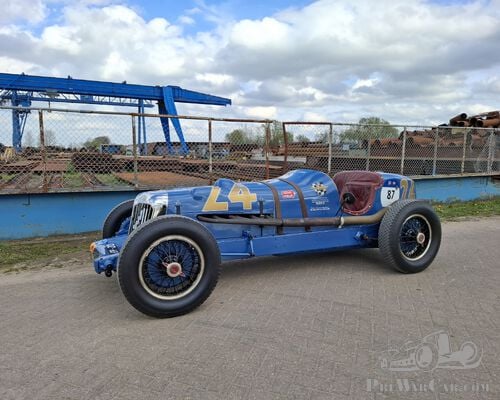
1932 - Graham " Lucenti " Indianapolis
Originele deelnemer aan de Indy 500 van 1932, 1934 en 1935. Beste resultaat: een 10e plaats algemeen in de Indy 500 van 1934, bestuurd door "Herb" ..
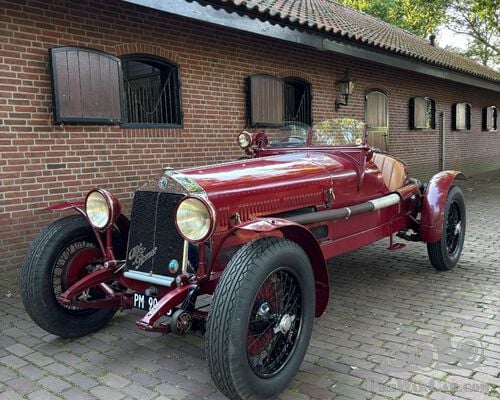
Alfa 6C1750 Spider
Alfa Romeo 6C 1750 Spider met een volledig gedocumenteerde historie vanaf de aflevering in 1930 aan de eerste eigenaar in Florence tot op de dag va..