Het wereldwijde magazine en verkoopplatform voor liefhebbers van klassieke auto’s, door liefhebbers.
Het wereldwijde magazine en verkoopplatform voor liefhebbers van klassieke auto’s, door liefhebbers.


Filter
Maak een keuze
- Auto's
-
Merk >>
-
Bouwjaar >>
-
-
Categorie >>
- Motorfietsen
- Onderdelen
-
Automerk >>
-
Fabrikant >>
-
Categorie >>
- Fietsen
-
Bouwjaar >>
-
Landen


Hoe een De Dion Roald Dahl een bloedneus bezorgde
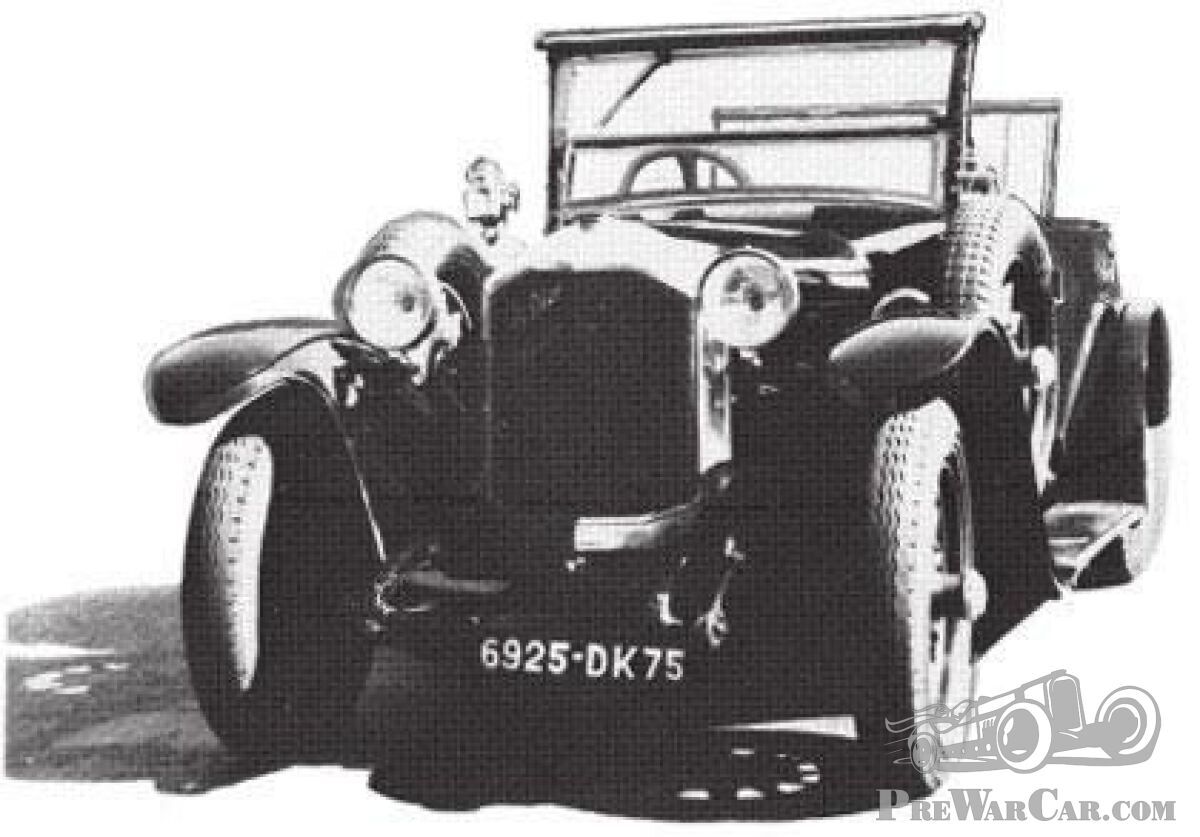

Wat zou Roald Dahl gezegd hebben over de schending van zijn geschriften door "gevoelige lezers" om ze meer geschikt te maken voor deze tijd? Er komen enkele nogal ontstellende scheldwoorden in me op, niet geschikt om hier te publiceren, evenals zinnen over 'in zijn graf omdraaien'.
Hoe dan ook, het heeft ons weer herinnerd aan dat grote verhaal uit de jaren twintig van De Dion-Bouton, gedreven door de 'oude halfzus' in Dahls autobiografische Boy - Tales of Childhood. Als u het niet kent, doe uzelf dan een groot plezier en koop het boek meteen. Misschien kunt u de ongecensureerde versie nog net vinden.
Het verhaal gaat over een jonge Dahl (destijds negen jaar oud) die tijdens het kerstverlof van de kostschool met zijn moeder, drie zussen, een halfzus en een halfbroer op stap gaat in de eerste auto van de familie. Uit het boek: 'Deze nieuwe auto was een enorme lange zwarte Franse auto, een De Dion-Bouton genaamd, die een canvas dak had dat naar achteren kon worden geklapt." De bestuurder was die twaalf jaar oudere halfzus (nu eenentwintig) die onlangs haar blindedarm had laten verwijderen. Zij had twee volledige rijlessen van een half uur gekregen van de man die de auto leverde, en in dat verlichte jaar 1925 werd dat als voldoende beschouwd. Niemand hoefde een rijtest af te leggen. Je kon zelf beoordelen of je bekwaam was, en zodra je vond dat je er klaar voor was, ging je gewoon weg."
Krakend naar 60mph
Hoewel ze nauwelijks weet hoe ze het ding aan de praat moet krijgen, wordt het halfzusje door al haar minderjarige familieleden aangespoord om de grote auto op de landwegen van Wales te laten rijden. Uit het boek: ""Hoe snel zal het gaan?" riepen we. "Gaat hij vijftig mijl per uur?" "Het zal zestig doen!" antwoordde de oude zus. Haar toon was zo zelfverzekerd en verwaand dat we ons dood zouden moeten schrikken, maar dat gebeurde niet. "Oh, laten we er zestig van maken!" riepen we. "Belooft u ons de zestig te halen?" "We zullen waarschijnlijk sneller gaan dan dat," kondigde de zuster aan, terwijl ze haar rijhandschoenen aantrok en een sjaal over haar hoofd knoopte in de goedgekeurde rij-manier van die tijd."
Nou, je moet het zelf maar lezen, maar we vertellen alleen dat de tocht uitmondt in een akelig ongeluk waarbij de neus van de kleine Roald wordt afgesneden. Maar hoe zit het met het voertuig zelf? Dahl voegt er alleen aan toe: "Onze machine had een heel bijzonder kenmerk dat je volgens mij niet meer ziet bij de auto's van tegenwoordig. Dat was een tweede voorruit achterin, uitsluitend om de wind uit de gezichten van de passagiers op de achterbank te houden als de kap omlaag was. Het had een lang middendeel en twee kleine einddelen die naar achteren konden worden gekanteld om de wind af te buigen."
Een tourer of torpedo met twee windschermen dus, die ook door de halfzus zwaar op de proef werd gesteld: "Het lawaai van tegen elkaar schurende tandwielen was verschrikkelijk. Het klonk alsof er met een grasmaaier over harde stenen werd gereden. Er staat een foto van de De Dion in het boek, duidelijk geregistreerd op 6925-DK75, een Parijs kenteken. Bill Boddy schreef er in Motor Sport over: "Dat lijkt een vreemde naam voor een auto die vermoedelijk in Wales werd belast... Het is niet die van de Model-IW De Dion Bouton uit 1923 die eigendom was van H.O. Duncan, auteur van het nu zo gezochte boek 'World On Wheels', want deze tourer had het kenteken 880-BK 30.
Kan iemand hier meer duidelijkheid verschaffen?
Woorden: Jeroen Booij; foto: DocPlayer.net
Gepubliceerd:
donderdag maart 9th, 2023
Facebook
LinkedIn
Twitter
WhatsApp
Email
Copy
Reacties
David Grimstead
06 Mei 2023, 22:13
The Dahl’s, to a 9-year-old’s eyes’, “enormous, long” motor-car big enough to squeeze in a family of seven, still sounds much bigger than this one appears, like a 15/43 h.p. all-weather 5/7-seater, which could be bought new in 1923 with “a three-section Auster rear screen, spring gaiters, wire wheels and a luggage rack” for £838 - over £40,000 today. As the car’s rear brakes locked, spinning it, likely a pre-1925 model from when front brakes and much bigger hubcaps were fitted and a single spare wheel usually mounted at the rear.
Dahl’s description of the rear screen having adjustable end sections isn’t quite what this car appears to have and where is its folded-down hood and the bulb-horn he said his sister kept honking? It appears to have coach-lamp side-lights when torpedo style was a 1925 UK fitting; also, the headlights are higher than on advertised UK models. Shadows indicate this car has artillery-style wheels when early 1920s English-advertised cars mostly had wires or discs. Some features you’d think might stick in the memory.
Most De Dions sold in the UK at this time were bodied “H.H.H.” pattern under control of H. W. Hillman at De Dion’s Woodside Works in North Finchley (H.H.H. comprised Messrs. Hillman, H. O. Duncan and H. H. Rodwell). They made a 12/28 h.p. 4/5-seat torpedo in 1925; a poor-quality advert photo shows one fitted with a four-section rear screen. Larger 15-18 h.p.- and 22/65 h.p.-engined chassis were also fitted with the same H.H.H. generic, but bespoke-appointed, bodies. Some complete cars of unknown style and quantity were also imported new from France.
From 1924, all models were described as “embodying four-speed gear-boxes, with a right-hand gearchange… Ease of gear changing marks all these models, and there is no doubt that in this respect the De Dion sets a lead that many other makers would do well to follow.” Dahl’s half-sister made a lie of this sales pitch but he did write that she had to be reminded to use the clutch when trying to engage a gear…
Re Dahl’s severed nose, he wrote that in 1925 “there was no Triplex then”, which is wrong by over a dozen years, unless he really meant “toughened glass”. Discovered and patented in 1909 in France by artistic chemist Eduard Benedictus, safety glass laminated with celluloid/xylonite was already in limited use there by 1912 when Reginald Delpech, reportedly recovering from a shattered plate glass taxi windscreen injury, bought a British manufacturing licence. His new Triplex company’s prospectus described manufacture “as so simple that female labour could largely be employed” and although initially there were not enough shareholders, the company was making laminated Triplex at Hythe Road, Willesden by mid-1913.
With evidentially unjustified foresight, Triplex’s luridly-named chairman, General Sir Bindon Blood, declared at a 1913 introductory luncheon: “No matter how you shatter it […] no pieces like those which cause motor accidents ever fly from the glass, so that you can encounter an accident without fear of having your nose or ears cut away.” Celebrity endorsement soon followed when London-based dancer Madame Pavlova had it fitted to her saloon car. Ironically, according to a court report shortly after the factory began production, a couple of youths were fined ten-shillings apiece by magistrates for throwing stones through its windows – one supposes just testing...
Before WWI, Triplex was recommended for all transport vehicle windows and architectural use, shop display-cases, etc. Weather equipment maker G, Beaton and Sons Ltd. even had an accessory Triplex rear screen on sale in 1914 but then, perforce, non-shattering vehicle, aircraft and ship’s-bridge screens took priority. Auster Ltd. supplied Triplex windscreens for military vehicles during WWI, publishing photos of a shrapnel-starred but still whole Crossley staff-car’s screen to record their benefit.
Wider usage for vehicle windscreens began as soon as post-war car manufacture commenced, encouraged by Delpech’s extensive advertising campaigns – twelve cars had them as standard at the 1919 London Motor Show, where both Auster and Beatonsons displayed Triplex front and extending rear screens. Beatonsons’ rear design was advertised as tough enough to fold down for use as a picnic table. Some De Dion Bouton cars sold in the UK had it by at least 1923; hence, quite remiss of whoever ordered Dahl’s car not to have had Triplex screens fitted – unless they had?
Although Triplex advertised that glass injuries due to ordinary glass were the most dangerous outcome of collisions and insurance with it was lower, fitting laminated glass was not universal until 1929. That was also the year Triplex was first sued for misrepresentation after a beautician lost the end of her nose and soon after another woman suffered severe facial cuts, from “shatterproof” screens. Investigations revealed that some Triplex of the time could, if the sandwiched layer of celluloid had been sun-embrittled, cease to retain shards when broken, even helping sharp edges stick out. Even so, the fitting of safety glass windscreens became compulsory for all British cars in January 1931. (Not relevant, but by then the development of toughened single-sheet granulating safety-glass by Triplex/Pilkington Brothers and others was nearing fruition, allowing it to replace laminated from 1934.)
Ergo, unless the Dahl’s “new” car was really quite old in 1925 it could and should have been fitted with some Triplex laminated glass.