Het wereldwijde magazine en verkoopplatform voor liefhebbers van klassieke auto’s, door liefhebbers.
Het wereldwijde magazine en verkoopplatform voor liefhebbers van klassieke auto’s, door liefhebbers.


Filter
Maak een keuze
- Auto's
-
Merk >>
-
Bouwjaar >>
-
-
Categorie >>
- Motorfietsen
- Onderdelen
-
Automerk >>
-
Fabrikant >>
-
Categorie >>
- Fietsen
-
Bouwjaar >>
-
Landen


De Panhard van de kunstenaar
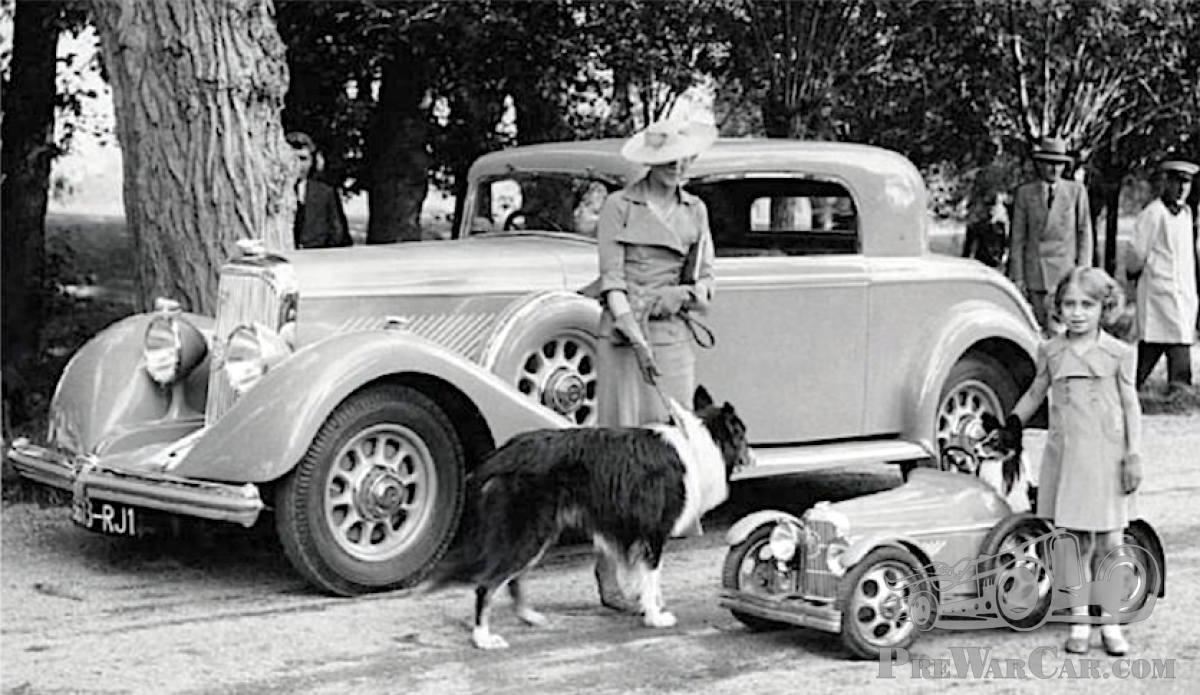
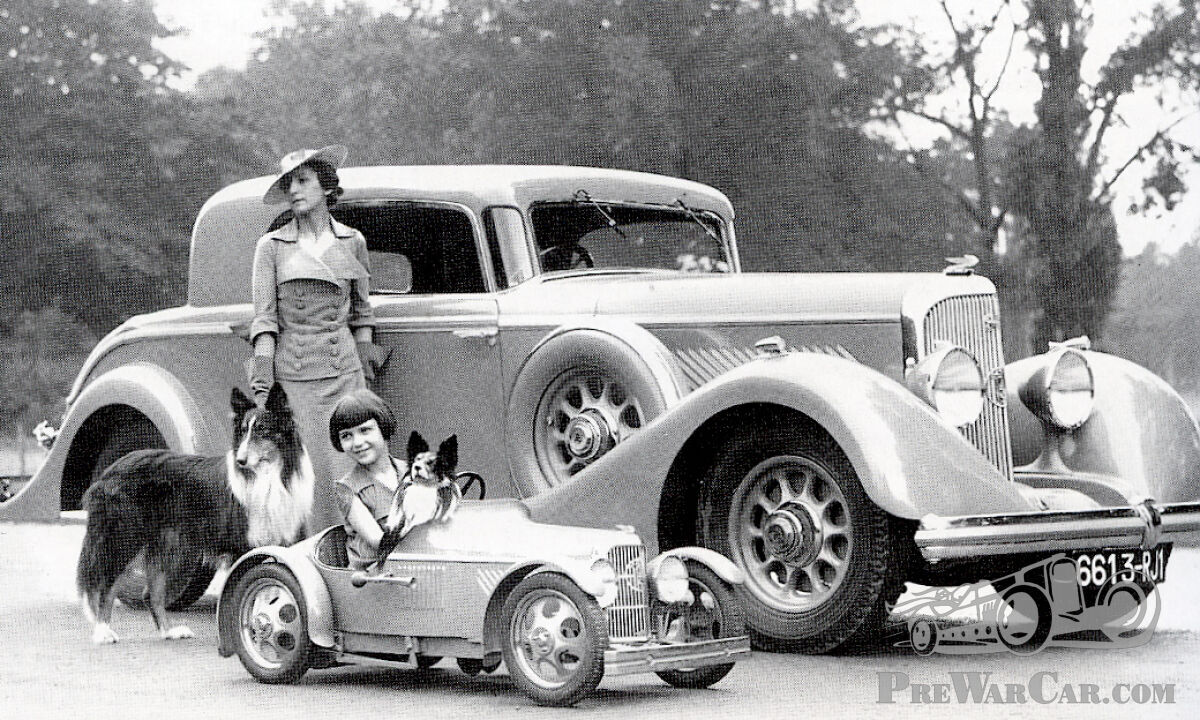
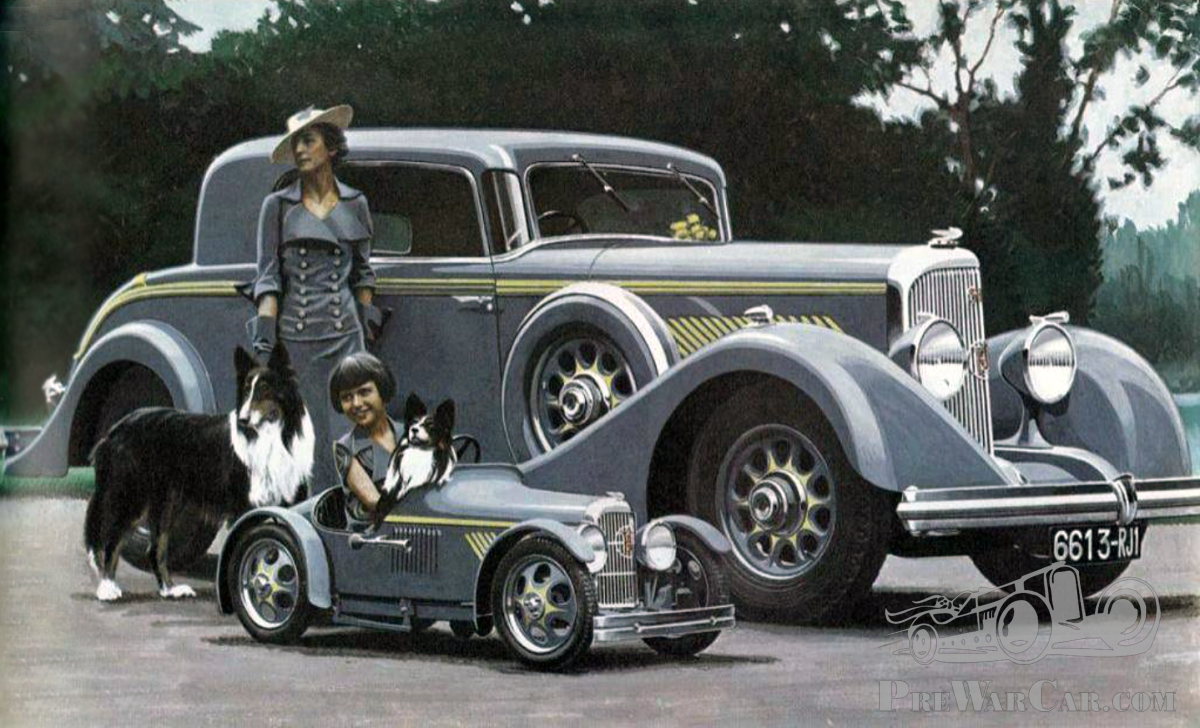


Nu hier is een duo van vrijdagse dames om ons te charmeren! Deze vrouwen zijn Madame Kow en een onbekend meisje. Mevrouw Kow was de vrouw van Alexis Kojewnikow, beter bekend als Alexis Kow, die zoveel prachtige ontwerpen, tekeningen en advertenties maakte voor Panhard et Levassor en Hotchkiss in de jaren twintig en dertig, meestal als freelancer.
Deze foto's - de zwaar geretoucheerde gekleurde versie werd breed gepubliceerd - dateren uit 1934 en zijn genomen tijdens het Concours d'Elegance in Bagatelle in Frankrijk dat jaar. We kunnen alleen maar aannemen dat de auto inderdaad blauw was met gele accenten zoals in de gekleurde variant. Merk op dat Mme. Kow en het meisje gekleed zijn in bijpassende kleuren tot en met de schoenen, handschoenen, corsage, handtas en vermoedelijk zelfs de riem van de hond.
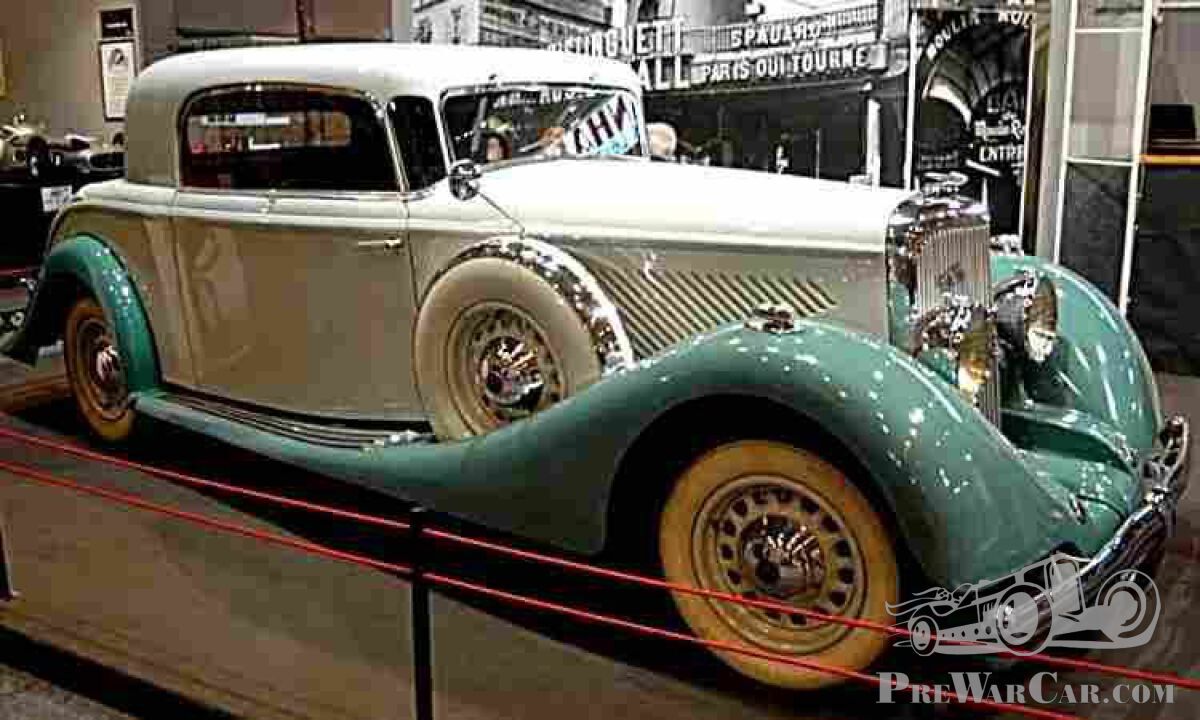
De auto wordt beschreven als een Panhard et Levassor 6CS RL-N Coupé X72 Belka, maar we weten niet wat 'Belka' betekent. Een carrosseriebouwer? Zo ja, dan hebben we er nog nooit van gehoord. Het Lane Motor Museum heeft een coupé met dezelfde stijl, die het beschrijft als een "faux cabriolet (coupé) in 'DERKA' uitvoering, die oorspronkelijk werd geleverd met een 4,1-liter zescilinder motor met zijkleppen". Hij werd in 1933 nieuw verkocht aan Monsieur Lagouche.
De website van het museum zegt: "Misschien wilde Lagouche meer vermogen dan de standaard auto bood, want hij stuurde de auto in december 1934 terug naar de fabriek en liet de motor vervangen door de grotere 4,8-liter lijn zes motor (nu met belastbare 27pk) uit de X74." Is Belka misschien verward met Derka, of andersom? Zou het zelfs dezelfde auto kunnen zijn?
Woorden: Jeroen Booij; foto: archief
Gepubliceerd:
vrijdag januari 20th, 2023
Facebook
LinkedIn
Twitter
WhatsApp
Email
Copy
Reacties
Herman van Oldeneel
25 Januari 2023, 07:48
David Grimstead
20 Januari 2023, 14:30
According to “Priscilla in Paris” in a July 1934 edition of the posh Tatler magazine, this event was an oh, oh, so exasperating affair for the elegant ladies taking part but the blue Panhard, Mme. Kow and the young girl driver did get a mention:
“The Concours d'élégance feminine en automobile took place this year at the Jardin d' Acclimation of the Bois de Boulogne, and some three hundred beautiful cars, driven by exquisitely dressed women, snailed past a jury composed of famous artists, such as van Dongen, the arbiter elegantiarum of Paris; M. André de Fouquière, and other celebrities of le Tout Paris. One of the prettiest outfits was that of Mme. Vera Goullet, who was driving a dark-blue Renault, and Mlle. Blanche Montel, all in white, at the wheel of an all- white Delage, ran her a close second. An amusing couple were Mme. Kow in a blue Panhard, followed by tiny, seven-year-old Jacqueline Kami, in a miniature toy car that was the exact replica of the big one. One of the special mentions went to the great screen and stage star, Mlle. Gaby Morlay, who was in such a state of exasperation that, she vowed, she would have liked to drive right through the jurymen's bench. The competitors had been herded into line for the drive past at ten o'clock; at two p.m. they were still edging forwards, an inch at a time, and Gaby ought to have been on the lot at the Joinville studios before mid-day. Once in the line, hedged in by the spectators, it was impossible to get away, and a good deal of the language I heard was not at all en rapport with the dainty appearance of the competitors.”
It had been observed in 1931 that Panhards were generally dark blue and a report of the 1934 Paris motor show noted that the only new idea was Panhard’s clever design for the A-pillar: “… removal of the single upright altogether, and replacing it by two slender uprights separated by a four-inch glass panel... a safety-first feature of great value.”
Lees verder
“The Concours d'élégance feminine en automobile took place this year at the Jardin d' Acclimation of the Bois de Boulogne, and some three hundred beautiful cars, driven by exquisitely dressed women, snailed past a jury composed of famous artists, such as van Dongen, the arbiter elegantiarum of Paris; M. André de Fouquière, and other celebrities of le Tout Paris. One of the prettiest outfits was that of Mme. Vera Goullet, who was driving a dark-blue Renault, and Mlle. Blanche Montel, all in white, at the wheel of an all- white Delage, ran her a close second. An amusing couple were Mme. Kow in a blue Panhard, followed by tiny, seven-year-old Jacqueline Kami, in a miniature toy car that was the exact replica of the big one. One of the special mentions went to the great screen and stage star, Mlle. Gaby Morlay, who was in such a state of exasperation that, she vowed, she would have liked to drive right through the jurymen's bench. The competitors had been herded into line for the drive past at ten o'clock; at two p.m. they were still edging forwards, an inch at a time, and Gaby ought to have been on the lot at the Joinville studios before mid-day. Once in the line, hedged in by the spectators, it was impossible to get away, and a good deal of the language I heard was not at all en rapport with the dainty appearance of the competitors.”
It had been observed in 1931 that Panhards were generally dark blue and a report of the 1934 Paris motor show noted that the only new idea was Panhard’s clever design for the A-pillar: “… removal of the single upright altogether, and replacing it by two slender uprights separated by a four-inch glass panel... a safety-first feature of great value.”
Michael Schlenger
20 Januari 2023, 12:15
"BELKA" is simply the internal code for the specific type of car, its engine and body style. The underlying five-letter code was introduced in 1927 and enabled a precise identification of any works version. See: Bernard Vermeylen, Panhard & Levassor entre tradition e modernité, p.118
Lees verder
Sujit Gupta
20 Januari 2023, 07:21
The Museum car looks different. The A pillar styling and the front fenders are are not matching. I think this CS from 1934 is closer, may be the same car.
Lees verder
De 1933 auto uit het Lane Museum heeft enkel een platte voorruit.
Kow's 1934 Panhard has a three-piece panoramic windshield.
The 1933 car from the Lane Museum only has a flat windshield.