Het wereldwijde magazine en verkoopplatform voor liefhebbers van klassieke auto’s, door liefhebbers.
Het wereldwijde magazine en verkoopplatform voor liefhebbers van klassieke auto’s, door liefhebbers.


Filter
Maak een keuze
- Auto's
-
Merk >>
-
Bouwjaar >>
-
-
Categorie >>
- Motorfietsen
- Onderdelen
-
Automerk >>
-
Fabrikant >>
-
Categorie >>
- Fietsen
-
Bouwjaar >>
-
Landen


Early history of this 1935 Armstrong Siddeley 17HP Sports Saloon
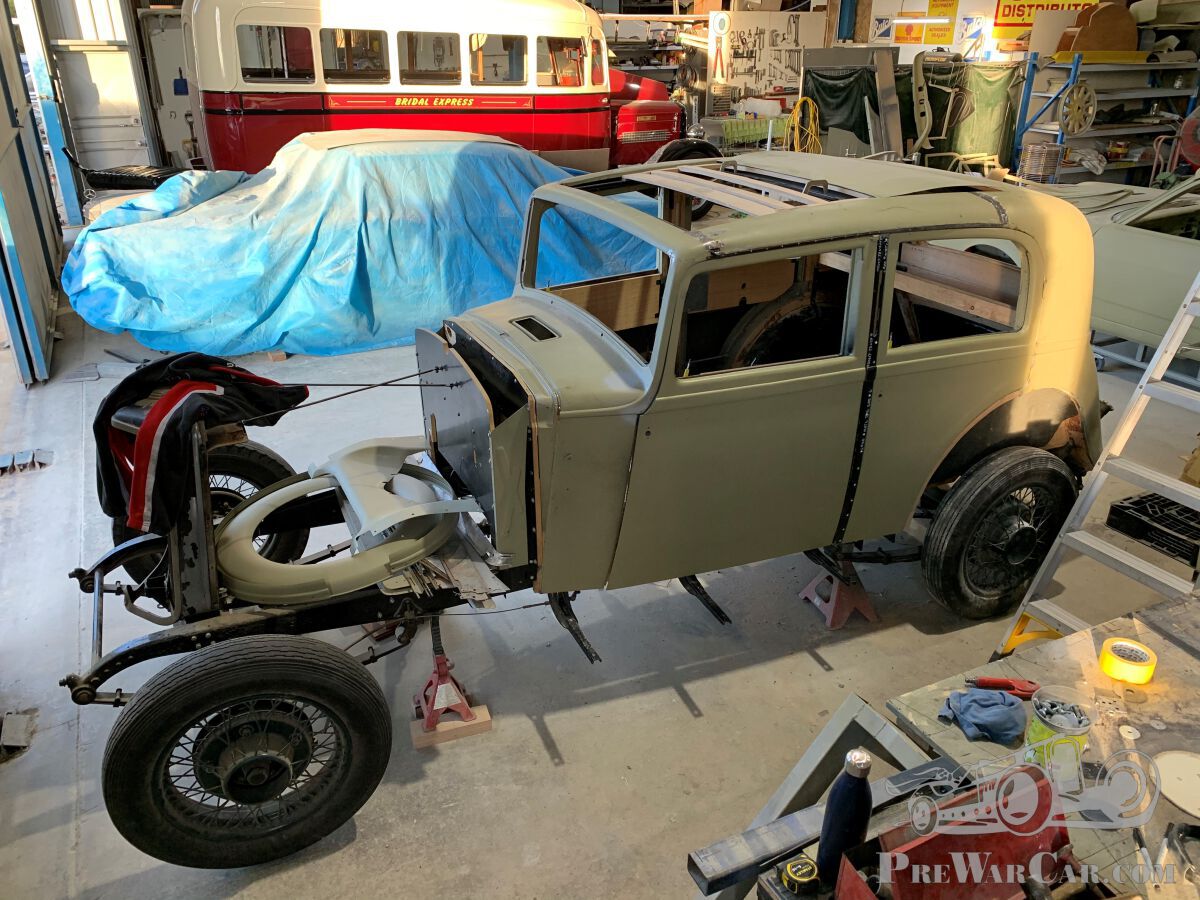
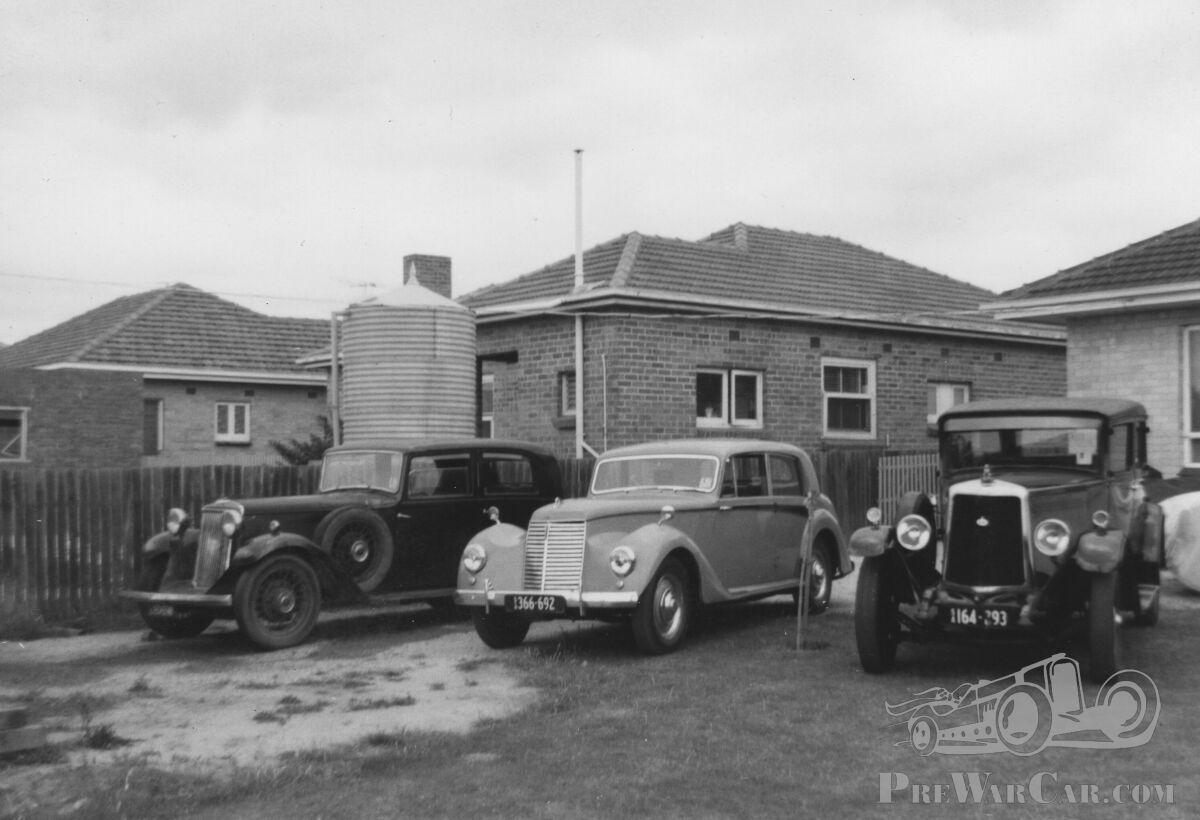
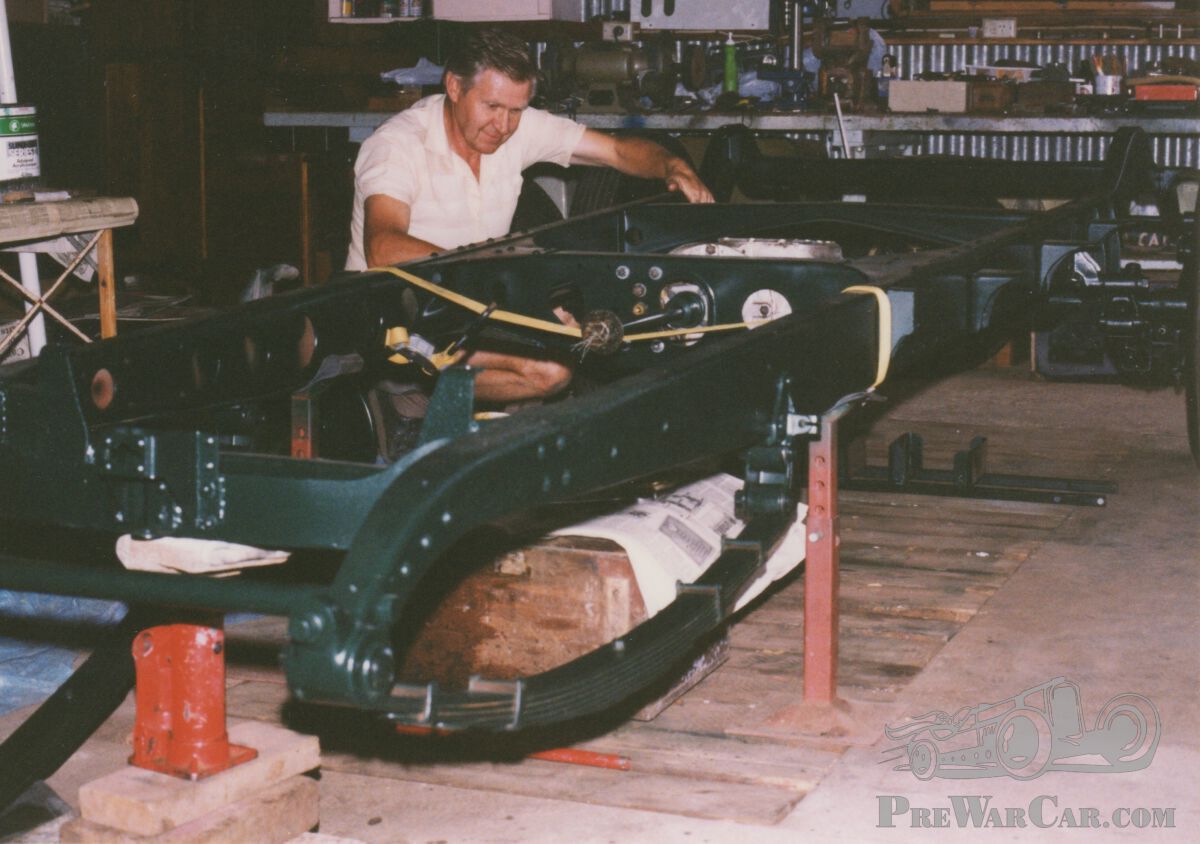
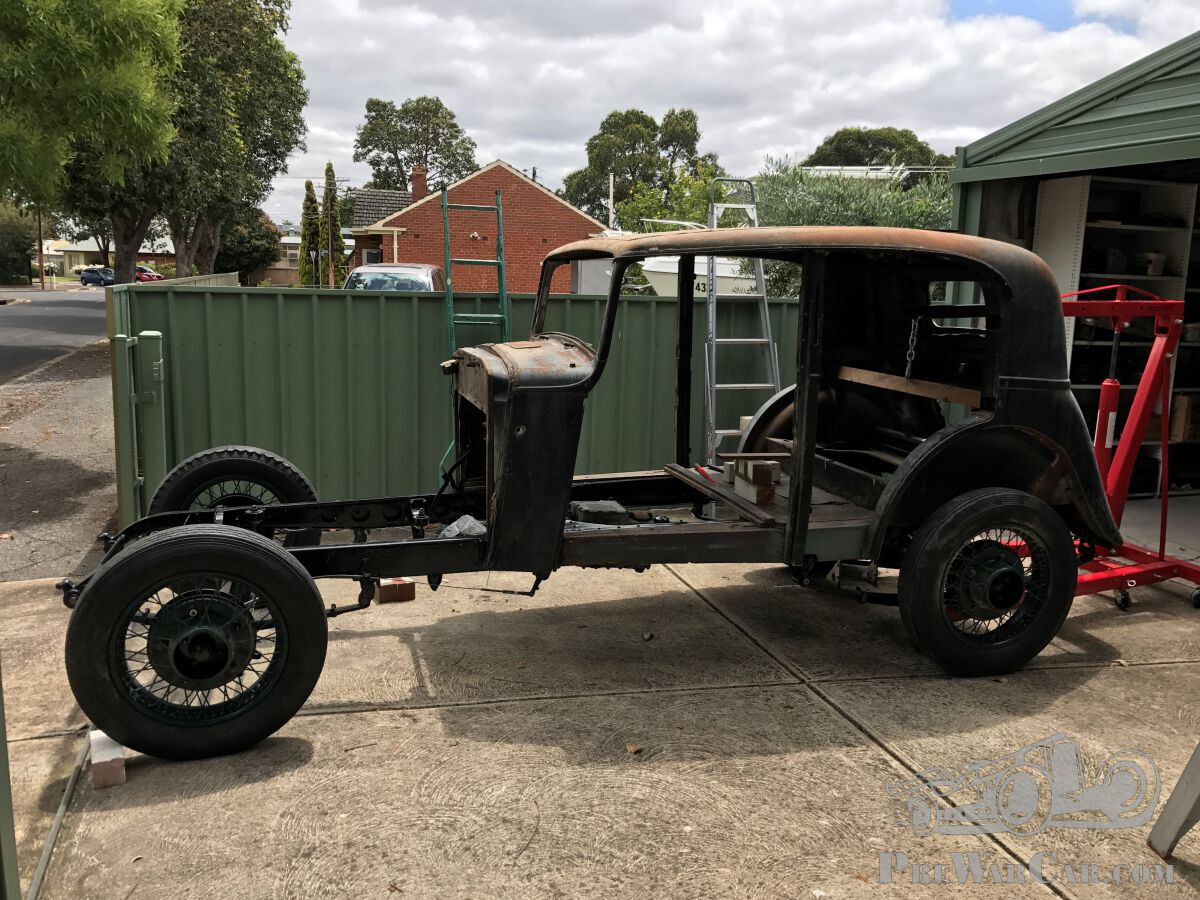
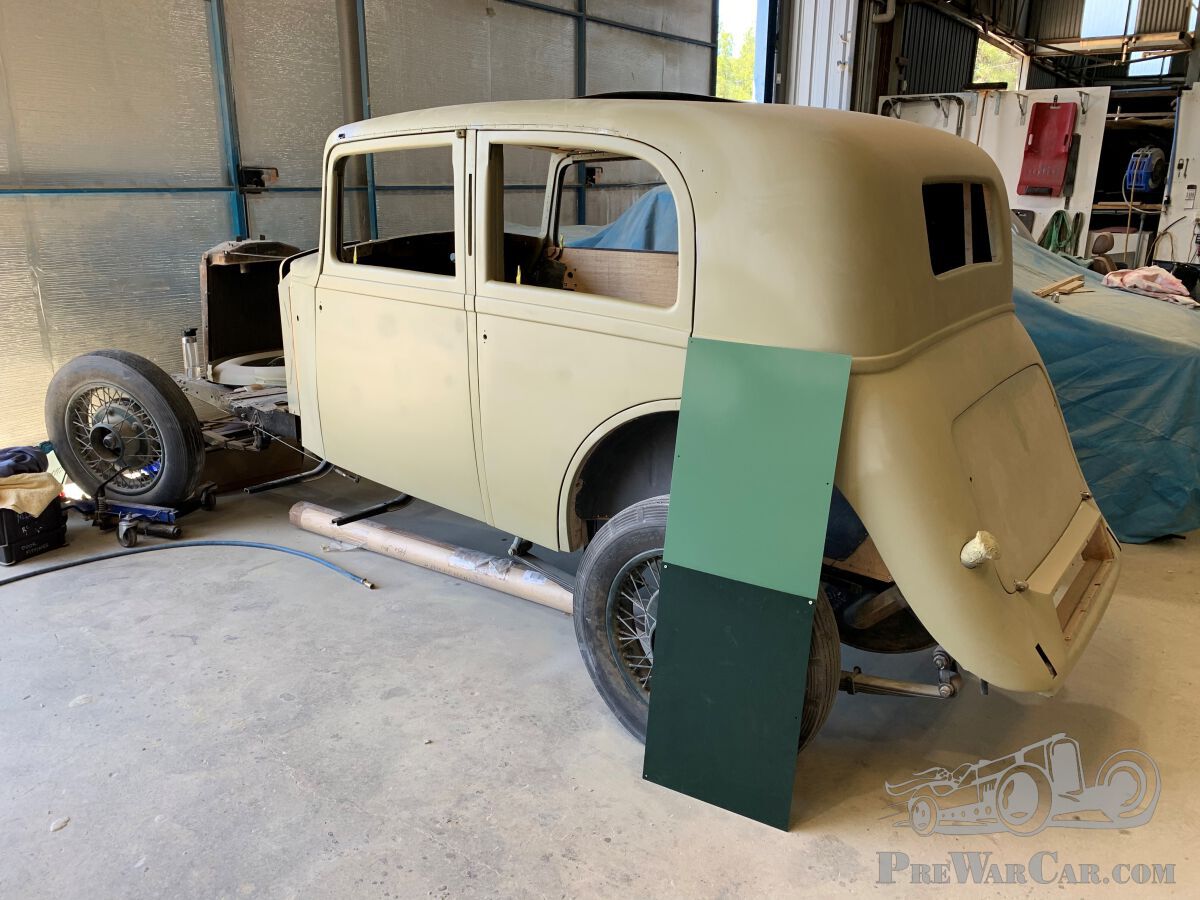


This 1935 Armstrong Siddeley is one of the 112 Sports Saloon bodies fitted to a 17HP chassis by in-house coachbuilder, Burlington. It is one of two known to remain today. Major Alexander Gallaher, of the Fourth Royal Irish Dragoon Guards is believed to be the first owner of the car. That ownership lasted only three short years.
“After his ownership, I have no further history until the car arrived in South Australia in 1960, painted all black instead of its original pretty two-tone green paint scheme. In 1960 it was owned by a young Dr RJ Kimber in Adelaide who went on to become a well-respected haematologist. The car was donated as part of the initial collection of what was to become the Australian National Motor Museum in Birdwood, South Australia. But after a few years, it was replaced by better-preserved vehicles and sold from the collection. My father bought the car in 1972, in a very bad state, and twice started to restore it but did not proceed very far. In 2009 I inherited the vehicle after my father passed away and have been restoring it since 2018. It has had much of the timber frame remade by one of the two coach-building companies that are left in South Australia. The body panels have recently been repaired and it is almost ready to be painted.” This is what Paul Heuer from Adelaide, the current owner of the Armstrong Siddeley told us. The pictures show the Sports Saloon being brought back from a very sad state.
He would like to know more about the early history of his 1935 Armstrong Siddeley 17HP Sports Saloon (chassis 68625). What happened to the car after the death of Major Gallaher in 1938? And how did it get from England to Australia? There was talk that it got there via India during WW2 but up to this point, there is no evidence to support this.
Can anyone help out or tell us where we might be able to find information?
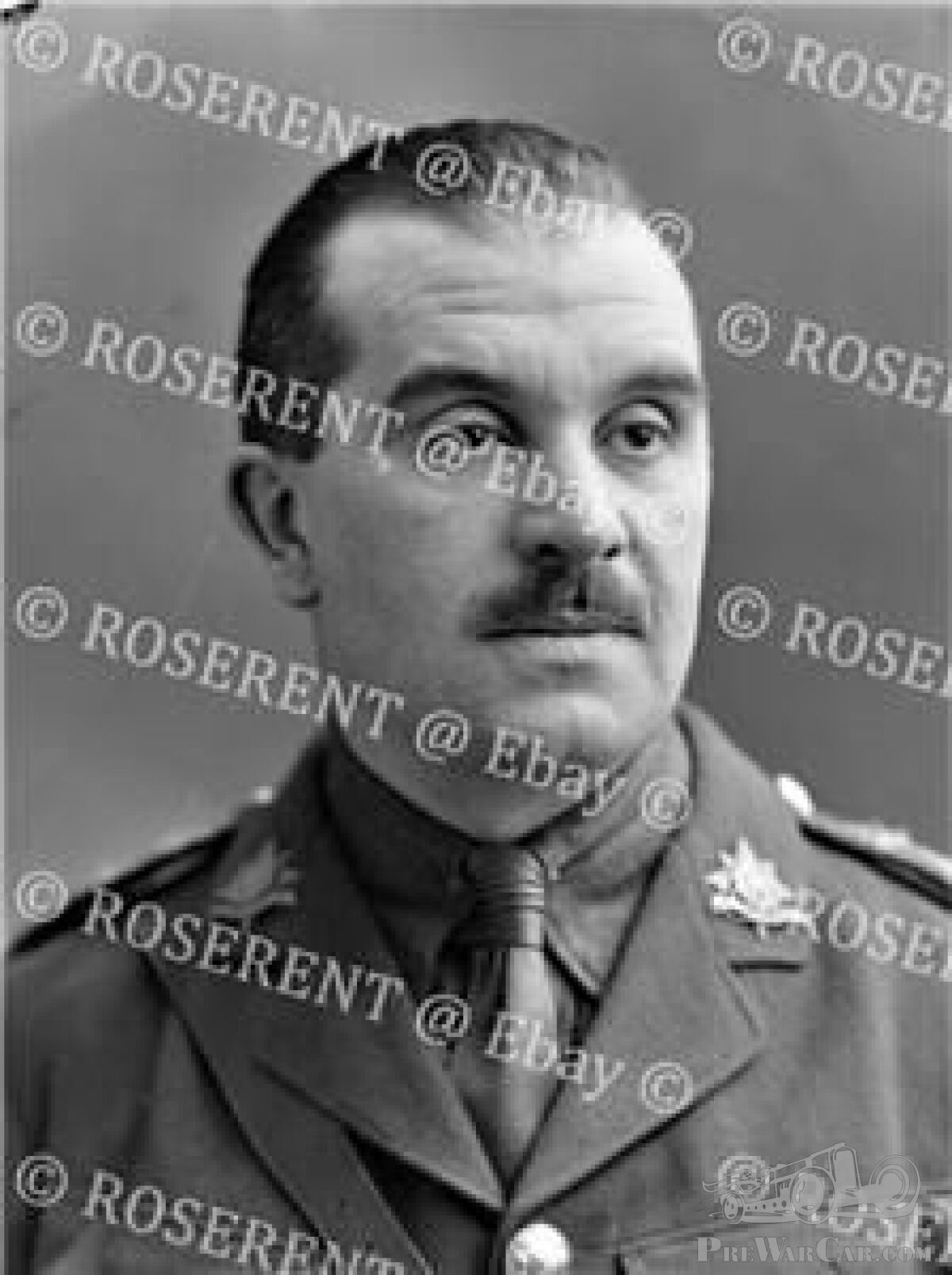
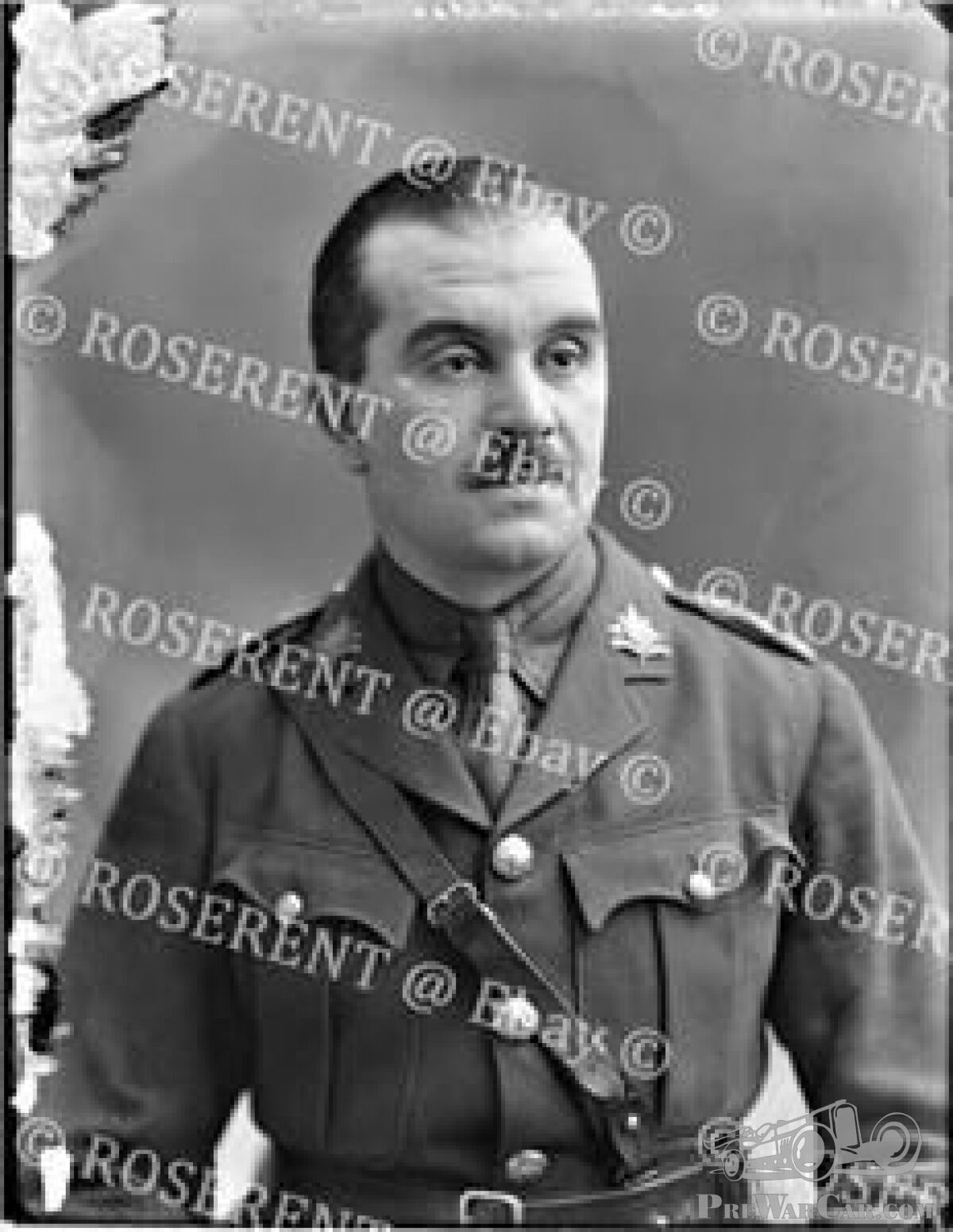
Major Alexander Gallaher
What Paul has already found out about the car and first owner Alexander Gallaher:
The history of my 1935 17HP Sports Saloon is unknown between 1935 and 1960. It is listed in the ‘Batch Book’ of cars coming out of Armstrong Siddeley Motors in 1935 as a two-tone car in green, delivered locally in England. It then appears in the ASCC data sheets in South Australia in 1960, painted all black with a green fine-line. I spent a few hours one evening recently seeing what I could find about the car’s first owner.
The ASM Batch Book records the car being delivered to a ‘Maj. A. Gallaher’ new from the factory. Note the spelling of the surname “Gallaher”, not the more common form “Gallagher”. A British Army Major should have appeared in records, perhaps from WW1, so I started in that area. I could find only one A. Gallaher in public documents from the First World War; a Lieutenant Alexander Gallaher. And it seems he was quite noteworthy!
My first clue came from a book about WW1 titled, “Meeting the Enemy” by Richard van Emden: Lieutenant Alexander Gallaher of the 4th (Royal Irish) Dragoon Guards was brought down in this charge. His horse fell, pinning him to the ground until, in pain, he struggled free and crawled into a cowshed where three men were already sheltering. In no position to escape, they waited for the enemy to arrive.
Another passage from “Retreat and Rearguard 1914”, by Jerry Murland: From Lt Alexander Gallaher: "I saw a flash which seemed right in front of my eyes, and my horse went down. When I came round I was lying on my right side, with one leg under my dead horse. My head was bad . . . All was quiet for a moment. Dead and wounded lay all around and everything seemed strangely still."
The name of his regiment is quite distinctive, and leads to more information from the British National Archives:
Name: Alexander Gallaher
Regiment: 4th Dragoon Guards
Date of Service: 1908
Born: 1887
And that he also became a pilot, awarded an “Aviator’s Certificate”: Lt. Alexander Gallaher, 24 October 1913, Used a Bristol Biplane at the Bristol School, Larkhill, Salisbury Plain.
I next discovered Alexander Gallaher listed in the 1935 edition of “Who’s Who: Men and Women of the Time”, and he is now Major Gallaher: Gallaher, Major Alexander, D.S.O. 1917; M.C.; 4/7th Dragoon Guards; m. 1925, Valerie Elizabeth Haine; one d. Educ.: R.M.C., Sandhurst. Joined 4th Dragoon Guards, 1908; Captain, 1915; Aviator’s Certificate, 1915; Adjutant 2/1st Dorset Yeomanry; served with Egyptian Cavalry; Brigade-Major to R.A.F., 1918; served European War (Mons Star, 1914, Medaille Sauvetage, 1917, despatches thrice, D.S.O., M.C., wounded five times);
So the good Brigade-Major was married and had a daughter by 1935, and he was retired from the Army. It seems, from his membership of the Royal Automobile Club, that he might also have been interested in cars.
However, Major Gallaher did not enjoy his new Sports Saloon for long. The Glasgow Herald of 5th January 1938 reports the death of Major Gallaher thus: D.S.O. MAJOR FOUND DEAD IN FIELD A D.S.O. Major, who was wounded five times in the Great War, was found dead in a field at Stanmore, Middlesex, yesterday with a throat wound. He was Major Alexander Gallaher, aged 49, of Avenue Close, Avenue Road, Regent’s Park, London.
The Belfast Gazette lists the Major’s bequests in which his wife and daughter are named, making me wonder if Maj. Alexander was part of the Gallaher tobacco family. The Major’s listing in The Peerage also gives weight to that suspicion: Major Alexander Gallaher is the son of James Gallaher and Jessie Robertson Muir.
Some weeks later I was given some research conducted by a Robert Bulford from Queensland with a newspaper cutting from the Gloucestershire Echo of 6th January 1938. It reported that Mrs Gallaher told an inquest that Major Gallaher had ‘depression due to ill-health caused by war-wounds’. Sadly, Major Gallaher had taken his own life.
In summary I believe I now know who was the first owner of my car. Unfortunately for Major Gallaher that ownership lasted only a short three years, and there the trail goes cold. My father was told that the car came to Australia via India, but I have no evidence of that.
I will continue to try to trace the Major’s daughter and Robert Bulford to see if there are living relatives. The thought of a family photo, in a descendant’s collection, of Major Gallaher and his family gathered around the new car (which was a popular pose at that time) is quite enticing.
Gepubliceerd:
donderdag augustus 22nd, 2024
Facebook
LinkedIn
Twitter
WhatsApp
Email
Copy
Reacties


John Breslin
22 Maart 2024, 11:07
Hi, Paul, this is Alexander Gallaher in 1915. I own the glass plate negative.
Lees verder
Michael Bull
22 Augustus 2024, 13:40
My brother John and I purchased this car sometime in the 1960s. It was still black with beautiful green leather upholstery. It had recently been thrashed and maltreated by a prior owner but still retained some of its glory. The motor ran and we drove it briefly but the water pump was wrecked. We donated it to the Birdwood Mill motor museum, then owned by the legendary Jack Kaines. I am sad to hear it was passed on and obviously deteriorated much more after that. It had been a sound restoration project at the time. I also owned a magnificent Armstrong Siddeley 25hp car.
I now live in Britain but can be contacted on [email protected].
Lees verder
I now live in Britain but can be contacted on [email protected].
angus murray
06 September 2023, 14:16
How do I contact you directly? I have some material that may be of interest to you.
Regards Gus
Lees verder
Regards Gus
Peter Maguire
19 December 2020, 17:23
Hello Paul,
It is nice to see someone restoring a car like your 17. Too many many are converted into inappropriate 'specials', which are nothing like anything Armstrong-Siddeley would have made.
My first car (1964) was a 20HP Sports Saloon of which I was the second owner. I 'restored' it after purchase at a cost of some £250, a lot then. It was re-restored in 1978 as it sat for 5 years while I was working abroad.
If you have not yet painted it, please do try to use 'cellulose' as would be nearer to the original finish. Also any 'black' should have approximately 4% red in it. Old blacks were really very, very dark browns! A sort of soft black. Also the radiator shell and the 'slats' (do you have the thermostatic blinds?) should be the main body colour.
I hope you will accept my apologise for being pedantic!
Good luck with the car.
Best regards, Peter.
Lees verder
It is nice to see someone restoring a car like your 17. Too many many are converted into inappropriate 'specials', which are nothing like anything Armstrong-Siddeley would have made.
My first car (1964) was a 20HP Sports Saloon of which I was the second owner. I 'restored' it after purchase at a cost of some £250, a lot then. It was re-restored in 1978 as it sat for 5 years while I was working abroad.
If you have not yet painted it, please do try to use 'cellulose' as would be nearer to the original finish. Also any 'black' should have approximately 4% red in it. Old blacks were really very, very dark browns! A sort of soft black. Also the radiator shell and the 'slats' (do you have the thermostatic blinds?) should be the main body colour.
I hope you will accept my apologise for being pedantic!
Good luck with the car.
Best regards, Peter.

Paul Heuer
16 December 2020, 23:22
Peter, thanks for commenting on the article about my car. I have Bill's excellent book (please pass on my gratitude when you next speak to Bill) and the batch book page for my car, photographed by the club and sent to my father (as opposed to an online scan). The batch book clearly shows 'Maj A. Gallaher' (see below), so it is indeed a typo in Bill's book.
The birthdate/age is a little more confusing, but multiple searches of several databases have come up with only one Major Gallaher in that era. I suspect that the newspaper report was in error.
Lees verder
The birthdate/age is a little more confusing, but multiple searches of several databases have come up with only one Major Gallaher in that era. I suspect that the newspaper report was in error.
Chris Wood
24 October 2024, 18:17
Hello Paul,
It’s just so good to see the enormous interest from Australia in both the car and the man. And what a man—I’ve read some truly horrifying descriptions of the incredible 1914 retreat from Mons by the Old Contemptibles. To have been awarded a medal in this particular battle where everyone was a hero, he must have been truly exceptional.
Now, to the car: I’ve always had a soft spot for Armstrongs. They were in the main very elegant and well-engineered but funnily enough I’ve been offered a 1934 17 h.p. model and came across this one whilst doing a bit of research.
I hope your restoration continues well.
Best wishes,
Chris
Lees verder
It’s just so good to see the enormous interest from Australia in both the car and the man. And what a man—I’ve read some truly horrifying descriptions of the incredible 1914 retreat from Mons by the Old Contemptibles. To have been awarded a medal in this particular battle where everyone was a hero, he must have been truly exceptional.
Now, to the car: I’ve always had a soft spot for Armstrongs. They were in the main very elegant and well-engineered but funnily enough I’ve been offered a 1934 17 h.p. model and came across this one whilst doing a bit of research.
I hope your restoration continues well.
Best wishes,
Chris
Peter Maguire
16 December 2020, 09:50
A couple of observations.
My old friend Bill Smith mentions this car in his book 'Armstrong Siddeley Motors'. However he gives the name of the first owner as Major A. GALLACHER! The date of first registration is given as May 1935. Bill spent 20 years researching, so the different spelling could be a 'typo', but it is worth looking into. Bill Smith had access to all the original batch books that belonged to Armstrong Siddeley Motors, not copies or 'on line'.
If 'Major A. Gallaher' was born in 1887, the date given in the British National Archives, then he would not have been aged 49 at the time of his death, the 4th January 1938, as stated in The Glasgow Herald report. He would have been at least 50 or perhaps 51 years of age. So, is it the same person?
Lees verder
My old friend Bill Smith mentions this car in his book 'Armstrong Siddeley Motors'. However he gives the name of the first owner as Major A. GALLACHER! The date of first registration is given as May 1935. Bill spent 20 years researching, so the different spelling could be a 'typo', but it is worth looking into. Bill Smith had access to all the original batch books that belonged to Armstrong Siddeley Motors, not copies or 'on line'.
If 'Major A. Gallaher' was born in 1887, the date given in the British National Archives, then he would not have been aged 49 at the time of his death, the 4th January 1938, as stated in The Glasgow Herald report. He would have been at least 50 or perhaps 51 years of age. So, is it the same person?
Joop Terpstra
16 December 2020, 09:19
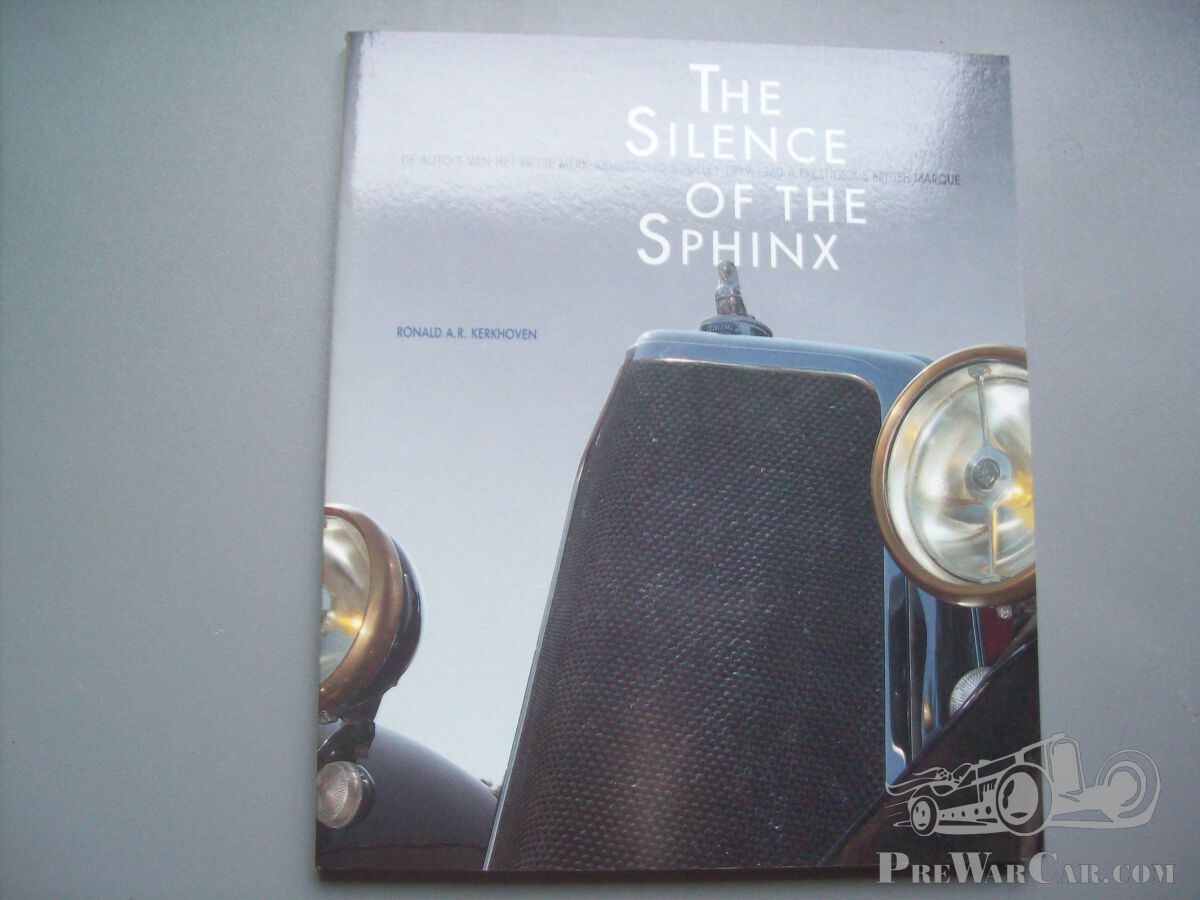
Here in Holland, now some 25 years ago, I bought a new presented book with the complete history of Armstrong-Siddeley at a clubmeeting of this interesting carbrand. If the owner of this 17hp sports saloon is interested in this book just let me know, it is written in english and dutch.
Joop Terpstra
Lees verder
Joop Terpstra