Het wereldwijde magazine en verkoopplatform voor liefhebbers van klassieke auto’s, door liefhebbers.
Het wereldwijde magazine en verkoopplatform voor liefhebbers van klassieke auto’s, door liefhebbers.


Filter
Maak een keuze
- Auto's
-
Merk >>
-
Bouwjaar >>
-
-
Categorie >>
- Motorfietsen
- Onderdelen
-
Automerk >>
-
Fabrikant >>
-
Categorie >>
- Fietsen
-
Bouwjaar >>
-
Landen


Een mysterieuze auto in het besneeuwde Belgrado
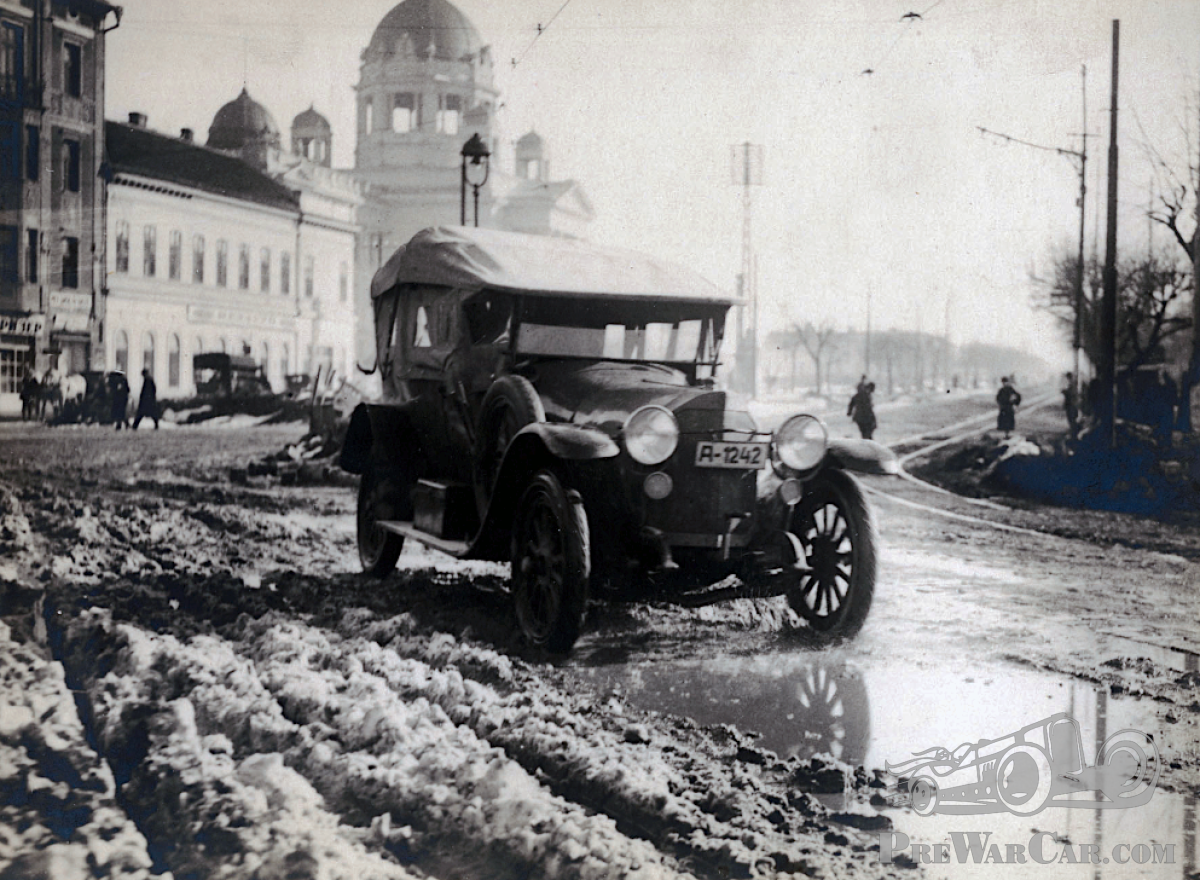

Is het niet vaak zo dat hoe minder informatie we over iets hebben, hoe sterker ons verlangen is om er meer over te weten te komen? Het enige wat we aanvankelijk wisten over deze specifieke foto was dat hij "Een auto in de sneeuw" afbeeldde, zoals het bijschrift van de Universiteit van Graz ons vertelde. Waar, wanneer en door wie de foto is genomen en welke auto erop staat, ontbrak.
Verschillende bronnen zeiden dat het in 1928 in Belgrado was genomen, wat ons geloofwaardig leek. Een andere vertelde ons meer specifiek dat het "Het Nationale Assemblee-gebouw op het Nikola Pašić-plein in het centrum van Belgrado" toont, wat correct lijkt te zijn. Hoewel het tussen andere gebouwen is ingeklemd, is dit indrukwekkende stukje architectuur nog steeds te vinden en lijkt het niet veel veranderd te zijn.
Vervolgens stuitten we op een krantenknipsel met de kop "De enige twee auto's in Belgrado botsten in 1903", met deze foto als openingsfoto. Vertaald staat er: In 1903 reden er in Belgrado niet meer dan twee auto's door de straten van de stad. Er zou iets interessants gebeurd zijn, waarover de burgers nog dagenlang vertelden. Volgens de kranten uit die tijd botsten die twee, de enige auto's in die tijd, op het kruispunt Mostar in Belgrado en veroorzaakten een algemene chaos. Gelukkig werd gemeld dat geen van de bestuurders gewond raakte, en dat de enige schade de auto betrof die de botsing zou hebben veroorzaakt. De 'dader' vluchtte snel te voet weg en de eigenaar van de tweede auto, Vrzimir Točkanović, ontsnapte met een paar schrammen. Bij die gelegenheid vertelde Vrzimir de politie en de verzamelde burgers: "Alles gebeurde zo snel dat ik niet wist wat er gebeurde. Hij reed het kruispunt op en hij moet harder dan 20 per uur hebben gereden!" De bestuurder die het ongeval veroorzaakte, wiens naam tot op heden niet bekend is, werd lange tijd gezocht omdat hij ook de nummerplaten van zijn auto verwijderde alvorens te vluchten.
Vergeef ons, we lieten ons meeslepen. De foto, duidelijk niet van 1903, werd alleen gebruikt om het stuk te illustreren met een foto van een historische auto in Belgrado, maar het was niettemin een interessant stukje trivia. Iedereen die meer weet over het ongeluk van Vrzimir Točkanović op het kruispunt van Mostar wordt uitgenodigd zijn kennis hier te delen. Ondertussen zijn we nog niet veel verder gekomen met deze mooie foto, dus we horen graag van jullie wat de auto in eerste instantie is. Een Mercedes of Benz, denken wij?
Woorden: Jeroen Booij; foto: Universiteit van Graz
Gepubliceerd:
woensdag maart 1st, 2023
Facebook
LinkedIn
Twitter
WhatsApp
Email
Copy
Reacties
Ariejan Bos
07 Maart 2023, 12:25
Maybe Elite seems a better suggestion on the basis of radiator shape, but the Elite cars I know of all have high shoulders, lacking the roundness of the Belgrade car, while all have horizontal bonnets right down to the wind shield. Besides, all seem to have dead straight front axles (though it is unclear on your car) and I see some more differences. On the basis of these observations, for me it seems unlikely that the car is an Elite.
Lees verder
Graeme Simpson
02 Maart 2023, 02:31
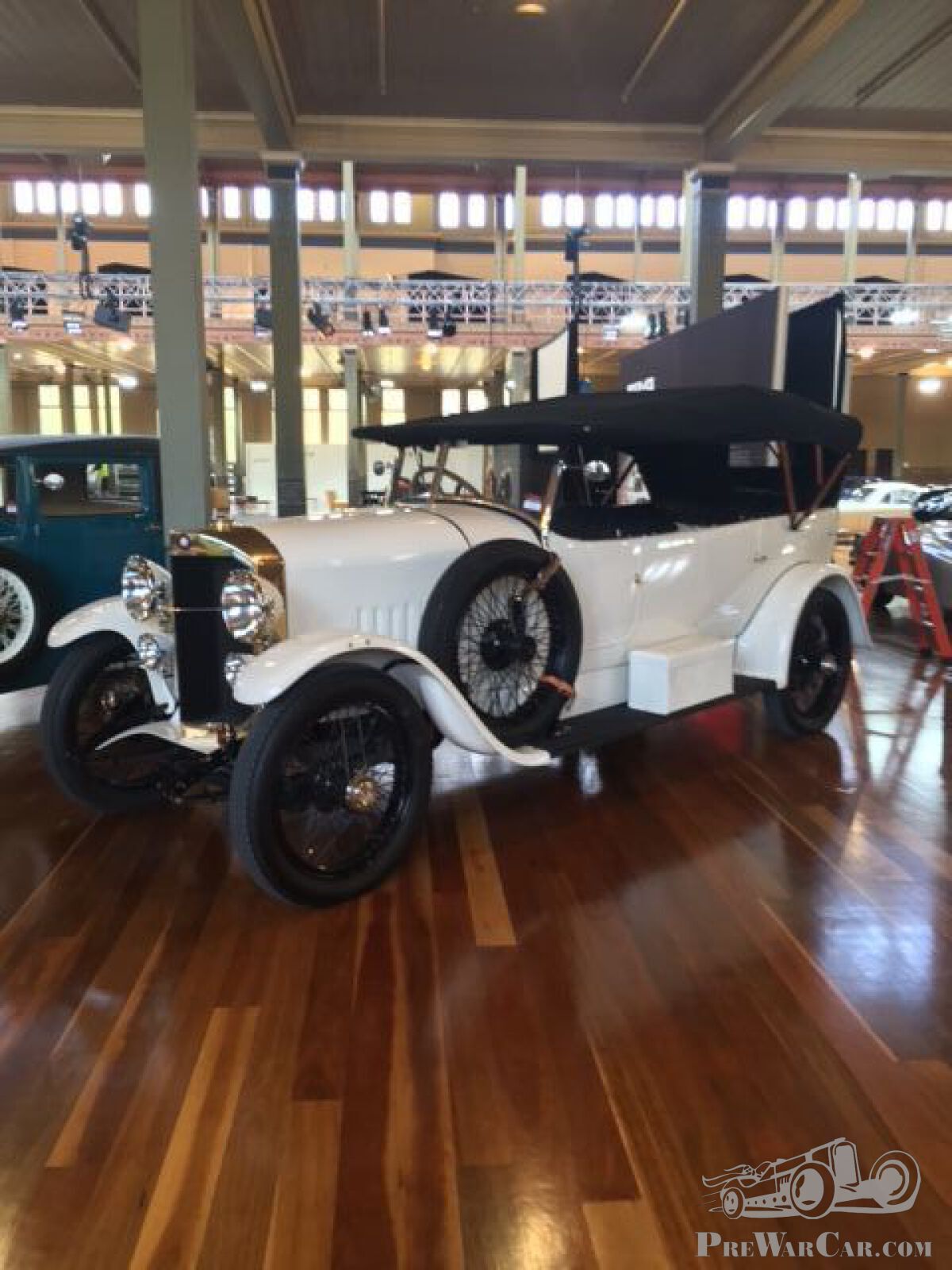
I believe this to be an Elite 10/35 or 10/38 from 1919-1920. The shallow dropped front axle, the shape of the dumb-irons, the round-shouldered radiator & bonnet, the badge(s) apparently mounted not on the point of the radiator, but to each side, the boomerang-shaped steady bar between the Bosch headlights all point towards this identification. Also the battery box mounted to the running board. I have an original spare parts book for the 10/35, which came with our Elite 12/40 when I bought it in 1963. About 3000 Elite cars were made by Elitewerke A G in Brand-Erbisdorf, Sachsen, from about 1914 to 1928, when the firm was bought by Adam Opel A G, itself soon bought by General Motors Corp.
Lees verder
Ariejan Bos
01 Maart 2023, 15:46
It's as always in the details. Of course the details are a bit vague in this photo, but still they are clear enough to determine the make. And that would be a Benz of just before or in WW1, based on details like radiator shape and front axle. A Mercedes of that period had a front axle with deeper bend and very important: the radiator filler tube was always at the front end of the radiator, where for Benz it was always located at the rear, near the bonnet. The combination of the large and small electric front lights is not an identifying feature: I'd prefer to call them a German feature, as many German makes made use of these, including Benz, Mercedes and Opel.
The car is not Opel, because of the different radiator shape, with its inner core curving down parallel from top to bottom. The same of course applies to the Fiat 510S, which had a completely different front by the way. Also the Steyr radiator had a different radiator inner core and moreover had a straight front axle.
Lees verder
The car is not Opel, because of the different radiator shape, with its inner core curving down parallel from top to bottom. The same of course applies to the Fiat 510S, which had a completely different front by the way. Also the Steyr radiator had a different radiator inner core and moreover had a straight front axle.
Stefan Krayer
01 Maart 2023, 12:46
It could be a Steyr around 1920, because of the Austrian influence in that area.
Lees verder
Steve Barnett
01 Maart 2023, 12:23
V radiator and 12-spoke artillery wheels are not only the preserve of Opel but combined with the smaller driving lights below the main headlights suggests 1919 Opel 45hp.
Lees verder
Tomas Garcia
01 Maart 2023, 09:35
Good morning, I would not rule out that it is a Fiat 510S.
Lees verder
Daniel Reuben
01 Maart 2023, 02:24
I believe this is a Benz, perhaps from 1912-1914 on basis of the lights and brackets, front axle, spring perches and of course radiator.
Lees verder
Michael Schlenger
01 Maart 2023, 00:48
The tourer in this photo is a German car from the period 1913/14 to c.1920 featuring a similar radiator used by Daimler or Benz back then. However, in the absence of any other distinctive features I doubt that it's possible to ascertain the manufacturer, since such radiators were used by many other marques and appear to have been available as an aftermarket accessory. I've dozens of period photos showing similar cars which are neither Daimlers nor Benzes, but offer no clue regarding their identity. By the way: I doubt that the photo was taken at the end of the 1920s in a European capital like Belgrade, I'd say it was taken immediately after WW1.
Lees verder