Het wereldwijde magazine en verkoopplatform voor liefhebbers van klassieke auto’s, door liefhebbers.
Het wereldwijde magazine en verkoopplatform voor liefhebbers van klassieke auto’s, door liefhebbers.


Filter
Maak een keuze
- Auto's
-
Merk >>
-
Bouwjaar >>
-
-
Categorie >>
- Motorfietsen
- Onderdelen
-
Automerk >>
-
Fabrikant >>
-
Categorie >>
- Fietsen
-
Bouwjaar >>
-
Landen


Op vakantie met een Hillman: de beste manier om de zee te zien
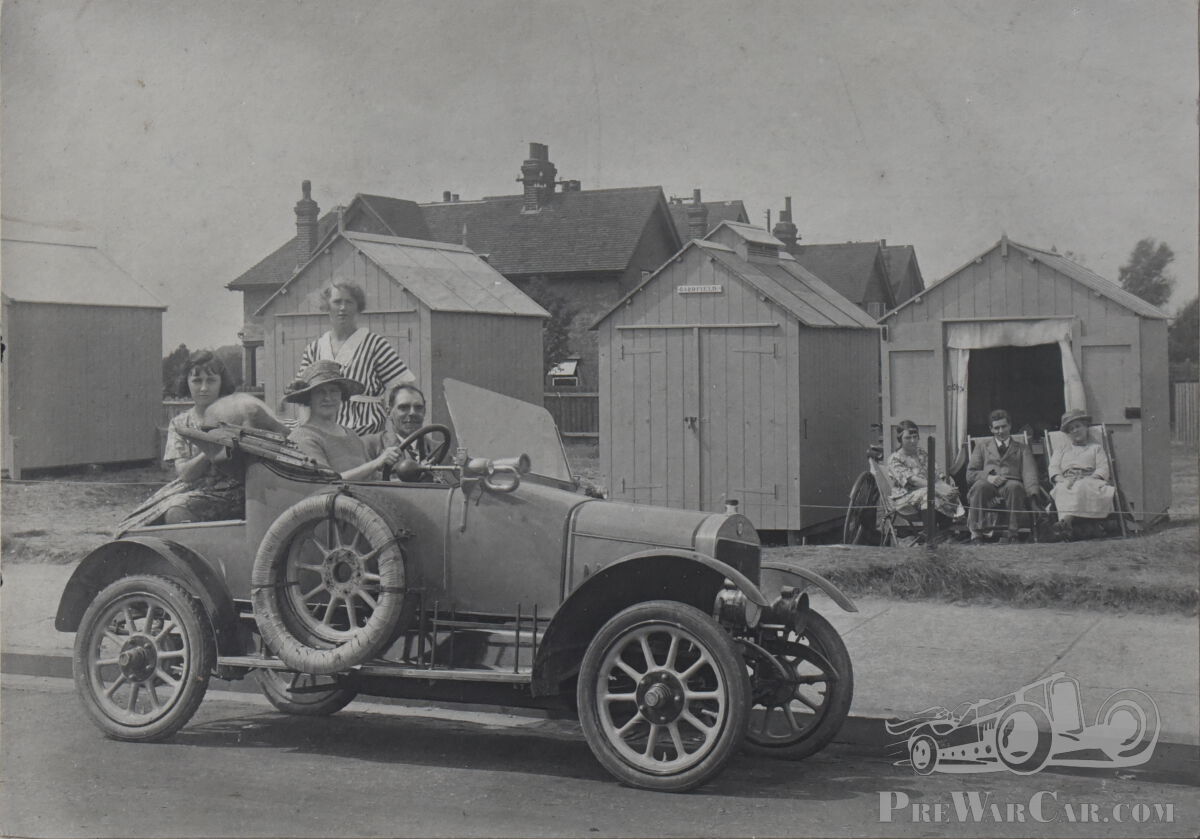

Nu de warmere maanden zijn aangebroken, hebben mensen hun vakantieplannen gemaakt en de meesten dromen van een strandvakantie in Mallorca of ergens anders met een soortgelijke combinatie van zon, zee en strand. Natuurlijk was het pas met de komst van goedkope pakketreizen in de jaren 1960 dat zulke exotische uitstapjes mogelijk werden. Tientallen jaren daarvoor reed het typische Britse gezin met de auto of de trein naar een kustplaats van hun keuze en dompelden ze hun tenen onder in het verfrissende water van het Kanaal, de Atlantische Oceaan of de Noordzee.
Hoewel de buitenlandse pakketreis helaas heeft bijgedragen aan de teloorgang van de Britse badplaats, zijn er nog steeds veel mooie plekken waar je een paar dagen kunt ontsnappen aan de drukte. Brighton heeft veel attracties naast de verschillende historische autosportevenementen, de met palmbomen omzoomde kust van Eastbourne is prachtig op een zonnige dag en Margate heeft een uniek karakter en een aantal charmante tweedehands winkeltjes. De automobilisten op deze foto hebben als bestemming Felixstowe gekozen, de stad in Suffolk die uitgroeide tot een mondaine badplaats voor de Victorianen en Edwardianen en die na 1898 zelfs drie aparte treinstations kreeg.
Naast een pier die in 1905 werd gebouwd, is Felixstowe vooral bekend om zijn strandhuisjes. Er wordt gezegd dat het de eerste stad ooit was die ze installeerde en ze zijn zeker prominent aanwezig op deze foto, waarvan de belangrijkste ster natuurlijk de Hillman 9hp is met drie trotse dames en hun herenvriend aan boord. De 9hp werd in 1913 geïntroduceerd als Hillman's eerste poging tot een lichte auto, maar de productie werd al na een jaar onderbroken vanwege het uitbreken van de oorlog. Mogelijk is de productie na de oorlog kortstondig hervat, maar overlevenden zijn uiterst zeldzaam. We kennen er maar één en die staat in Australië. Zijn er nog meer?
De auto is waarschijnlijk gebouwd in 1913 of 1914, maar we denken dat de foto is genomen in de jaren 1920, omdat de koplampen een beetje scheef lijken te zitten, zoals alleen een auto die al wat langer meegaat dat zou doen. We weten niet zeker hoe ver ze hebben gereisd en we denken niet dat de meisjes achterin al te lang op de blootgestelde dickey-zitting hebben willen zitten, maar ze hebben er een mooie dag voor gehad. Met een koperen lichte auto naar Felixstowe is misschien niet ieders idee van de perfecte vakantie, maar wij zouden het altijd nog verkiezen boven drie uur op een EasyJet-vlucht naar Torremolinos.
Woorden: Zack Stiling; foto: Stiling Collectie
Gepubliceerd:
vrijdag juni 7th, 2024
Facebook
LinkedIn
Twitter
WhatsApp
Email
Copy
Reacties
David Grimstead
17 Juni 2024, 00:31
Gérard Karleskind
12 Juni 2024, 23:31
En 1985 j'ai possede une voiture seblable à la photo avec historique. J'ai en ma possession beaucoup de photos. J'ai vendu la voiture in 1999. Le nouveau acquereur etant decede deux apres elle someille dans une grange depuis plus de vingt ans.
------------------------------------------------------------------------
In 1985 I owned a car like that in this historic photograph. I have in my possession many photographs. I sold the car in 1999. The new owner being deceased, it was sleeping in a barn for more than 20 years.
Lees verder
------------------------------------------------------------------------
In 1985 I owned a car like that in this historic photograph. I have in my possession many photographs. I sold the car in 1999. The new owner being deceased, it was sleeping in a barn for more than 20 years.
Tam Large
11 Juni 2024, 01:11
I think this may be a 1920 model of Hillman. The parallels between this example and my February, 1920, 11.9hp Calcott are very striking. The distinctive curved shape of the scuttle area, the design of windscreen and even the type and position of the bulb horn and the mounts for the Lucas sidelights are pretty well identical. Hollick & Pratt made the body of my Calcott, not surprisingly as they were literally round the corner from each other, and the same was, I'd guess the case for the Coventry-made Hillman. Both cars have fork mounts for headlights too, although the Calcott has Lucas headlights matching the sidelights—all part of an off-the-shelf set sold by Lucas. The similarities continue with very similar steel artillery wheels, and the style of hubs and the central ring with five studs are also indistinguishable. It shows how much was bought in off the shelf by each maker at this date. Most illuminating. Can anyone confirm if Hollick & Pratt did bodywork for Hillman?
Lees verder
Clive Hamilton-Gould
07 Juni 2024, 13:44
Colin Crabbe was using his Hillman on a Light Car Rally in 1977. This car was found in Hastings by Michael Burn in 1972 with a collection of other vintage cars. I have no idea where it is today.
Lees verder
However, dickey seats were soon being installed and in April, 1914, Hillman, exasperated at “the still prevalent vice of overloading”, wrote to The Autocar magazine complaining that although the Nine’s chassis had been designed for only two-seater bodywork, purchasers were signing up for bodies with a dickey seat, even a double-dickey and then complaining it was Hillman’s fault that the car’s performance was not as per the adverts. Hillman said it was not only unfair on them and the car but on the driver’s wallet - a new set of tyres alone was £6 5s. They advised that if a third person was to travel and then for only a short distance, better to sit them on the passenger floor because, they warned, excess weight behind the back axle was likely to induce skidding.
Their protestations were evidently ignored because many second-hand 1914 two-seaters with a dickey or “provision for a dickey-seat” were advertised for sale during the Great War. Bowing to the inevitable, 1915 new cars were advertised with a double-dickey.
At its launch in 1913, the Nine had been the most expensive of the light cars (rather than cycle-cars) then appearing but testers said the price was justified by its better specification compared to the Humberette at £125, Swift at £140, Perry at £147, G.W.K. at £150, Standard at £185 and Singer at £185. The basic £200 two-seater (7ft. 9in. wheelbase and 4ft. track) had a 60 by 120mm, 1,357 c.c. engine rated 8.9 h.p., a three-speed and reverse gearbox, overhead worm-drive axle, five Sankey wheels with Dunlop deep-grooved tyres, adjustable foot pedals and steering wheel, domed wings, a hood, screen, electric side and tail lamps, two acetylene headlamps with gas generator, a horn, number plates and a full set of tools. All levers were inside the body but it lacked a speedometer. Hillman claimed it could return 35 m.p.g. at 45 m.p.h. Electric headlamps and self-starter were fitted from the end of 1915 —it had a Scott Dynamotor starter post-war.
In July, 1913, possibly still undergoing factory proving trials at the hands of Mr. H. Nelson Smith, Secretary to the Hillman Motor Company, a 9 h.p. Hillman had already visited the seaside, being a winner at Saltburn Sands Speed Trials. Smith had also done well with it at Brooklands’ April season-opening meeting, winning a 75-m.p.h. Long Handicap and winning several more light-car races during the year. He took the Class A records there in April, 1914, in a single-seater racing version and a standard Hillman Nine was awarded a gold medal in the R.A.C. Light-Car Trials that year.
A unique 2,714 c.c., 17.8 h.p., eight-cylinder Hillman was entered at the Brooklands Whitsun Meeting of May, 1914. It had a pair of four-cylinder “Nine” engines side by side in its chassis, with parallel starting handles sticking out the front. The engines had separate drive shafts connected to separate bevel drives, perhaps one on each half-shaft? Needless to say, it did not perform well due to its weight and an inability to synchronise the engines. A standard Hillman Nine was also at this meeting but, already a winner, was so heavily handicapped it won nothing.
The Hillman “Miniature Business Car” and a 5cwt. van version, respectively £200 and £195 in 1915, remained on sale to authorised purchasers during the Great War. Second-hand 1913-15 models were often for sale and a new “special 9-h.p. chassis” was advertised in July, 1916, for £185 but by then so too was a version with an 11 h.p. engine. The first post-war small Hillman, advertised from October, 1918, was visually identical to the original 1913 Nine except for its electric headlamps. It was described over the next two years having either a 10 h.p., 63 by 120mm, 1,496 c.c. engine or an 11 h.p., 65 by 120mm, 1,592 c.c. engine and available with a longer wheelbase of 8ft. 6in. In early 1919, a two-seater cost £370 but by the year-end was £435.