Het wereldwijde magazine en verkoopplatform voor liefhebbers van klassieke auto’s, door liefhebbers.
Het wereldwijde magazine en verkoopplatform voor liefhebbers van klassieke auto’s, door liefhebbers.


Filter
Maak een keuze
- Auto's
-
Merk >>
-
Bouwjaar >>
-
-
Categorie >>
- Motorfietsen
- Onderdelen
-
Automerk >>
-
Fabrikant >>
-
Categorie >>
- Fietsen
-
Bouwjaar >>
-
Landen


PWC Workshop: which material for relining a cone clutch?


Jos van Genugten is a young engineer and is approaching restoration jobs 1. as an afficionado, 2. as somebody who likes to show but even more likes to drive his cars. It occured to him that whenever the subject of the cone clutch comes to table, that there are as many opinions as cone clutches...! Below you will find his approach and his opinion. Feel free to respond.
"Part of our beloved hobby is the restoration/maintenance of the aged & tired vehicle. Just recently we have started a series of repair samples under the name "PreWarCar Workshop". In this week's Workshop a maintenance job that many people have dealt with in the past: relining a cone clutch.
There are many ways of doing this job, and just as many opinions on which material to use and how to maintain it after driving. I would like to begin with this article asking you to comment on this article with your own experience on material and lubrication/non-lubrication of the chosen material afterwards.
As said: this way I’m showing you is just 1 of the ways that I happen to have excellent experiences with this method during thousands of pre-war miles with my own vehicles. Anything could potentially work from greased leather belts to certain rubber types to composites and everything in between. Please comment!
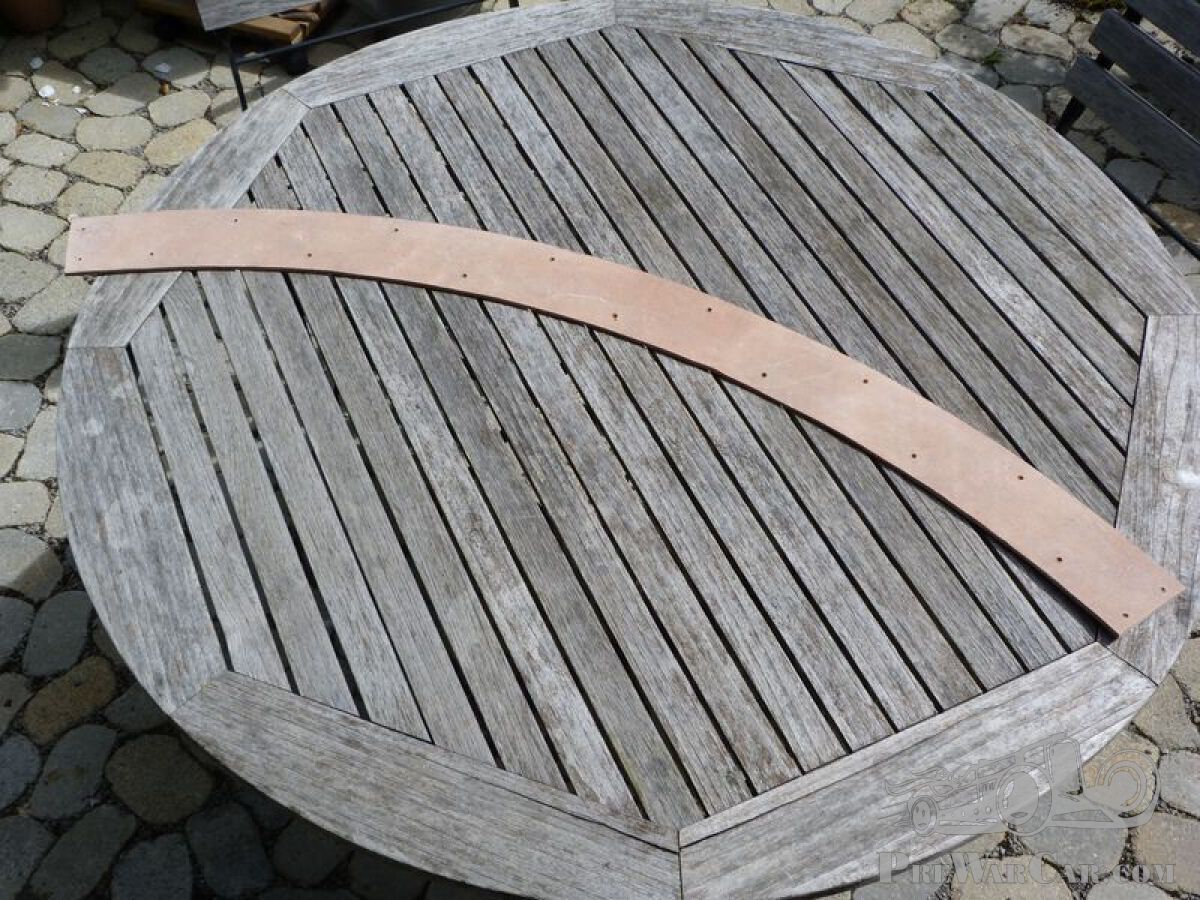
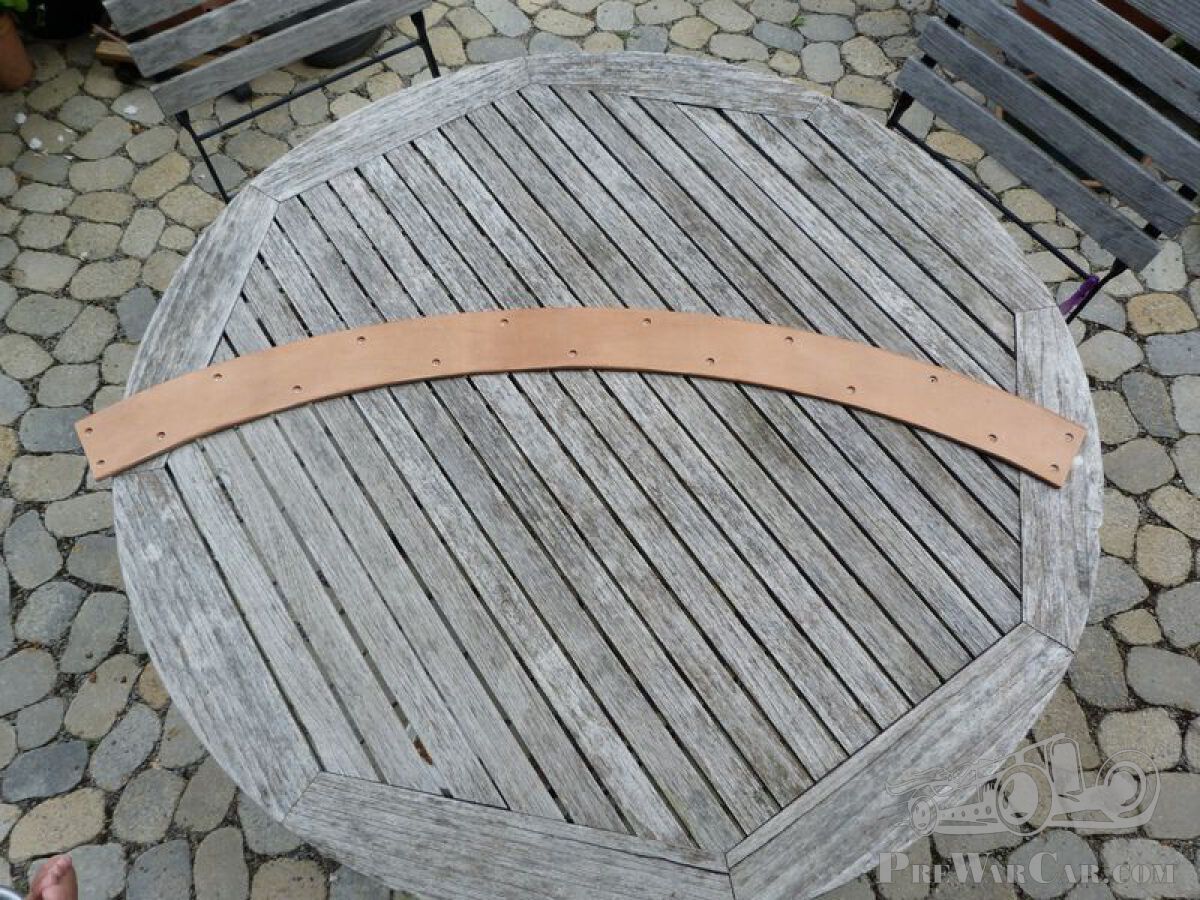
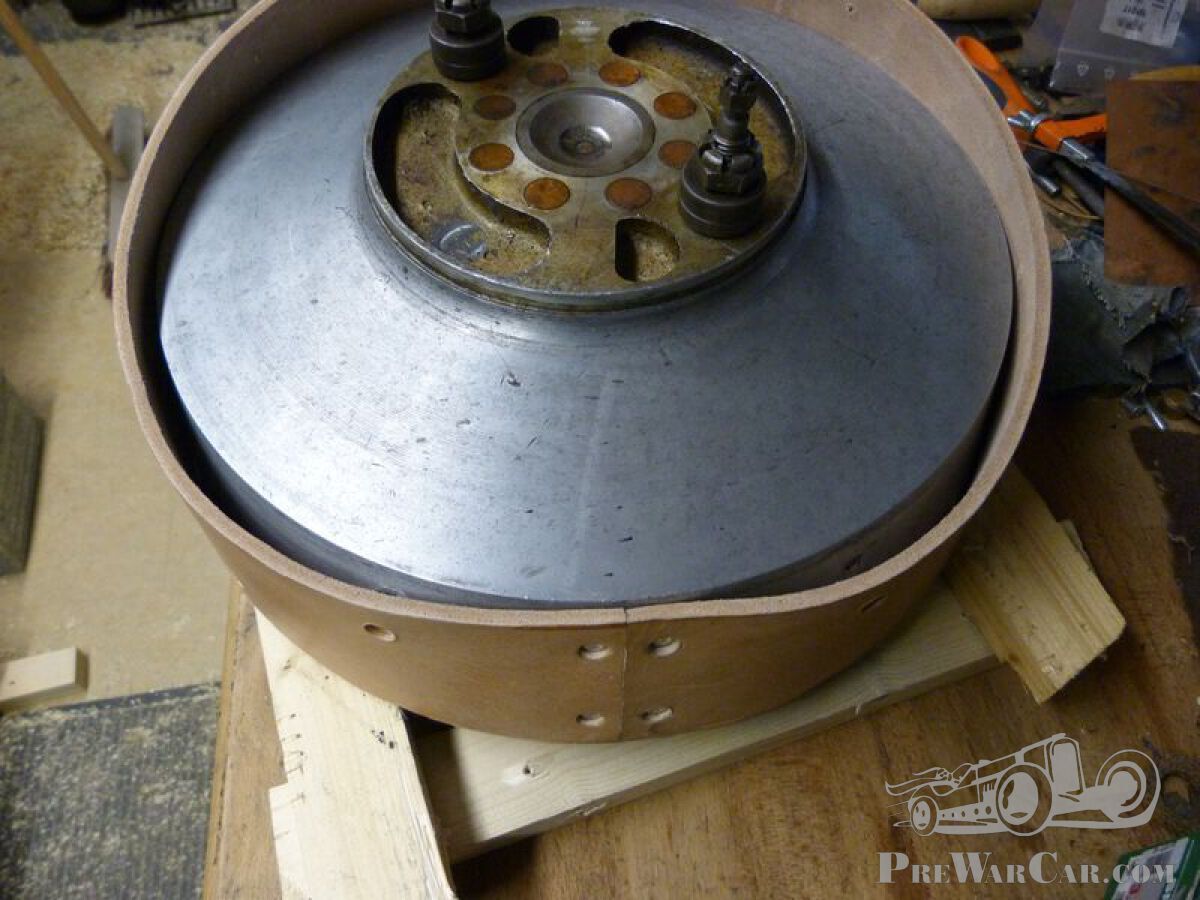
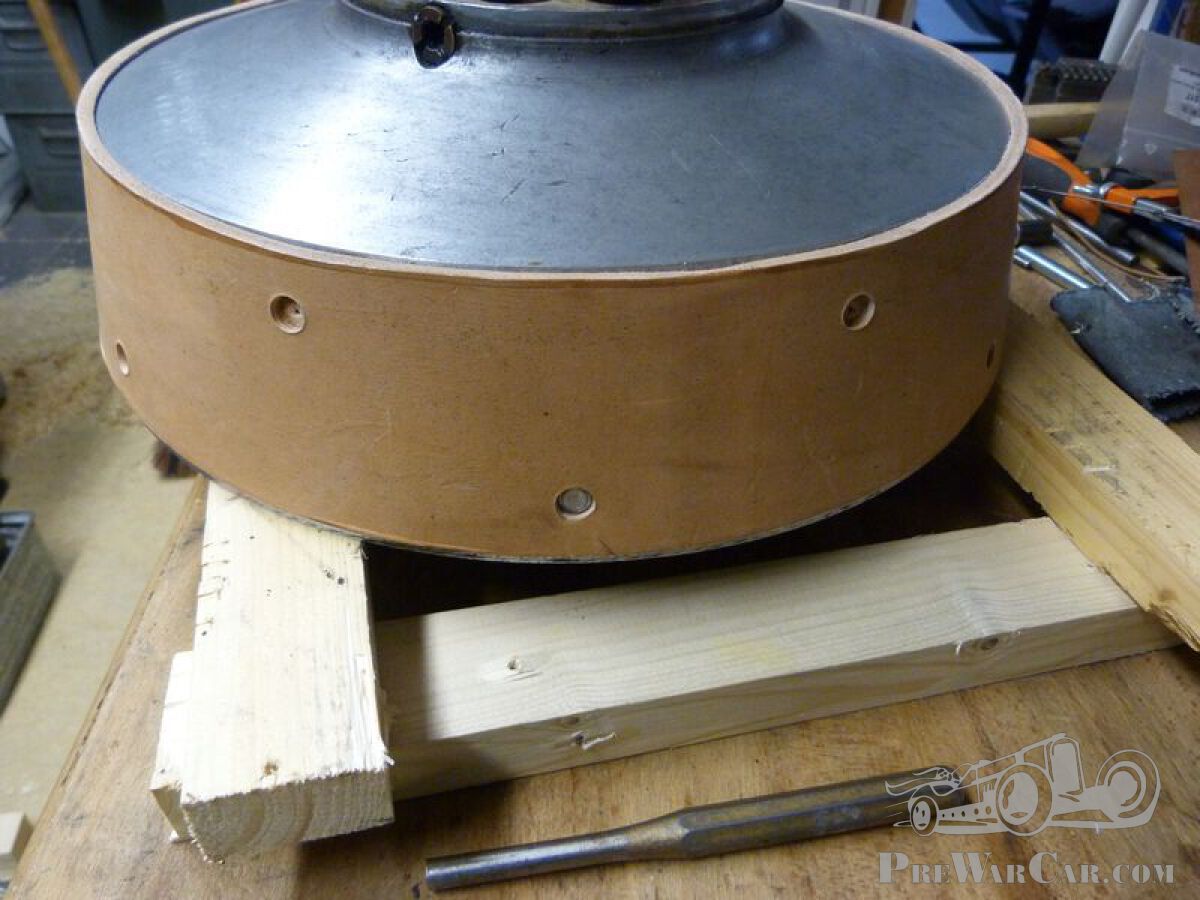
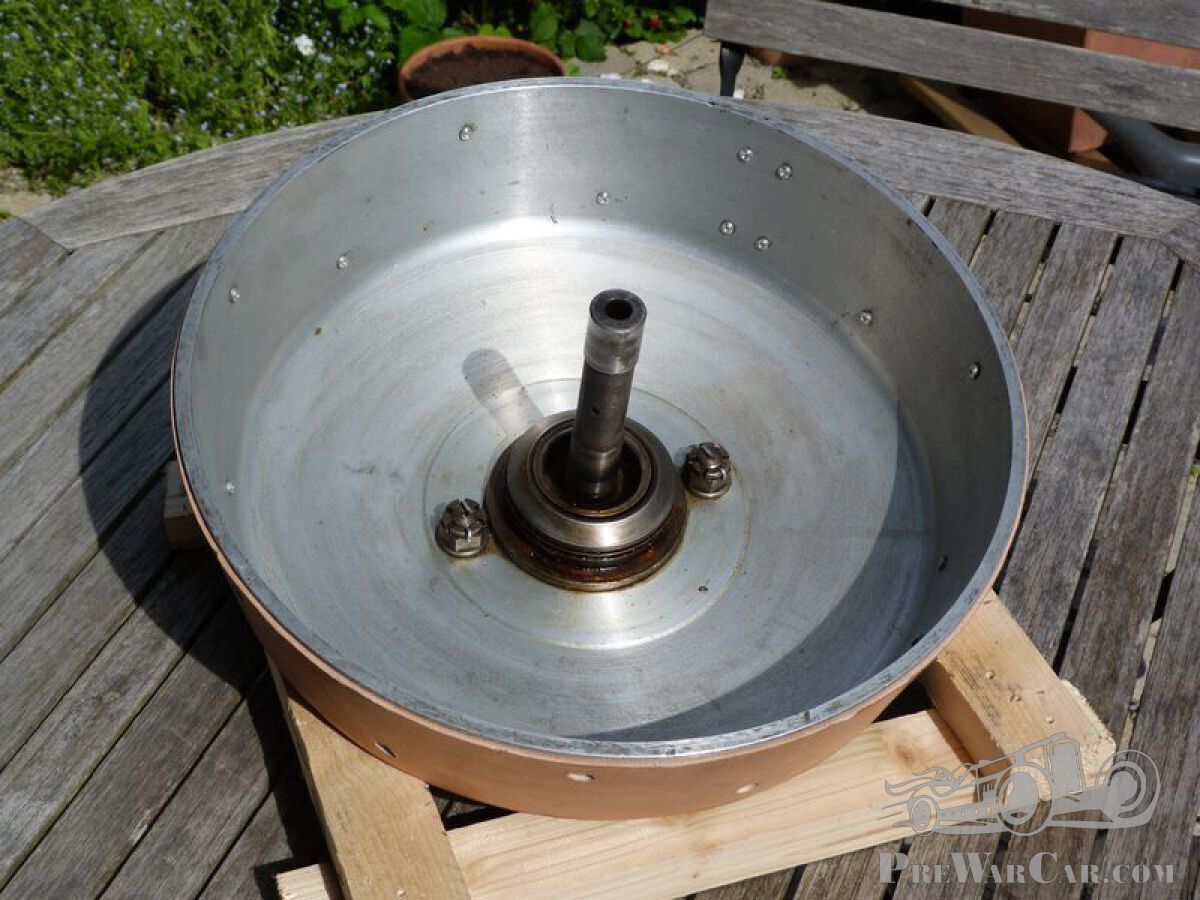
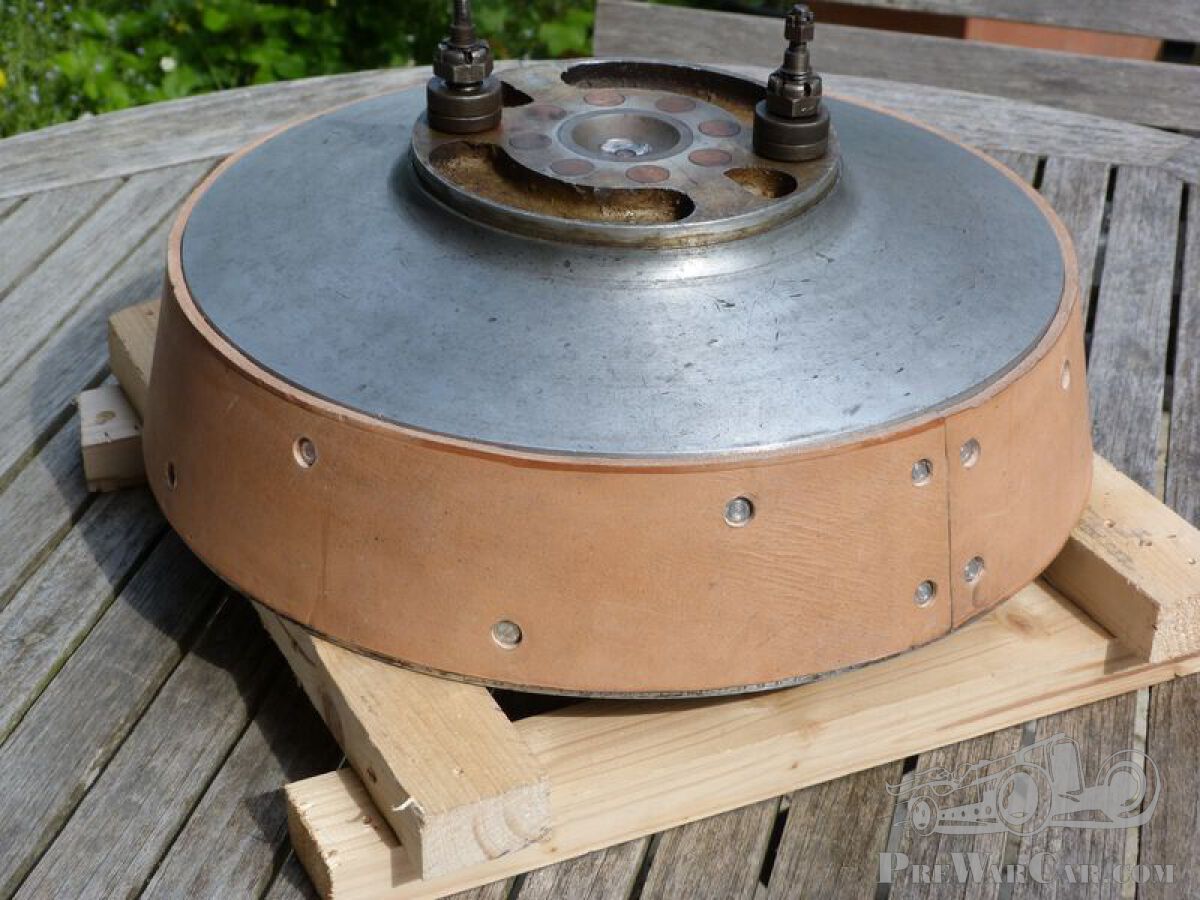
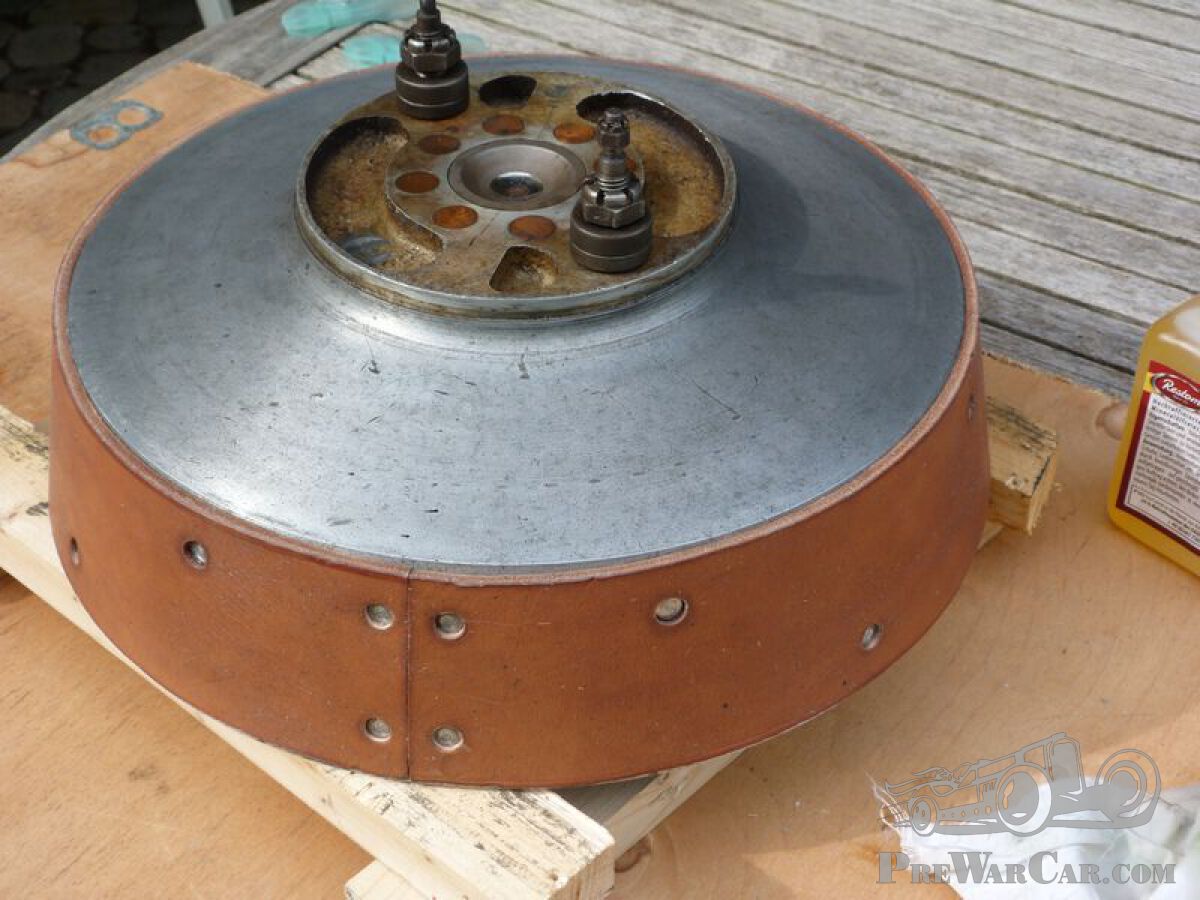
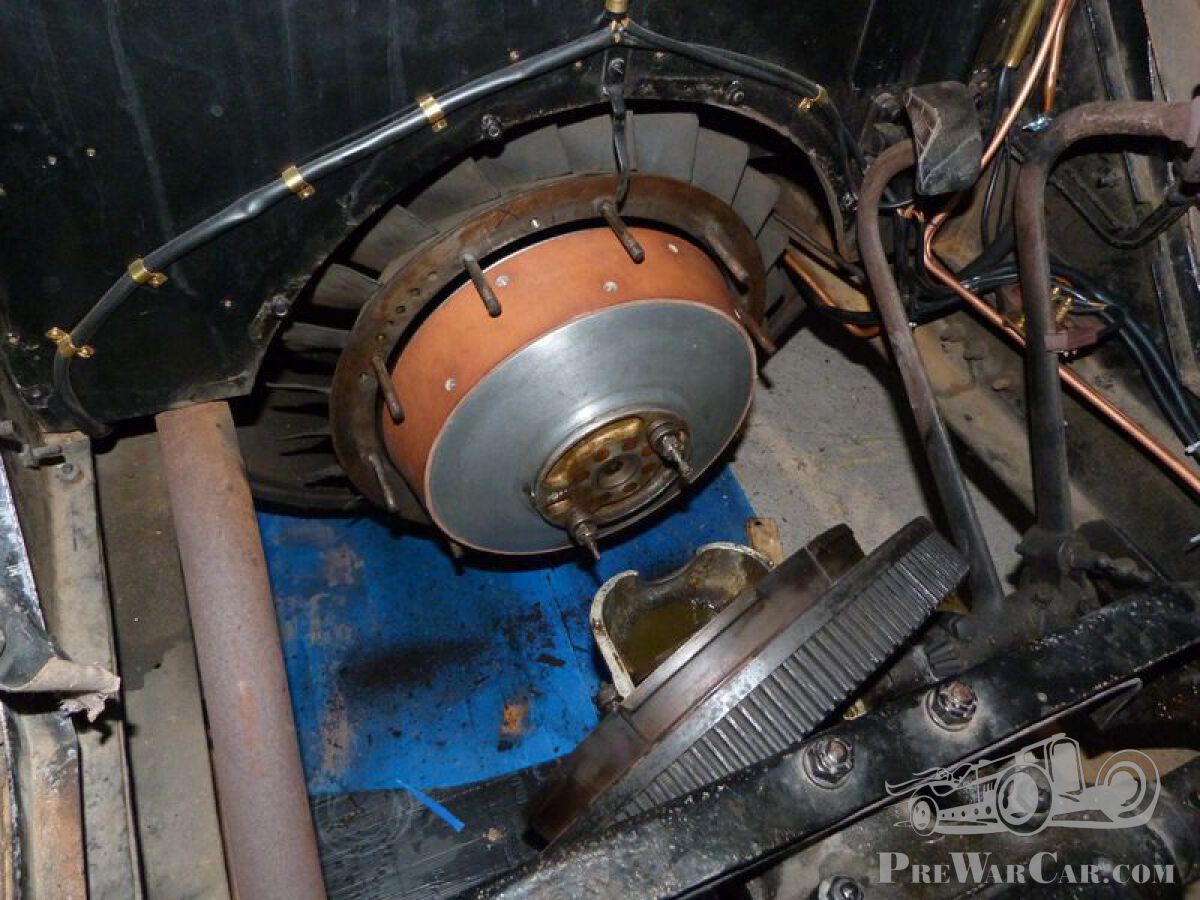
For this job, I have chosen a high-quality modern friction material which is found in excavators, certain marine applications and heavy-duty off-road and mining equipment. The reason for this material is that it has very good wet and dry brake capabilities. Meaning that it will work both when it is dry as new, but also after having suffered many miles behind your non-sealed pre-war crankcase, soaked in oil and grease.
The glue that is used for mounting it is a cold-applied high-temperature high-strength 2-component glue which is especially for glueing metals. I have tried using many different glue types in the past, and this one has given me the best results. Although for a cone clutch it’s not a very difficult application, because 99,9% of the times the clutch will be pressed in the cone and it’s fully seated all the way around. It’s a different story for brake linings.
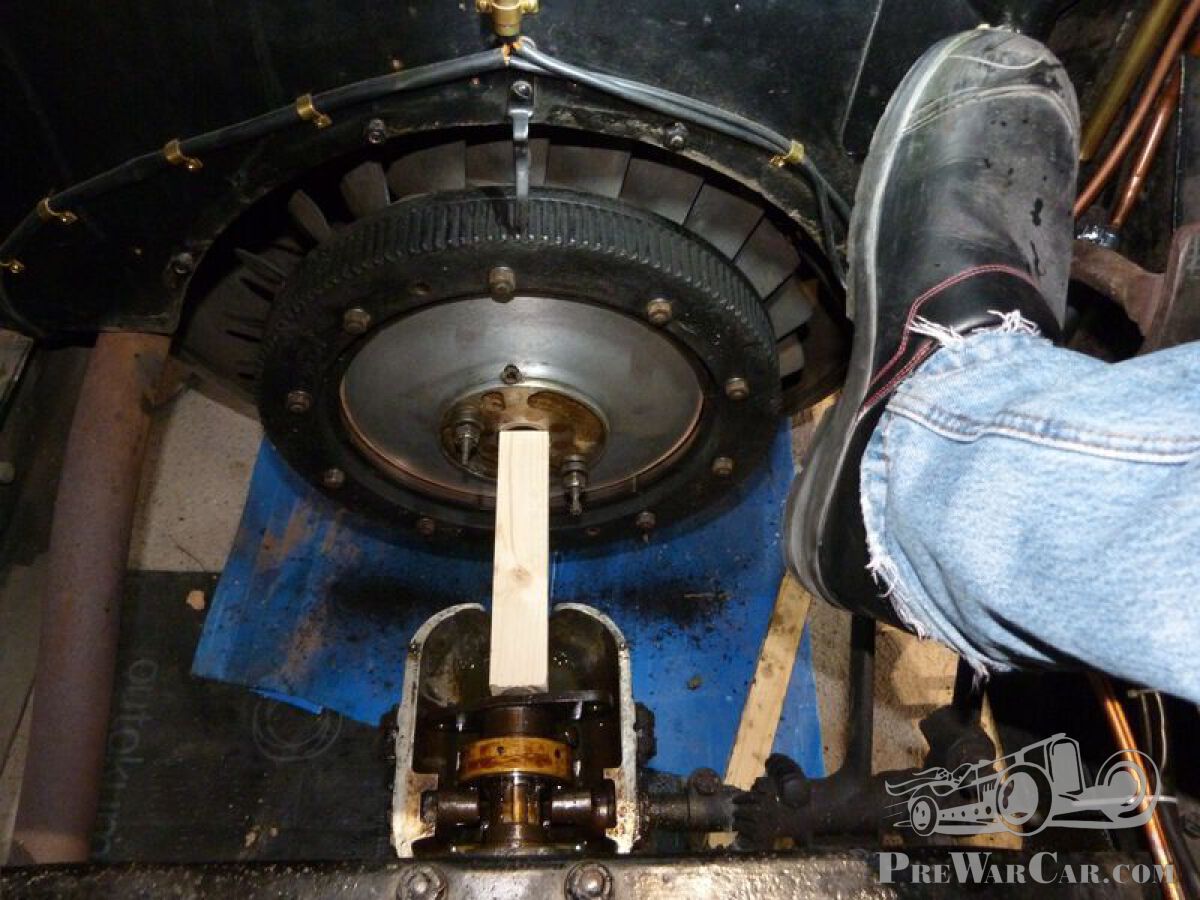
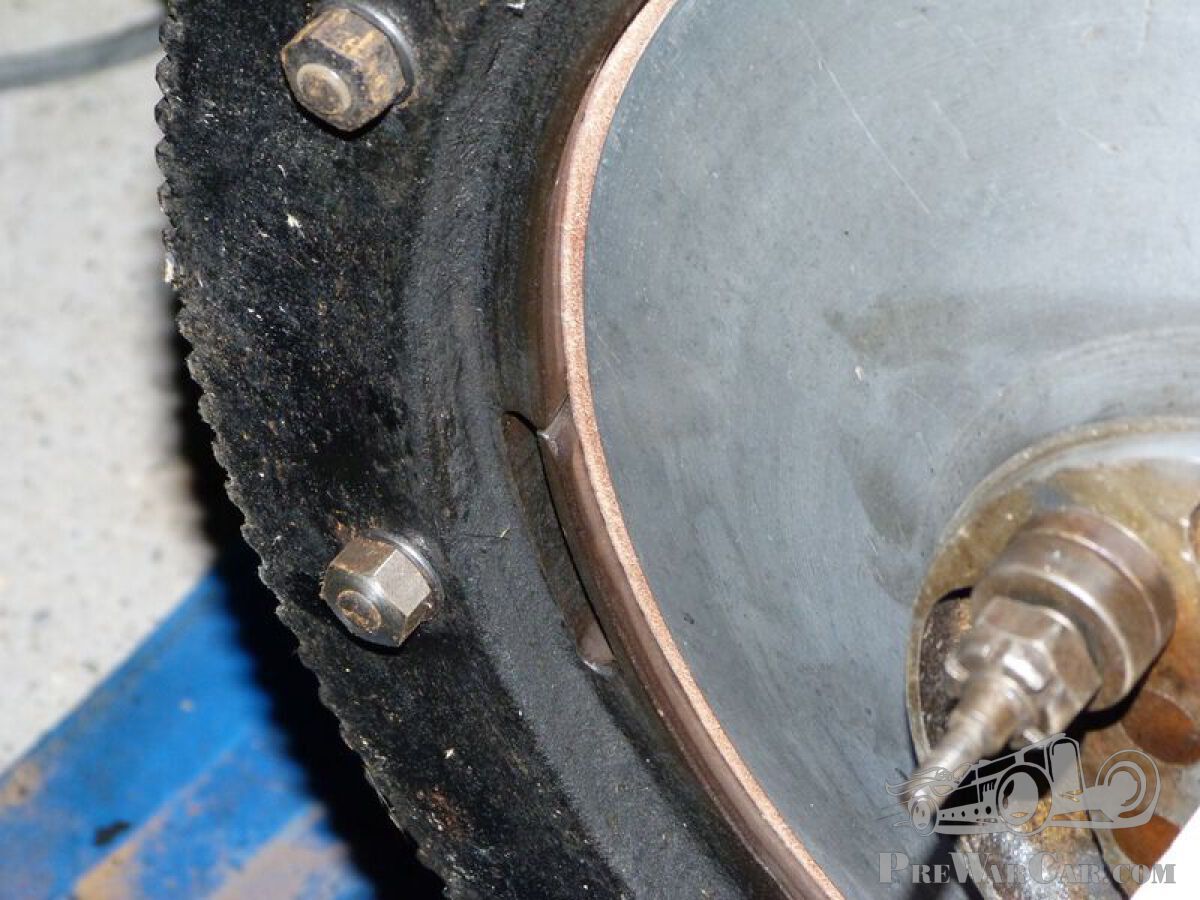
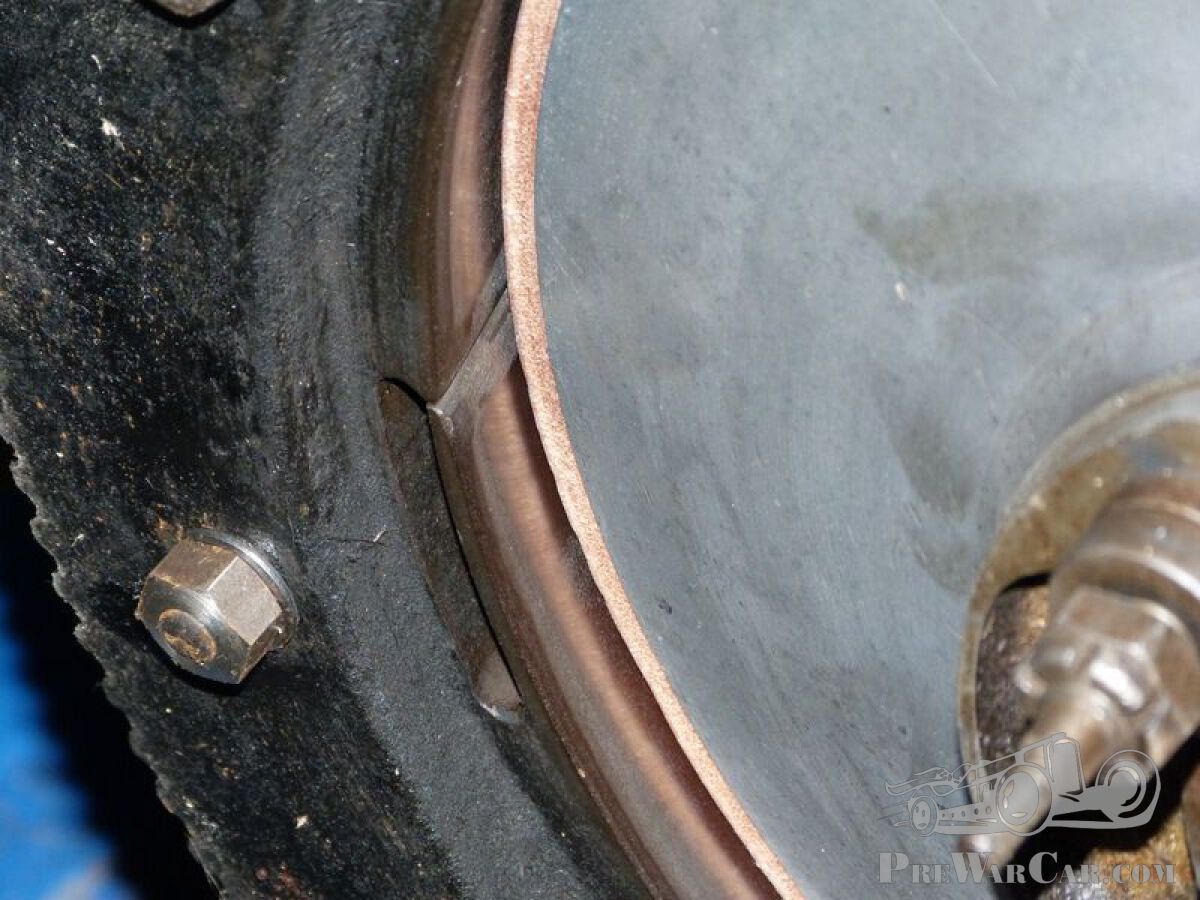
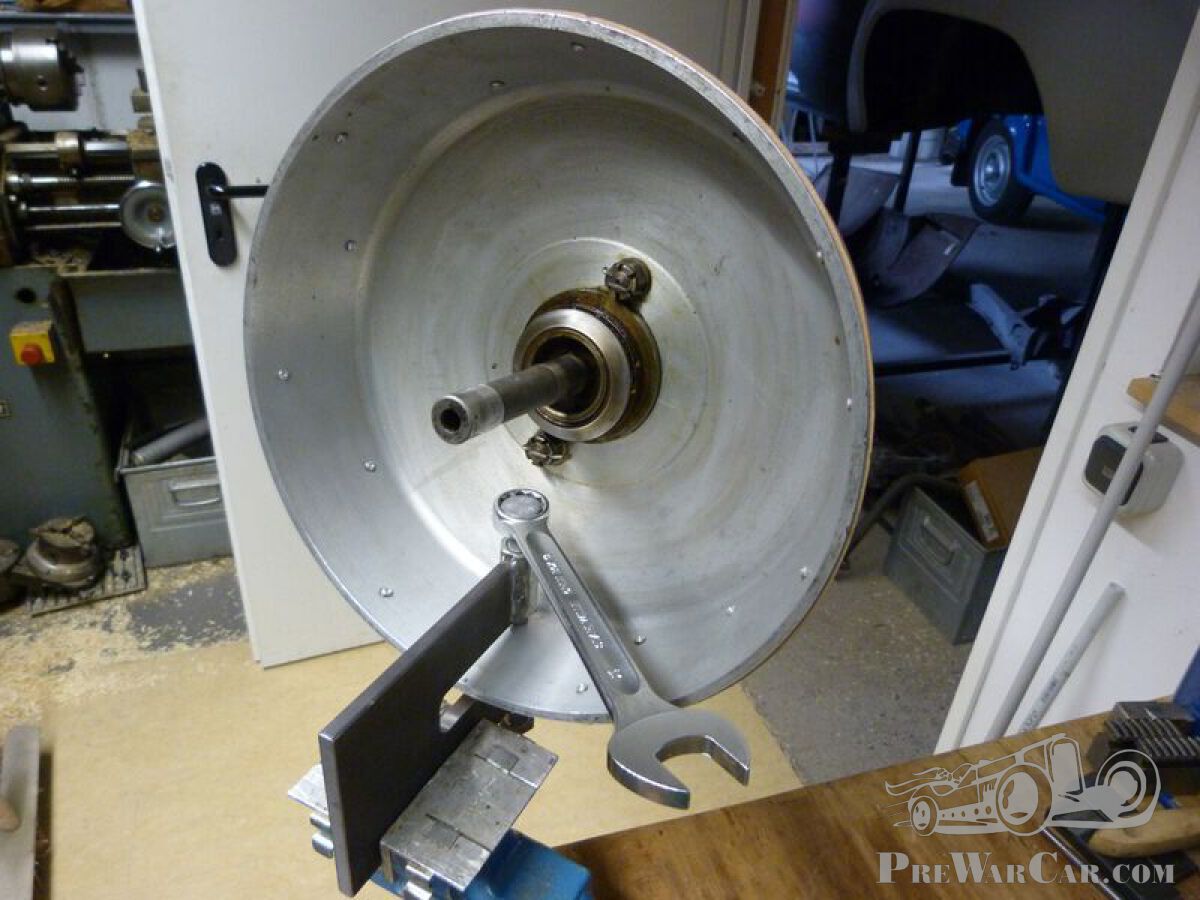
For the story of making this part, I prefer to let the pictures speak for themselves, since the whole story is very self-explanatory and easier to describe from pictures. Please visit my photo album for the complete report via the link
(work, photos & text by Jos van Genugten)
Gepubliceerd:
donderdag mei 2nd, 2024
Facebook
LinkedIn
Twitter
WhatsApp
Email
Copy
Reacties
John
11 Mei 2025, 14:29
From books I have read there are hints of a brake on the male cone clutch wheel to slow it down when the pedal is depressed for meshing gears. How does this work and how can I adjust it? My transmission in my 1916 Studebaker does not shift well, I believe because the shaft going to the transaxle does not slow down quickly enough. Any help would be appreciated.
Lees verder




Steven Donders
25 Augustus 2024, 20:53
The clutch of my 1914 Renault ED failed a couple of months ago. When pressing the clutch pedal some parts of the lining were thrown out of the rotating flywheel and then the clutch blocked, it would not disengage anymore. The lining was completely hardened and had started to crumble, fragments of the lining blocked in between clutch cone and flywheel. I thought that it would be a big issue to repair the clutch but in the end it was quite simple to resolve.
I bought some straight leather transmission belt, 80 m.m. wide, thickness 5 m.m. It was easy to shape it to fit to the cone. Therefore I soaked the belt in water for about 10 minutes and put it in a mould that I had built from scrap wood. After a two-day drying period I put the leather strip around the cone and cut it 12 m.m.—too short—then drilled and countersunk the holes for the rivets. I then riveted both ends of the leather strip to the cone after which the lining could be easily stretched around the cone and had a proper tight fit. After riveting all rivets by means of a screw clamp tool I soaked the lining in "huile de pied de boeuf" to keep the leather smooth.
Reassembly of the clutch was not too complicated and finally everything works properly again, the clutch operates very smooth when moving off and does not slip when fully engaged. Quite satisfied with the result I hope the clutch will work for some decades again...
Lees verder
I bought some straight leather transmission belt, 80 m.m. wide, thickness 5 m.m. It was easy to shape it to fit to the cone. Therefore I soaked the belt in water for about 10 minutes and put it in a mould that I had built from scrap wood. After a two-day drying period I put the leather strip around the cone and cut it 12 m.m.—too short—then drilled and countersunk the holes for the rivets. I then riveted both ends of the leather strip to the cone after which the lining could be easily stretched around the cone and had a proper tight fit. After riveting all rivets by means of a screw clamp tool I soaked the lining in "huile de pied de boeuf" to keep the leather smooth.
Reassembly of the clutch was not too complicated and finally everything works properly again, the clutch operates very smooth when moving off and does not slip when fully engaged. Quite satisfied with the result I hope the clutch will work for some decades again...


Theo Biekens
04 Mei 2024, 17:44
For many years I have been involved with veteran cars, mostly pre-1915. On all the cars the original leather lining for the clutch has been replaced by a modern brake lining, the woven type. The lining is glued but for the period look it is also riveted. On one car, a 1910 Darracq, the clutch makes the car jump after it has not been used for a long time, so I put a little engine oil, SAE 30, on the lining and the problem is solved. If you drive your cars a lot of miles I would only recommend modern clutch lining instead of leather .
Lees verder
Fred Veenschoten
03 Mei 2024, 14:14
You can form brake lining material by heating it up with a propane torch. You can then bend it and clamp it to a form and let it cool then glue it. I have used JB Weld here in the USA.
Lees verder
Martin
28 Juli 2024, 18:40
Thank you for the very useful information. J-B Weld is good stuff. I just patched a two-inch crack in a Clyno cylinder head water jacket with it, and made a good repair.
Lees verder
Martin
10 Maart 2025, 23:16
The Clyno has a Ferodo clutch lining and it is far too fierce, violently bites causing transmission judder. A liberal dusting with talcum powder makes it work properly but disappears after 10 uses. The Bentley website reckons a little molybdenum disulfide grease works. I've not tried it yet. February, 1971, Beaded Wheels magazine recommends chrome leather and neatsfoot oil and describes how to fit it.
My advice: don't use Ferodo brake linings.
Lees verder
My advice: don't use Ferodo brake linings.
Jean Marie Obermeyer
02 Mei 2024, 21:01
I need to know if there is a type of leather used for the cone clutch. Also, is it pre-treated in some way other than with neatsfoot oil.
Lees verder
Barry Fletcher
11 Juni 2020, 21:37
Hello
I have been searching all over the internet trying to find some info on Cone Clutches". I need a system for an old mechanical brake press that was converted to a pneumatic system and I want to restore it back to something similar. The machine I have is a "Connecticut 24 ton " made in the 60's and I can't find any info on the press, so I'm trying to go another route and maybe find someone who knows about clutch systems and maybe I can adapt something from an old car or from something else. Can you help me ?
Regards...Barry Fletcher
Lees verder
I have been searching all over the internet trying to find some info on Cone Clutches". I need a system for an old mechanical brake press that was converted to a pneumatic system and I want to restore it back to something similar. The machine I have is a "Connecticut 24 ton " made in the 60's and I can't find any info on the press, so I'm trying to go another route and maybe find someone who knows about clutch systems and maybe I can adapt something from an old car or from something else. Can you help me ?
Regards...Barry Fletcher
Onbekend
09 Juni 2016, 13:28
Jos, interesting topic. What is the name of this oil and grease resistant friction material that you mention?
Lees verder
Onbekend
09 Juni 2016, 07:18
Thanks for all the comments. It is difficult to say that any modern material is more or less flexible than a leather material since there are as many friction material types as you can wish for. This material is rather flexible and springy. Much more than the removed material from this cone clutch.
I don't have the experience that this repair leads to jerky clutch engagement, I hope the owner of the car can comment on this once the car has been put back together (it's still in restoration at the moment).
Lees verder
I don't have the experience that this repair leads to jerky clutch engagement, I hope the owner of the car can comment on this once the car has been put back together (it's still in restoration at the moment).
Onbekend
08 Juni 2016, 16:28
Nicely set rivets, lining appears to have "metallic" content, I am surprised it is flexible.
As late as 1988(?), my hometown(Peekskill, NY), a "Brake and Clutch Shop" was still in a dilapedated building, the owner of about 80 years did all the work! I loved going there, and he also stocked BEARINGS for ANYTHING.
I recall peeking into his workshop area that took up half the building(to the side), specialized (hand)machines to do all that neat stuff real fast.
Once, I needed to reline front brake pads on a 1930ish Harley Davidson, wanted something better than norm.
My old friend(?) stepped back from the front counter to the high dusty shelves in back, pulled down a coiled, heavily metallic mesh combination of brake material. I don't think I will ever use those pads, too pretty.
Lees verder
As late as 1988(?), my hometown(Peekskill, NY), a "Brake and Clutch Shop" was still in a dilapedated building, the owner of about 80 years did all the work! I loved going there, and he also stocked BEARINGS for ANYTHING.
I recall peeking into his workshop area that took up half the building(to the side), specialized (hand)machines to do all that neat stuff real fast.
Once, I needed to reline front brake pads on a 1930ish Harley Davidson, wanted something better than norm.
My old friend(?) stepped back from the front counter to the high dusty shelves in back, pulled down a coiled, heavily metallic mesh combination of brake material. I don't think I will ever use those pads, too pretty.
Onbekend
08 Juni 2016, 10:42
One problem with modern friction linings is that they are too stiff. Most cone clutches have spring under the lining to slightly distort and raise bumps in the lining material to give ease the clutch engagement. The lining will compress fully when completely engaged so there is complete contact with the flywheel. If the lining will not bulge, the clutch can be very fierce and difficult to engage smoothly. I only use leather when I reline cone clutches. Leather lasted for many years in the original installation and new leather will last indefinitely.
Lees verder
Onbekend
08 Juni 2016, 08:53
Alvis seem to have originally used leather for the cone clutch lining on the early cars but certainly by 1924 were using a woven fabric lining material. When I rebuilt my 1924 car in 1982 the original lining was still serviceable and is still good after over 55,000 miles. I suppose they do not wear much as one does not slip the clutch much when starting. Fierceness is the problem not slip although with the Alvis the cone can retain water after going through a flood and then slip can occur until the clutch has dried out. I am sure your lining will grip fine.
Lees verder
Onbekend
08 Juni 2016, 04:14
What is the material... and the glue for that matter? I've heard all sorts of mixed reviews of non-leather substitutes but the original lining removed here doesn't look like leather. I wonder what it was.
Lees verder