Het wereldwijde magazine en verkoopplatform voor liefhebbers van klassieke auto’s, door liefhebbers.
Het wereldwijde magazine en verkoopplatform voor liefhebbers van klassieke auto’s, door liefhebbers.


Filter
Maak een keuze
- Auto's
-
Merk >>
-
Bouwjaar >>
-
-
Categorie >>
- Motorfietsen
- Onderdelen
-
Automerk >>
-
Fabrikant >>
-
Categorie >>
- Fietsen
-
Bouwjaar >>
-
Landen


De zoete inval op wielen: Herr von Schlechtleithner en de Oostenrijkse snoepkaravaan


De foto van die indrukwekkende camper, die hier onlangs te zien was, vertelde een prachtig verhaal. Het ging om het succes van een rijke Amerikaanse zakenman die het voertuig in 1915 gebruikte om met zijn gezin en een deel van zijn personeel een rondreis door de Verenigde Staten te maken. Het vervoermiddel dat we hier vandaag zien, lijkt qua concept vergelijkbaar, maar het verhaal dat eraan verbonden is, zou van een heel andere orde zijn.
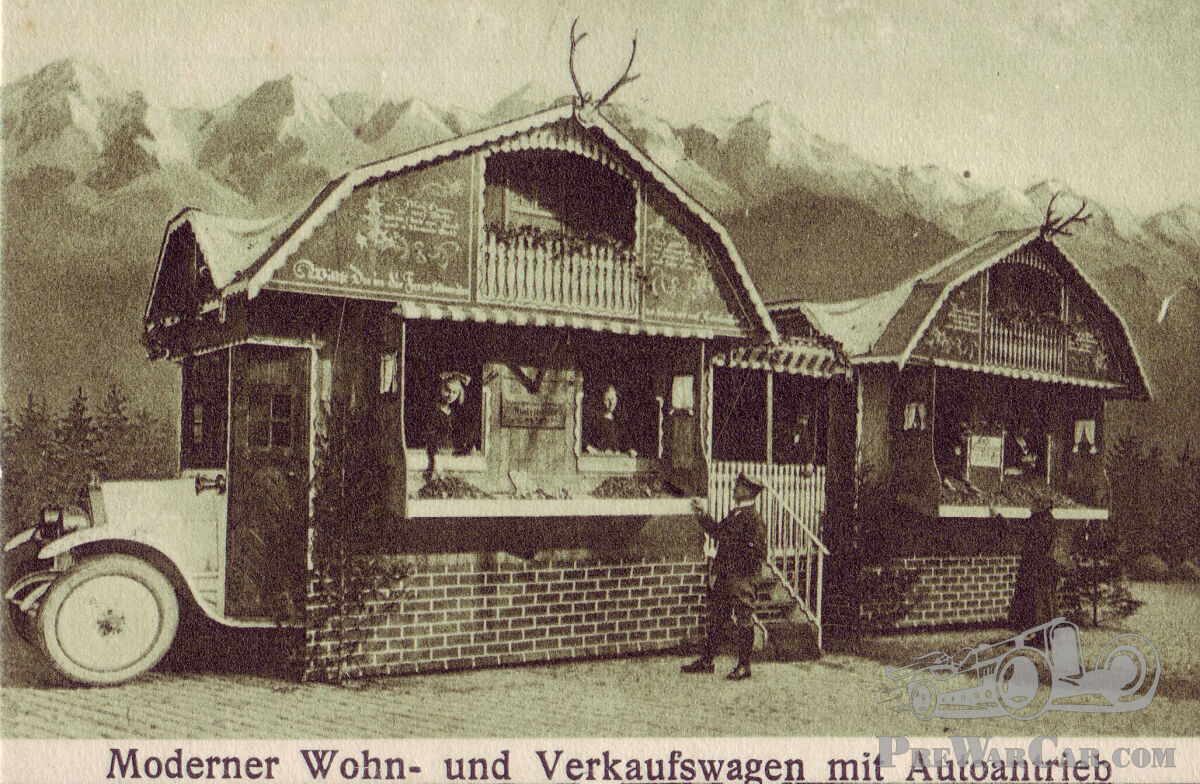
Deze zogenaamde landjacht is niet alleen een Europese variant uit Oostenrijk, maar kent ook een totaal ander achtergrondverhaal — eerder eentje van armoede dan van rijkdom. Het originele bijschrift luidt: “Foto toont de reizende snoepwinkel van Franz von Schlechtleithner, een verarmde Oostenrijkse edelman die het leven in zijn eigen land ondraaglijk vond en besloot om voor zichzelf en zijn gezin van drie dit kleine huisje annex winkeltje te bouwen, rijdend op zes wielen. Hij is van plan door Europa te reizen met de wagen, en onderweg snoep te verkopen. De winkel bevindt zich in de afkoppelbare aanhanger.”
De foto zou von Schlechtleithner tonen naast zijn caravan-snoepwinkel, en is gedateerd op 1922. Zoals je merkt, hebben we nog geen definitief oordeel kunnen vellen over de betrouwbaarheid van dit verhaal. De reden daarvoor is simpel: we hebben geen andere informatie kunnen vinden over de familie von Schlechtleithner — met of zonder “von”, of met of zonder de derde “h” in de achternaam. Maar toch lijkt er een verhaal in deze foto te schuilen dat het waard is om verteld te worden. Wie weet?
Tekst: Jeroen Booij
Foto: Underwood & Underwood / Library of Congress
Gepubliceerd:
vrijdag maart 28th, 2025
Facebook
LinkedIn
Twitter
WhatsApp
Email
Copy
Reacties
David Grimstead
30 Maart 2025, 22:48


Laurent Zoller
28 Maart 2025, 21:14
I have just found some other interesting documents:
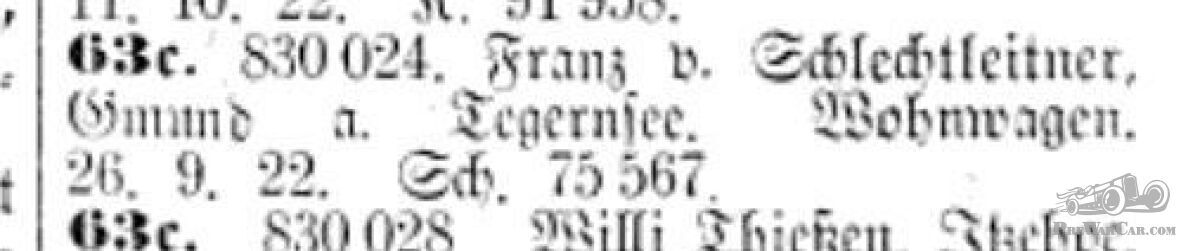
- a patent application by Schlechtleitner dated September 26th, 1922, concerning this vehicle
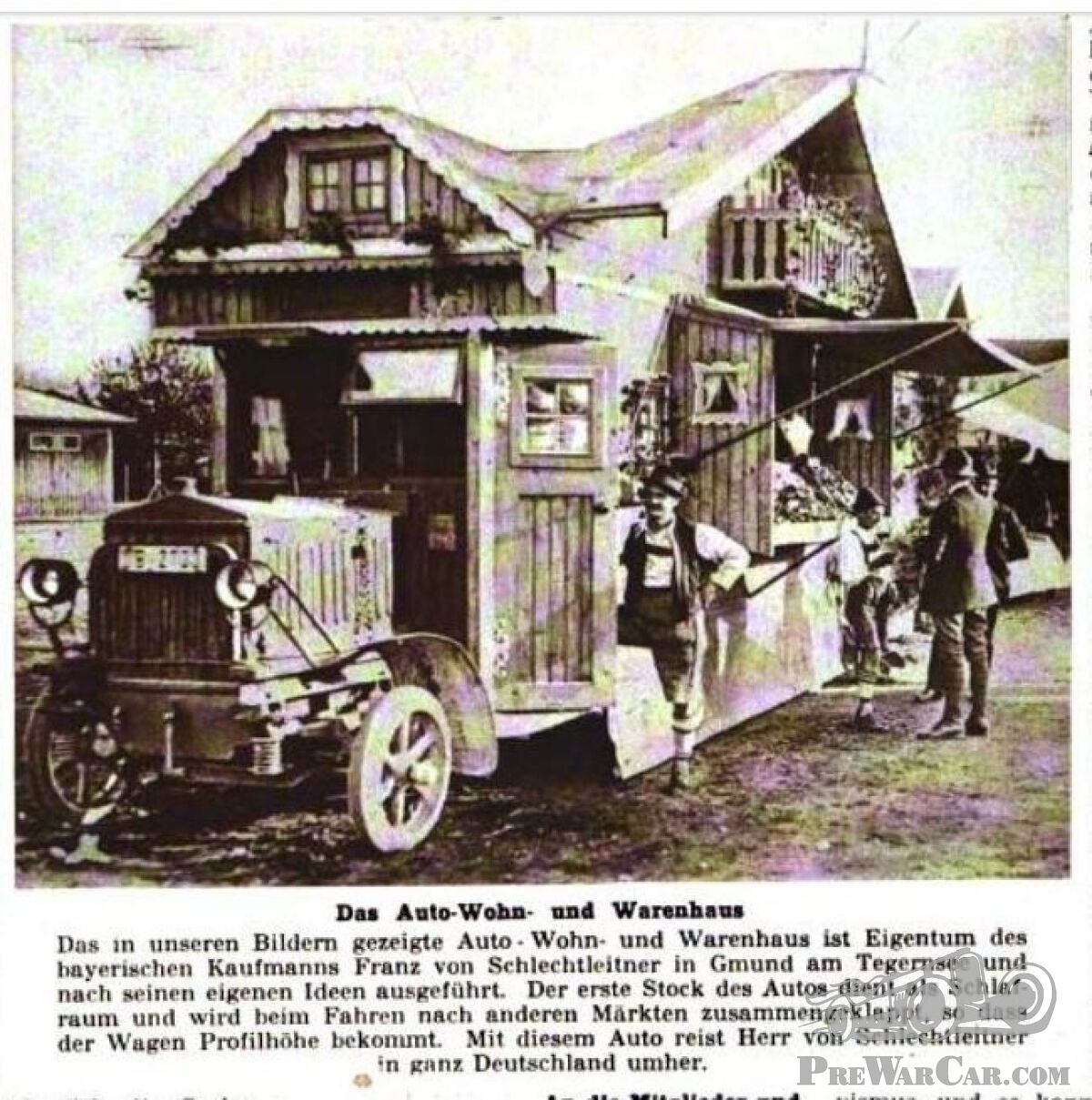
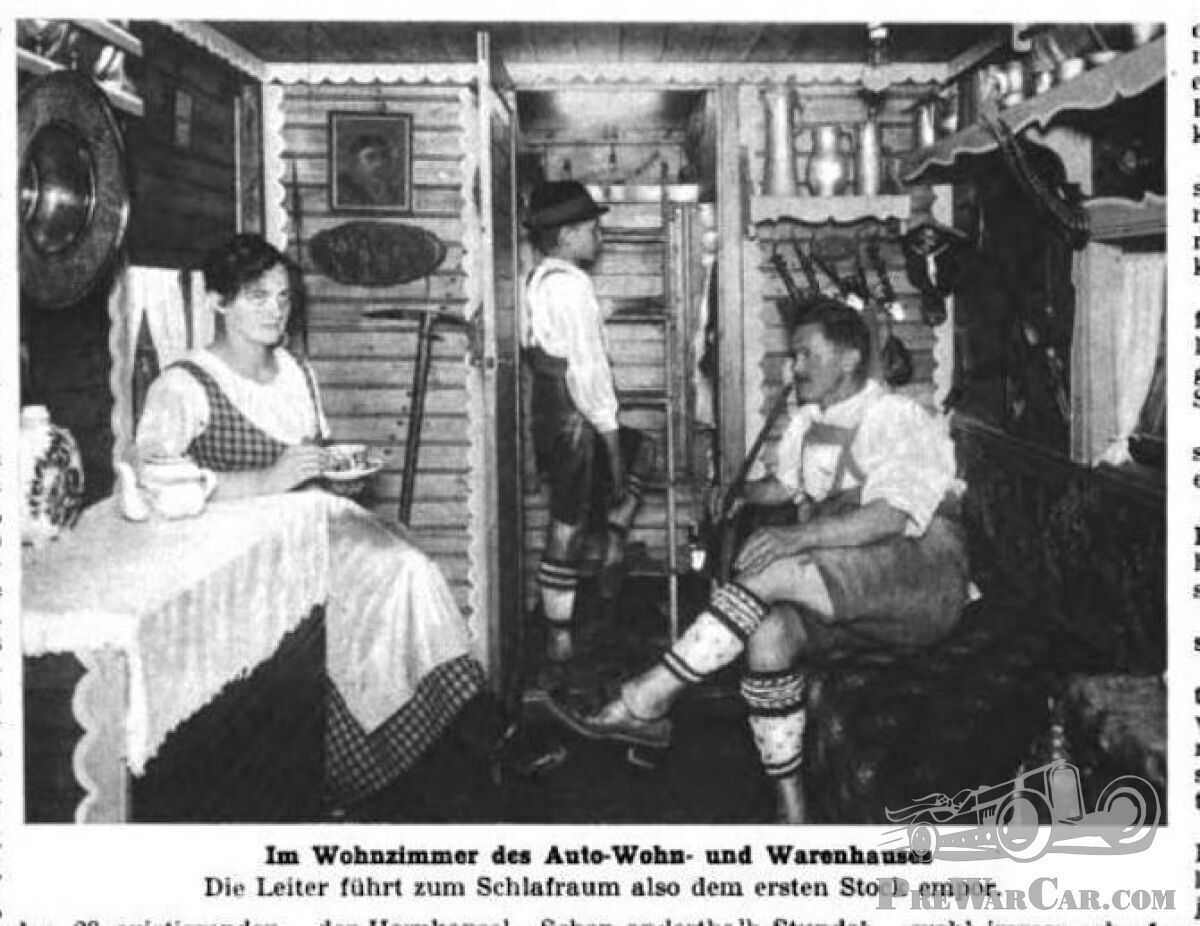
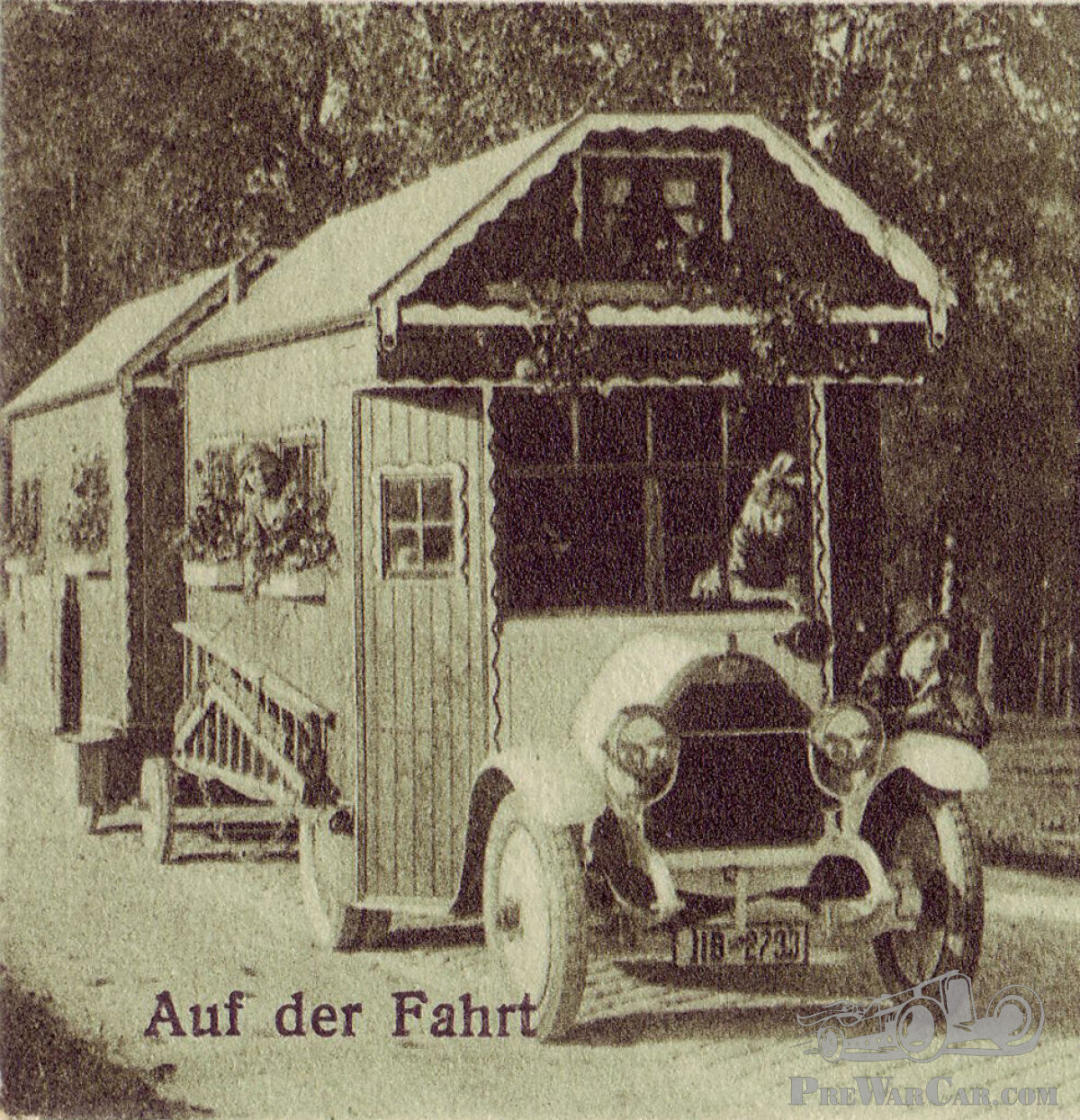
- two photos from the Deutsch Amerika magazine of October 21st, 1922. We learn that Franz von Schlechtleileitner is a trader in the town of Gmund am Tergernsee and that he goes from market to market with his vehicle .
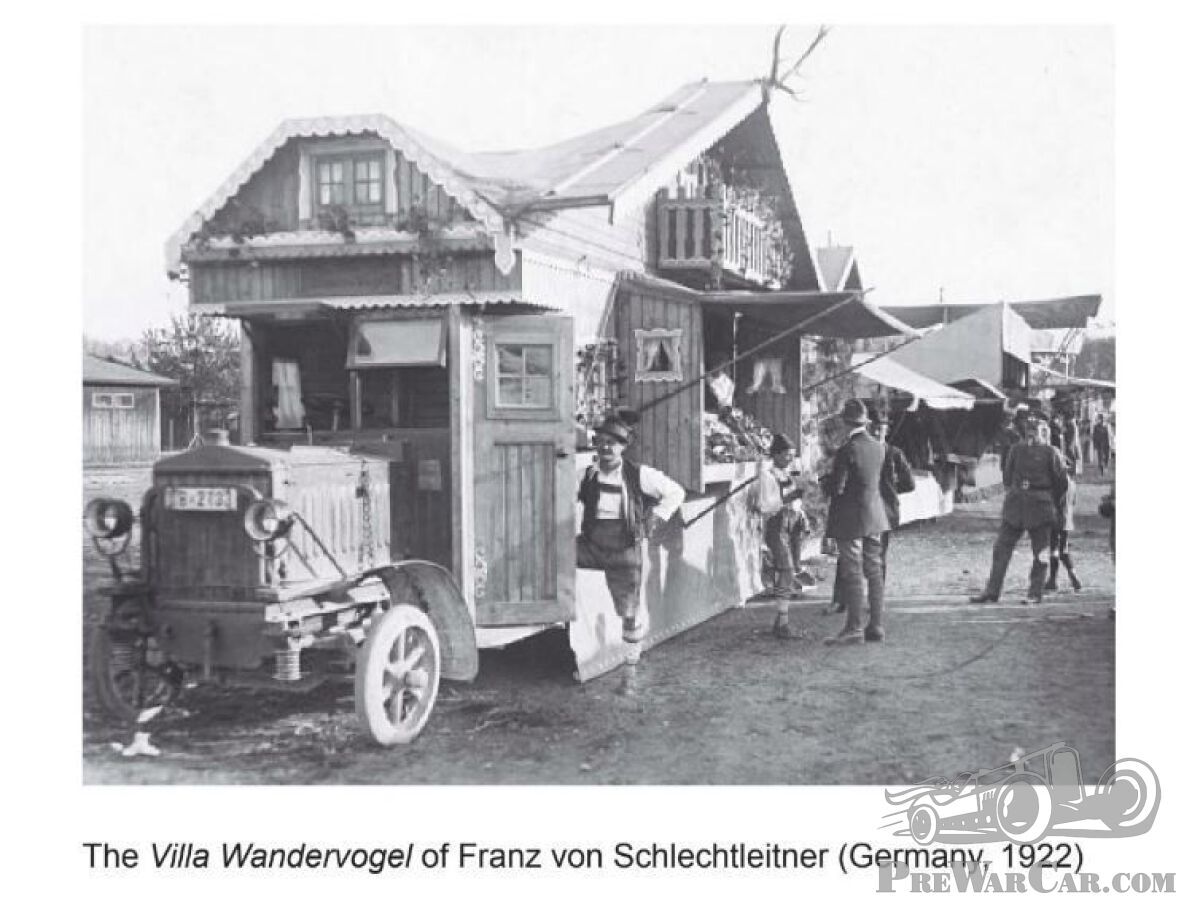
- a photo of the Wandervogel from 1922 (nickname of the vehicle) published in the book "Recreational vehicles."
-------------------------
Je viens de trouver d'autres documents intéressants
- un dépot de brevet de Schlechtleitner du 26 septembre 1922 concernant ce véhicule
- deux photos de la revue Deutsch Amerika du 21 octobre 1922. On apprend que Franz von Schlechtleileitner est commerçant dans la ville de Gmund am Tergernsee et qu'il va de marché en marché avec son véhicule .
-une photo du Wandervogel de 1922 (surnom du véhicule) parue dans le livre "recreational vehicles.
Lees verder
- a patent application by Schlechtleitner dated September 26th, 1922, concerning this vehicle
- two photos from the Deutsch Amerika magazine of October 21st, 1922. We learn that Franz von Schlechtleileitner is a trader in the town of Gmund am Tergernsee and that he goes from market to market with his vehicle .
- a photo of the Wandervogel from 1922 (nickname of the vehicle) published in the book "Recreational vehicles."
-------------------------
Je viens de trouver d'autres documents intéressants
- un dépot de brevet de Schlechtleitner du 26 septembre 1922 concernant ce véhicule
- deux photos de la revue Deutsch Amerika du 21 octobre 1922. On apprend que Franz von Schlechtleileitner est commerçant dans la ville de Gmund am Tergernsee et qu'il va de marché en marché avec son véhicule .
-une photo du Wandervogel de 1922 (surnom du véhicule) parue dans le livre "recreational vehicles.


Hergen Deuter
28 Maart 2025, 16:45
In fact, Franz von Schlechtleitner, apparently without a third h, seems to have left few traces except for a second sales van, also dated 1922, which is depicted on Kulturgut-Volksfest.de.
Lees verder


Laurent Zoller
28 Maart 2025, 14:16
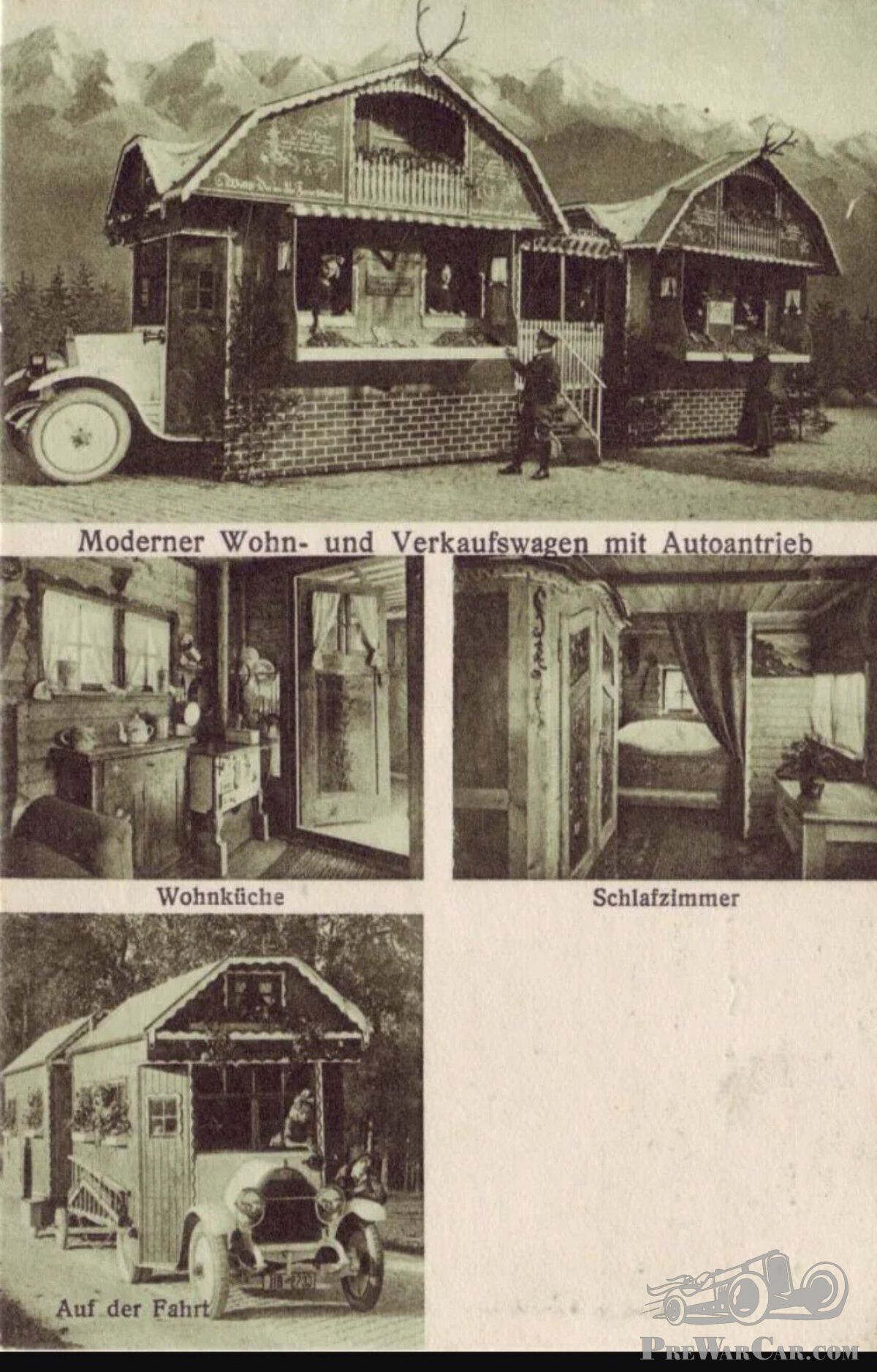
Here are two other documents dated 1922 concerning this vehicle. The larger one comes from the Munich Museum.
--------------------------------------------------------------
Voici deux autres documents datés de 1922 concernant ce véhicule . Le plus grand provient du musée de Munich.
Lees verder
--------------------------------------------------------------
Voici deux autres documents datés de 1922 concernant ce véhicule . Le plus grand provient du musée de Munich.
Michael Walz
28 Maart 2025, 12:44
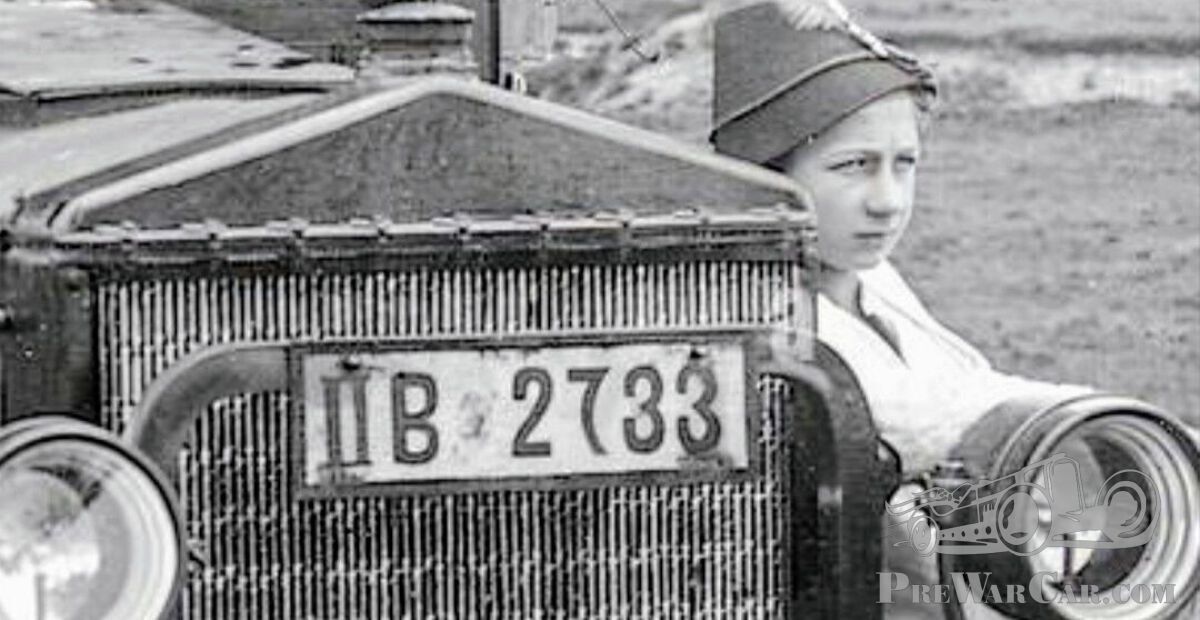
The number-blade is from germany on the picture. IIB is for Kreis Oberbayern: https://de.wikipedia.org/wiki/Liste_der_deutschen_Kfz-Kennzeichen_(historisch)
Lees verder
Stanislav Kirilets
28 Maart 2025, 01:13
Austrian? I always thought this was a Büssing from and in Germany.
Lees verder
“The world’s only travelling candy store. Austrian Nobleman, Franz von Schlechtleitner of Innsbruck, unable to make a living in his own country, has started on a tour of Europe, under the most remarkable auspices. Being an expert automobilist, with the remnant of his family fortune, he has had a unique motor van built, taking as a model a picturesque Tyrolese cottage. There is a porch on the rear, curtains on the tiny windows and real flowers before them. The interior is divided in a parlor and kitchen, while the bedrooms are upstairs on the second floor. A small trailer attached holds the goods and provisions. By means of a few additional boards, carried on the sides and roof, the van is quickly converted into its real purpose, that of a candy shop, Herr Schlechtleitner and his wife making in the kitchen delicious sweet-meats. In this strange conveyance, accompanied by their three children, they are selling candy in the towns and villages they visit and making an excellent living.”
The story was still of interest in the U.S.A. in May, 1925, by when the Soda Fountain magazine claimed the truck was a Ford. Unlikely, but von Schlechtleitner’s family was reported to be still on the road in the December 3rd, 1927, edition of Deutsch-Amerika, when their candy-wagon was on that shorter chassis with disc wheels, pneumatic tyres and towing a four-wheel trailer. The picture was captioned: “The nobility of labour: Franz von Schlechtleitner, an Austrian nobleman in Innsbruck, who lost all his fortune due to the hardship after the war, had built a mobile confectionery stall and apartment and is now moving with this as a modern nomad from place to place. In this way he feeds himself, his wife, a son and two daughters.”
As to von Schlechtleitner patents, this is from the December 8th, 1931, Commercial Motor magazine of Great Britain: “A Coupling which Increases Road Grip: A coupling for trailers described in patent No. 359,557, by F. von Schlechtleitner, 23, Marktstrasse, Munich, is intended to produce a lifting effect of the front of the tractor, thus increasing the pressure of its rear wheels on the road and giving it greater tractive effect. The rear springs of the tractor are so formed that the stronger the pull on the drawbar, the greater the load on the rear wheels of the tractor. We should imagine that if this principle were carried too far it might result in the tractor rearing up and falling on its driver; cases of the kind have been known, and to avoid it the connection of the drawbar has been carried as low as possible.”