Het wereldwijde magazine en verkoopplatform voor liefhebbers van klassieke auto’s, door liefhebbers.
Het wereldwijde magazine en verkoopplatform voor liefhebbers van klassieke auto’s, door liefhebbers.


Filter
Maak een keuze
- Auto's
-
Merk >>
-
Bouwjaar >>
-
-
Categorie >>
- Motorfietsen
- Onderdelen
-
Automerk >>
-
Fabrikant >>
-
Categorie >>
- Fietsen
-
Bouwjaar >>
-
Landen


The Deauville tragedy
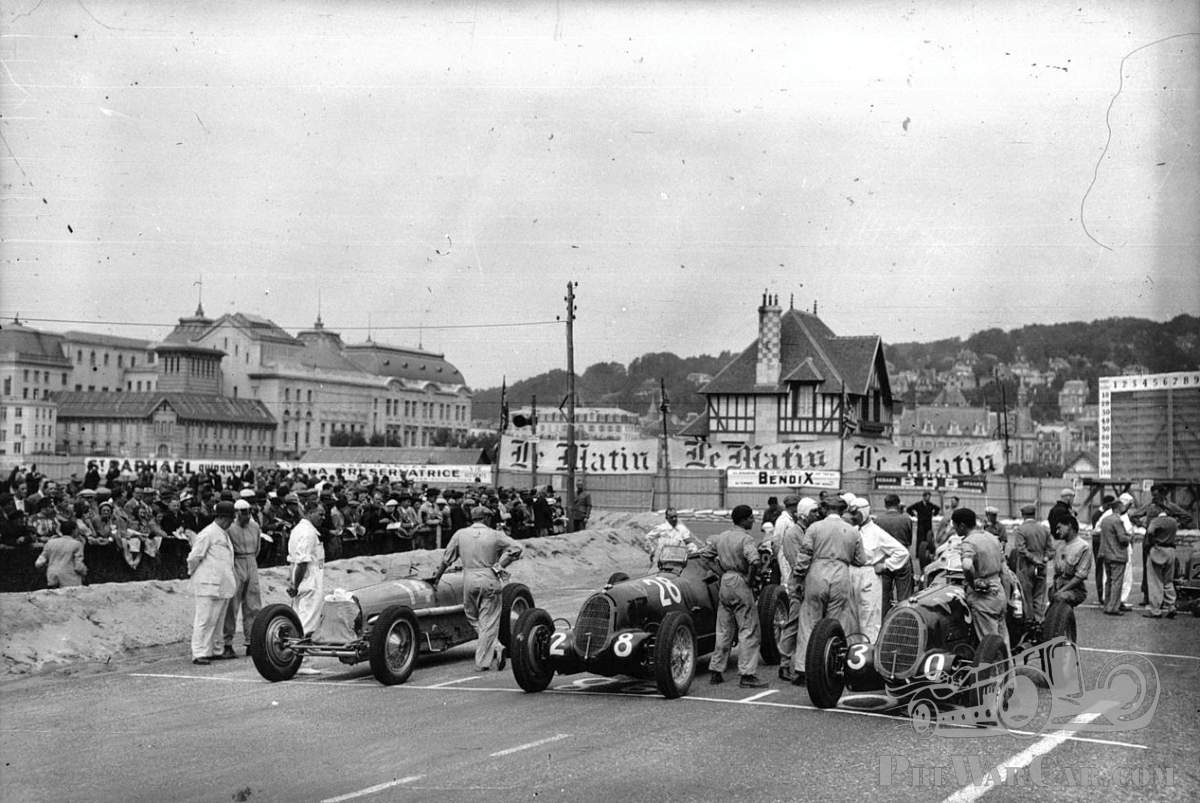
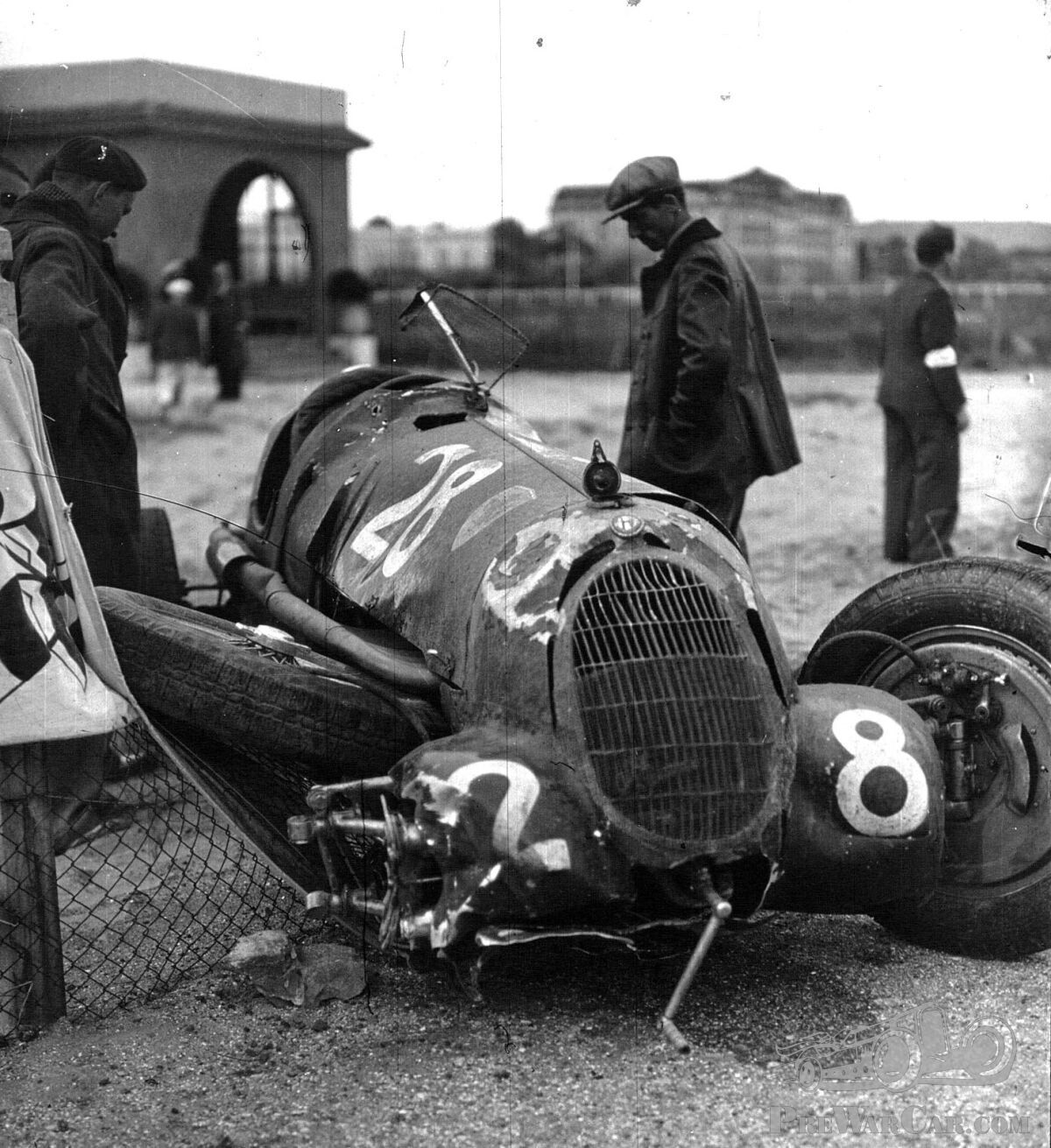


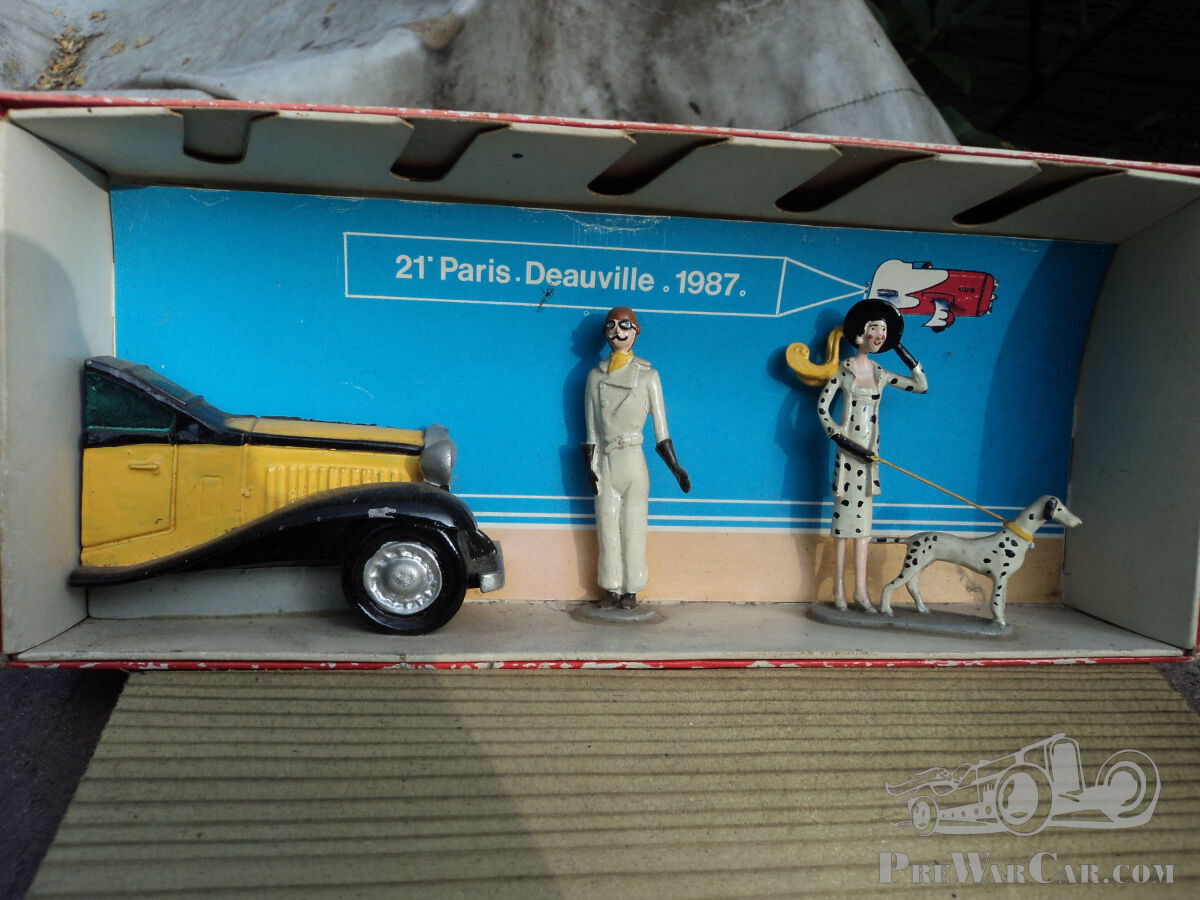
Pre-war Grand Prix races have been organised at some places that would raise an eyebrow today — from small tracks in rural Sweden or France to street circuits in Spain or Estonia to purpose-built tracks that weren’t designed particularly well and were abandoned soon after their opening. The 1936 GP of Deauville fits this latter category but is a race that often seems to have been overlooked. But perhaps there are reasons for this. It was a Grand Prix organised for prestige by investors and sponsors — among them industrialist Armand Esders, who famously owned a Bugatti Type 41 Royale. But things went very wrong.
Deauville was, and maybe still is, an upmarket beach resort on the French west coast. Back in the mid-1930s, it was felt it could do with some new action and a team of local entrepreneurs dreamt up an international Grand Prix in the fashion of Monaco. They also managed to get the municipality interested as they were keen to put the town on the map. A circuit was laid out along the Boulevard Eugène Cornuché, passing the casino and grand villas, and back along the seafront. The track, 3.712 meters long, was opened by Ettore Bugatti himself, driving a Royale (the Esders car?). The route was narrow in places, with some very sharp corners, and reputedly several of the drivers complained about it.
On race day, 19 July, Bugatti was there with two T59s for works drivers Robert Benoist and Jean-Pierre Wimille, while Scuderia Ferrari sent over two Alfa Romeos 8Cs to be raced by Giuseppe Farina and René Dreyfus. Other privately entered Alfa Romeos were to be raced by José de Villapadierna of Spain, Raymond Sommer of France plus Austin Dobson and Charles Martin from the UK. Other participants included another Bugatti T51, two Maserati 8CMs and an ERA Type B.
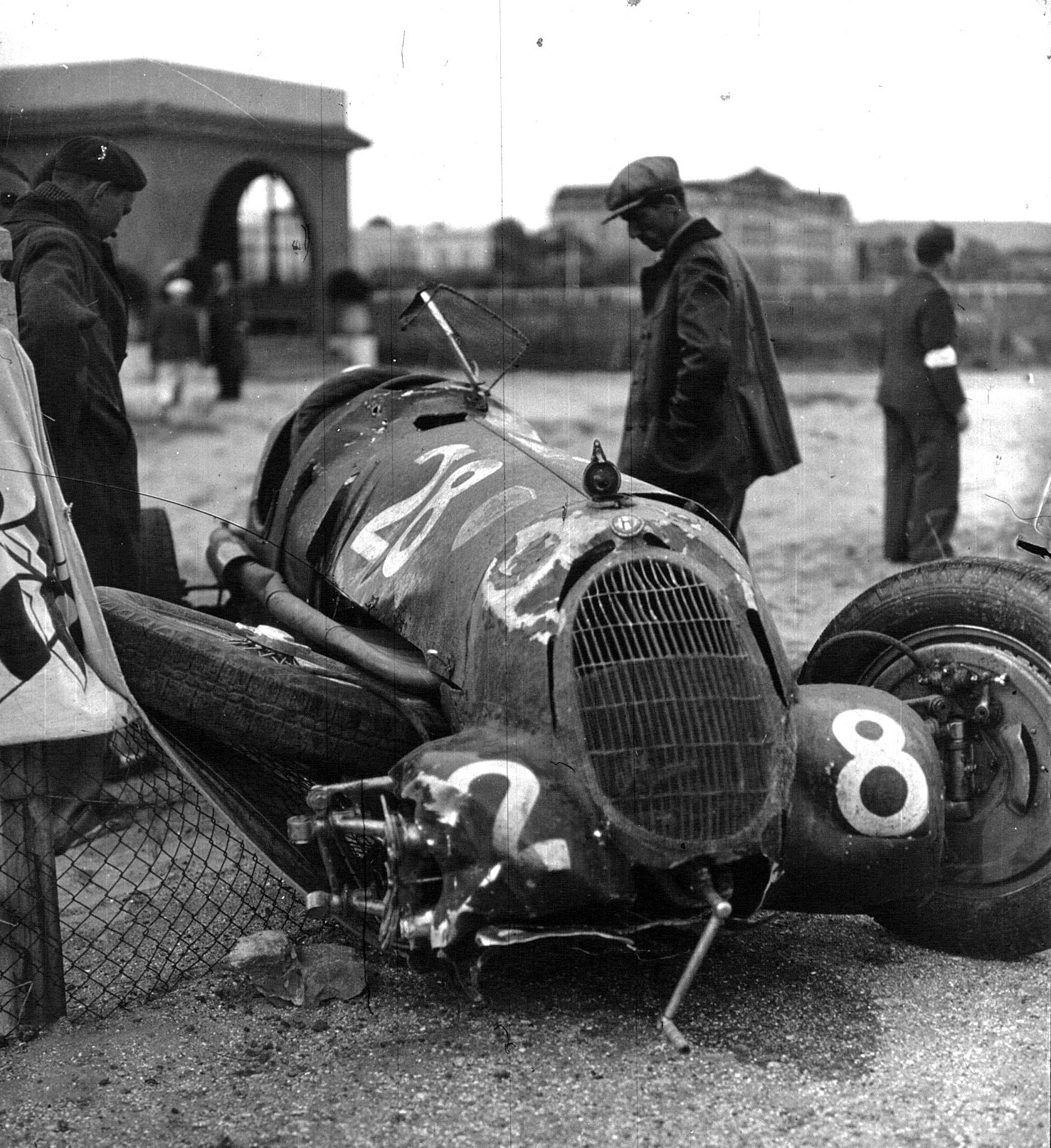
The first race started in heavy rain with a dissappointing number of visitors. But things were to get worse. When Albert Chambost lost control of his Maserati, he overturned and had to be taken to hospital. He had a fractured skull and would die three days later from his injuries. By that time the second race had taken place in which disaster would strike just as hard. Robert Benoist crashed his Bugatti T59 but escaped unhurt. Sadly, Marcel Lehoux wasn’t quite so lucky. Guiseppe Farina (Alfa 8C) tried to lap his 2-litre ERA and hit him at speed while doing so. Lehoux's car overturned and he died instantly. Farina escaped without major injuries. There is some fascinating footage from the race that illustrates how quickly things went wrong. It can be seen here.
It is probably no surprise that the Deauville GP never had a sequel. Bronze sculptures for both Marcel Lehoux and Albert Chambost were placed on the boulevard in 1937 but no one seems to know where they are now. Another disgrace?
Words by Jeroen Booij with thanks to Normandythenandnow.com. Pictures Wikipedia and from the archive.
Gepubliceerd:
woensdag september 22nd, 2021
Facebook
LinkedIn
Twitter
WhatsApp
Email
Copy
Reacties
D Macnab
27 September 2021, 01:44
David Scott
23 September 2021, 10:59
The Bugatti railcars were, I believe, a way of using up the excess Royale motors, although the horrendous fuel consumption proved problematical. Hornby made models of the Bugatti Autorail in single, double and treble car veriosn iun both clockwork and electric, to over come the difficulties of the tight radius curves they were aeticulated, unlike the real thing.
Here is my clockwork one!
Lees verder
Here is my clockwork one!
Larry Lewis
23 September 2021, 16:09
Bugatti railcars are now available in N scale from Fulgurex- The cheapest one is 1,190 Swiss Francs. I want one but I sure can't afford it!
Lees verder
Larry Lewis
22 September 2021, 16:19
"Autorail Rapide" could be referring to a Bugatti railcar. They were used on the L'Etat system. A good way to get to the race, I think.
Lees verder
Marcel Lehoux was a very experienced and well respected French driver, based in Algiers, who had joined the ERA works team for 1936. His death caused considerable sadness. The ERA R3B was never repaired but useable parts were fitted to other cars. It was painted in the team colour of apple green which was changed to black in that year.
Was the colour changed as a mark of respect for Lehoux? I've not been able to confirm this and would very much like to know.