Het wereldwijde magazine en verkoopplatform voor liefhebbers van klassieke auto’s, door liefhebbers.
Het wereldwijde magazine en verkoopplatform voor liefhebbers van klassieke auto’s, door liefhebbers.


Filter
Maak een keuze
- Auto's
-
Merk >>
-
Bouwjaar >>
-
-
Categorie >>
- Motorfietsen
- Onderdelen
-
Automerk >>
-
Fabrikant >>
-
Categorie >>
- Fietsen
-
Bouwjaar >>
-
Landen


De laatste overlevende Beckmann: een vergeten auto duikt op in Noorwegen

The 1911 Beckmann 24/45 PS as it looks today after restoration

The Beckmann as bought by Rune Anschim in 2006
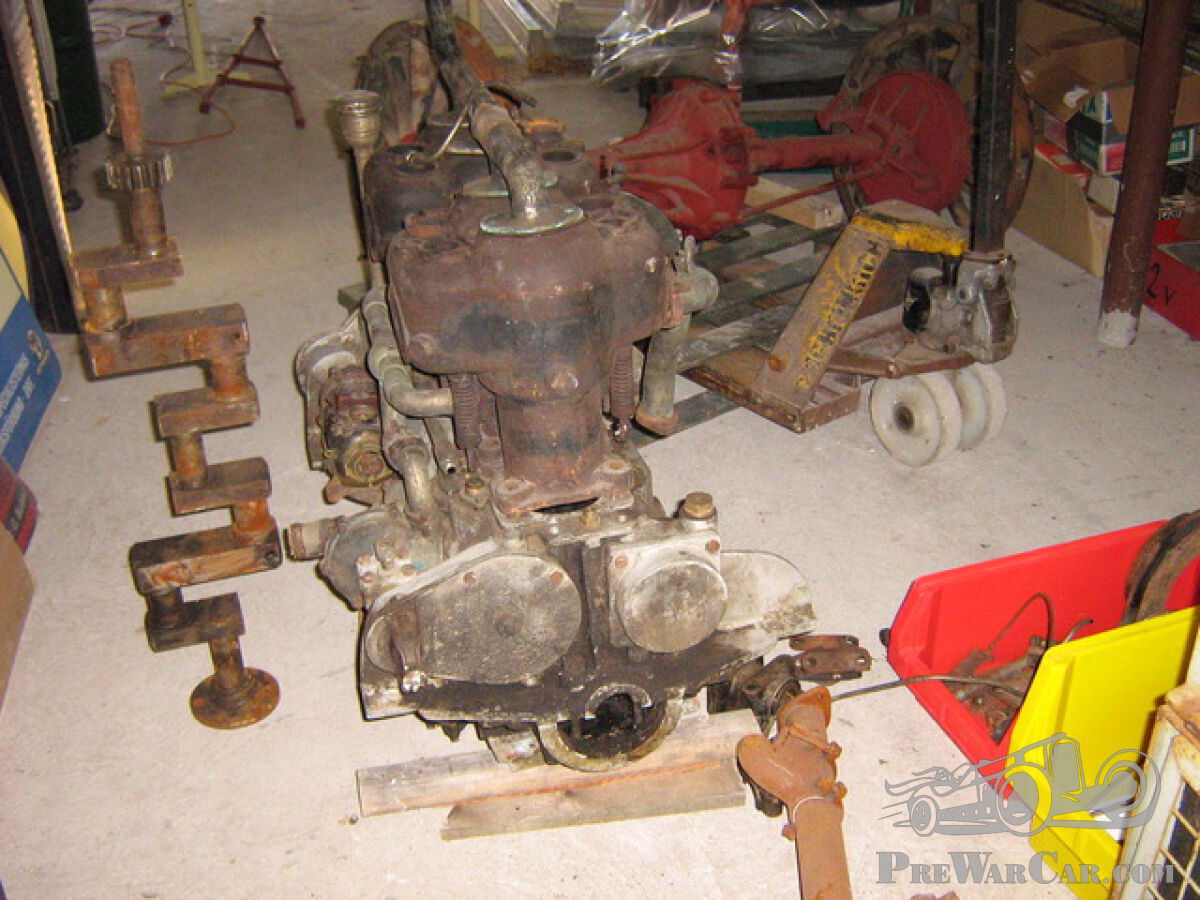
The engine before restoration had seen better days


The restored engine is a very handsome piece of work
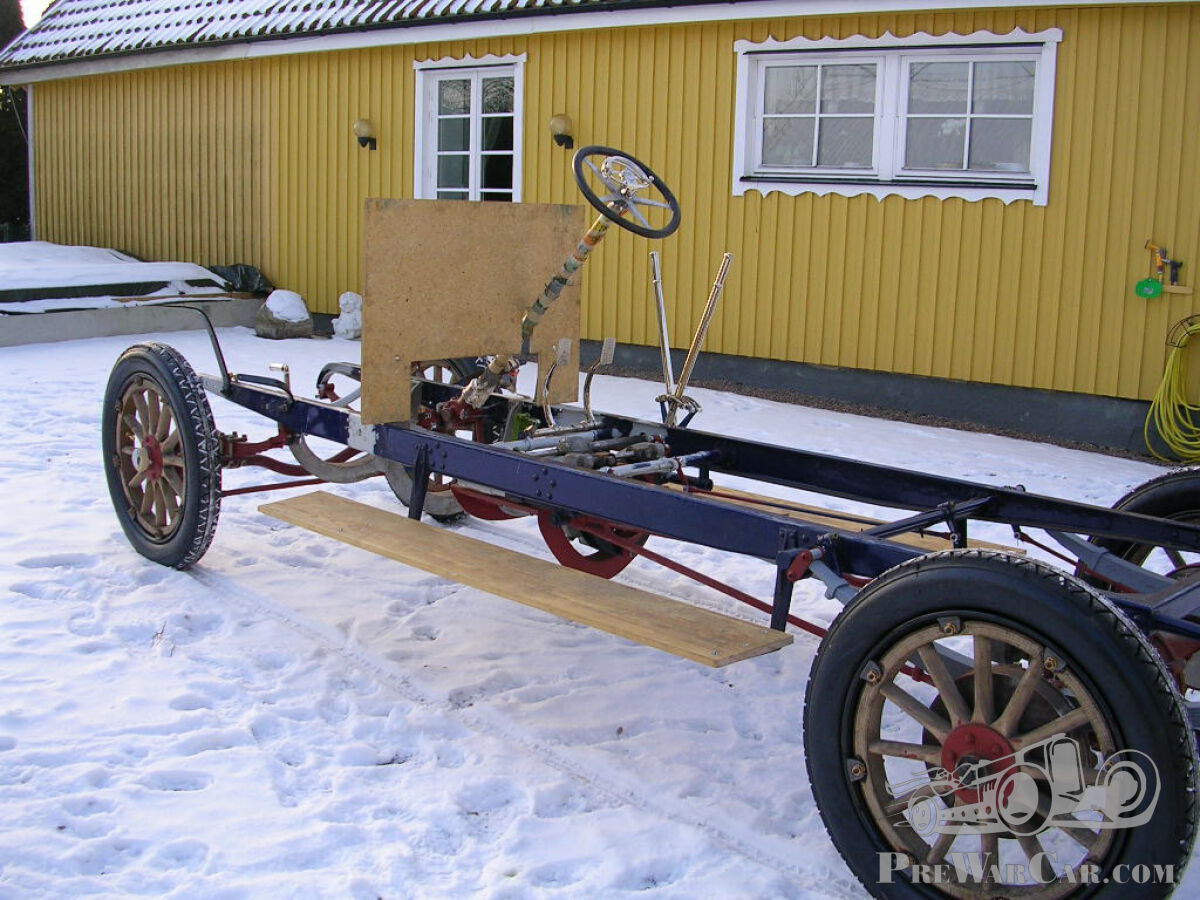
The chassis and springs were restored in Sweden

This was the car which supplied several much-needed body parts
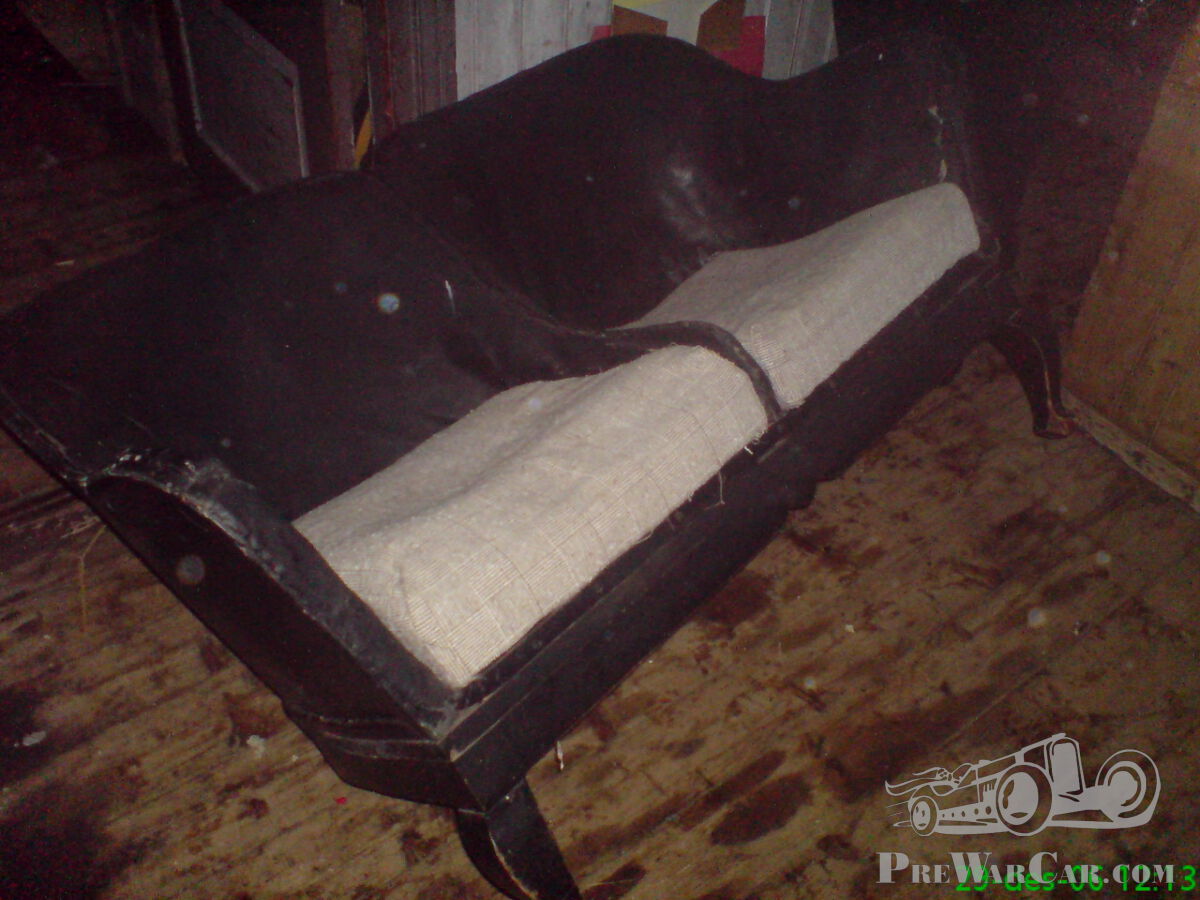
The front seats had survived in the guise of a sofa
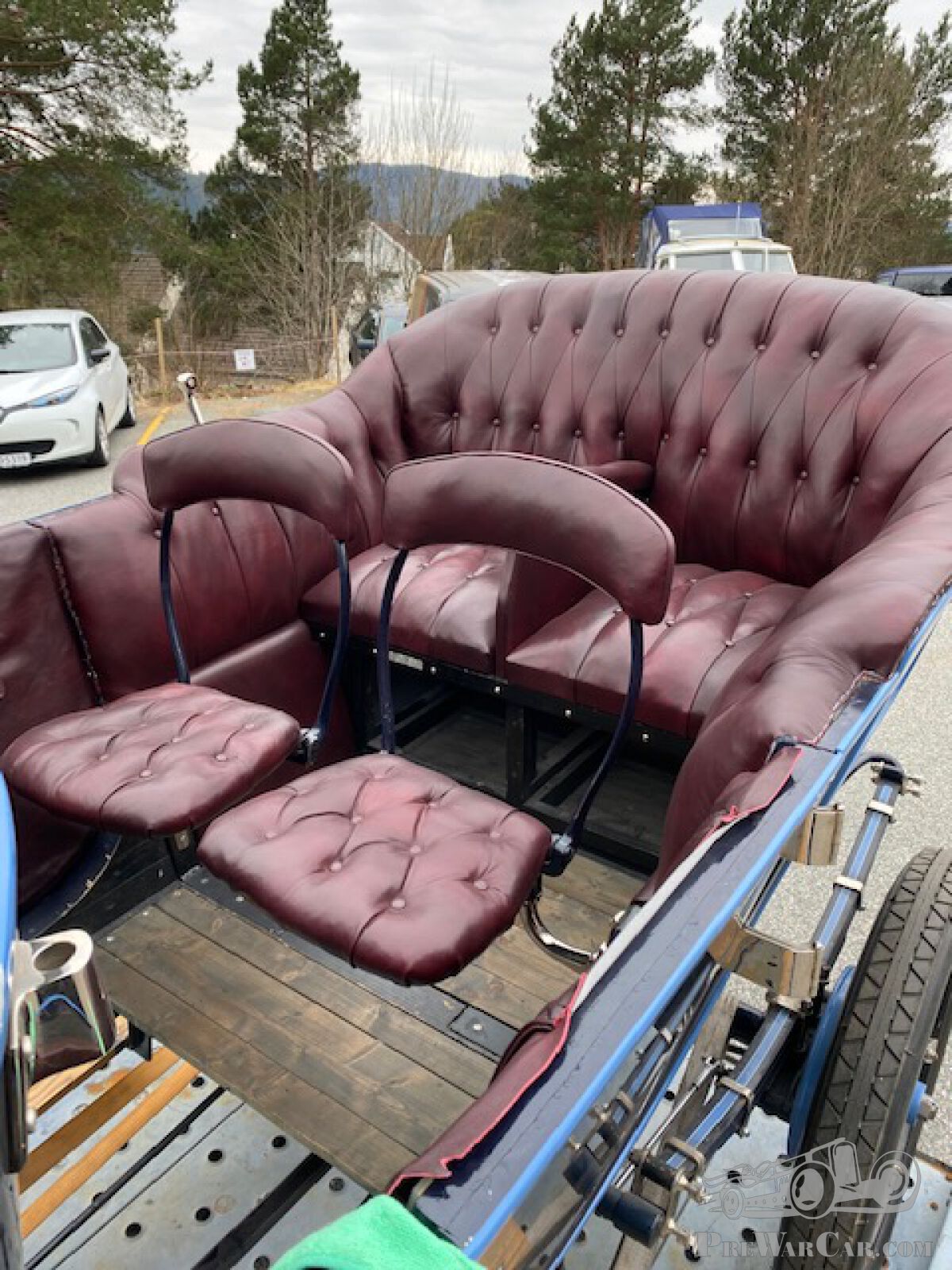
Polish craftsmen did superb work with the upholstery
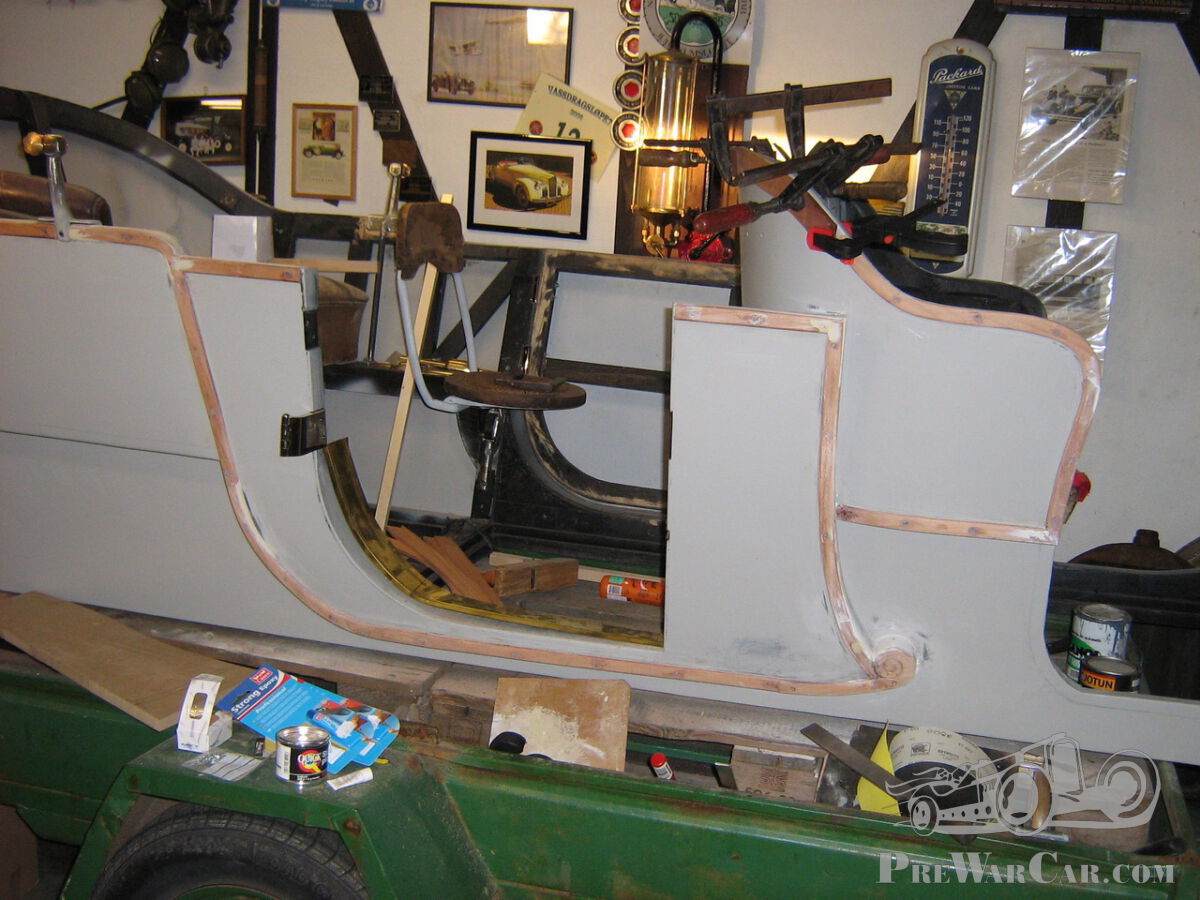
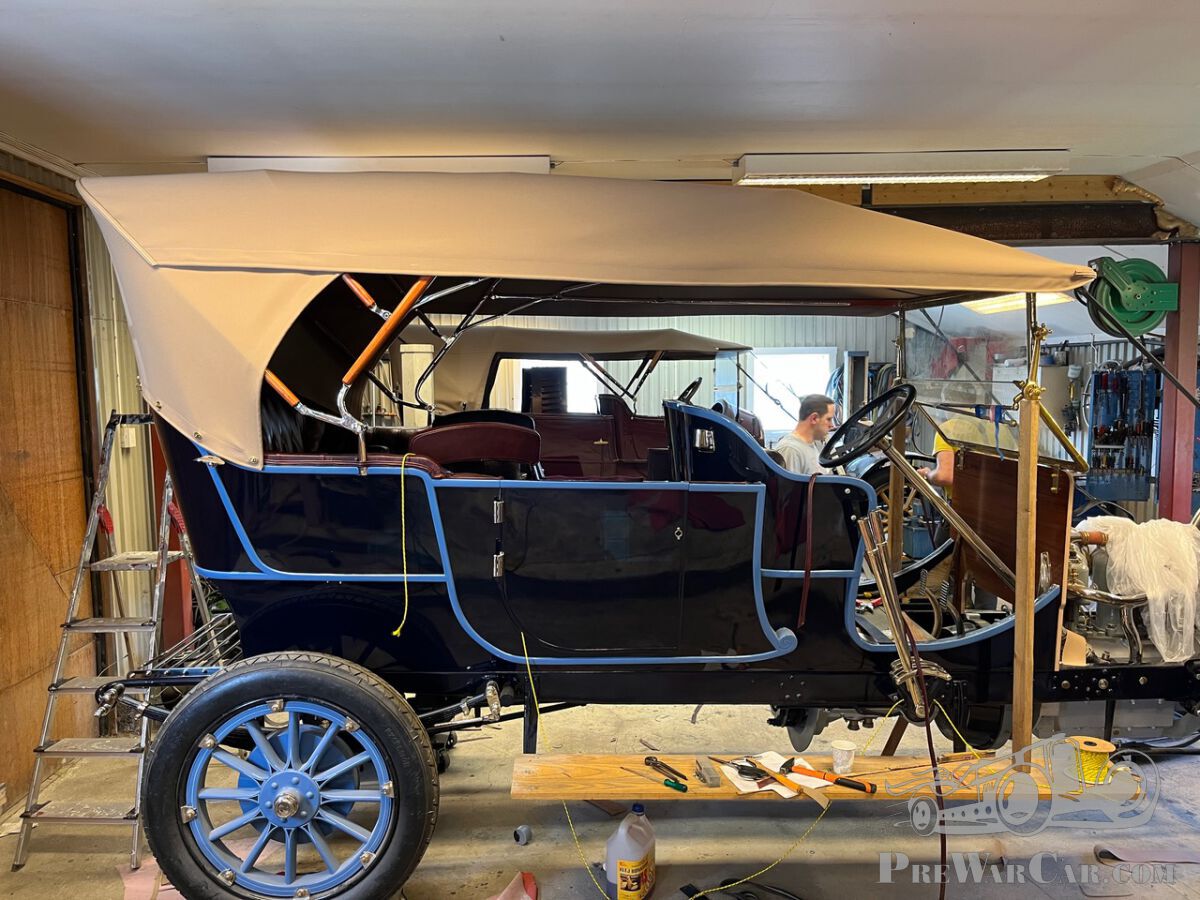
The body took shape in a Swedish workshop
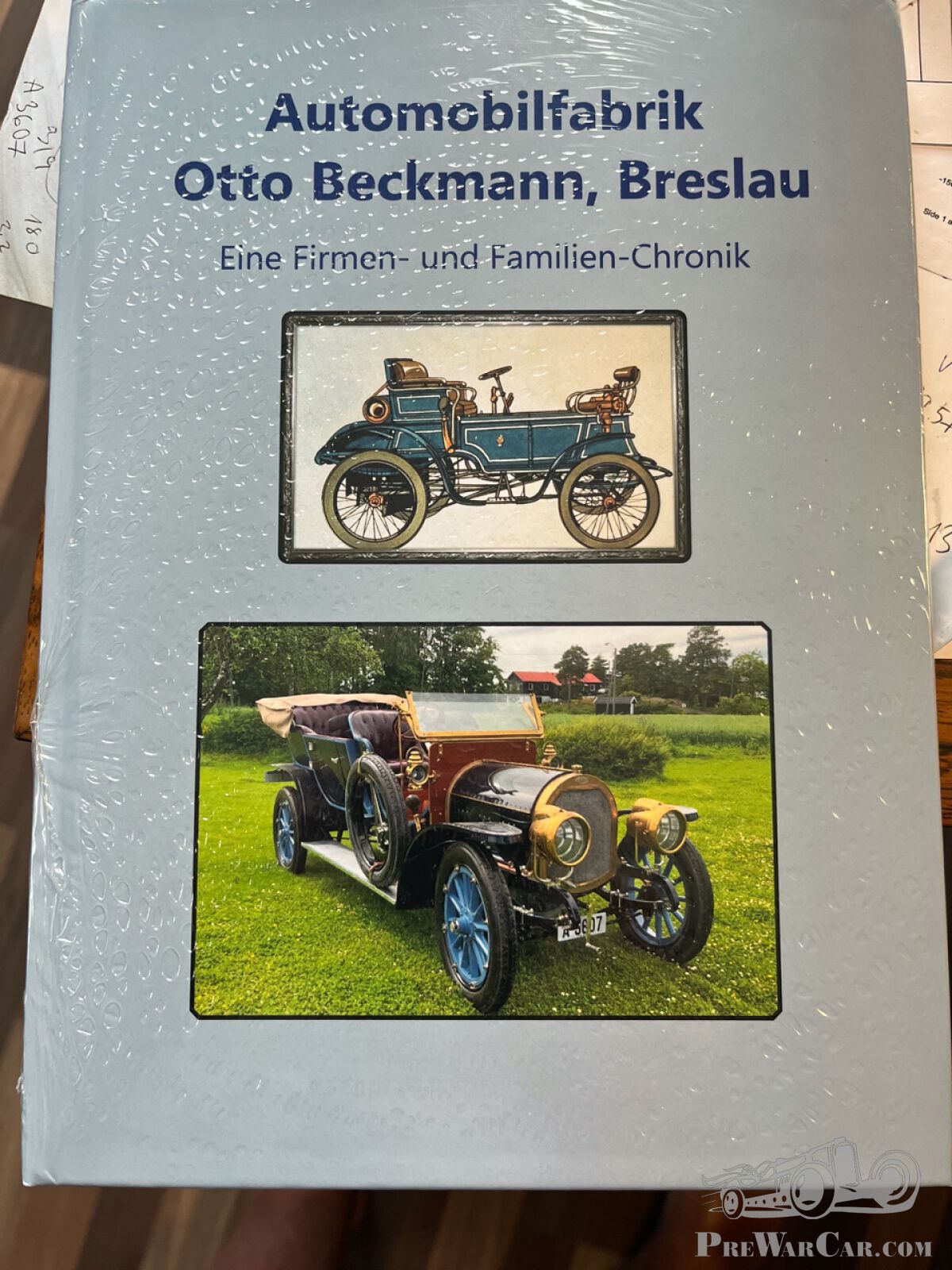
Rune's car adorns the new book about Beckmann by Christian Børner

Paul Beckmann at the wheel of one of his cars


Otto Beckmann & Cie bouwde auto's in Breslau, in het Duitse Keizerrijk, van 1900 tot 1926, vertelt Georgano ons. Hij begon zijn eigen motoren te gebruiken vanaf 1904 en had al snel een assortiment dat twee-, vier- en zescilindermodellen omvatte. Met een kwart eeuw productie op zijn naam zou je denken dat er een behoorlijk aantal Beckmanns bewaard zijn gebleven. Niet dus! Breslau ligt op grondgebied dat historisch betwist werd tussen verschillende koninkrijken, en ligt sinds 1945 binnen de huidige politieke grenzen van Polen, hoewel het in Beckmanns tijd binnen het Duitse Rijk viel. Vanwege zijn locatie had Beckmann weinig invloed in West-Europa en verkocht hij voornamelijk in het Oost-Duitse Rijk en andere Oost-Europese landen, waar de winters streng zijn en de inspanningen om historische voertuigen te behouden relatief laat op gang kwamen.
Dit betekent dat er slechts één bekende overlevende is, een 21/45 PS uit 1911, die net een hoognodige restauratie heeft ondergaan door Rune Aschim uit Noorwegen, die al die tijd in correspondentie heeft gestaan met de nakomelingen van Otto Beckmann. De beginjaren van de auto roepen wat vraagtekens op, maar Rune vertelt ons alles wat hij weet: “We weten weinig over de auto vanaf 1911 in Duitsland, totdat hij in 1920 werd uitgerust met een Frankonia-carrosserie en naar Zweden werd geëxporteerd. Oorspronkelijk zou de auto een Roi-des-Belges carrosserie uit de fabriek in Breslau hebben gehad. In Zweden werd de auto slechts vijf jaar gebruikt, maar hij moet veel gebruikt zijn, want alle mechanische onderdelen waren versleten.
“In 2006 kocht ik het chassis van Viklit Graae Jørgensen in Denemarken. Ik was van plan om een nieuwe carrosserie te bouwen in de stijl van 1911, maar ik had het geluk om de restanten van een soortgelijke auto te vinden op Andøya, een eiland in het noorden van Noorwegen. Daar was de voorste helft van de carrosserie omgebouwd tot een bank. Daar kreeg ik ook het stuur, de claxon, enzovoort. De motor werd in Zweden gerestaureerd en Åke Lindell in Zweden maakte nieuwe veren en restaureerde het chassis. Het hout voor de carrosserie kwam uit Noorwegen, en de metalen panelen, motorkap en vleugels werden in Zweden gemaakt. De bekleding werd gedaan door Poolse vakmensen. De achterkleinzoon van Paul Beckmann, Christian Børner, heeft een boek over de fabriek geschreven. Hij heeft bevestigd dat mijn auto de enige overlever is en heeft met veel informatie geholpen.”
Aschim heeft een geweldige prestatie geleverd door deze unieke, en zeer goed uitziende, Edwardian uit de dood te doen herrijzen.
In de komende weken en maanden hopen we dat zijn onderzoeksinspanningen wat licht zullen werpen op die jaren van de geschiedenis van de auto die nu nog onbekend zijn.
We zouden graag meer willen weten over de Frankonia carrosseriefabriek, omdat we er niet bekend mee zijn, maar we vragen ons af of er een verband is met de Frankonia koepelvormige spatborden uit één stuk, die in 1912 werden geadverteerd in The Autocar en verkrijgbaar waren via Barimar Ltd. van 10, Poland Street, London W. Momenteel is er een paar Frankonia zijlichten te koop, opnieuw bij Viklit Graae Jorgenson.
Het 21/45 PS model gebruikte een 5,3-liter T-kop motor met dubbele ontsteking. Het ziet er een zeer capabele toerwagen uit, dus we hopen dat Aschim er veel plezier aan zal beleven tijdens de Scandinavische klassieke auto evenementen.
Woorden: Zack Stiling
Foto's: Rune Anschim
Gepubliceerd:
woensdag november 13th, 2024
Facebook
LinkedIn
Twitter
WhatsApp
Email
Copy
Reacties
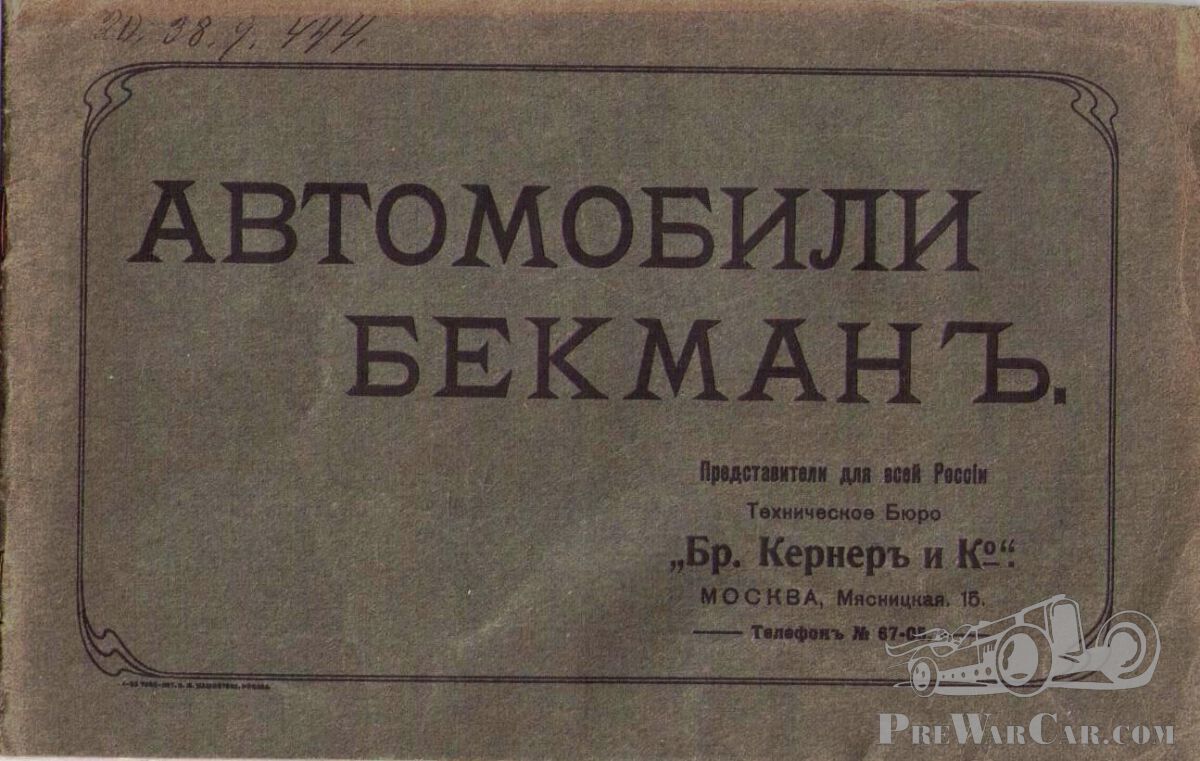
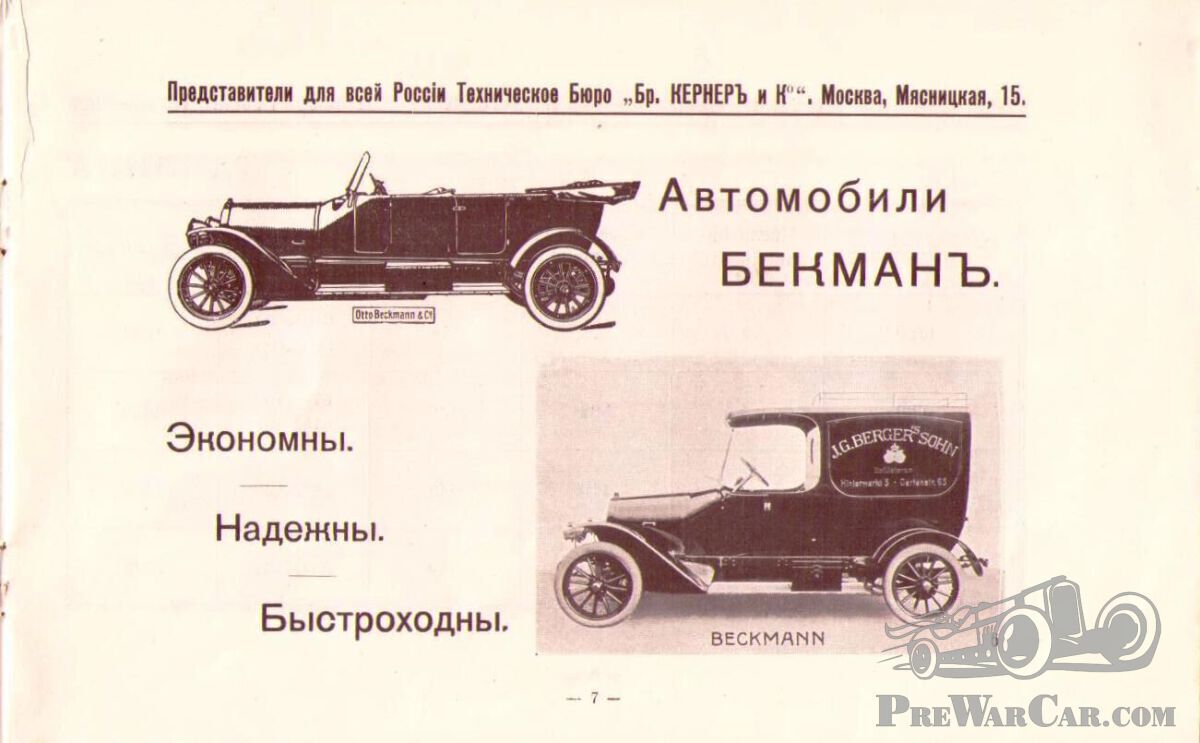
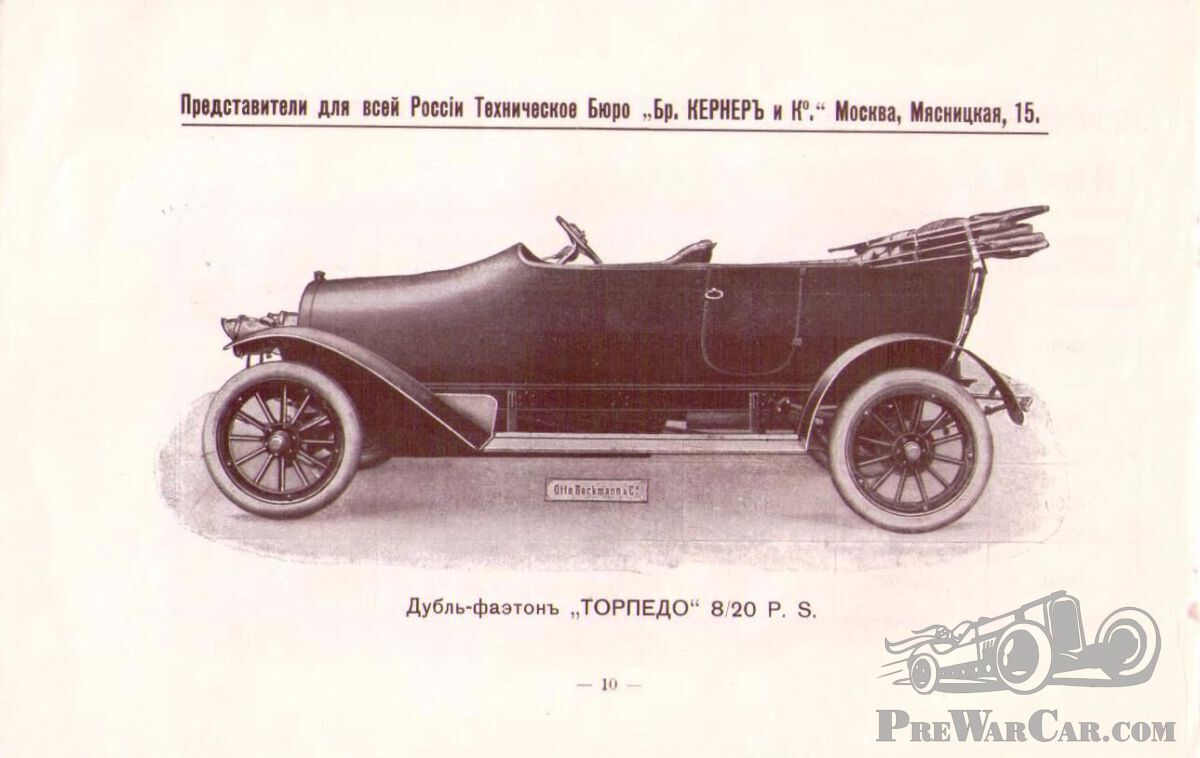


Stanislav Kirilets
20 November 2024, 03:32
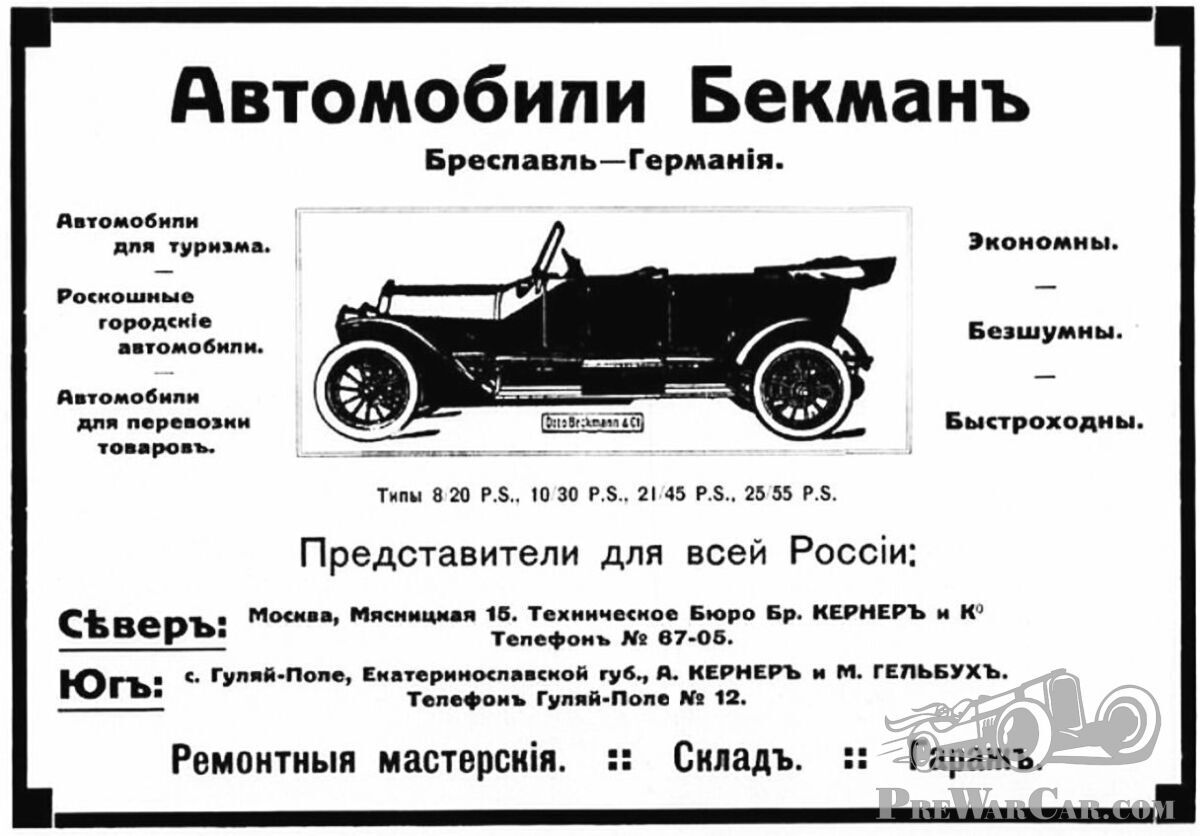
The Beckmann was also represented in Russia. I have the brochure.
Lees verder
Christian J. Börner
20 November 2024, 17:47
Hello, Mr. Kirilets, do you remember that we communicated with each other in 2017 about whether and how Beckmann was represented in Russia?
Because you are now reporting that you have a Russian-language Beckmann brochure, I would like to ask you to contact me again. I assume that you still have my email address.
Lees verder
Because you are now reporting that you have a Russian-language Beckmann brochure, I would like to ask you to contact me again. I assume that you still have my email address.
Stanislav Kirilets
20 November 2024, 20:49
Hello! Yes, I remember. But I can't find your email address. Do you have mine? Then contact me:
kiriletz(*)t-online.de
Unfortunately the scans are not big enough.
Regards,
Stanislav
Lees verder
kiriletz(*)t-online.de
Unfortunately the scans are not big enough.
Regards,
Stanislav
Ariejan Bos
16 November 2024, 10:34
It is definitely a beautiful restoration with a result that seems to have been driven directly out of the showroom. Historically, however, the body doesn't fit with the presumed year of production, when the torpedo shape was fully accepted by Beckmann and integrated in their complete model range. So, although understandable from a cost perspective, the use of this 'luckily found' older type of double phaeton body is not correct from an historical perspective.
An interesting detail which is typically Beckmann is the shackle at the front of the front spring, present till at least 1914. This spring system was used by many other car makes in the early 1900s, but by 1905 most of them had abandoned this. The advantage of this system has never been clear to me, so if anyone can explain I would be grateful!
Lees verder
An interesting detail which is typically Beckmann is the shackle at the front of the front spring, present till at least 1914. This spring system was used by many other car makes in the early 1900s, but by 1905 most of them had abandoned this. The advantage of this system has never been clear to me, so if anyone can explain I would be grateful!
Rune Aschim
18 November 2024, 16:50
This body style is correct for my car as it has the broad frame. In 1912 Beckmann started with torpedo bodies and the frame was 10cm more narrow. Perhaps late 1911 cars had torpedo bodies. I have evidence of the firewall being cut down to a round curve in 1920 when the modern body was installed and car sent to Sweden, and also of brackets made for the newer hood.
Lees verder
Michael Schlenger
16 November 2024, 19:37
Regarding the body design, I also share the view that in 1911 all German car manufacturers had adopted the torpedo shape. The transition took place gradually, however. For example, another German niche manufacturer, Oryx, offered both bodies with and without torpedo in its 1910 prospectus. Given the poor documentation of Beckmann motor cars in contemporary photos and prospectuses, I wouldn't completety rule out the possibility that even in early 1911 an individual Beckmann could haven been manufactured with a traditional body lacking a torpedo. The fact that French manufacturers introduced the torpedo much more slowly is an indication that preferences on the buyers' side were pretty diverse before the First World War. Even in the mid-1920s, invididual cars were made with bodies which would have been clearly outdated by 1920 already. So, as long as this body style was available with a Beckmann from c.1910, I wouldn't put too much emphasis on the assessment that the chassis might be one year "too late". Of course, it would be nice to know also the owners thinking in this regard.
Lees verder
Christian J. Börner
14 November 2024, 15:23
I think it's great that this well-written article appeals to a wide range of experts, collectors and perhaps also authors of relevant literature, and thus saves my great-grandfather's company from oblivion.
As Mr. Schlenger has already written, the start of vehicle construction at Beckmann is not only incorrectly stated by Georgano, but by all authors who have concentrated on this subject after WWII. The most detailed description of Beckmann products can be found in the three books by Hans-Heinrich von Fersen: Autos in Deutschland 1885-1920 (from 1965 with 5 pages), 1920-1939 (from 1967 with 2 pages) and Sportwagen in Deutschland (from 1968 with 2.5 pages). But even he didn't know everything correctly.
The only source that gives the correct year for the start of motor vehicle production—1898—was the publication "Bilder aus der deutschen Automobil-Industrie“ (Images from the German Automobile Industry) from the Verlag Automobil-Welt, Berlin, 1905.
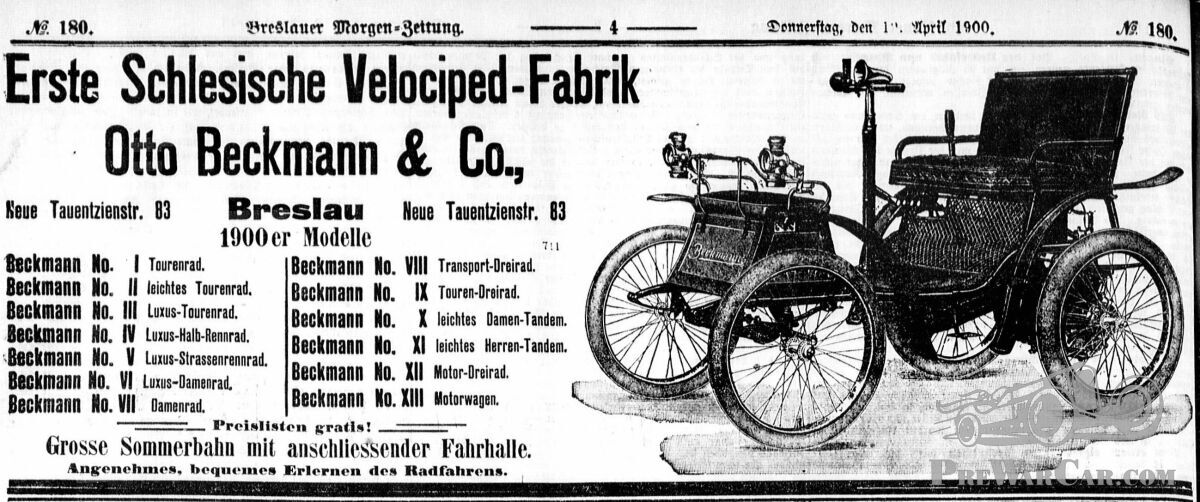
What could have been the reason for this? The first motorized models, the XII, a motor tricycle, and XIII, the first motor vehicle (which came in two versions), were not yet presented to a larger potential buyer group but were only offered at the place of origin, i.e. in the greater Breslau area (which was then the capital of the province of Silesia), initially of course only in minimal quantities. So Paul Beckmann was content to only advertise them in the local press. Here is an advertisement from April, 1900, (models I to XI were exclusively bicycles).
It was only when motor vehicle production had really picked up, that was in 1901, he changed the company name to "Erste Schlesische Velocipeden-Fabrik Otto Beckmann & Co., Fahrrad- und Automobilfabrik".
By the end of 1904, bicycle production had been completely abandoned, which is an indication that automobiles were selling in very good numbers and that production capacities were being exhausted.
I would like to add a few points for interested readers about what happened between these antipodes, the start of motor vehicle production in 1898 and its end when the company was taken over by Opel at the beginning of 1917, in terms of the range of products and in terms of sportiness. I ask for a little patience.
In 1986 I heard that there were fragments of an old Beckmann car in southern Sweden. I drove there immediately, saw the sad remains and had great hopes that one day a fully assembled Beckmann car could be created from them. After an odyssey lasting many years, a brave and experienced collector, Rune Aschim, dared this experiment. The car is now in Norway, perhaps more beautiful and better than it was in 1911. But my greatest wish will hopefully come true in 2025, 39 years after the discovery: I want to be able to see and touch the original and drive it. My friend Rune will be able to arrange it.
Lees verder
As Mr. Schlenger has already written, the start of vehicle construction at Beckmann is not only incorrectly stated by Georgano, but by all authors who have concentrated on this subject after WWII. The most detailed description of Beckmann products can be found in the three books by Hans-Heinrich von Fersen: Autos in Deutschland 1885-1920 (from 1965 with 5 pages), 1920-1939 (from 1967 with 2 pages) and Sportwagen in Deutschland (from 1968 with 2.5 pages). But even he didn't know everything correctly.
The only source that gives the correct year for the start of motor vehicle production—1898—was the publication "Bilder aus der deutschen Automobil-Industrie“ (Images from the German Automobile Industry) from the Verlag Automobil-Welt, Berlin, 1905.
What could have been the reason for this? The first motorized models, the XII, a motor tricycle, and XIII, the first motor vehicle (which came in two versions), were not yet presented to a larger potential buyer group but were only offered at the place of origin, i.e. in the greater Breslau area (which was then the capital of the province of Silesia), initially of course only in minimal quantities. So Paul Beckmann was content to only advertise them in the local press. Here is an advertisement from April, 1900, (models I to XI were exclusively bicycles).
It was only when motor vehicle production had really picked up, that was in 1901, he changed the company name to "Erste Schlesische Velocipeden-Fabrik Otto Beckmann & Co., Fahrrad- und Automobilfabrik".
By the end of 1904, bicycle production had been completely abandoned, which is an indication that automobiles were selling in very good numbers and that production capacities were being exhausted.
I would like to add a few points for interested readers about what happened between these antipodes, the start of motor vehicle production in 1898 and its end when the company was taken over by Opel at the beginning of 1917, in terms of the range of products and in terms of sportiness. I ask for a little patience.
In 1986 I heard that there were fragments of an old Beckmann car in southern Sweden. I drove there immediately, saw the sad remains and had great hopes that one day a fully assembled Beckmann car could be created from them. After an odyssey lasting many years, a brave and experienced collector, Rune Aschim, dared this experiment. The car is now in Norway, perhaps more beautiful and better than it was in 1911. But my greatest wish will hopefully come true in 2025, 39 years after the discovery: I want to be able to see and touch the original and drive it. My friend Rune will be able to arrange it.
Michael Schlenger
13 November 2024, 08:57
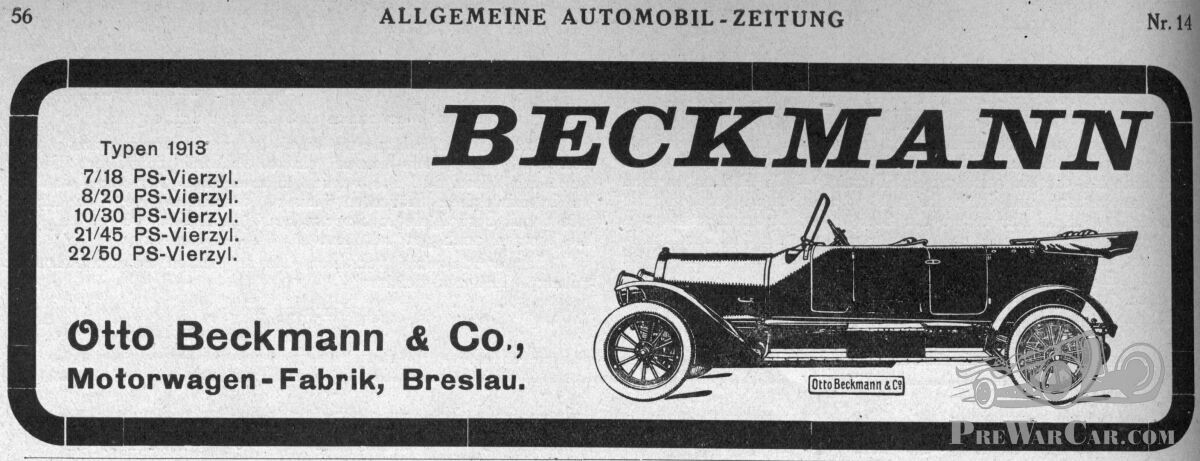
Many thanks for this article on the once important, but largely forgotten German car manufacturer Beckmann, from Breslau in the former province of Silesia. Unfortunately, the first sentence contains a common mistake—according to the research of Beckmann descendant Christian Börner the company started building motor cars in 1898, already. And it wasn't the founder of the company, Otto Beckmann, but his son Paul who was responsible for this important step which in 1904 led to the decision to fully concentrate on automobiles rather than continue to build bicycles which was the original field of business of the "Erste Schlesische Velocipedfabrik Otto Beckmann & Co." which had been the full name of the company since it foundation in 1882 (four years ahead of Opel, by the way). The exact number of cars that were built under the Beckmann brand until the takeover by Opel in 1926 is unknown, but it's reasonable to assume that several thousands must have been produced. Beckmann advertisements can be found in leading German car magazines alongside names like Audi, Bergmann, Brennabor, Dux, Fafnir, Lloyd, Loreley, Mathis NAG and NSU like, for example, in the "Allgemeine Automobil Zeitung" No. 14, from April, 1913. There I found the attached advertisement and together with Christian Börner I hope that other enthusiasts will also take a look into their collections where more documents relating to this once renowned company might slumber...
Lees verder
Rune Aschim
18 November 2024, 17:04
Thank you for the comment. For me this has been an interesting case. I understood before I bought the remains that this was a high quality car. T-head engines we know from Stutz and Mercer, but very few European cars had them. And why double ignition? A friend here in Norway said it was to be sure that all the gasoline explodes within the 5.3 litres. The double magneto I found at the Hershey swapmeeet in the U.S.A.
Lees verder