Het wereldwijde magazine en verkoopplatform voor liefhebbers van klassieke auto’s, door liefhebbers.
Het wereldwijde magazine en verkoopplatform voor liefhebbers van klassieke auto’s, door liefhebbers.


Filter
Maak een keuze
- Auto's
-
Merk >>
-
Bouwjaar >>
-
-
Categorie >>
- Motorfietsen
- Onderdelen
-
Automerk >>
-
Fabrikant >>
-
Categorie >>
- Fietsen
-
Bouwjaar >>
-
Landen


Vier soldaten, een Franse schuur en de Peugeot die niet bestond...


De wonderen van de fotografie hebben ons van tijd tot tijd foto's gebracht die uit het rijk der fabelen lijken te komen. Al bijna 100 jaar krijgt de wereld foto's voorgeschoteld van dingen waarvan gedacht wordt dat ze niet bestaan, voornamelijk omdat er geen overtuigend bewijs is dat ze wel bestaan, zoals het Monster van Loch Ness en Bigfoot. De foto's zijn natuurlijk hoaxes, verzonnen door practical jokers, publiciteitszoekers en gekken, maar de auto op deze foto is iets heel echts. Maar zonder deze foto zouden we niet weten dat hij ooit heeft bestaan.
Eerst iets over de foto: hij komt van een Franse meneer die ons vertelt dat hij is genomen in Orléans, waarschijnlijk op 27 januari 1916. De vier mannen zijn allemaal Franse soldaten en degene achterin was de broer van de overgrootvader van onze correspondent.
De auto zelf is een Peugeot Type 147 40pk tourer, een model dat, zo is ons verteld, alleen is geproduceerd tijdens de oorlog van 1914-1918. Blijkbaar, zo wordt ons verteld, staat hij in geen enkele Peugeot-catalogus uit die periode vermeld. Het lijkt erop dat er vandaag de dag geen dergelijke auto's meer bestaan, maar wat ons verbaast is dat we er zelfs geen foto's uit die periode van kunnen vinden op het internet, of zelfs maar iets vergelijkbaars, met uitzondering van één zijaanzichtfoto van slechte kwaliteit die mogelijk is afgedrukt als advertentie in een tijdschrift. Er is ons verteld dat een foto van dezelfde auto met een andere soldaat voorkomt in Claude Rouxels boek Ghota de l'automobile Française, maar die hebben we zelf niet gezien.
We kunnen het beste even de tijd nemen om alles in ons op te nemen, want het is een prachtig ding om aan vast te houden. Het is een enorm beest en de motor moet een enorme omvang hebben - misschien wel zes of zeven liter, zouden we denken. De enorme V-vormige radiateur zijn we niet gewend van Peugeots uit die tijd en het moet de auto een dominante aanwezigheid op de weg hebben gegeven. Maar we worden vooral getroffen door die merkwaardige kappen op de vleugels waarin vermoedelijk de zijlichten zijn geplaatst. Waar zouden die voor dienen, vragen we ons af?
Dit is echt een foto vol mysteries. Wat kun jij ons vertellen over de prachtige, maar lang verloren gegane Peugeot met 40 pk?
Woorden: Zack Stiling; foto: Niepceron
Gepubliceerd:
maandag juli 3rd, 2023
Facebook
LinkedIn
Twitter
WhatsApp
Email
Copy
Reacties


William Mundt
09 Juli 2023, 15:47
This Gallic beast must have struck fear in the heart of its contemporary Mercedes!
Lees verder


Jean-Pierre Record
09 Juli 2023, 13:34
Well, I, like Laurent, think it could be a 147-147S or 150-150S made in Peugeot's Lille factory, but with at least a radiator grille seemingly shared with a contemporary Benz or Daimler-Mercedes.
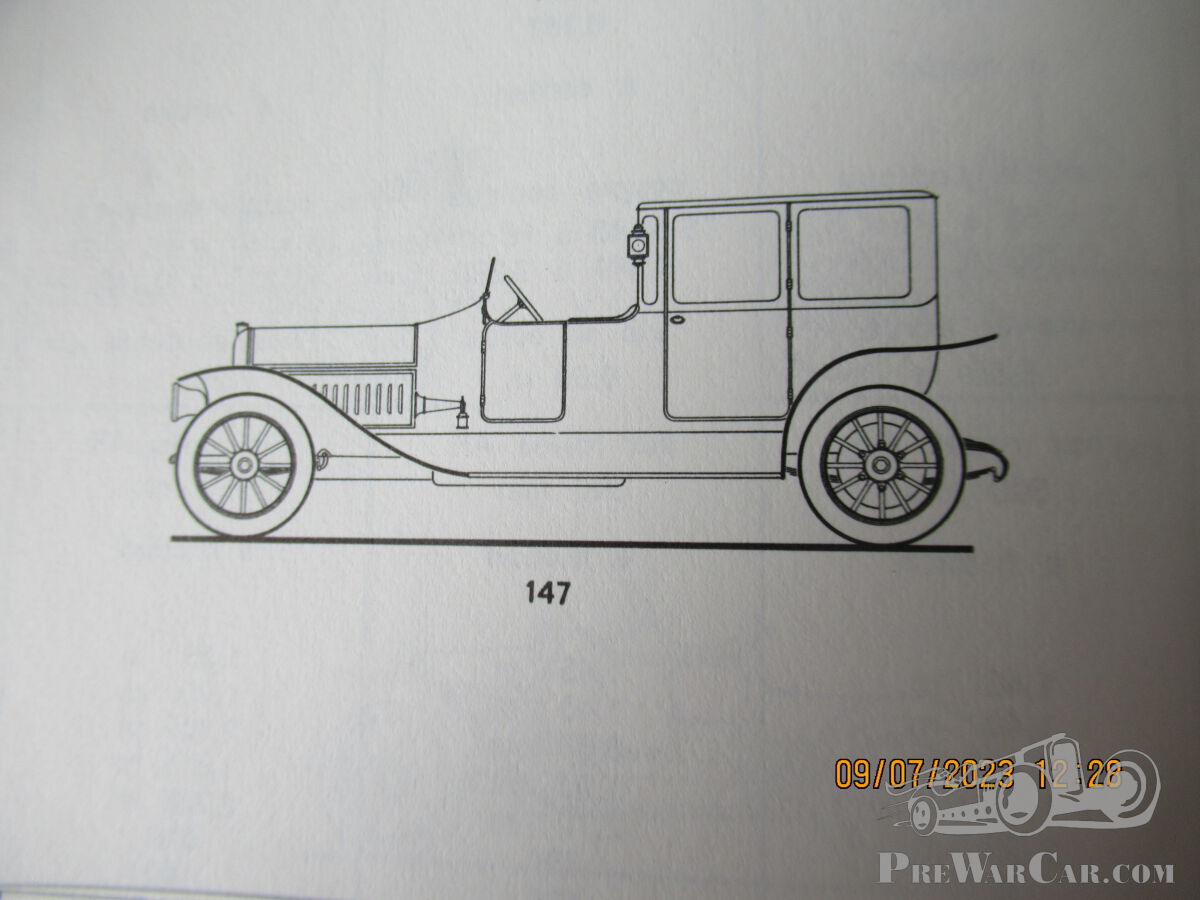
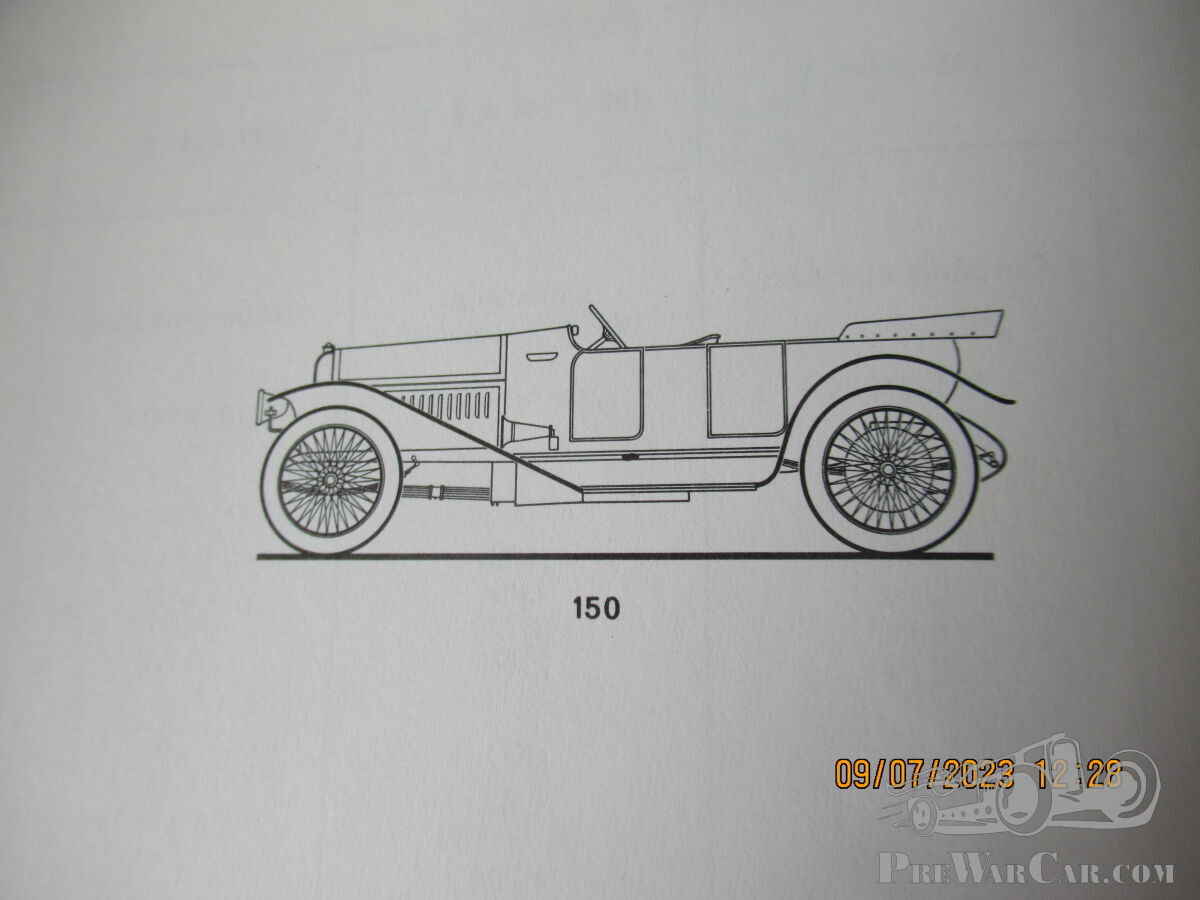
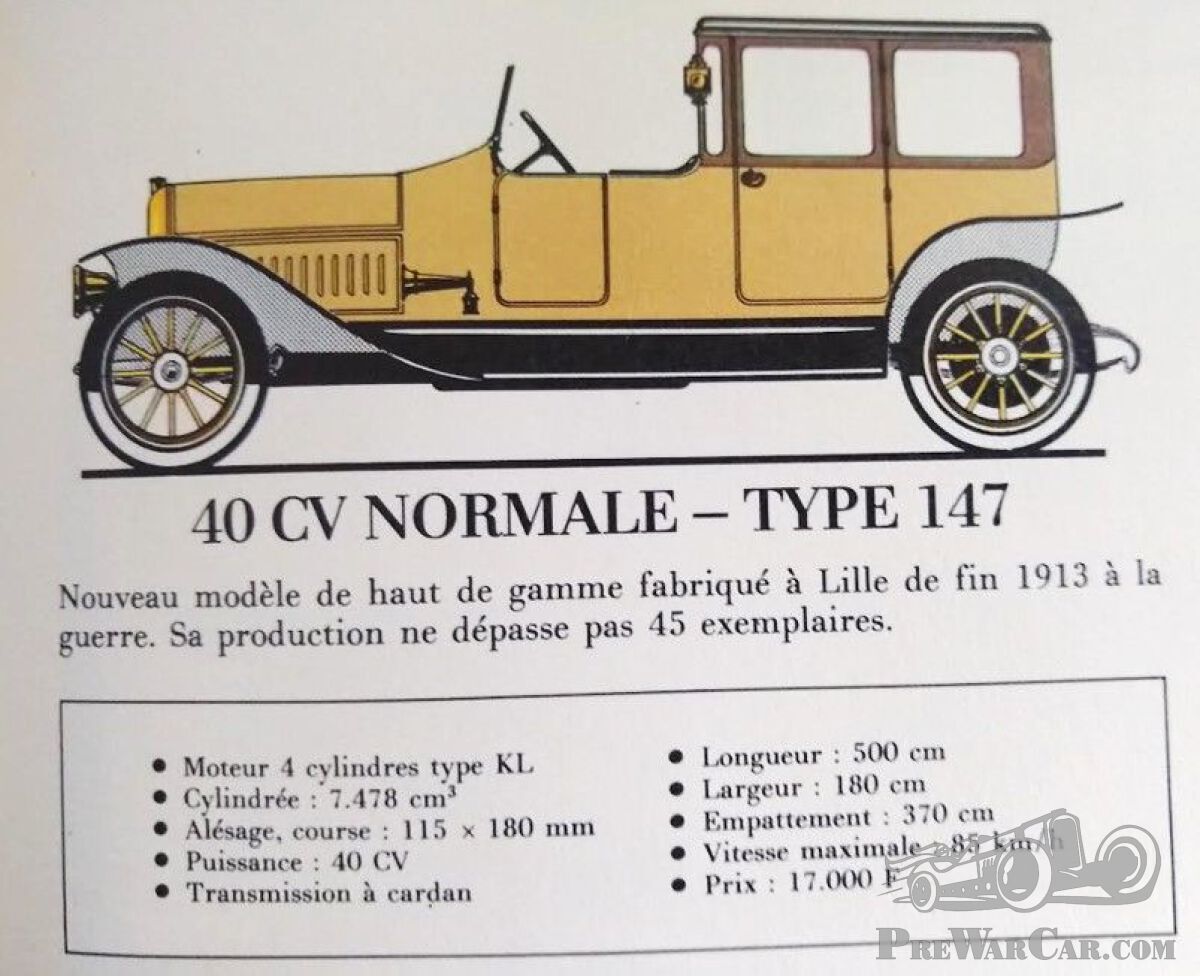
According to the book "La production Peugeot 1889 à 1928", the 147-147S was made in 1913 and 1914 and powered by the enormous four-cylinder, 40 hp, 7½-litre, was a maximum speed of 79 to 85 km/h (49 to 53 mph) with coupé limousine bodywork, with a total production of only 45 cars. The 150-150S was made in 1914 in the same factory with the same engine, and with torpédo and sport bodies it achieved an astonishing maximum speed from 122 to 129 km/h (76 to 80 mph) depending on the rear axle ratio; it had a production run of only 49 vehicles.
Lees verder
According to the book "La production Peugeot 1889 à 1928", the 147-147S was made in 1913 and 1914 and powered by the enormous four-cylinder, 40 hp, 7½-litre, was a maximum speed of 79 to 85 km/h (49 to 53 mph) with coupé limousine bodywork, with a total production of only 45 cars. The 150-150S was made in 1914 in the same factory with the same engine, and with torpédo and sport bodies it achieved an astonishing maximum speed from 122 to 129 km/h (76 to 80 mph) depending on the rear axle ratio; it had a production run of only 49 vehicles.
Laurent Friry
08 Juli 2023, 11:45
Ariejan is really an expert and I can only agree with him.
I am the co-author of the book mentioned by Zack and when Claude Rouxel and I worked on the Ghota de l’automobile française, we were very intrigued by this car and only knew that it was a Peugeot.
Since, I have found other pictures of the same car.
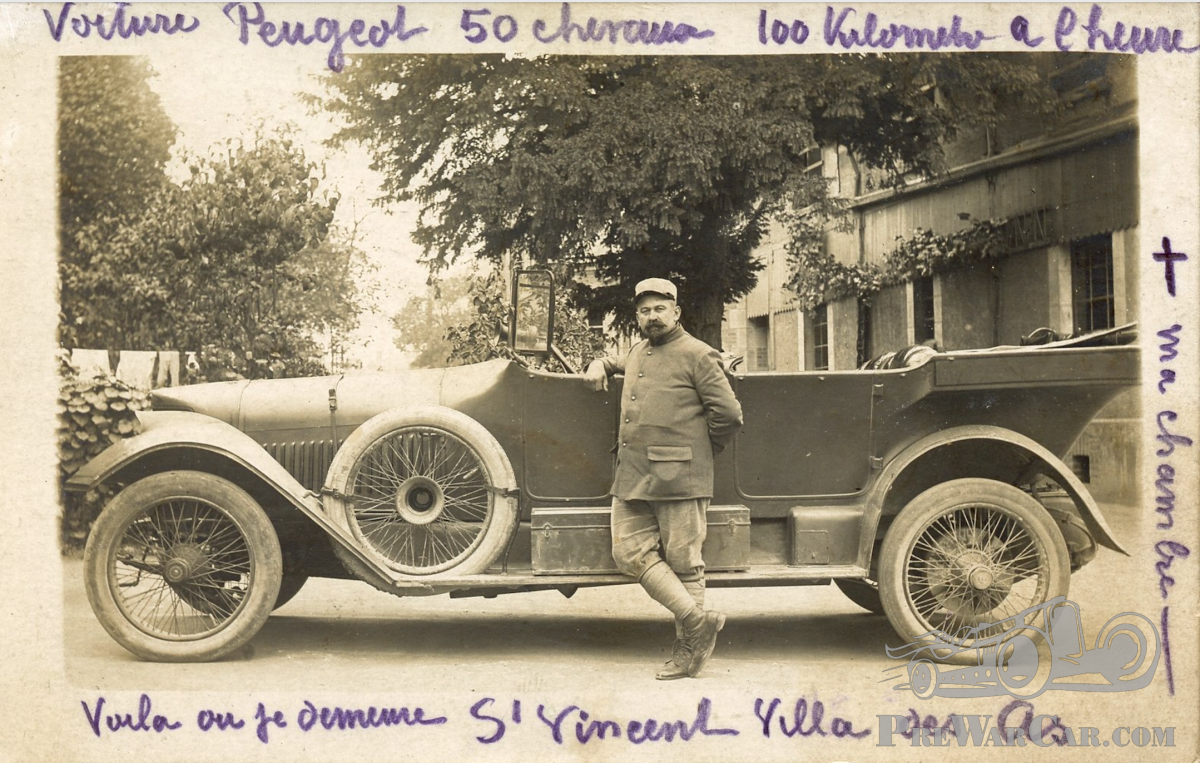
One of them is giving further details as it is a postcard, and the sender, a certain Victor, wrote: Car Peugeot 50 HP, 100 km/h. Here is where I live: St Vincent, villa des As. My bedroom (X).
Looking at the pre-WWI Peugeot production record, it could be a Type 147 or 150, both equipped with a very large four-cylinder engine of 7½-litre capacity.
The body is definitely of German origin, which makes me think that this car was a "prise de guerre", taken from the enemy, and then effected as a staff car.
Lees verder
I am the co-author of the book mentioned by Zack and when Claude Rouxel and I worked on the Ghota de l’automobile française, we were very intrigued by this car and only knew that it was a Peugeot.
Since, I have found other pictures of the same car.
One of them is giving further details as it is a postcard, and the sender, a certain Victor, wrote: Car Peugeot 50 HP, 100 km/h. Here is where I live: St Vincent, villa des As. My bedroom (X).
Looking at the pre-WWI Peugeot production record, it could be a Type 147 or 150, both equipped with a very large four-cylinder engine of 7½-litre capacity.
The body is definitely of German origin, which makes me think that this car was a "prise de guerre", taken from the enemy, and then effected as a staff car.
Thomas Ulrich
09 Juli 2023, 12:39
Hallo,
I think Laurent is right. It is definitely German and it has an Alexis Kellner body. Alexis Kellner had a patent on the sidelights included at the front wings before the Kaiser War. I know that Alexis Kellner fitted several French cars with his bodies.
Lees verder
I think Laurent is right. It is definitely German and it has an Alexis Kellner body. Alexis Kellner had a patent on the sidelights included at the front wings before the Kaiser War. I know that Alexis Kellner fitted several French cars with his bodies.


Luc Ryckaert
03 Juli 2023, 11:33
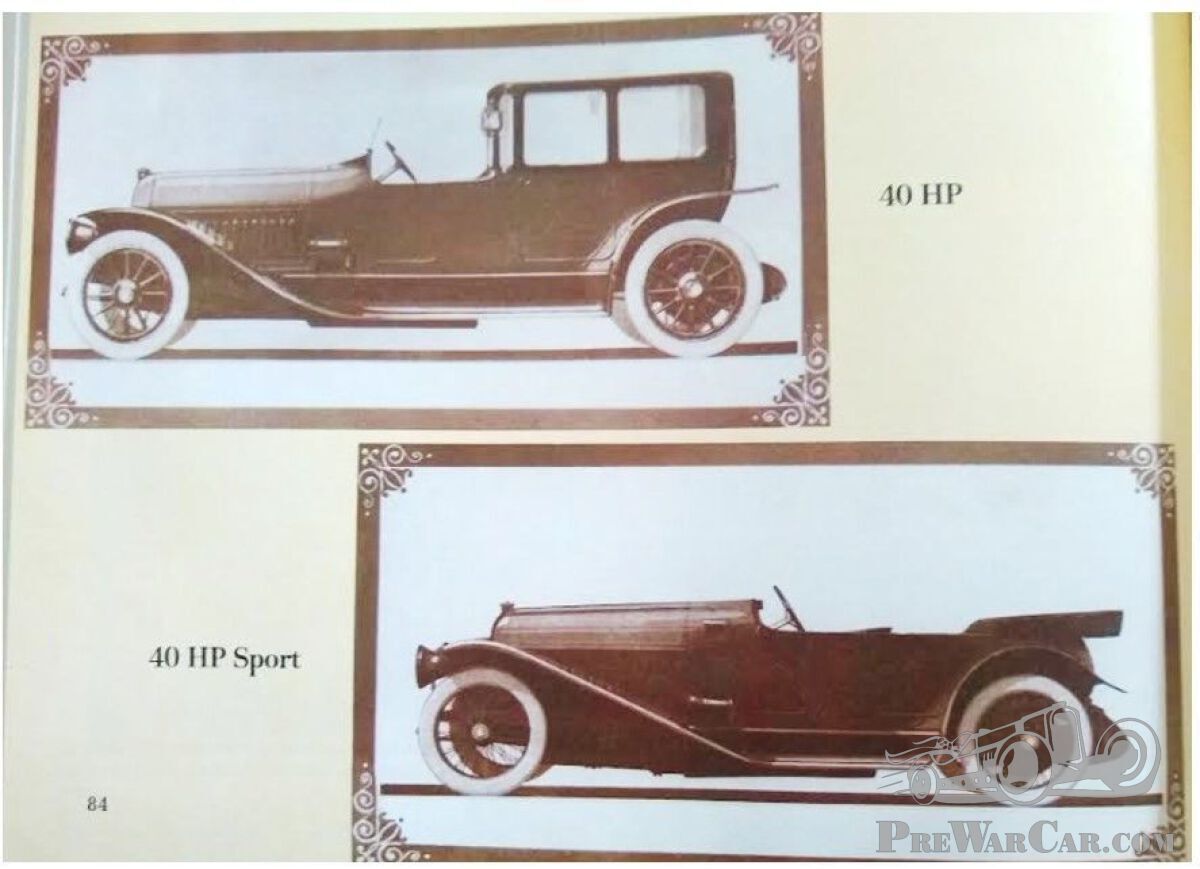
Hello. This is what I found in "Toutes les Peugeot" by René Bellu (1980). The pictures of the 40 HP and 40 HP Sport come from the 1914 Peugeot catalogue. Kind regards, Luc Ryckaert.
Lees verder
Niepceron
03 Juli 2023, 16:21
Hello Luc,
Thank you for this but I think it’s not the same car: a front bulkhead and the radiator…
Lees verder
Thank you for this but I think it’s not the same car: a front bulkhead and the radiator…
Ariejan Bos
03 Juli 2023, 11:28
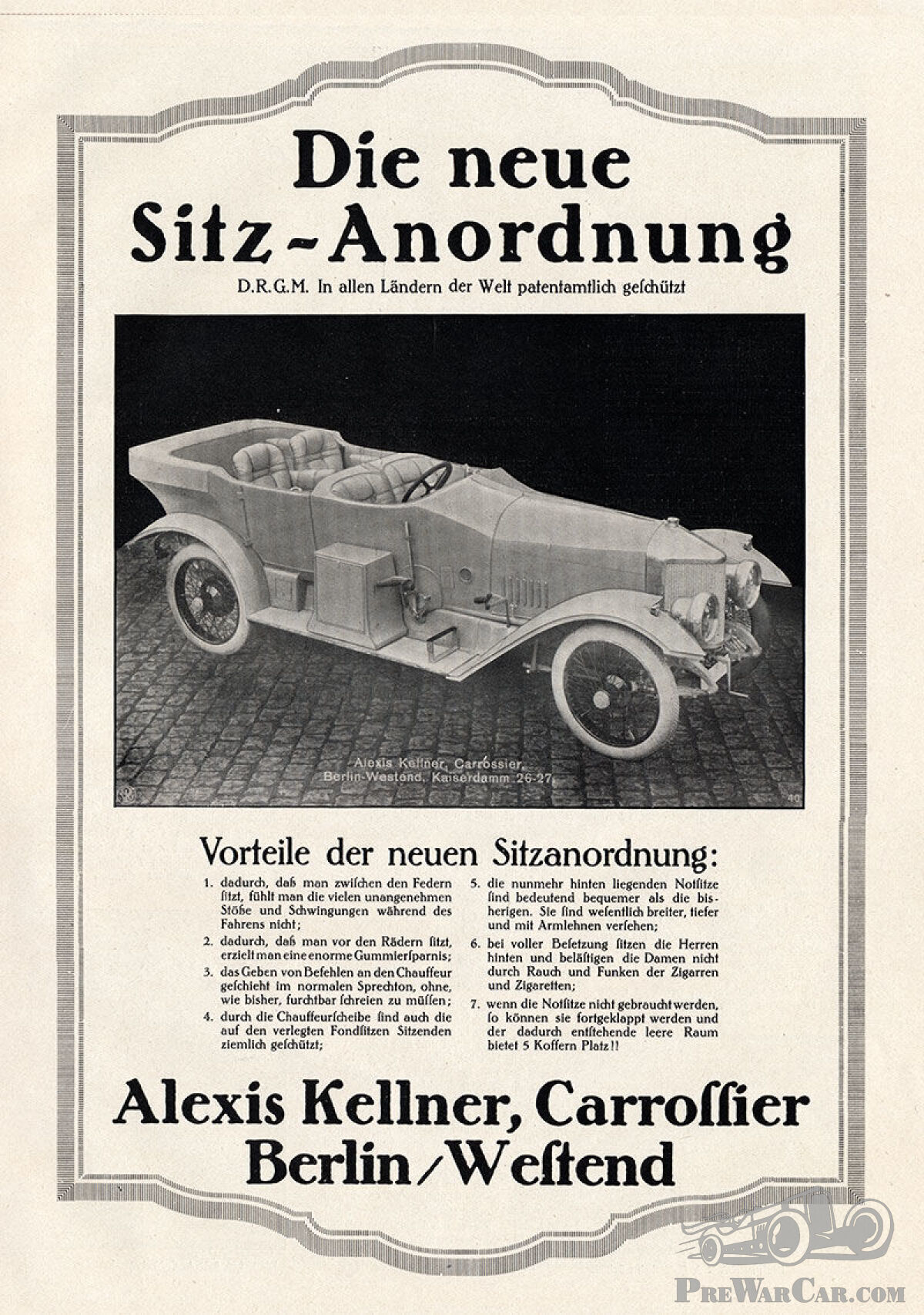
Although I have several photos of this model, based on the curiously mounted manually operated siren at the window side, it's my opinion that the car was a one-off. According to the information written on the different postcards, the Peugeot would be a 45hp or 50hp model capable of more than 100 km/h (62 mph), which was used as an instruction vehicle. The body is described as a "carrosserie boche", the derogatory name hinting at the German origin. It resembles very much the Alexis Kellner type of body of shortly before the Great War with its pointed radiator and mudguards. A well known example of this style is the better known 1914 Minerva. This type of mudguard lights was shown for the first time at the 1913 Bruxelles Show.
Lees verder
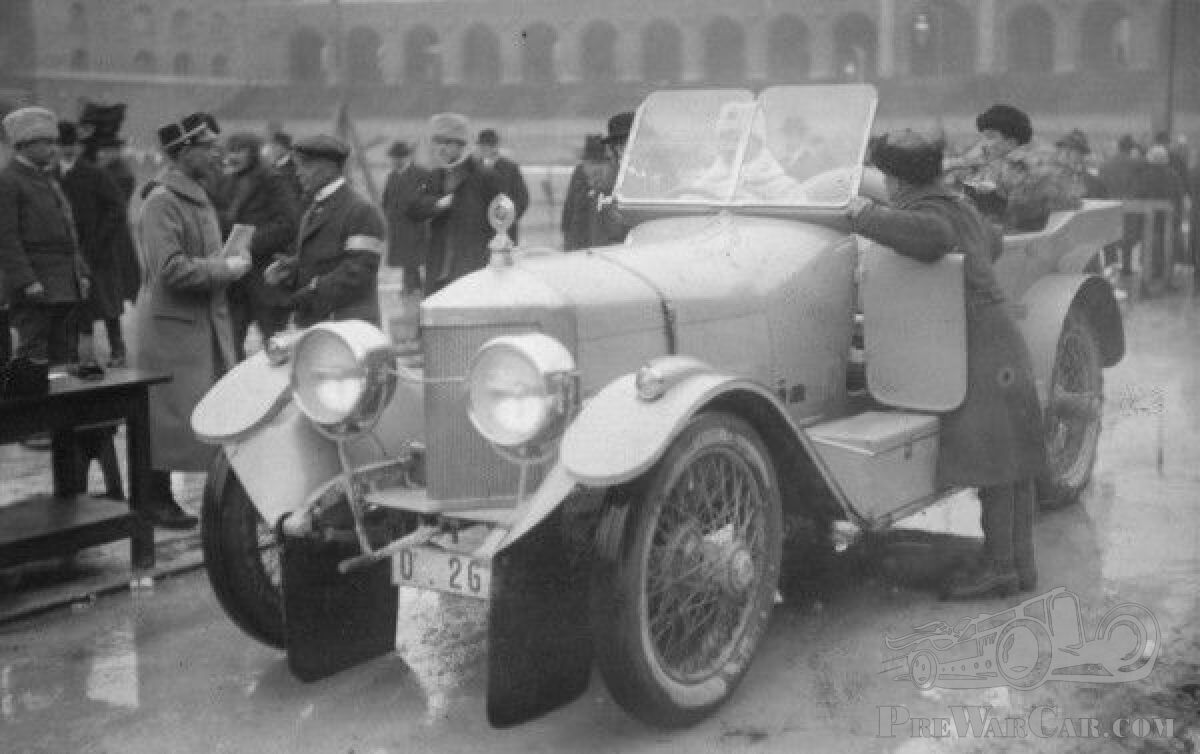
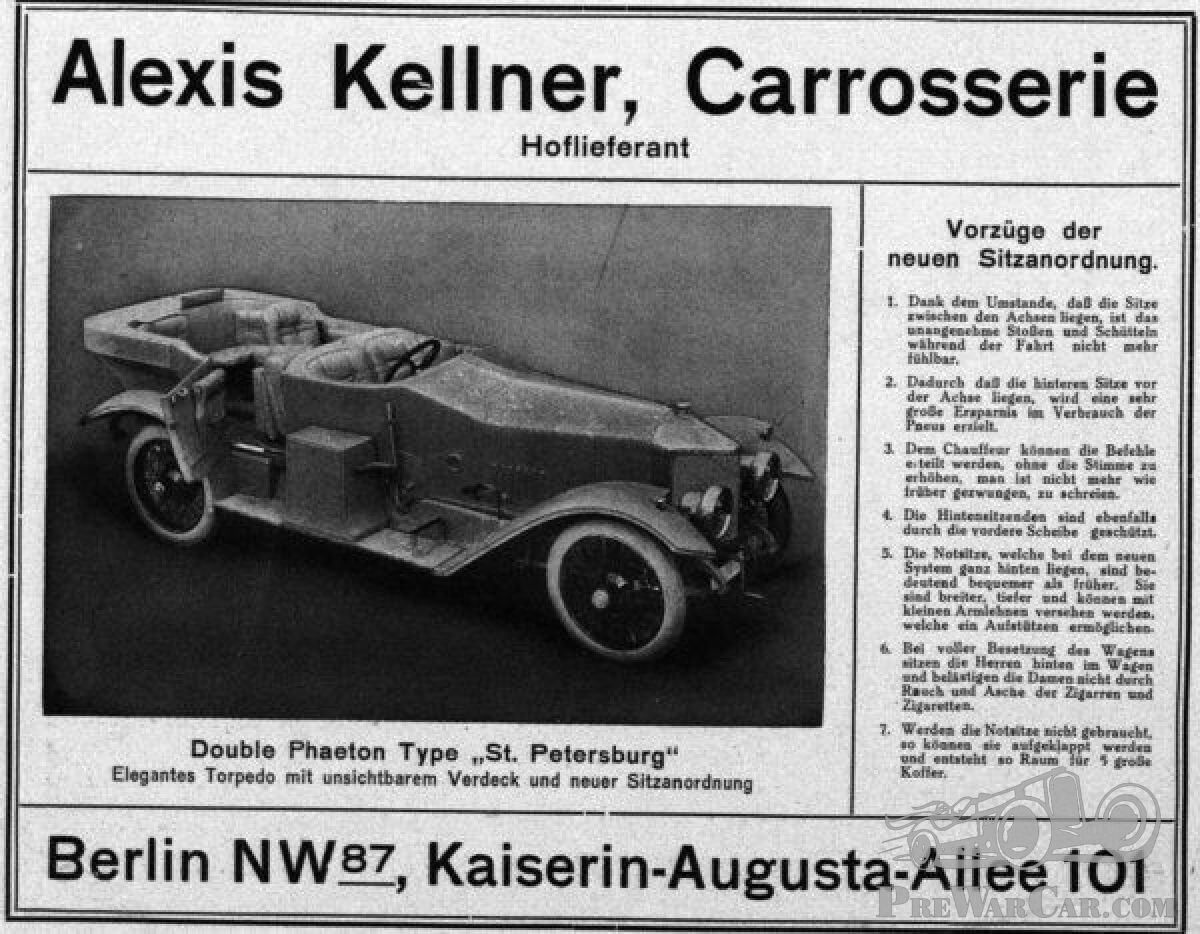
This bodywork by Alexis Kellner is of "St. Petersburg" type (photo 1).
It was mounted on several cars of different marques, German, Belgian and French.
The Kellner Minerva is indeed well-known, as Arejian reminds us. It even participated in a concours d'élégance in 1915 in Spain.
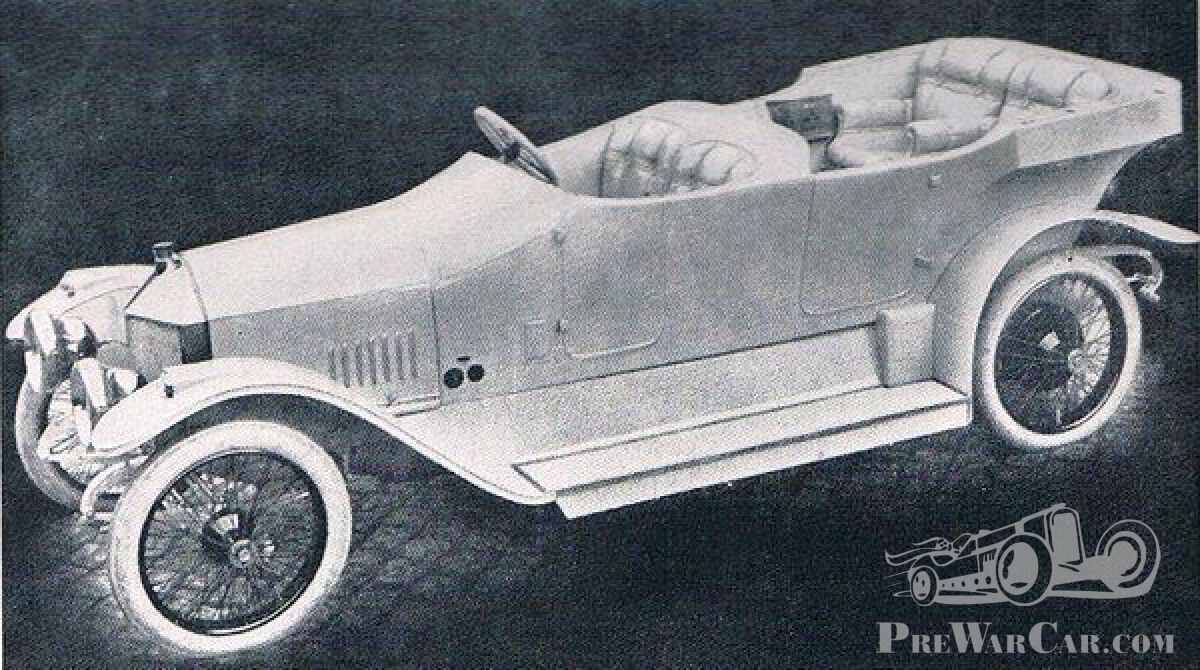
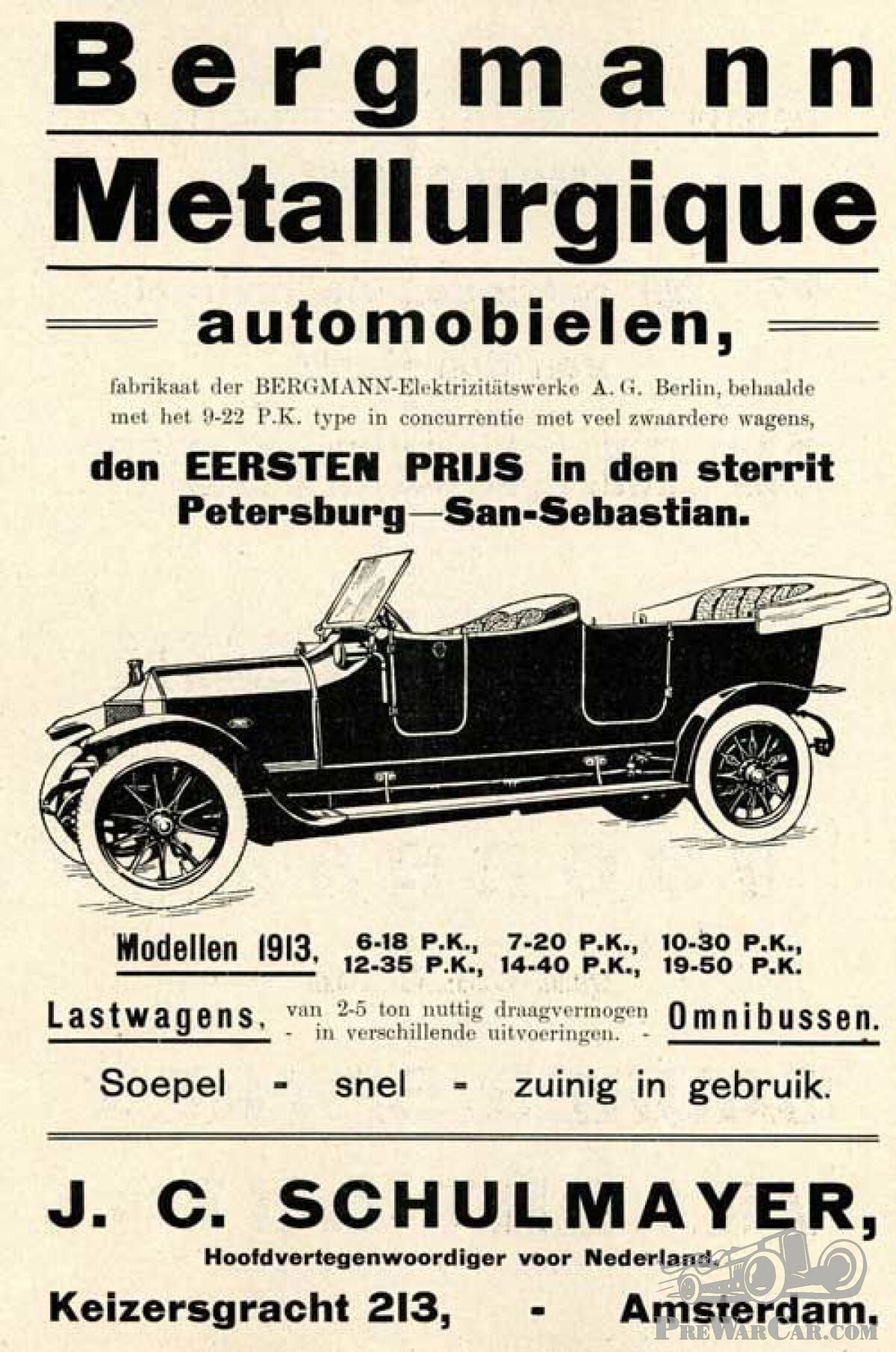
This bodywork is also found in Germany on a Bergmann Métallurgique chassis. (photo 2 and 3). Prince Georg of Saxony owned one.
The German vehicle could have six different engines: 6-18, 7-20, 10-30, 12-35, 14-40 or 19-50.
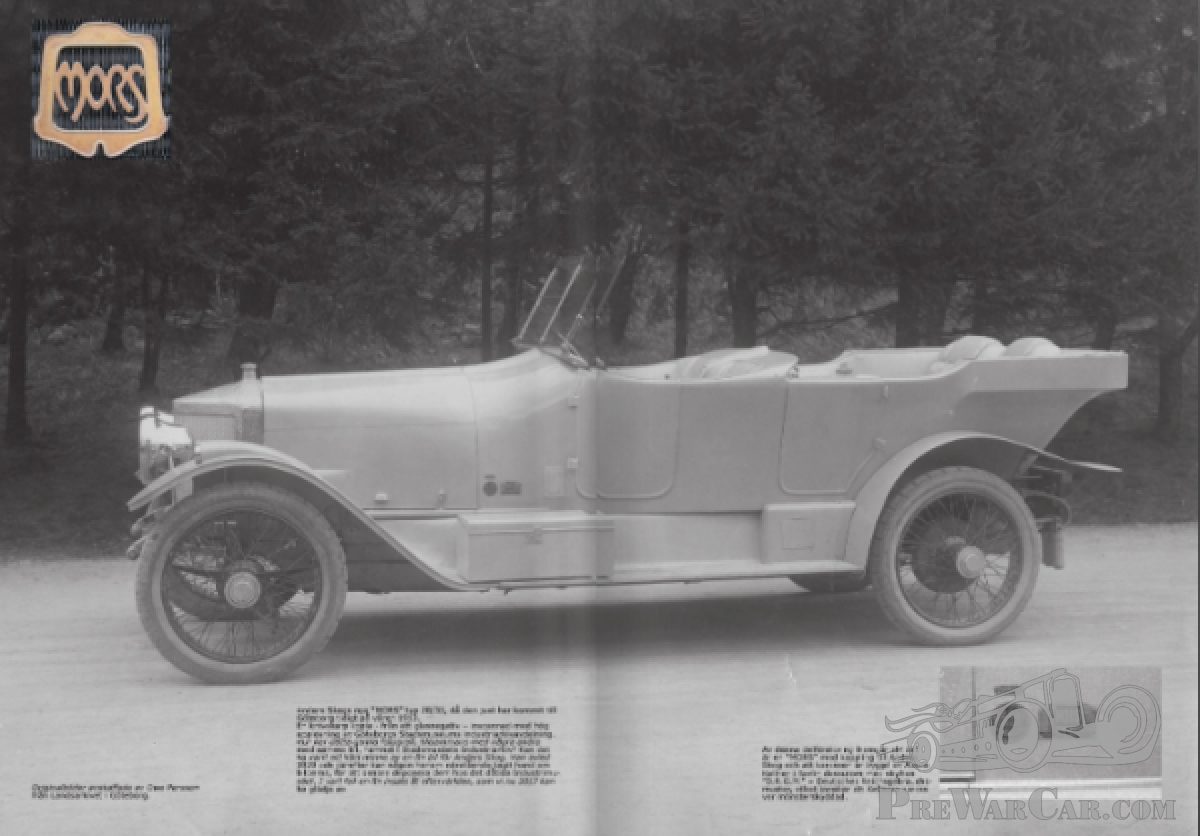
I also have photos of a French Mors car with this bodywork (photo 4 and 5).
Thank you Laurent Friry for your beautiful document.
Laurent Zoller