Het wereldwijde magazine en verkoopplatform voor liefhebbers van klassieke auto’s, door liefhebbers.
Het wereldwijde magazine en verkoopplatform voor liefhebbers van klassieke auto’s, door liefhebbers.


Maak een keuze
- Auto's
-
Merk >>
-
Bouwjaar >>
-
-
Categorie >>


Rod Briggs AC6 Special
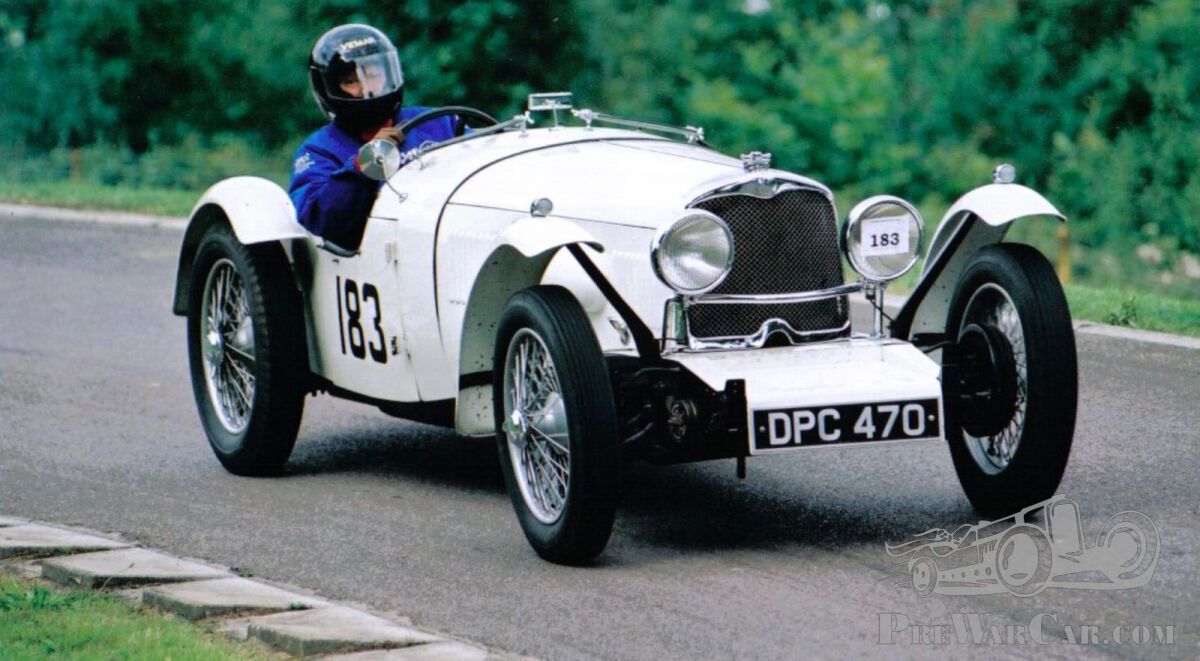

Rod Briggs AC6 Special
The 1935 Rod Briggs AC6 Special is an interesting example of a "special"—a vintage competition car built around original pre-war mechanical components but extensively developed over many decades. It is both a working competition machine and a rolling test-bed for the engineering work of Rod Briggs, an acknowledged specialist in pre-1963 AC six-cylinder engines.
Origins
The foundation of the car dates from 1935, when it began life as an AC 16/70, one of the final pre-war AC models powered by the famous 1991 cc overhead-camshaft six-cylinder engine. By this time AC had abandoned its old transaxle layout and adopted a more conventional chassis and gearbox arrangement after the company was rescued by the Hurlock brothers in 1930. The revised cars retained the sophisticated Weller-designed engine while gaining a much-improved chassis.
The AC engine itself was remarkable for its day:
- Aluminium block with wet liners.
- Single overhead camshaft.
- Chain-driven camshaft.
- Crossflow-style inclined valves.
Production life from 1919 until 1963, one of the longest-lived engine designs in British motoring.
From road car to "Special"
Like many British sporting cars after the war, the original 1935 AC was eventually converted into a special. Such cars were often stripped of heavy touring coachwork and rebuilt with lightweight aluminium bodies specifically for hill climbs, sprints and VSCC events.
Although the precise chronology of the Briggs car's transformation is not fully documented publicly, it has evolved continuously under Rod Briggs' ownership into a highly developed but period-faithful competition machine.
Rather than restoring it to factory specification, Briggs chose to develop it in the traditional spirit of British specials—extracting greater performance while respecting the original engineering philosophy.
Development under Rod Briggs
The Briggs Special has become much more than a competition car.
It serves as the principal development vehicle for the engineering business documented on the AC6 Specialist website. Many components now offered to owners worldwide were first designed, tested and proven on this car before being manufactured for customers. These include:
- redesigned water pumps
- billet crankshafts
- forged connecting rods
- improved flywheels
- upgraded timing gear
- strengthened rocker gear
- modern oil sealing arrangements
- numerous reliability improvements
Rod Briggs states that redesigned water pumps and other components have been subjected to "many hundreds of trouble-free miles" and severe hill-climb use on the Briggs Special before entering production.
Competition career
- The Briggs Special is regularly seen in:
- Vintage Sports-Car Club hill climbs
- speed trials
- sprint meetings
Competition results published by the VSCC show Rod Briggs campaigning a 1935 AC 16/70 (1991 cc) over many years, demonstrating the car's continuing competitiveness and reliability.
Importance
The Briggs Special has become influential because it helped reverse a long-standing problem among AC owners.
During the 1960s–1990s many AC six-cylinder engines were discarded in favour of Bristol, Triumph or Ford units because parts and specialist knowledge had become scarce.
Through rebuilding engines, reproducing components and proving them on his own competition car, Rod Briggs has helped make original AC engines practical again. His work has encouraged restorers to retain authentic AC power rather than replacing it with later engines.
Engineering philosophy
Unlike many heavily modified specials, the Briggs car retains the essential architecture of the original AC engine while improving durability:
- original 1991 cc overhead-cam six-cylinder layout
- period appearance
- stronger internal components
- improved lubrication
- improved cooling
- better sealing
- carefully developed performance enhancements rather than radical redesign
This reflects Briggs' philosophy that the original Weller design was fundamentally excellent and should be refined rather than replaced.
Legacy
Today, the 1935 Rod Briggs AC6 Special is significant for three reasons:
- It preserves one of Britain's most advanced pre-war engine designs in active competition.
- It has served as the development platform for many modern replacement parts now used by AC owners around the world.
- It demonstrates that the pre-war AC six-cylinder engine—designed in 1919—can still be reliable and competitive in historic motorsport when sympathetically engineered.
Although not as famous as factory racing ACs, the Briggs Special has arguably become one of the most technically influential surviving AC-engined competition cars because of its role in preserving and advancing the marque's unique overhead-cam six-cylinder engine.
Meer advertenties van deze dealer
 MG PB Mille Miglia
 Riley 12/4 Sports Special
Vergelijkbare advertenties AC AC6 Special 1935 te koop
 AC 16 / 66 - 1935 / 6 Cylinder / British Racing Green
 1934 Packard Eight 1101 Club Sedan
 1937 AC 16/70 4 seat Sports Tourer
 1934 Riley 9hp Imp
Deel:
Facebook
LinkedIn
Twitter
WhatsApp
Email
Copy





- AC
- Albert
- Albion
- Allard
- Alldays
- Alta
- Alvis
- Arab
- Ariel
- Armstrong Siddeley
- Arrol-Johnston
- Aston Martin
- Atalanta
- Austin
- Autovia
- BSA
- Bat
- Bean
- Beardmore
- Bedford
- Beeston
- Belsize
- Bentley
- Beverley Barnes
- British Salmson
- Briton
- Brough Superior
- Calcott
- Calthorpe
- Century
- Chater Lea
- Clyno
- Coventry-Premier
- Crossley
- Cubitt
- Dennis
- ERA
- English Mechanic
- Frazer Nash
- G.W.K.
- GN
- Gwynne
- H.E.
- H.R.G.
- Hillman
- Humber
- Imperial
- International
- Invicta
- Jackson
- Jaguar SS
- Jensen
- Jowett
- Lagonda
- Lanchester
- Lea Francis
- Leyland
- MG
- Marendaz
- Maudslay
- Maxim
- Morgan
- Morris
- Napier
- New Carden
- Phoenix
- Premier
- Railton
- Raleigh
- Raymond Mays
- Riley
- Rolls-Royce
- Rover
- Santler
- Siddeley
- Singer
- Standard
- Star
- Straker-Squire
- Sunbeam
- Surrey
- Swift
- Talbot
- Thornycroft
- Triumph
- Trojan
- Vauxhall
- Victor
- Vulcan
- Waverley
- Wolseley (-Siddeley)
Anders Brits auto's te koop
Adverteerder Classicmobilia
- Naam: Classicmobilia
-
Adres:
1 Farjeon Court 1 Old Farm Park
MK7 8RE Milton Keynes

Stuur bericht