Het wereldwijde magazine en verkoopplatform voor liefhebbers van klassieke auto’s, door liefhebbers.
Het wereldwijde magazine en verkoopplatform voor liefhebbers van klassieke auto’s, door liefhebbers.


Filter
Maak een keuze
- Auto's
-
Merk >>
-
Bouwjaar >>
-
-
Categorie >>
- Motorfietsen
- Onderdelen
-
Automerk >>
-
Fabrikant >>
-
Categorie >>
- Fietsen
-
Bouwjaar >>
-
Landen


A brass era mystery in the May Day parade


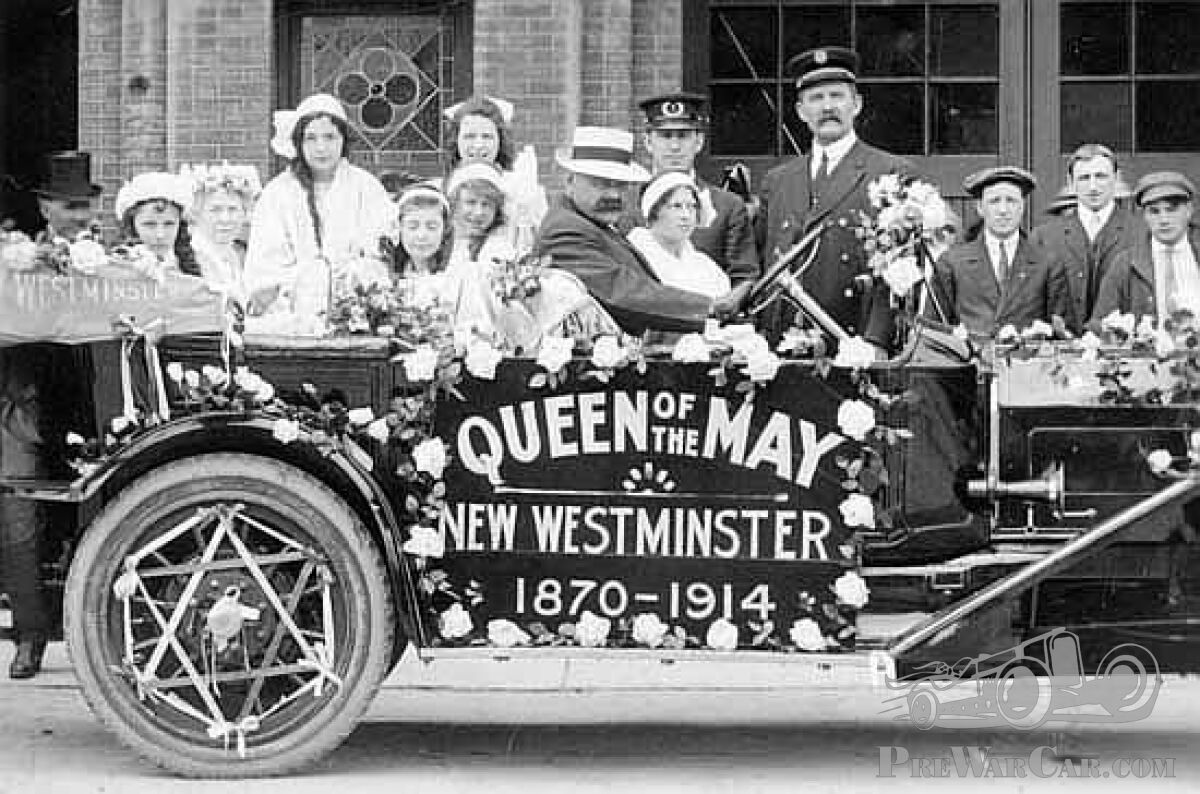
This postcard was pointed out to us by Steve. The image is taken on Columbia Street in New Westminster (B.C.) in 1914. Showing the May Day parade. As also written on the beautifully decorated car the festivities are all about the “Queen of the May.” The source tells us this special occasion May Queen Eva Atkinson was the centre of attention. Besides this, it also tells us that the building we see in the background is designed by architect F.J. Bauer and contained the fire department and city hall.
About the pre-war we see. Steve had a hard time identifying this brass era car but he thinks he figured out what car we see here. He would like to have this great car in his own garage. What he wrote to us: “the car is a McLaughlin from 1912 or a bit earlier. What makes this one special is the torpedo phaeton body. I have seen quite a few pictures of these early McLaughlins, but this is the only one with a torpedo body. The fenders might be different from the touring bodied cars.”
Do you think Steve is correct about the make of the car? Or do you have your doubts? Please comment below and tell us what you think.
Words by the editor. Photographs sent in by Steve Diggins. Source: New Westminster Archives.
Gepubliceerd:
maandag november 19th, 2018
Facebook
LinkedIn
Twitter
WhatsApp
Email
Copy
Reacties
Steve Diggins
24 November 2018, 18:27
We had a lot of fun figuring out what the May Day car was. I am sure most of us had never heard of a Havers including me. It would have been good to clarify that McLaughlins were not Buicks made under licence and the very interesting history of the collaboration between the two companies which made both a success.
Lees verder
A. Bos
24 November 2018, 11:02
Dear Peter, no, I'm sorry, I'm definitely not a Russell specialist. For identification purposes I collect images of any car ever built before WW1, but info on Canadian makes including Russell is scarce. To find more you will have to do local digging, which will be easier for you than for me! I wish you good luck in this and of course congratulations with the purchase of such a rare car!
Lees verder
A. Bos
22 November 2018, 20:53
I agree and I must admit I missed that detail. Identifying American cars is easy and difficult at the same time. Easy, because the models produced by a make almost always were exactly the same, so you know that in an identification normally all details have to match. Difficult because there were so many makes and if a car isn't one of the top 10 makes it can take a while before you'll find the exact match. Very helpful are the overview lists which appeared in the Cycle and Automobile Trade Journal showing almost every make and model in the US and which were published every year in spring. I have them from 1903 onwards and use these regularly (you can find them online in Hathitrust).
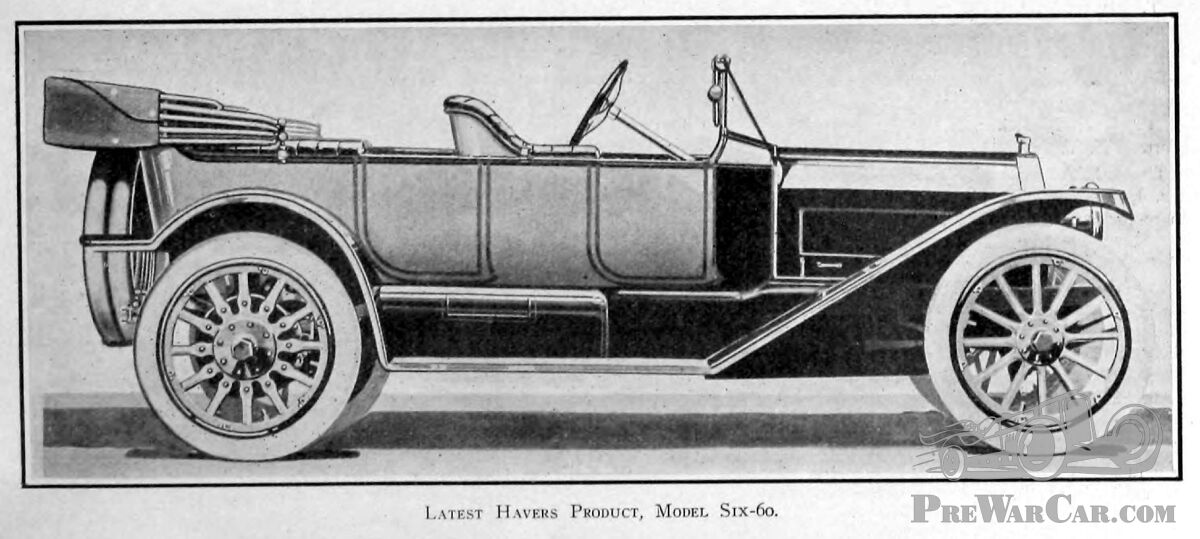
Now what we have are the following details for identication: long sloping front fenders ending horizontally with visor, rear fenders ending with a horizonal part, 8 wheel bolts rear and front (!), no louvres, a hand grip on the lower side of the hood, a torpedo dash and a rather low, slender body. A steering wheel with bent spokes. I took me about two hours to find the match: a 1913 Havers Six-60 touring car. Compare with the uploaded picture (published in the Horseless Age of June 11, 1913) and you'll see it's all there. The only link with Canada I could find was that the Havers was built in Port Huron, Michigan, which was located immediately beside the US border with Canada.
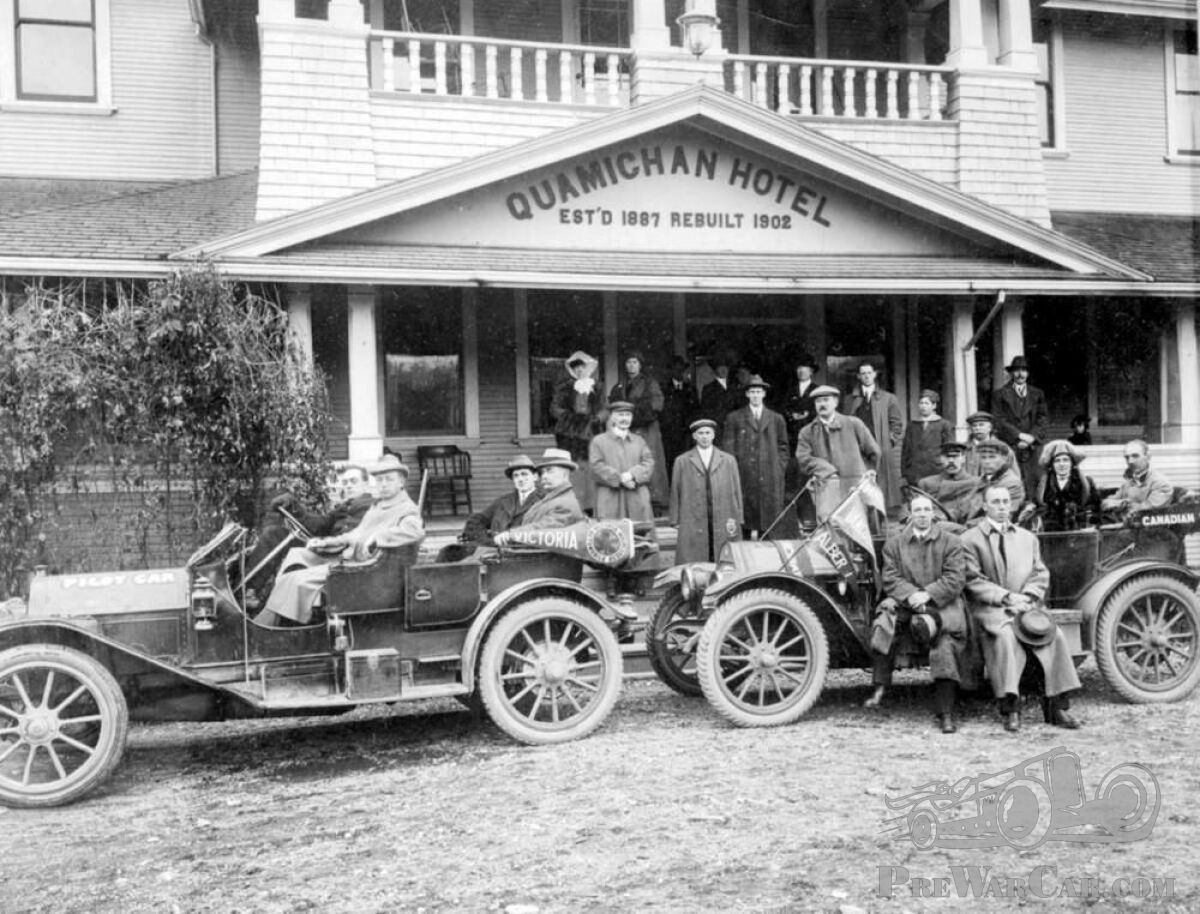
Yesterday I forgot to upload picture no. C-08377 from the BC Archives, so I've added that too and if you would check the Reo and the Cadillac models in period publications, you'll find that these are exact matches too.
Lees verder
Now what we have are the following details for identication: long sloping front fenders ending horizontally with visor, rear fenders ending with a horizonal part, 8 wheel bolts rear and front (!), no louvres, a hand grip on the lower side of the hood, a torpedo dash and a rather low, slender body. A steering wheel with bent spokes. I took me about two hours to find the match: a 1913 Havers Six-60 touring car. Compare with the uploaded picture (published in the Horseless Age of June 11, 1913) and you'll see it's all there. The only link with Canada I could find was that the Havers was built in Port Huron, Michigan, which was located immediately beside the US border with Canada.
Yesterday I forgot to upload picture no. C-08377 from the BC Archives, so I've added that too and if you would check the Reo and the Cadillac models in period publications, you'll find that these are exact matches too.
Peter Findlay
24 November 2018, 08:25
Wow, nice match! I got to wondering how a Havers would end up way out here in British Columbia so I checked the BC registration archives. I found a few Havers, and one was registered to S. H. Thompson of New Westminster in September of 1913. This is probably the car in the photo. BC plate number 6257.
A. Bos, would you have any information on 1910 Russell models? I recently acquired one and would love to see any sales or other info.
Lees verder
A. Bos, would you have any information on 1910 Russell models? I recently acquired one and would love to see any sales or other info.
Peter Findlay
22 November 2018, 08:03
Here is another picture which is a little closer. You can see that it is a right hand drive - not a 13-14 Russell. Also, it has 8 bolts on the rear wheel hub. A Russell would have 6 bolts.
Lees verder
Peter Findlay
22 November 2018, 06:37
This car is definitely not a 1912 Russell Torpedo. These had very flat-topped, squared off fenders. It could be a 1913 or 1914 Russell if it is a left hand drive. It's hard to tell from the photo which side the driver is on. Even so, the rear fenders do not look correct for a 13-14 Russell.
Lees verder
Ariejan Bos
21 November 2018, 21:52
That is interesting as neither of these two cars is a McLaughlin. The car at the front is a 1910 Cadillac model 30 toy tonneau and had been apparently a pilot car in some sort of reliability trial. The other car is a Reo 1912 touring car (probably Canadian built) and very similar to the Reo used for the first crossing of Canada by automobile in 1912 (photos also in the BC archive).
Lees verder
Peter Findlay
23 November 2018, 07:45
Yes, the C-08377 photo shows the cross-Canada REO. The driver is Jack Haney and Thomas Wilby is in the rear seat, with his wife I presume. The front car may have belonged to A.E. Todd, who organized the Good Roads Movement from B.C. and contributed the Todd Medal for whomever would be the first to make the coast to coast drive successfully. It wasn't claimed until the 1940s, I believe. If Todd is not in the Cadillac, then he's elsewhere in the picture, almost certainly.
Lees verder
Steve Diggins
21 November 2018, 04:13
The BC Archives photo of the two McLaughlins is numbered C-08377
Lees verder
A. Bos
20 November 2018, 10:45
I have my doubts about the car being a McLaughlin. In fact this make was of course a Buick built in license and there are two details which just do not fit: the horizontally ending front fenders and the hood lacking louvres. These features you'll not find in a McLaughlin in the period 1911 to 1914, but you will in another Canadian make, the Russell. This type of torpedo body was a common feature for many American cars from about 1911, including the MacLaughlin and the Russell. I agree that there are not many McLaughlin photos to support this (but they exist), and there is at least one 1912 example with a similar body still with us. And if you want to see more, just check the Buick of that period. The same is true for the Russell and although the car is not very visible and sharp in this photo, Russell was a also common appearance in Canada and based on the earlier mentioned details in my opinion therefore a better option.
Lees verder
Steve Diggins
20 November 2018, 10:08
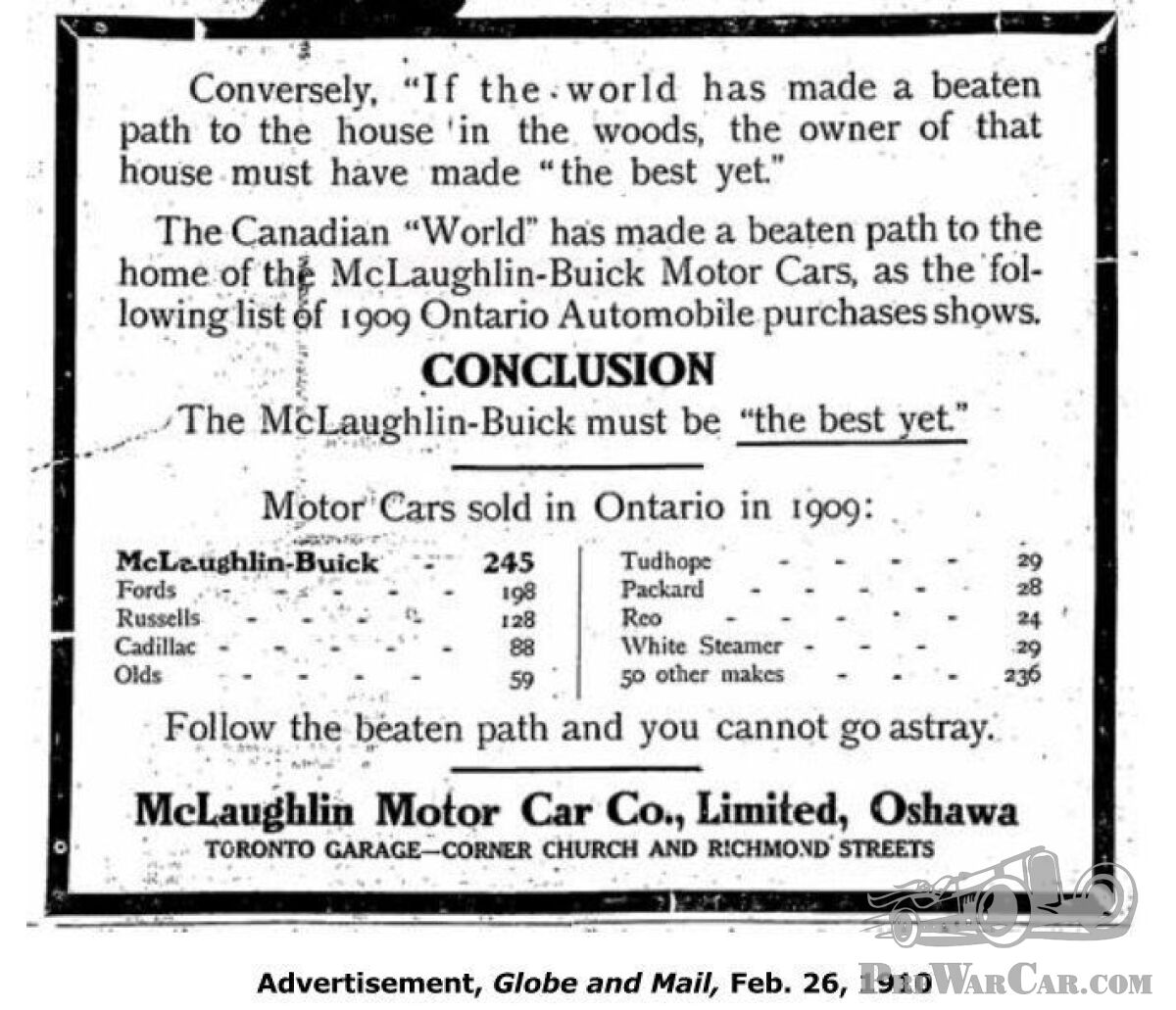
This ad from 1910 shows how well respected and successful McLaughlin cars were. It also shows how crowded the market place was with over fifty different makes being sold.
Lees verder