Het wereldwijde magazine en verkoopplatform voor liefhebbers van klassieke auto’s, door liefhebbers.
Het wereldwijde magazine en verkoopplatform voor liefhebbers van klassieke auto’s, door liefhebbers.


Filter
Maak een keuze
- Auto's
-
Merk >>
-
Categorie >>
- Motorfietsen
- Onderdelen
-
Automerk >>
-
Fabrikant >>
-
Categorie >>
- Fietsen
-
Bouwjaar >>
-
Landen


"It's with this Bignan I crashed the other day..." (UPDATE IV: Bignan used only their own engines)
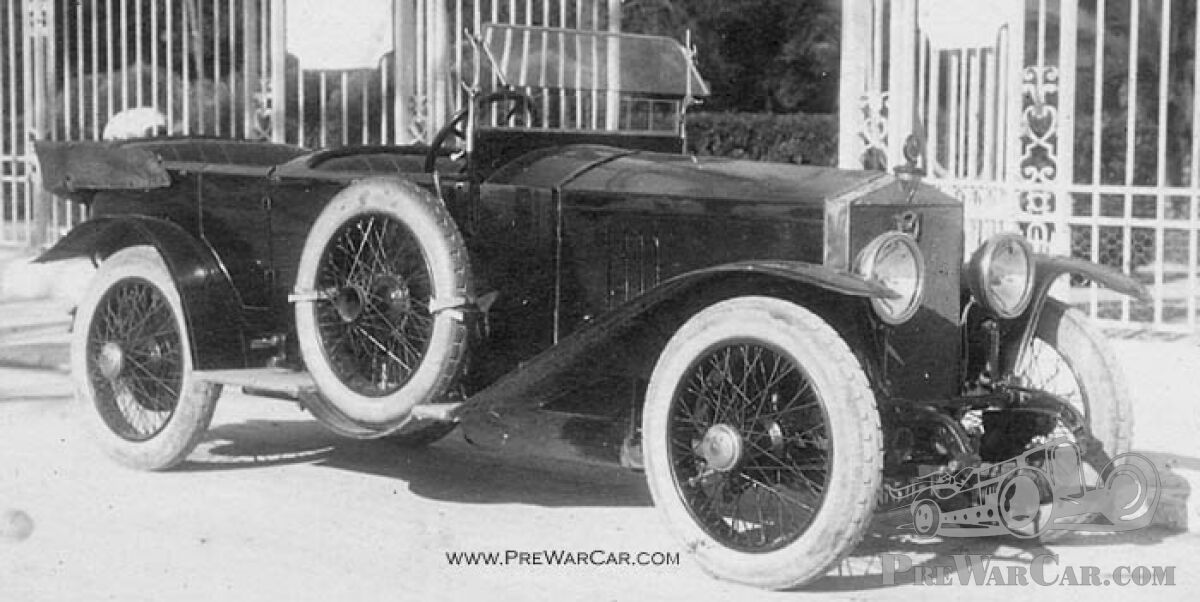

A shiny and rare Bignan Torpedo, but shit happens. The backside of the postcard reads in ancient fountainpen handwriting (in french) : this is the fourseater car that got involved in an accident the other day' . These last words refer to a day some 80 years back. Only a handfull of Bignan cars have survived. We wonder who can give a rough guess on the total number of survivors.... Most Bignan's had interesting engines, all French, all sporty. 16 valves, Scap, Ballot, Salmson. So the obvious question is which powerplant is/was hiding under the bonnet of this Bignan? Can you date this Bignan and give a rough guess about the engine?
(UPDATE IV by Bart Oosterling >>>"Your source must have been Georgano's encyclopedia : that states usage of proprietary engines. I am pretty sure that that is wrong. I am working on a database of (car)applicatio ns of- and types of prewar-proprietary engines- I checked that also and found no proof of Bignan using other than it's own engines."
Gepubliceerd:
woensdag september 8th, 2010
Facebook
LinkedIn
Twitter
WhatsApp
Email
Copy
Reacties
Onbekend
17 September 2010, 19:34
Onbekend
12 September 2010, 21:58
Hello,Here in New Zealand I have a Bignan Sport 1919,type 132C.
Lees verder
Onbekend
09 September 2010, 16:43
Your source must have been Georgano's encyclopedia: that states usage of proprietary engines. I am pretty sure that that is wrong. I am working on a database of (car)applications of- and types of prewar-proprietary engines- I checked that also and found no proof of Bignan using other than it's own engines.
Lees verder
Onbekend
09 September 2010, 15:59
(as promised) It seems there were no SCAP's, Chapuis-Dorniers, Ballots, CIME's, Ruby's etc. in Bignans: From Bolster: Bignan started as an engine manufacturer. His first competition car was a 1400 cc. Production Bignan cars had big 4 cyl. 2940cc and 3457cc. Later (ca. 1922) for the Bignan Sport a 2 litre 'desmodromique' engine which won the 24hrs at Spa in its class. For 1923 engines had 16 valves. In 1924 a 6 cylinder version of the same engine. Bankruptcy through too much racing followed. Left over Bignan radiators were fitted to E.H.P.'s. Dumont's "French cars form 1920-1925 pictures a very similar Bignan on page 59 stating it as a 1923 model, and a later more sophisticated type 11 CV on page 61. This book als confirms that there were no proprietary engines in Bignans...
Lees verder
Onbekend
09 September 2010, 12:45
As President of Amicale Bignan in charge of survivors . I will come with the register as soon as possible.
The photo represents i think a 3l or a 3,5 l because as explained by Marc no front break.
A register of surviving cars exist: i have it. The link to of survivors in the text is my Bignan in progress to be restored.
Lees verder
The photo represents i think a 3l or a 3,5 l because as explained by Marc no front break.
A register of surviving cars exist: i have it. The link to of survivors in the text is my Bignan in progress to be restored.
Onbekend
09 September 2010, 12:42
It appears to be a circa 1919/1920 17CV with a 3.5 liter four cylinder engine designed by Causan. This machine does not have front brakes unlike the later 11CVs which were powered by 2 liter SOHC engines again designed by Causan. There were 3 iterations of the 2 liter, including an early one with desmodromic valves and of course a 16 valve version. In addition to competition success their 1923 and 1924 adverts touted the "autoservo-regulateur" servo assisted front brakes. In 1924 the Bignan 2 liter 6 place torpedo was priced at 41,200 francs against the 2 liter 4 place Ballot at 46,000 francs and the Bugatti 8 cyl 2 liter torpedo at 57,000 francs.
Lees verder
Onbekend
09 September 2010, 10:44
I am pretty sure Bolster's book "French vintage cars" can answer that: http://www.tddejong.nl/classic/104.jpg
I will check it tonight and follow up.
Lees verder
I will check it tonight and follow up.
Onbekend
09 September 2010, 08:16
Only twelve are in my list of survivors, but even amongst those can be double entries. One is (was) in the USA, one in Germany. A very early one from 1919 can be seen in the Talmont Musseum.
Lees verder
Onbekend
09 September 2010, 00:00
Jacques Bignan undoubtedly produced some excellent cars and engines achieving significant racing success. I would suggest that the car in the picture is a more standard tourer. No front brakes in evidence so likely early twenties. Possibly an early chassis with one of the big 4 cylinders of 3.0l or 3.5l. If as late as '23 could've been equipped with the more 'sporty' 2.0l 16 valve twin-plug head engine. I believe that a register of surviving cars is being developed.
Lees verder
As promised, i come back with the informations about the topics required on this subject.
As President of French Amicale BIGNAN and because my grand uncle was the owner of BIGNAN betwwen 1924 and 1931, i have started a big study on Bignan collecting a lot of automobilia around this make.
My objectives are : collect informations, do register of survivors, help to owners, write of a book ...
Concerning the production based on the infos i have today: i can say that Bignan produced :
With Bignan engine
Around 500 Type 3 liters / 3,5 liters
Around 3000 type 2 liters including the 2 liters desmodromic
With Salmson engine
996 Cyclecars 1100 cc
Bignan produced around 1000 chassis including :
Type 15000 with SCAP or Ballot engine 1600cc
Type 8cv with EHP engine
Some 6 cylinders and 8 cylinders with Bignan engine
Concerning the register of surviving: i have in my book:
5 Types 132C or 13000 ==> 3liters or 3,5liters
10 Types 2 liters including a copy/replica of the desmodromic without original motor
2 types 15000 with SCAP engine
Maybe some others exist and i should be very pleased if i can have contact .
To complete my personnal collection, i should be pleased if i can have a nice copy of the photo of this subject.
Feel free to contact me
Kind regards
Pascal ROUSSELLE