Het wereldwijde magazine en verkoopplatform voor liefhebbers van klassieke auto’s, door liefhebbers.
Het wereldwijde magazine en verkoopplatform voor liefhebbers van klassieke auto’s, door liefhebbers.


Filter
Maak een keuze
- Auto's
-
Merk >>
-
Bouwjaar >>
-
-
Categorie >>
- Motorfietsen
- Onderdelen
-
Automerk >>
-
Fabrikant >>
-
Categorie >>
- Fietsen
-
Bouwjaar >>
-
Landen


Grese Gun end question
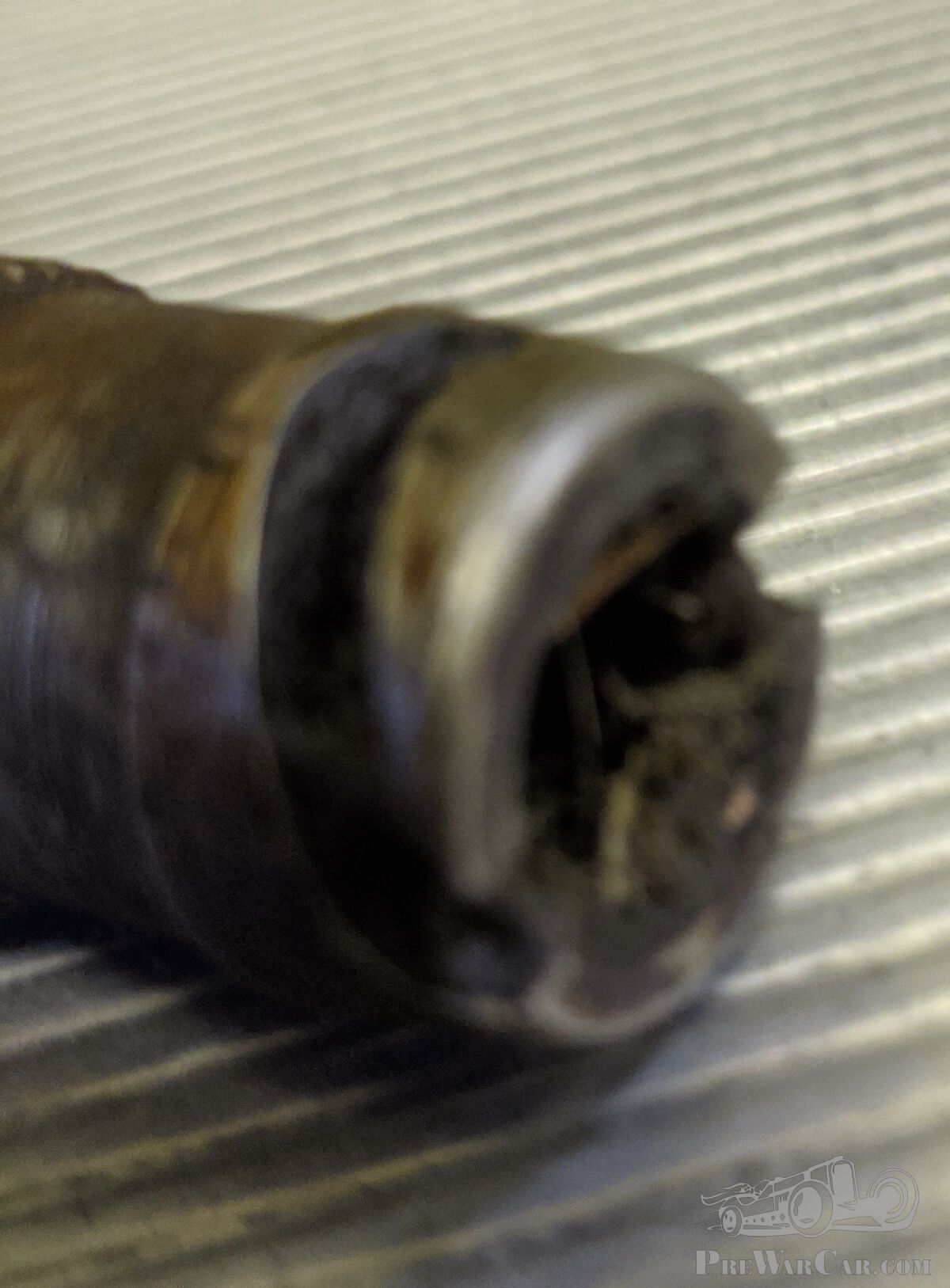


What is the name for this type of grease gunend?
Thanks.
John Peirson.
Gepubliceerd:
woensdag april 29th, 2020
Facebook
LinkedIn
Twitter
WhatsApp
Email
Copy
Reacties
John Peirson
02 Mei 2020, 06:24
Thank you David, Leo and Larry. With the information you provided I have been able to find a friend with a car that uses Alemite grease fittings. Now I need a similar grease gun with an Enots end for oiling my 1927 Rolls-Royce 20 hp.
Lees verder
Larry A. Lewis
29 April 2020, 15:56
They are called Zerk fittings today, in North America at least. Zerks are an improvement on the Alemites as they have a mushroom head which allows the grease gun to attach to it without the need to align the gun with the two projections. When grease squirts back out of a Zerk, they are easily and cheaply replaced.
Lees verder
Leo van Stirum
29 April 2020, 10:02
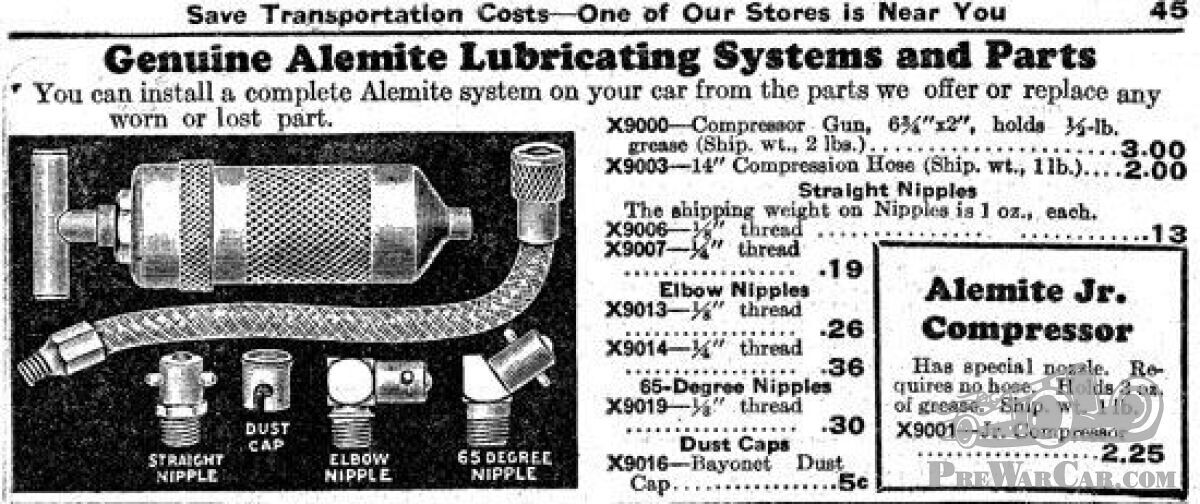
It is actually the first type of standardised grease fitting, made by the Alemite Co., here's what i found on the 'Farmcollector.com' site
In the early days of slow speeds and iron-on-iron bearings (sometimes with a brass or babbitt insert), open oil holes, into which a shot of oil was frequently squirted, sufficed. Of course, lots of dirt got into the holes, so spring-loaded, self-closing metal caps were added, and, in some cases, automatic drip or mechanically operated oilers. Bearings that required what was called “hard oil” (grease to you and me) had a grease cup. The cup held a day or two’s worth of grease and when the top was periodically turned down, grease was forced into the bearing. Henry’s Model T Ford used grease cups and oil holes exclusively.
Keeping all those cups and holes filled took a lot of time and, as usual, a guy who had to do the job thought of a better way. Early in the 20th century, Arthur Gulborg had to keep the oil cups full on all the die casting machines in his father’s Chicago factory, the Alemite Die Casting & Mfg. Co. In about 1916, he devised a screw-type grease gun and a straight, hollow fitting with a spring-loaded ball in the end to keep the grease in.
A flexible hose on the end of the gun had a slotted nozzle that was twisted onto the fitting and was held there by a small projection on each side, similar to the small automotive light bulbs still used today. After greasing, a small brass dust cap was twisted onto each fitting. Gulborg’s gun used a plunger on the end of a threaded rod at the end opposite the nozzle. A T-handle on the outer end of the rod was turned to force the plunger and the grease into the fitting and then into the bearing.
“The Alemite High-Pressure Lubricating System” didn’t really take off until 1918, when the U.S. Army was persuaded to try it out on some of the Army’s White trucks. Gulborg’s system made the lives of Army truck drivers and mechanics much easier; in July 1918 the system was adopted Army-wide. Soon automobiles were using the Alemite system as well.
Lees verder
In the early days of slow speeds and iron-on-iron bearings (sometimes with a brass or babbitt insert), open oil holes, into which a shot of oil was frequently squirted, sufficed. Of course, lots of dirt got into the holes, so spring-loaded, self-closing metal caps were added, and, in some cases, automatic drip or mechanically operated oilers. Bearings that required what was called “hard oil” (grease to you and me) had a grease cup. The cup held a day or two’s worth of grease and when the top was periodically turned down, grease was forced into the bearing. Henry’s Model T Ford used grease cups and oil holes exclusively.
Keeping all those cups and holes filled took a lot of time and, as usual, a guy who had to do the job thought of a better way. Early in the 20th century, Arthur Gulborg had to keep the oil cups full on all the die casting machines in his father’s Chicago factory, the Alemite Die Casting & Mfg. Co. In about 1916, he devised a screw-type grease gun and a straight, hollow fitting with a spring-loaded ball in the end to keep the grease in.
A flexible hose on the end of the gun had a slotted nozzle that was twisted onto the fitting and was held there by a small projection on each side, similar to the small automotive light bulbs still used today. After greasing, a small brass dust cap was twisted onto each fitting. Gulborg’s gun used a plunger on the end of a threaded rod at the end opposite the nozzle. A T-handle on the outer end of the rod was turned to force the plunger and the grease into the fitting and then into the bearing.
“The Alemite High-Pressure Lubricating System” didn’t really take off until 1918, when the U.S. Army was persuaded to try it out on some of the Army’s White trucks. Gulborg’s system made the lives of Army truck drivers and mechanics much easier; in July 1918 the system was adopted Army-wide. Soon automobiles were using the Alemite system as well.