Het wereldwijde magazine en verkoopplatform voor liefhebbers van klassieke auto’s, door liefhebbers.
Het wereldwijde magazine en verkoopplatform voor liefhebbers van klassieke auto’s, door liefhebbers.


Filter
Maak een keuze
- Auto's
-
Merk >>
-
Categorie >>
- Motorfietsen
- Onderdelen
-
Automerk >>
-
Fabrikant >>
-
Categorie >>
- Fietsen
-
Bouwjaar >>
-
Landen


De raceauto van koning Alfonso: de Delahaye met Labourdette-carrosserie


Alfonso XIII, koning van Spanje (1886–1941), was een autoliefhebber in hart en nieren. En het lijdt weinig twijfel dat hij, zoals slechts weinigen, over de middelen beschikte om zijn passie volop te beleven. Hispano-Suiza zou zijn favoriete merk zijn geweest, wat gezien de Spaanse oorsprong ervan wellicht niet verwonderlijk is.
Toen de koning in 1909 een race over 226 mijl nabij Barcelona aankondigde, steunde Hispano-Suiza het evenement maar al te graag. Later schonk het bedrijf hem een exemplaar van de auto die het voor de race had ontwikkeld. Sterker nog, het model werd vervolgens naar hem vernoemd. Zo kwam de 3,6-liter viercilinder Type 15T – of 15/45 hp, afhankelijk van de markt – bekend te staan als de Alfonso XIII. Tegenwoordig wordt hij soms beschouwd als een van de eerste echte sportwagens.
Is het bruut ogende, kettingaangedreven monster op deze foto’s dan de Hispano-Suiza-raceauto van de koning? Helaas lijkt dat niet het geval. In plaats daarvan zou het gaan om een achtliter Delahaye uit 1908, die echter wel degelijk eigendom was van onze Spaanse snelheidsduivel. Alfonso XIII was bovendien een groot liefhebber van Frankrijk.
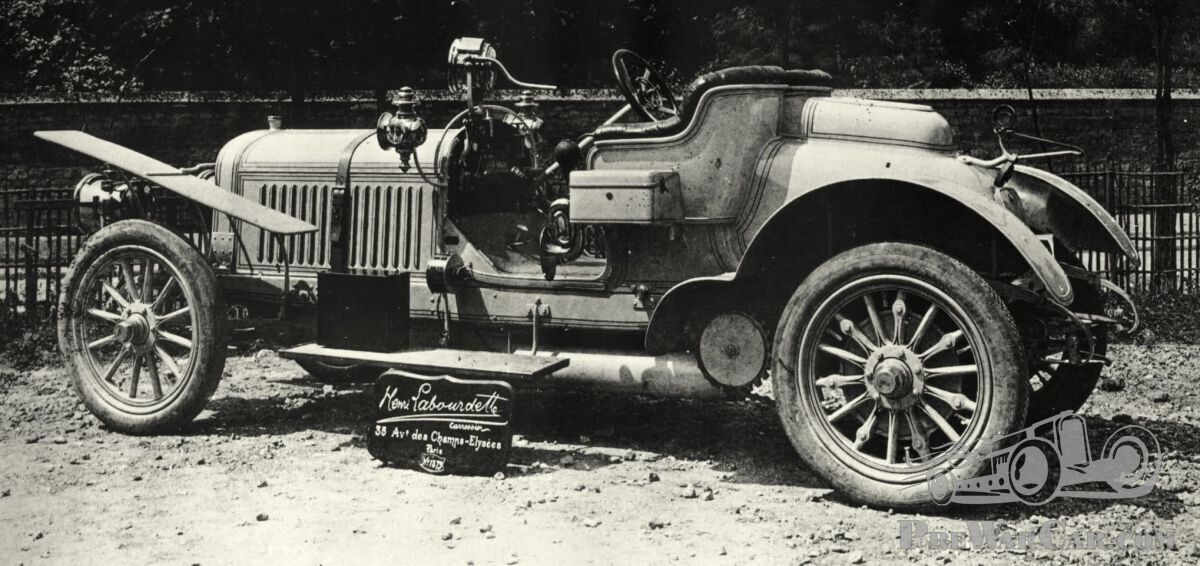
De carrosserie van de auto werd lange tijd toegeschreven aan Kellner uit Parijs. Later dook echter de eerste hier getoonde foto op, waarop duidelijk de naam van een andere Parijse carrosseriebouwer zichtbaar is: Henri Labourdette. Labourdette had een vestiging aan de Avenue des Champs-Élysées, een locatie die de vorst, die regelmatig in Parijs werd gezien, ongetwijfeld zal hebben aangesproken.
Merkwaardig genoeg lijkt er, ondanks het feit dat verschillende foto’s van de auto algemeen bekend zijn, bijzonder weinig informatie over deze intrigerende raceauto bewaard te zijn gebleven. Wie kan ons helpen de ontbrekende stukken in te vullen?
Tekst: Jeroen Booij
Foto’s: Jeff Randell / Hervé Landois
Gepubliceerd:
vrijdag augustus 28th, 2026
Facebook
LinkedIn
Twitter
WhatsApp
Email
Copy
Reacties
Ariejan Bos
06 September, 18:00
Ace Zenek
06 September, 13:28
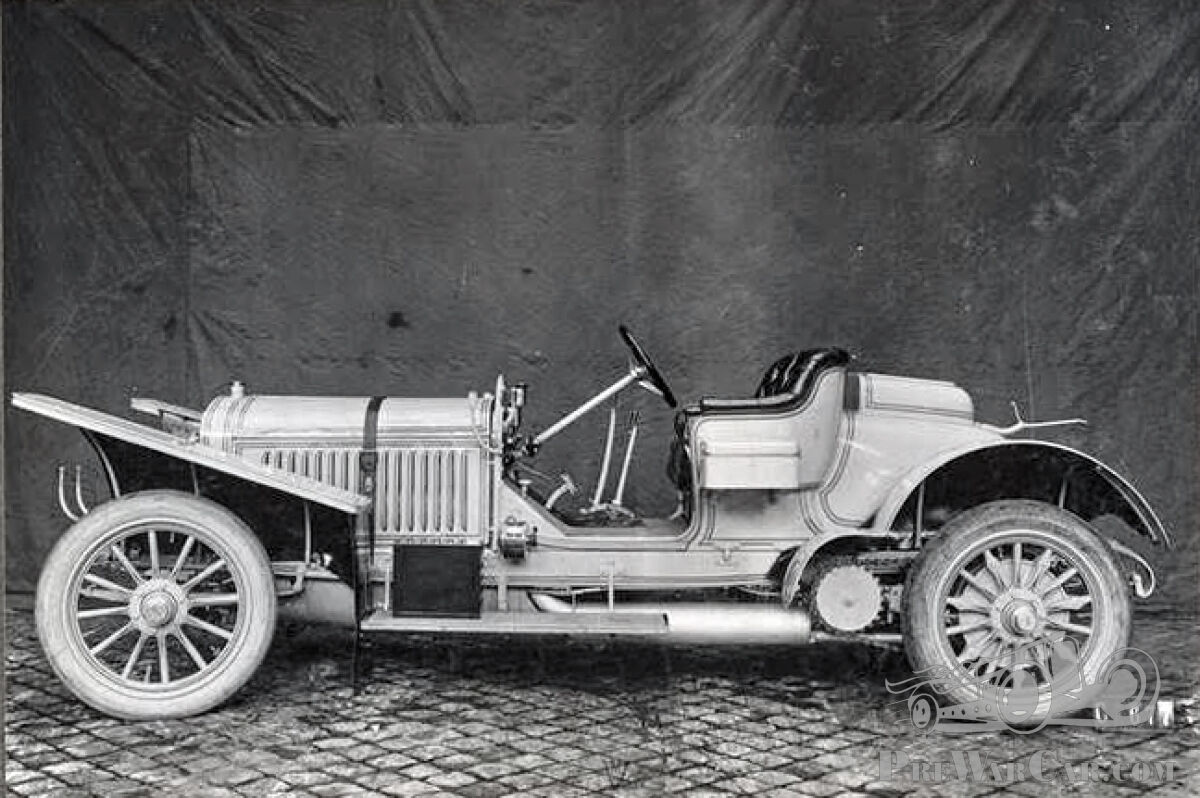
I can't fill in any of the gaps, but there are clearly differences between the Labourdette (photo 1) and Kellner (photo 2) photographs. In photo 1 we see the following.
1. Headlights, cowl lamps, spotlight, and a bulb horn have all been added.
2. There is a lock or round hole on the box mounted on the side of the passenger's seat.
3. There is a spring device over the spare tire carrier.
4. There is a rectangular plate, possibly the coach-builder's name, on the triangular piece in front of the passenger footwell.
5. The inner front dark stone guards/fenders of the front have been removed.
Possibly there are other differences, but these are what immediately caught my attention. Note that in photo 2 there is a small sign behind the left rear tire that may be a design number, but it is partially obscured by the PreWarCar logo.
Lees verder
1. Headlights, cowl lamps, spotlight, and a bulb horn have all been added.
2. There is a lock or round hole on the box mounted on the side of the passenger's seat.
3. There is a spring device over the spare tire carrier.
4. There is a rectangular plate, possibly the coach-builder's name, on the triangular piece in front of the passenger footwell.
5. The inner front dark stone guards/fenders of the front have been removed.
Possibly there are other differences, but these are what immediately caught my attention. Note that in photo 2 there is a small sign behind the left rear tire that may be a design number, but it is partially obscured by the PreWarCar logo.
Ariejan Bos
30 Augustus, 21:13
No, there is not much information on this car. Maybe that starts with the fact that Jean-Henri Labourdette in his own book named this car a Hispano-Suiza. The second photo puts us on a wrong track also, because that is a typical Kellner photo. Many Kellner bodies were photographed n front of a
black sheet and I even have a photo with a Kellner bodied car n front of this black sheet with identical folds! It is interesting to reflect on what this implicates. Photos of Kellner bodies however were always accompanied by a Kellner sign.
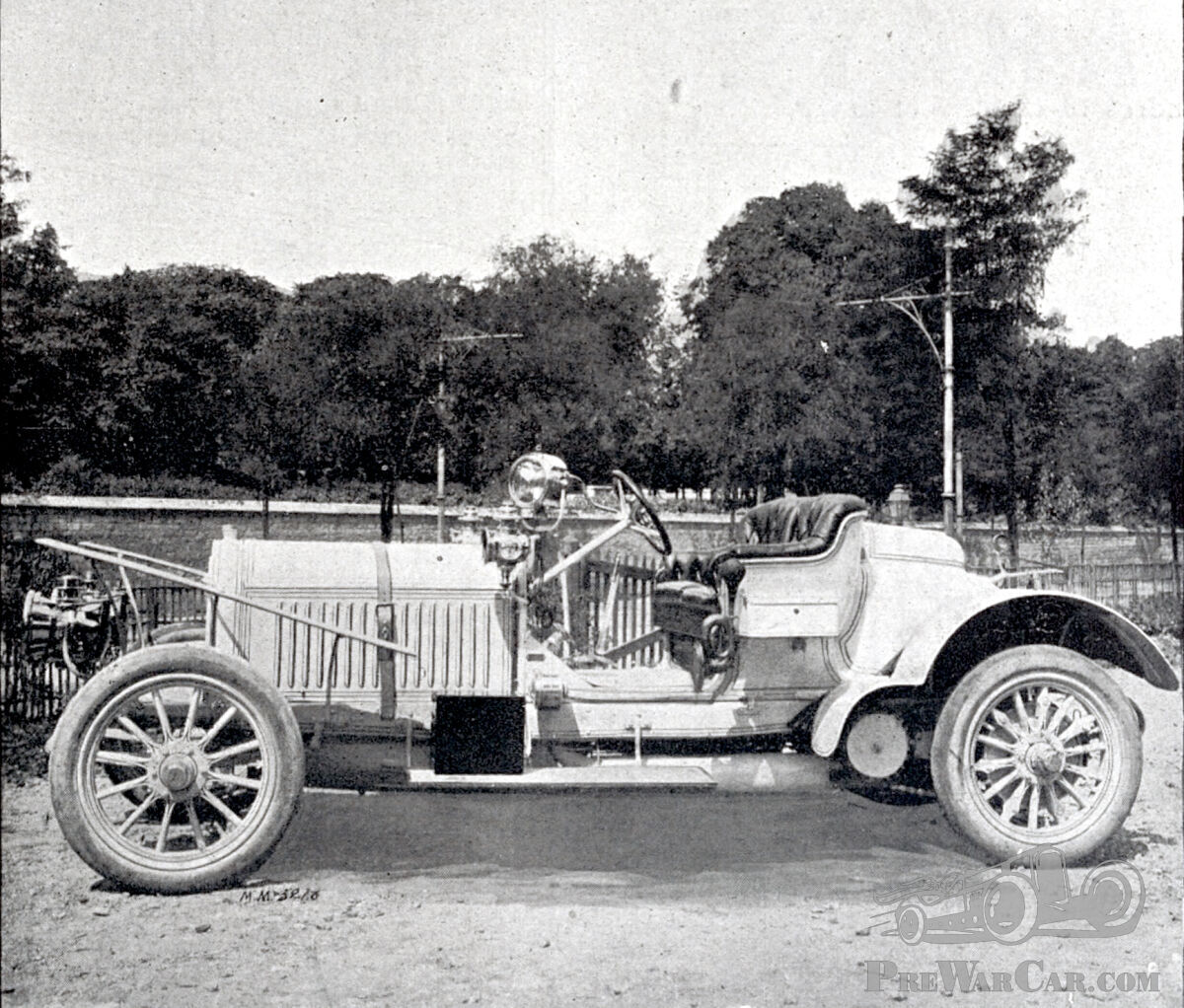
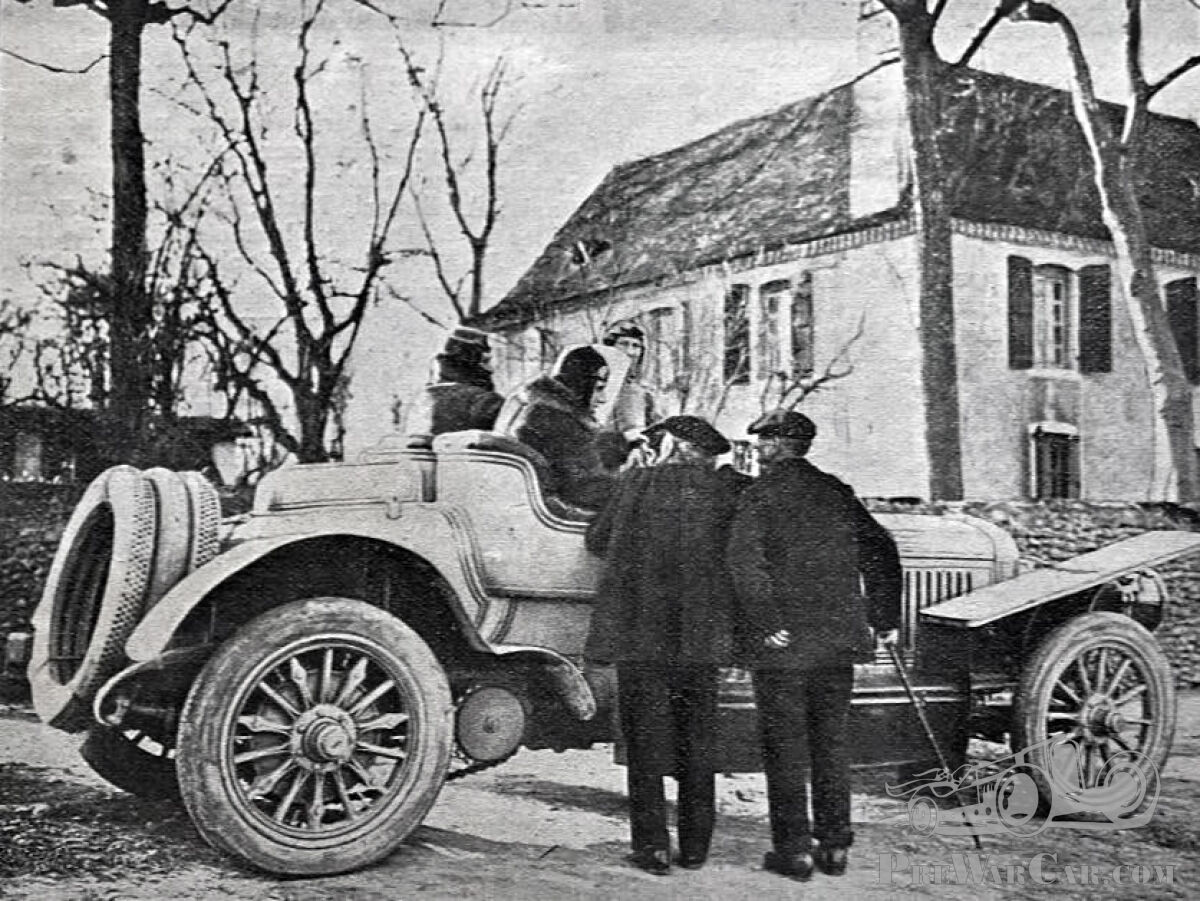
The next two photos found their way to the media. The first one (the third photo) comes from an unknown source and tells in the caption that the king used this car for pigeon hunting several kilometres from his palace El Escorial in San Lorenzo, near Madrid. The second photo (the last one) is a.o. shown in The Graphic of March 6, 1909. The caption reads that King Alfonso, returning from seeing the aeroplane ascent of Wilburg Wright in Pau, asks his way to Biarritz, one of his favourite destinations. However it was also written that King Alfonso, known to be a clever and fearless driver, had some small mishaps from time to time, resulting this time in a narrow escape from being killed near Sevilla during a trip to Villamanrique “on a powerful racing Delahaye car, which he drives for preference on such journeys.”
So the question now is: did the car survive? I can’t find any photos of this car after this accident, so possibly the car had only a very short career. What a dramatic end that would be for this remarkable car!
Lees verder
black sheet and I even have a photo with a Kellner bodied car n front of this black sheet with identical folds! It is interesting to reflect on what this implicates. Photos of Kellner bodies however were always accompanied by a Kellner sign.
The next two photos found their way to the media. The first one (the third photo) comes from an unknown source and tells in the caption that the king used this car for pigeon hunting several kilometres from his palace El Escorial in San Lorenzo, near Madrid. The second photo (the last one) is a.o. shown in The Graphic of March 6, 1909. The caption reads that King Alfonso, returning from seeing the aeroplane ascent of Wilburg Wright in Pau, asks his way to Biarritz, one of his favourite destinations. However it was also written that King Alfonso, known to be a clever and fearless driver, had some small mishaps from time to time, resulting this time in a narrow escape from being killed near Sevilla during a trip to Villamanrique “on a powerful racing Delahaye car, which he drives for preference on such journeys.”
So the question now is: did the car survive? I can’t find any photos of this car after this accident, so possibly the car had only a very short career. What a dramatic end that would be for this remarkable car!
The number on the right of the rear wheel reads C677 (all photos can be found on Coachbuild.com, which I already expected). Most if not all official photos of Kellner bodies have a similar number at the same spot. These numbers all start with a C and have the impression to be chronological. The theory I speculated on in my previous post is that it’s a photographer’s number and that by some unknown reason this photo was taken by the photographer responsible for the official Kellner photos.