Het wereldwijde magazine en verkoopplatform voor liefhebbers van klassieke auto’s, door liefhebbers.
Het wereldwijde magazine en verkoopplatform voor liefhebbers van klassieke auto’s, door liefhebbers.


Filter
Maak een keuze
- Auto's
-
Merk >>
-
Bouwjaar >>
-
-
Categorie >>
- Motorfietsen
- Onderdelen
-
Automerk >>
-
Fabrikant >>
-
Categorie >>
- Fietsen
-
Bouwjaar >>
-
Landen


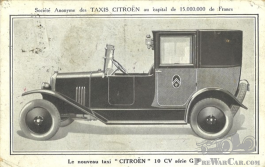
“Les Société des Taxis Citroën”
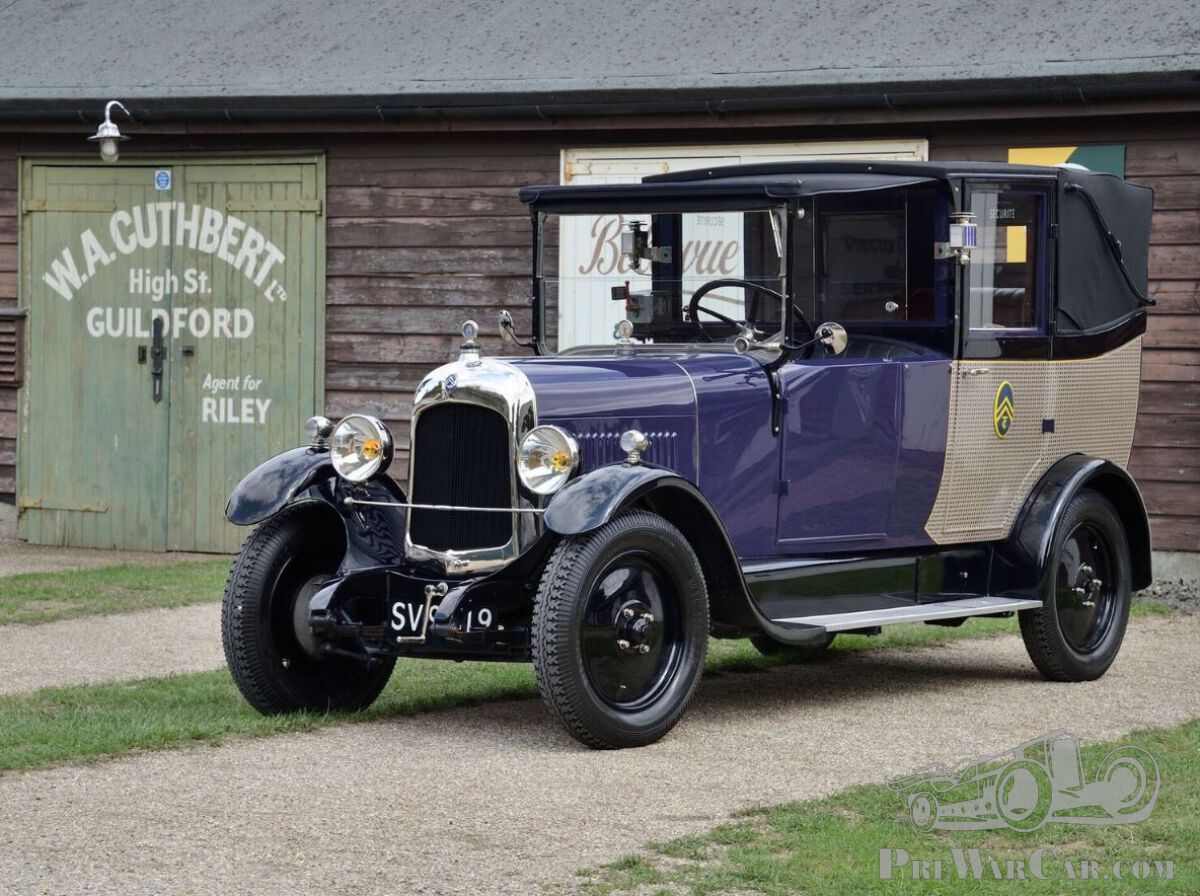


Last week we published an article in our online Magazine with the title: a De Dion Bouton restoration project with a question about the ‘Cannage’. In which Paul told us about the 1919 De Dion Bouton he restored but the problem he faced with the ‘Cannage’ panels. We asked our readers and fellow PreWarCar.com enthusiasts for tips on what they think he should do. What is the best way to restore the panels? But also recommendations for people and/or companies who can help him. Quite a few people reacted. One a little bit more helpful than the other, but well. Besides the reactions on the website, we also received an e-mail in which Martin answered to the enquiry about Cannage. He wrote the following:
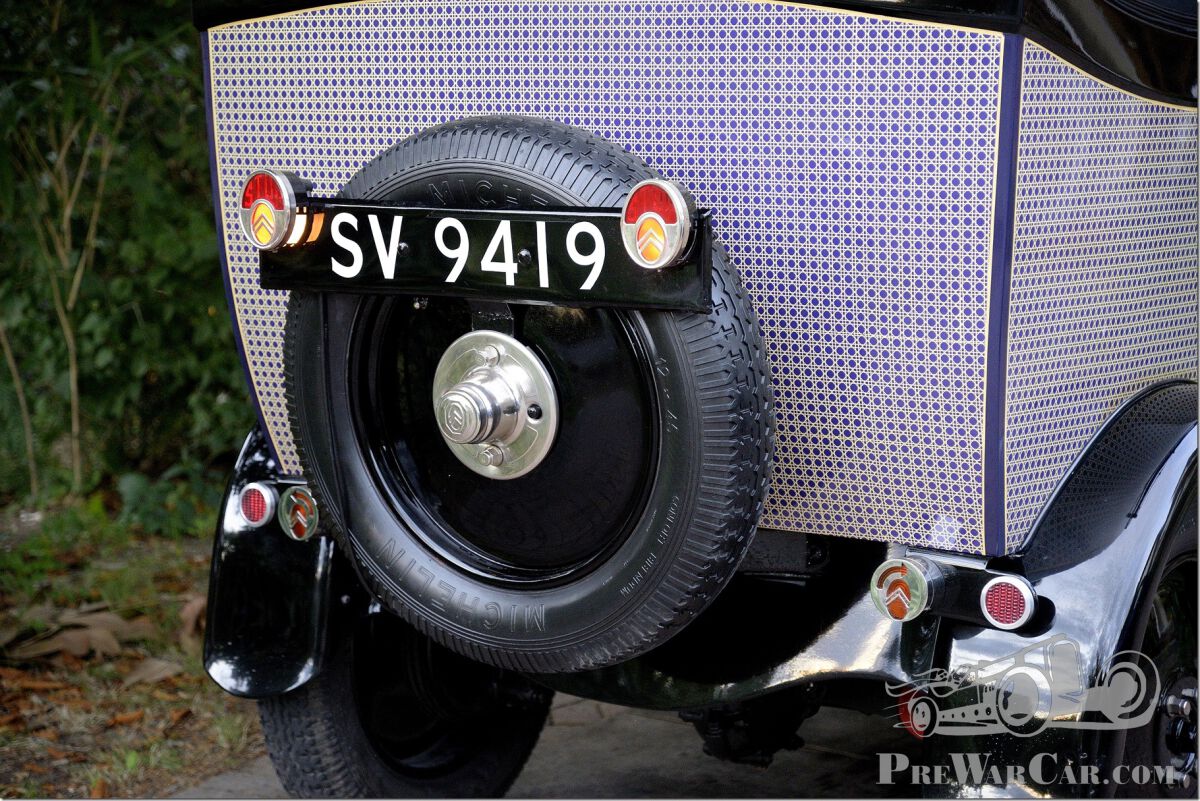
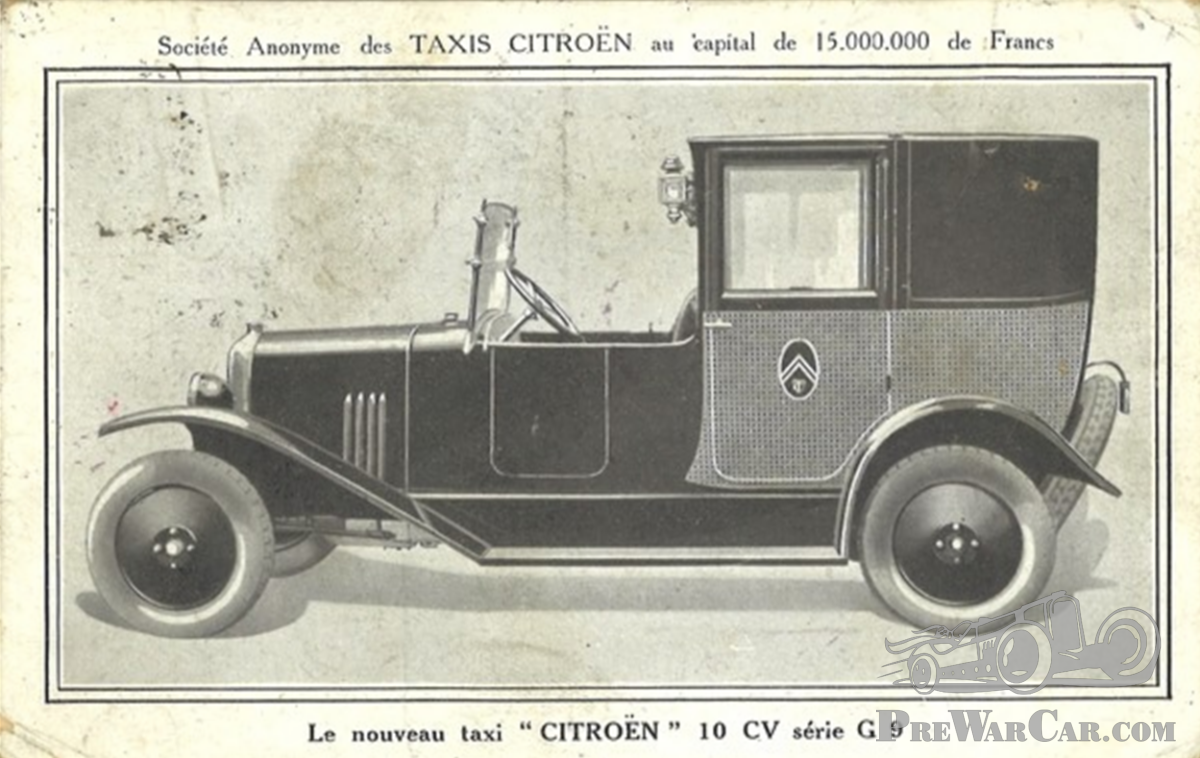
“Our 1926 B12 Taxi is probably the only one in the UK and one of very few in the world. I have yet to see another of similar quality. The bodywork and upholstery were restored by one Maurice Bailey who sadly died a year ago. I bought the Taxi from him prior to his death and finished the project.
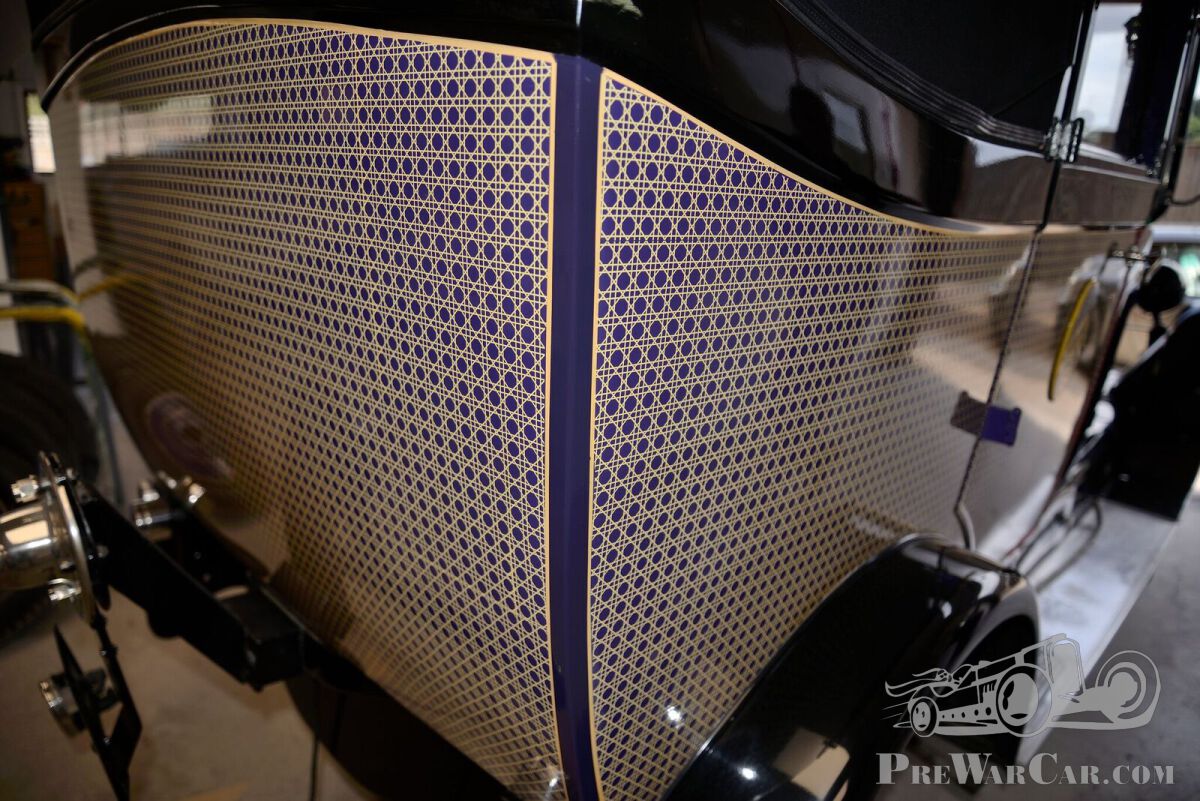
The Cannage has been applied as 300mm squares of water-based vinyl transfers. You may have applied simple transfers to your hands (they came free with sweets) when you were young/younger? According to Maurice it took a fellow whom he employed, 120 hours to do the entire vehicle. To finish the work a fine coach line was hand painted around the edges of the Cannage.
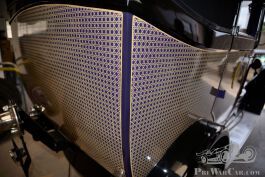
I can tell you that the hardest part of the exercise is getting all the bubbles out from below the transfer. I experimented with some spare material and just a 70mm square proved really difficult. Along the way it tears, it slides – My word !! Quelle horreur. It made the conventional “sticky back plastic” look easy in comparison. Incidentally, the badge on the door “Les Société des Taxis Citroën” was handmade using the “repousse“ technique. In England, this pattern is sometimes called a “six-way standard” a reference to the use of cane in chairs.
Like the De Dion in your article, the taxi also retains the original door furniture including the horn (not bone as you say) door pulls etc.
Now here is the tricky bit, I do not know from where Maurice purchased the Cannage transfers. However, I shall now look through all his papers to see if I can find a name or address. Paul is very welcome to come and inspect le Taxi if he wishes.”
Thank you very much, Martin, for your response. We really hope Paul can do something with one of the comments, recommendations or e-mails that came in after the publication of the article.
Do you also have a problem with the restoration of your beloved pre-war car? Please send an e-mail to [email protected] and hopefully we or one of our readers can help. But also if you would you like to show the rest of the world your wonderful craftsmanship. Send an e-mail so we can all admire your work.
In our online Marketplace, we found this wonderful 1912 Wolseley 16/20 Landaulette convertible for sale which is also beautifully decorated with Cannage.
Words by the editor. Story and photographs sent in by Martin de Little.
Gepubliceerd:
dinsdag september 18th, 2018
Facebook
LinkedIn
Twitter
WhatsApp
Email
Copy
Reacties
Pilla
08 October 2018, 13:39
Steve Bousfield
18 September 2018, 15:43
In UK this effect is usually referred to as Wicker.
Harold Radford used to do a Mini where they used real cane.
Lees verder
Harold Radford used to do a Mini where they used real cane.
Here in France there is a person by the name of Taka-Hira who makes "cannage" on cars.
You can visit his website: http://www.taka-hira.fr/
He made strips on my car (the green one on the two photos) and I am very happy with his work.
I don't know if he speaks or understands English.
Best Regards.
J.Pilla