Het wereldwijde magazine en verkoopplatform voor liefhebbers van klassieke auto’s, door liefhebbers.
Het wereldwijde magazine en verkoopplatform voor liefhebbers van klassieke auto’s, door liefhebbers.


Filter
Maak een keuze
- Auto's
-
Merk >>
-
Bouwjaar >>
-
-
Categorie >>
- Motorfietsen
- Onderdelen
-
Automerk >>
-
Fabrikant >>
-
Categorie >>
- Fietsen
-
Bouwjaar >>
-
Landen


Matching Numbers!
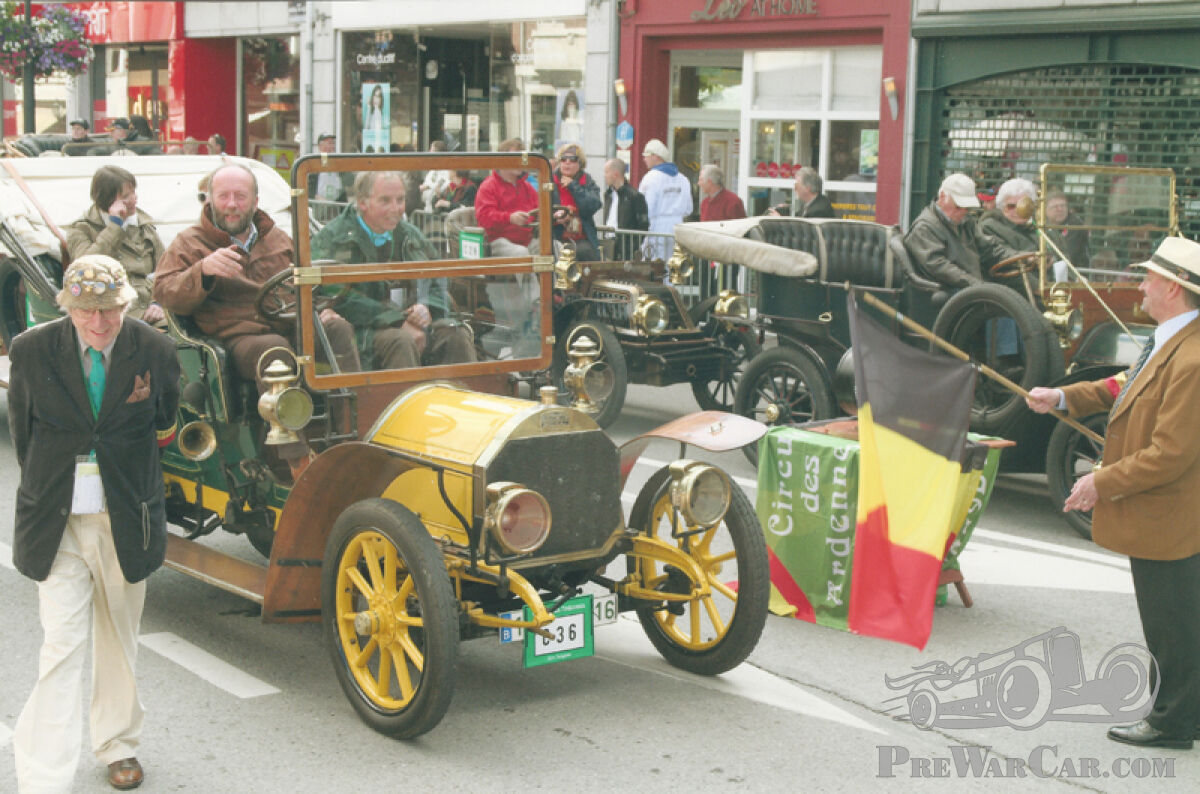

How much? And is the car matching numbers?
These are (too) often the first questions asked when amateurs (I prefer to use the French word “amateurs” because I want to underline the meaning of the word in English) approach me about a....
Gepubliceerd:
woensdag maart 22nd, 2017
Facebook
LinkedIn
Twitter
WhatsApp
Email
Copy
Reacties
Onbekend
25 Maart 2017, 23:45
Onbekend
24 Maart 2017, 09:09
Not a kid and seen some real stupid stuff in my life. The business of somebody saying all the numbers match and so that justifies another 25-50% higher price is frankly BS! There are some of the best most desirable cars out here that were built up from various cars parts and New manufactured parts. Bill Harrah was one who helped a lot of folks this way and some cars have been built up from just a chassis and a salvaged engine from another car. SO WHAT if the numbers match? Big deal!
Lees verder
Onbekend
24 Maart 2017, 00:23
It would be interesting to hear Douglas Blain's, the Publisher of The Automobile thoughts. He is the respected doyen of Originality.
Lees verder
Onbekend
23 Maart 2017, 21:00
I have a one owner 1934 Buick that is "matching numbers " but exactly as you say even that has a later push button starter on the dash and aluminium pistons ( left the factory with cast iron ) That where fitted by the original owner , then I have fitted an electric fuel pump to assist in starting when not used for some weeks . The main thing is to drive and enjoy our cars. If you want a great investment then buy art ,shares or property !
Lees verder
Onbekend
23 Maart 2017, 12:58
Well Bernard, I do get your point, but despite your observations, wich are absolutely correct, there are a lot of cars out there wich have a "numbers matching" configuration. My 1931 RR 20/25 for instance is a numers matching car, except for the body, but mechanically its absolutely original, I also have a 1956 Jag XK140 and an E-Type in my care and both have original mechanics, but I replaced the gearbox of the XK140 for an overdrive unit, the original box I kept.
So it is for us dealers, traders, mechanic´s and owners to explain what´s so special about that vehicle. People – customers, owners and bystanders do have to understand that mechanical issues might have led to a different engine or gearbox and that is no evil as long as its the right type of part. I sometimes understand the need for better brakes (mostly not), but in my point of view the most important thing about old cars is the understanding of the old machinery, there is no need for BMW 5 speed gearboxes in E-types and Xk´s, there is no need for full syncromesh gearboxes in BMW 328´s and no need for power steering except for handicapped people. Its the handling of an old machine that gives me the feeling of mastering the history, if I want modern behaviour of my car I should buy a new one. So let us not focus on numbers matching, its nice if they do, but I would not rule out a particular car because of wrong engine / gearbox numbers. Mending the numbers is forgery but it needs detective work to find out whats correct and whats not. But in time to come we will find even greater problems to determine if a certain vehicle is what it is supposed to be. 3D manufacturing will surely – no has already - reached the classic car market and we find allready a lot of new cars claiming wrong identities. So documentation will be more important but again that can be forged – so buyer beware there are greater problems waiting for you than NON MATCHING NUMBERS!
Lees verder
So it is for us dealers, traders, mechanic´s and owners to explain what´s so special about that vehicle. People – customers, owners and bystanders do have to understand that mechanical issues might have led to a different engine or gearbox and that is no evil as long as its the right type of part. I sometimes understand the need for better brakes (mostly not), but in my point of view the most important thing about old cars is the understanding of the old machinery, there is no need for BMW 5 speed gearboxes in E-types and Xk´s, there is no need for full syncromesh gearboxes in BMW 328´s and no need for power steering except for handicapped people. Its the handling of an old machine that gives me the feeling of mastering the history, if I want modern behaviour of my car I should buy a new one. So let us not focus on numbers matching, its nice if they do, but I would not rule out a particular car because of wrong engine / gearbox numbers. Mending the numbers is forgery but it needs detective work to find out whats correct and whats not. But in time to come we will find even greater problems to determine if a certain vehicle is what it is supposed to be. 3D manufacturing will surely – no has already - reached the classic car market and we find allready a lot of new cars claiming wrong identities. So documentation will be more important but again that can be forged – so buyer beware there are greater problems waiting for you than NON MATCHING NUMBERS!
Onbekend
23 Maart 2017, 10:57
Hello Sir,
Fantastic point, being 31 of age, new to the old car world after having managed to buy my great grand dad, mostly original Clement Bayard AC-2A, 1911, no numbers match and unfortunately
no paper work, but i know he was the only owner from new. So can only assume that you Sir must be right and you do have all the experience to prove it, so what can we do to stop so much forgery et les petits malins...
Lees verder
Fantastic point, being 31 of age, new to the old car world after having managed to buy my great grand dad, mostly original Clement Bayard AC-2A, 1911, no numbers match and unfortunately
no paper work, but i know he was the only owner from new. So can only assume that you Sir must be right and you do have all the experience to prove it, so what can we do to stop so much forgery et les petits malins...
Onbekend
23 Maart 2017, 10:04
Myself and many of friends would add that as soon as our wonderful classics left the factory, they have taken on their own unique history and story. How many times has this history been lost by some heavy handed view of restoring the cars back to some interpretation of how they left the factory. And usually over restored at that.
To me a car with known history with either unrestored original patina or restored to the period of ownership most representative of the cars history/life is the most valuable representation we can make.
Having said that an original matching number car or a vehicle that is complete reflecting its true history, e.g. A new engine being fitted in its early life all tell an important story and will always be extremely valuable.
Lees verder
To me a car with known history with either unrestored original patina or restored to the period of ownership most representative of the cars history/life is the most valuable representation we can make.
Having said that an original matching number car or a vehicle that is complete reflecting its true history, e.g. A new engine being fitted in its early life all tell an important story and will always be extremely valuable.
Onbekend
23 Maart 2017, 08:32
There are still some of us [and I am one] who are prepared to spend time and money putting a car which has been previously 'modified' back to original. For example in the past there has been a trend to do away the original beaded edge wheels and replace with well base. Ask anyone who has gone back to original and they will tell you that the all round improvement is most noticeable. The steering is much lighter and the general handling a vast improvement. Yes, it cost time and money but it is well worth it. There are many folks around today who think that they know better than the original manufacturers which in my opinion is not the case.
Lees verder
Onbekend
23 Maart 2017, 06:59
Bravo- well said. If you must judge a car then a known history is a much more interesting yardstick than the totally pointless matching numbers. If you own an old car it is amazing just how the history over its life can be a totally fascinating drama which unfolds with the more research you do. It turns a car from merely a machine into an integral part of social history, even if the engine has been changed or the body has had to be rebuilt
Lees verder
Onbekend
23 Maart 2017, 06:14
BENTLEY SOAP BOX (Most interesting point of view I red since ever!)
Soap box time! The ramblings of some one who was told his coupe was too original and a closed car to boot to easily sell and he ought to scrap the body and turn it into a Le Mans Rep by one person in the morning, and then on the same day somebody else told him that the car was not original enough to be of interest!!! Had a few "debates" recently, regarding "originality" of Vintage Bentleys. There are some people with the point of view that originality is the most important area to look at when considering buying. Prompting the debate, what is original? There is not a single car out there that has not been modified for one reason or another, either through regular maintenance or a desire to improve various aspects of comfort or performance. "Original" is usually taken to mean "matching numbers" and still retaining original body. Bentley owners bought a rolling chassis minus body and arranged their favourite coachwork company to supply and fit something to their taste of the moment. Then when they changed cars the body would sometimes be transferred to another car! So body changes were not uncommon, leaving the question, "If a body was changed in 1931, is the car with the new body regarded today as original and like wise the car the body was transferred to"? If the answer is yes, what is the cut off point? 1931, 1950, 2001? If a body is beyond repair, what do you do? A Le Mans rep is the usual answer, or sometimes a racing body in "The spirit" of the racing Bentley. Then if you buy a 6½ that still has the Smiths five jet carburettor that dumps fuel on the road under the car every time you switch off, causing a serious fire hazard, the thing to do is put some late SU carbs on that not only solves the problem but adds lots more horse power. Early privateers racing Bentleys often ended up putting the bigger engines in their cars as a means of winning races, these cars are still around today hailed as original racing cars! The Bentley Drivers Club themselves sell overdrive units for Vintage cars to enable said vehicles to drive in modern conditions My own car came as a pile of bits which included an unusable cylinder block, so an eight litre block which outwardly is exactly the same ((with the exception of the lower side plates having a few more screws holding it in place) was used. A vast improvement while at the same time solving a problem. In the marketplace today one could buy a very original Bentley, one that has all the same numbers that it had when it left the factory and the first body that was ever put on still intact. No enhancements whatsoever. You would certainly pay a premium for the privilege, but original it would be. On the other hand you could buy a newly build out and out race car that is probably 5% original Bentley and go and win races straight away. It will have VSCC papers etc so it will be a Bentley! And of coarse every thing in between is available. My personal view is this. The whole idea of owning a car like a Vintage Bentley is to have FUN with it. It will rarely be a very good investment. Buy a car that will do what you want to do. If you like touring, don't buy a racer, get a big engined reliable proven car. If your thing is to be the big banana at the local shows and BDC gatherings go for an early original as possible motorcar. On the other hand you might want loads of grunt to blat around Europe and impress the ladies. There is a Vintage Bentley out there to suit every body and they are worth what people are willing to pay. Life is too short to spend time criticising somebody else's choice. Like I said, enjoy the cars in which ever way you want and HAVE FUN!
Lees verder
Soap box time! The ramblings of some one who was told his coupe was too original and a closed car to boot to easily sell and he ought to scrap the body and turn it into a Le Mans Rep by one person in the morning, and then on the same day somebody else told him that the car was not original enough to be of interest!!! Had a few "debates" recently, regarding "originality" of Vintage Bentleys. There are some people with the point of view that originality is the most important area to look at when considering buying. Prompting the debate, what is original? There is not a single car out there that has not been modified for one reason or another, either through regular maintenance or a desire to improve various aspects of comfort or performance. "Original" is usually taken to mean "matching numbers" and still retaining original body. Bentley owners bought a rolling chassis minus body and arranged their favourite coachwork company to supply and fit something to their taste of the moment. Then when they changed cars the body would sometimes be transferred to another car! So body changes were not uncommon, leaving the question, "If a body was changed in 1931, is the car with the new body regarded today as original and like wise the car the body was transferred to"? If the answer is yes, what is the cut off point? 1931, 1950, 2001? If a body is beyond repair, what do you do? A Le Mans rep is the usual answer, or sometimes a racing body in "The spirit" of the racing Bentley. Then if you buy a 6½ that still has the Smiths five jet carburettor that dumps fuel on the road under the car every time you switch off, causing a serious fire hazard, the thing to do is put some late SU carbs on that not only solves the problem but adds lots more horse power. Early privateers racing Bentleys often ended up putting the bigger engines in their cars as a means of winning races, these cars are still around today hailed as original racing cars! The Bentley Drivers Club themselves sell overdrive units for Vintage cars to enable said vehicles to drive in modern conditions My own car came as a pile of bits which included an unusable cylinder block, so an eight litre block which outwardly is exactly the same ((with the exception of the lower side plates having a few more screws holding it in place) was used. A vast improvement while at the same time solving a problem. In the marketplace today one could buy a very original Bentley, one that has all the same numbers that it had when it left the factory and the first body that was ever put on still intact. No enhancements whatsoever. You would certainly pay a premium for the privilege, but original it would be. On the other hand you could buy a newly build out and out race car that is probably 5% original Bentley and go and win races straight away. It will have VSCC papers etc so it will be a Bentley! And of coarse every thing in between is available. My personal view is this. The whole idea of owning a car like a Vintage Bentley is to have FUN with it. It will rarely be a very good investment. Buy a car that will do what you want to do. If you like touring, don't buy a racer, get a big engined reliable proven car. If your thing is to be the big banana at the local shows and BDC gatherings go for an early original as possible motorcar. On the other hand you might want loads of grunt to blat around Europe and impress the ladies. There is a Vintage Bentley out there to suit every body and they are worth what people are willing to pay. Life is too short to spend time criticising somebody else's choice. Like I said, enjoy the cars in which ever way you want and HAVE FUN!
Onbekend
23 Maart 2017, 05:35
I totally agree,
Matching numbers, could only be guaranteed for VERY limited production runs.
Numbers are "USUALLY" matching if they come within ten numbers of engine /chassis.
The American VIN system allows a "Matching number" claim, if a replacement engine, say, of the same year replaces the original.
If you're buying a second hand car, then you don't want it to have been raced, or DO you ? it might have been a Gordon Bennett racer, or Targa Florio winner .
However, if it is all documented, then surely "it just ADDS to the Provenance" of the piece.
Be honest !
Lees verder
Matching numbers, could only be guaranteed for VERY limited production runs.
Numbers are "USUALLY" matching if they come within ten numbers of engine /chassis.
The American VIN system allows a "Matching number" claim, if a replacement engine, say, of the same year replaces the original.
If you're buying a second hand car, then you don't want it to have been raced, or DO you ? it might have been a Gordon Bennett racer, or Targa Florio winner .
However, if it is all documented, then surely "it just ADDS to the Provenance" of the piece.
Be honest !
Onbekend
23 Maart 2017, 01:04
The Sunbeams of our period didn't have matching numbers and so as long as a major part can be identified as being correct for a particular model, e.g., has a "B" suffix on the serial number for 1922, that's the best we can hope for. But of course your comments still apply: changing out major components was commonplace and was, as you say, an unavoidable byproduct of an adventurous life!
Lees verder
I have a 1910 Mitchell - a medium quality American car built in Racine, Wisconsin. It was stamped with an identification number in 3 places... on a plate attached to the dash board, on the engine block and on a cross member. The plate on my dash board is missing, the result of being screwed to wood that rotted away long ago. The number on the engine matches the number on the cross member but (I bought this car as a pile of parts) I am convinced that both the engine and the cross member have been changed. They are right for the chassis, but I very much doubt original to it. So, I have the magic "matching numbers" and they are meaningless.