Het wereldwijde magazine en verkoopplatform voor liefhebbers van klassieke auto’s, door liefhebbers.
Het wereldwijde magazine en verkoopplatform voor liefhebbers van klassieke auto’s, door liefhebbers.


Filter
Maak een keuze
- Auto's
-
Merk >>
-
Bouwjaar >>
-
-
Categorie >>
- Motorfietsen
- Onderdelen
-
Automerk >>
-
Fabrikant >>
-
Categorie >>
- Fietsen
-
Bouwjaar >>
-
Landen


Monsieur Bidault’s wonderlijke banden
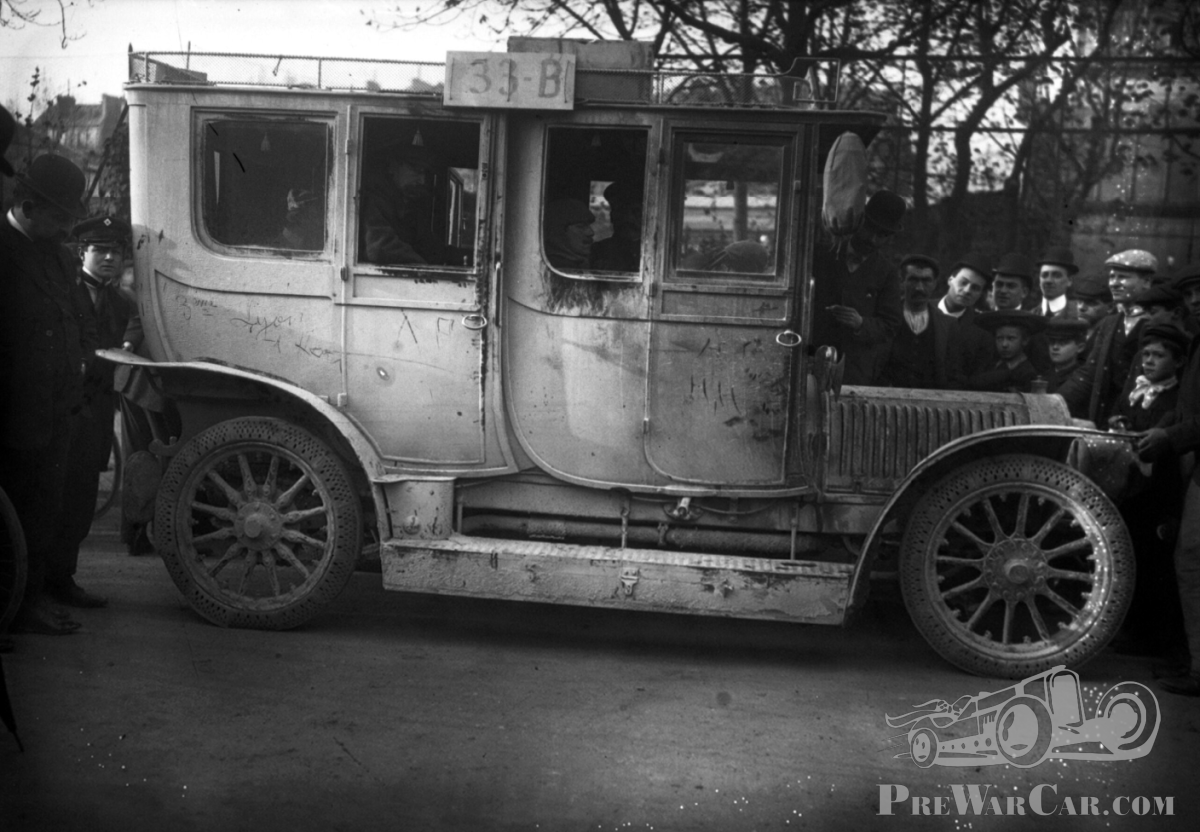
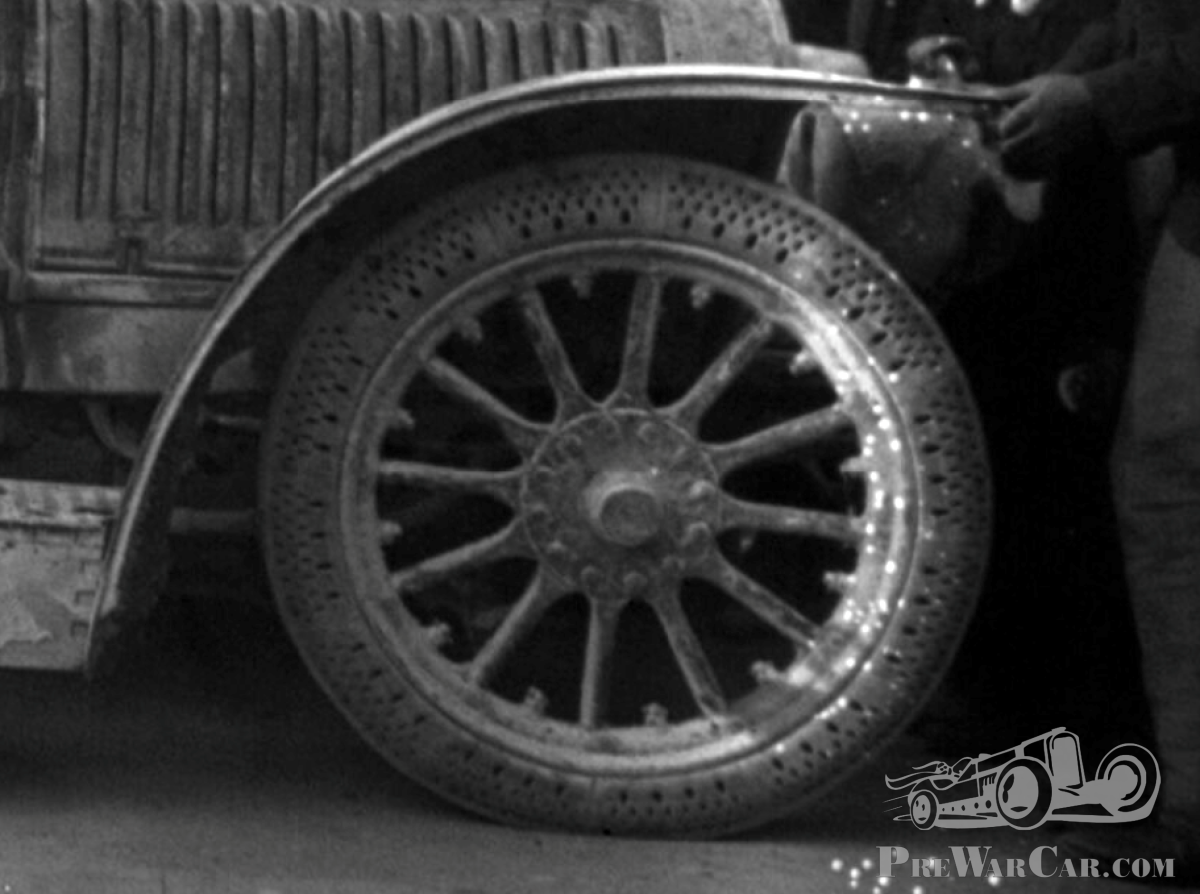
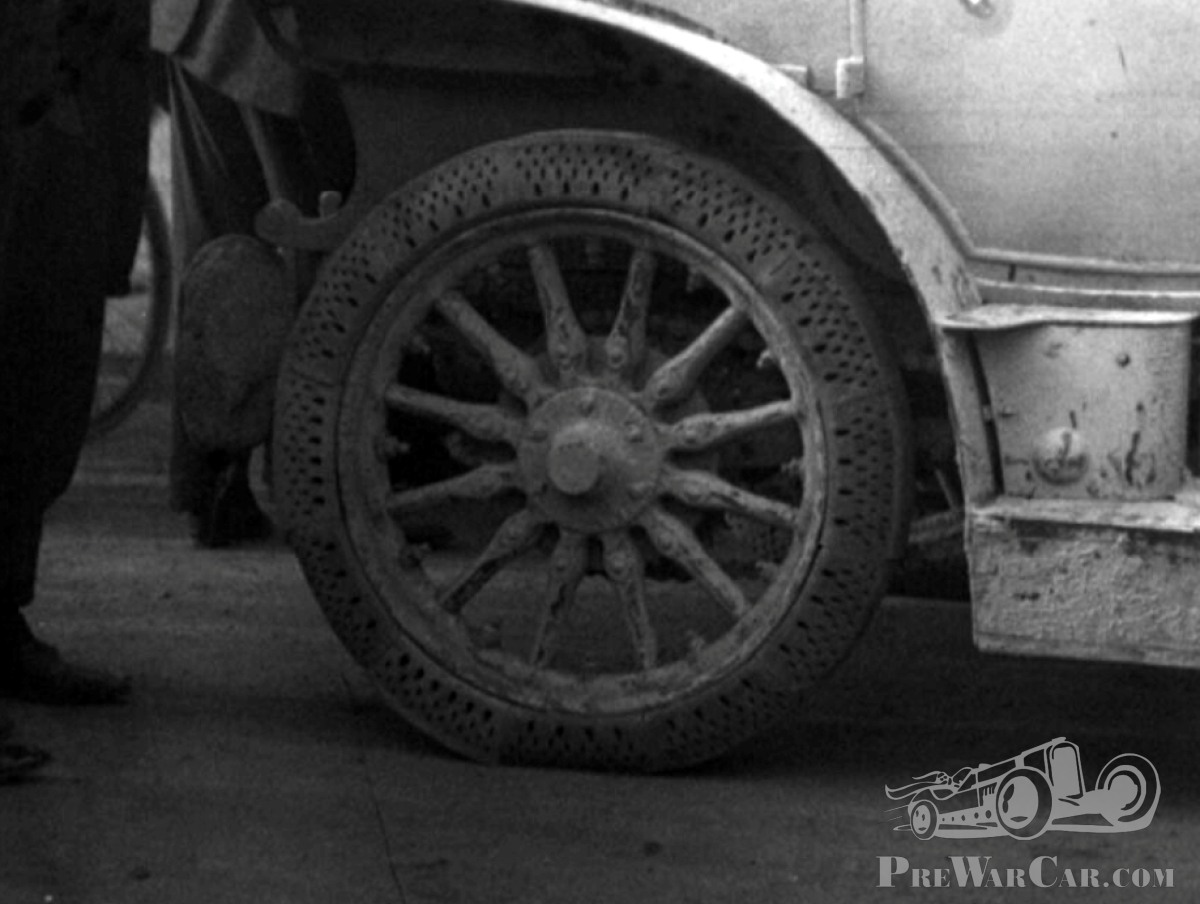


Voordat John Dunlop en de gebroeders Michelin de bandenindustrie veroverden, waren er meer slimme lieden die dachten dat zij de beste oplossing voor het bandenprobleem hadden bedacht. Deze foto werd genomen op een "Concours de roues élastiques", of "Elastische banden wedstrijd" gehouden in april 1908 in Frankrijk - een gebeurtenis die je je nu nauwelijks meer kunt voorstellen. Maar kijk eens naar die banden! Wat was het idee daarachter? We hebben op de afzonderlijke ingezoomd, zodat u ze iets beter kunt bekijken.
Een goed gebruikte Delauney-Belleville
Het is ook interessant om te zien dat het voertuig met die banden niet erg belangrijk wordt geacht, althans zo lijkt het. Voor een concours zou je verwachten dat het op zijn minst een wasbeurt krijgt. Of misschien zou een overspuitbeurt in dit geval nog geschikter zijn geweest! De auto is een Delaunay-Belleville en hij kan niet erg oud geweest zijn ten tijde van dit concours, wat het des te opmerkelijker maakt dat hij er zo - eh - goed gebruikt uitziet. Oh - hij werd ingeschreven door een monsieur of madame Bidault maar dat is allemaal bekend. De naam Bidault heeft voor zover wij weten niet echt geschiedenis geschreven in de bandenwereld.
Werd deze Delaunay-Belleville gebruikt als taxi of als bus? We zijn wel een paar foto's tegengekomen van auto's die er op leken, maar niet van deze met zijn opvallende 'dubbele cabine' carrosserie en diepe treeplanken. Iemand een idee?
(Woorden Jeroen Booij, foto Bibliothèque Nationale de France)
Gepubliceerd:
maandag september 12th, 2022
Facebook
LinkedIn
Twitter
WhatsApp
Email
Copy
Reacties
Stef Van den Bergh
16 September 2022, 20:46
On Google I found this postcard about the same car.
Lees verder
Jeroen Booij
20 September 2022, 14:54
It was given a wash for the post card photographer!
Lees verder
Keith K. Kuehn
12 September 2022, 18:42
Oh, I need to add that I forgot something! I also recently saw on youtube, where someone has , ha ha ha, "invented" this type of tire now for bicycles......
Lees verder
Keith K. Kuehn
12 September 2022, 18:39
These ARE segmented tires. As I have learned, they also had beaded edges so they "popped" into the seat of the wheel rim, and a threaded bolt held them on. Really did make sense, though as a previous person has questioned, how long did they last? I'd love to find some for a car and try!
Another person mentions springs in the wheel. I recently came across a somewhat local car guy who tried these on I think his maxwell. They were fine as long as you were going straight, but any turn set up unsettling wobbling. They of course were taken off the car and now are just a curious display of early ideas!
I do love the coachwork on this car! Very elegant.....
Lees verder
Another person mentions springs in the wheel. I recently came across a somewhat local car guy who tried these on I think his maxwell. They were fine as long as you were going straight, but any turn set up unsettling wobbling. They of course were taken off the car and now are just a curious display of early ideas!
I do love the coachwork on this car! Very elegant.....
Vincent van der Vinne
12 September 2022, 17:24
From 1905 onwards, a major tyre problem arose. This was not because the tyres at that time were not good enough, but because cars were changing too quickly and the technology/quality of the tyres could not keep up with this development fast enough.
What was the case? From 1905 onwards, the engine power of the average car increased rapidly. Whereas around 1902 a 12 HP was the strongest car on the market, around 1905 this was more or less standard and around 1907 it was on the lighter side. The cars could therefore achieve higher speeds.
A second development was that the bodywork also developed rapidly at that time. Around 1902 a two-seater so or victoria was the standard and a four/five-seater open tonneau an expensive car. Shortly thereafter, the longer open touper (model roi des belges) became the most expensive model. But from 1903-1905, a new public entered the market, namely the well-to-do who let themselves be driven and for whom the car took the place of their coach. This new public was also interested in a closed car (coupe or landaulette). So between 1905 and 1907, with the use of more powerful engines and longer chassis, more and more larger and heavier closed cars appeared on the market. These cars were much heavier than before and could also reach fairly high speeds. The tyres could not cope with these high speeds, which meant that they often lasted no longer than a year. In addition, the tyres were very expensive, up to a quarter of the price of a car.
It was therefore understandable that the owners did not like this and a solution had to be found for the high cost of the tyres, by ensuring that they lasted longer and were of better quality. In the course of time, other manufacturers came up with solutions to strengthen pneumatic tyres or replace them with other constructions. At this time, for example, wheels were fitted with springs.
Lees verder
What was the case? From 1905 onwards, the engine power of the average car increased rapidly. Whereas around 1902 a 12 HP was the strongest car on the market, around 1905 this was more or less standard and around 1907 it was on the lighter side. The cars could therefore achieve higher speeds.
A second development was that the bodywork also developed rapidly at that time. Around 1902 a two-seater so or victoria was the standard and a four/five-seater open tonneau an expensive car. Shortly thereafter, the longer open touper (model roi des belges) became the most expensive model. But from 1903-1905, a new public entered the market, namely the well-to-do who let themselves be driven and for whom the car took the place of their coach. This new public was also interested in a closed car (coupe or landaulette). So between 1905 and 1907, with the use of more powerful engines and longer chassis, more and more larger and heavier closed cars appeared on the market. These cars were much heavier than before and could also reach fairly high speeds. The tyres could not cope with these high speeds, which meant that they often lasted no longer than a year. In addition, the tyres were very expensive, up to a quarter of the price of a car.
It was therefore understandable that the owners did not like this and a solution had to be found for the high cost of the tyres, by ensuring that they lasted longer and were of better quality. In the course of time, other manufacturers came up with solutions to strengthen pneumatic tyres or replace them with other constructions. At this time, for example, wheels were fitted with springs.
Ariejan Bos
12 September 2022, 16:53
The tyres on the Delaunay-Belleville were called M.Y.G.-tyres (or Y.M.G., named after the inventors Yberly, Mérigoux and Goussard). They consisted of massive rubber tyre segments, of which in total 12 were mounted on a normal rim and the segments were transversally perforated to create air 'compartments'. This system was available for all car weight classes. In this trial, called the 'Concours de Roues et Bandages Élastiques, held in april 1908, they were present in three weight classes. The Delaunay of Bidault participated in Class B, 4th category, and weighed 2312 kilos.
The system was in a way comparable to that of L'Automatique Ducasble, which also consisted of massive tyres with air chambers.
Lees verder
The system was in a way comparable to that of L'Automatique Ducasble, which also consisted of massive tyres with air chambers.
David Burnett
12 September 2022, 13:06
The car looks to be covered in fine (white? ) dust. Road dust from a road trial maybe?
Lees verder
John Bates
12 September 2022, 13:04
I agree with Steve. They do NOT look pneumatic. I also agree that they look well thought out. They probably gave a smooth ride but how well they lasted I can't imagine. How well dis they stay on the rims? Using more modern materials and construction methods, would they work today?
Lees verder
Steve Diggins
12 September 2022, 01:49
They look to be segmented and not pneumatic. They are rubber probably vulcanized to a shaped metal segment piece. They look well thought out. I wonder how they performed.
Lees verder