Het wereldwijde magazine en verkoopplatform voor liefhebbers van klassieke auto’s, door liefhebbers.
Het wereldwijde magazine en verkoopplatform voor liefhebbers van klassieke auto’s, door liefhebbers.


Filter
Maak een keuze
- Auto's
-
Merk >>
-
Bouwjaar >>
-
-
Categorie >>
- Motorfietsen
- Onderdelen
-
Automerk >>
-
Fabrikant >>
-
Categorie >>
- Fietsen
-
Bouwjaar >>
-
Landen


Prewar Workshop: “Drilling” square holes
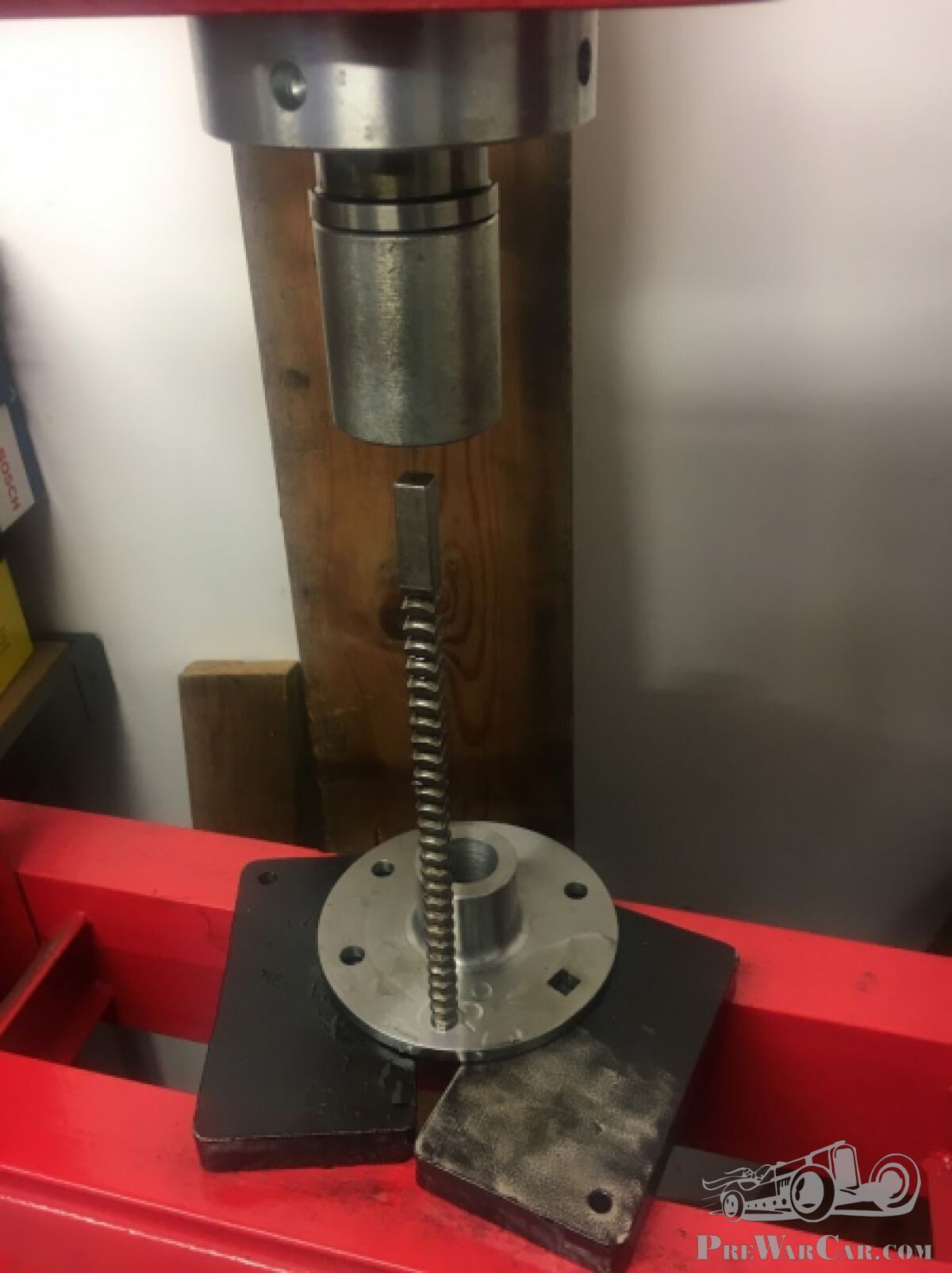
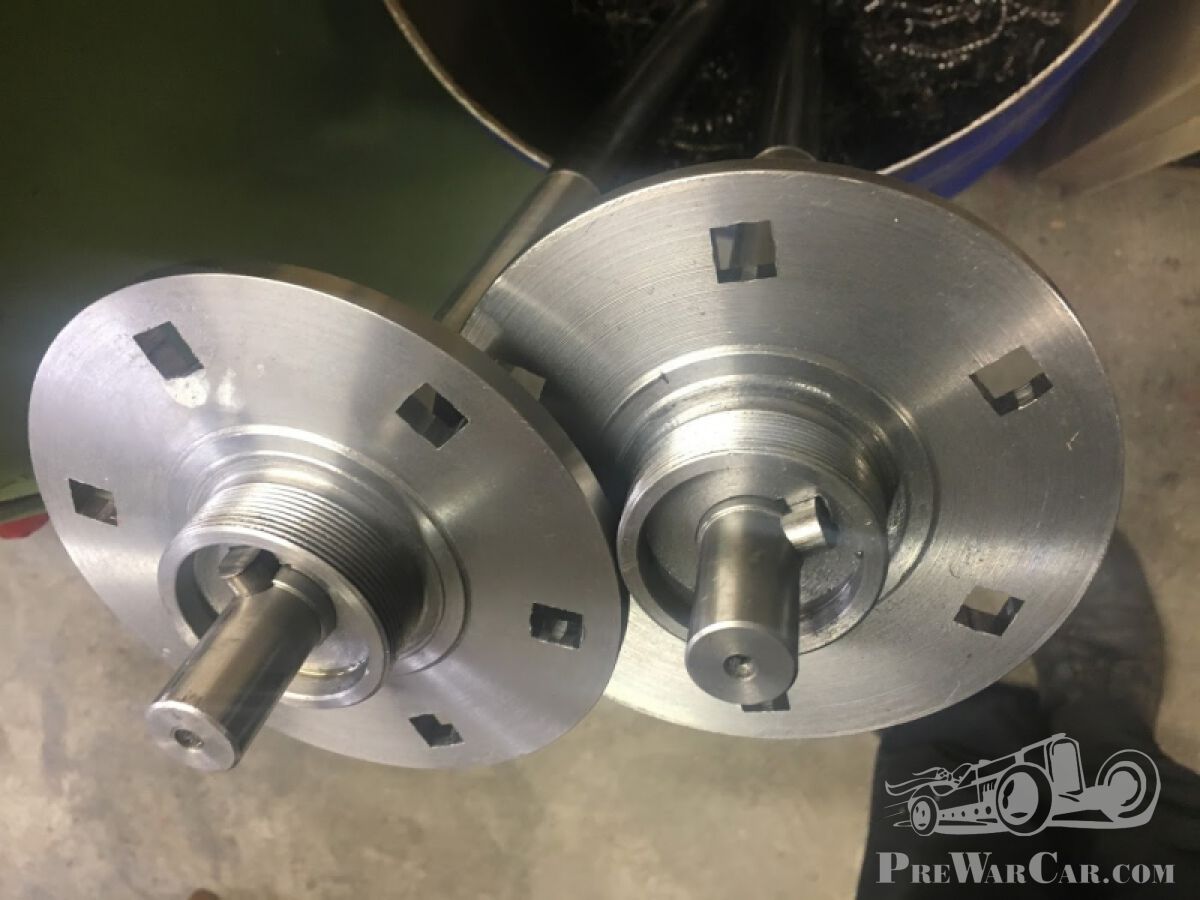


Recently I was making wheel hubs in the workshop and a question that kept rising from a lot of people that saw them was how I made the square holes. It’s actually a very simple operation that I want to show you.
This can be done in various ways, I will show the simplest way for the home shop. It’s called broaching. For every size square (or keyway for that matter) there is a different size broach. For the square hole, you drill a round pilot hole that’s the size of the broach start (the size of this is usually printed on the broach or easily measured). Then you put the broach in the hole in the press and press it through. In this operation, a couple things are very important.
First, make sure the square is lined up straight the way you want it. It’s easily overlooked and your hole will not be aligned. You can use an aid for this like a ruler, a machinist square or just eyesight if it’s not too important.
Second, make sure the part is laying straight in the press, not tilted in any way. This will make the broach go through unevenly and might wear it, break it or produce holes out of tolerance.
Then make sure the broach is straight in the hole, underneath the press. This is very important otherwise when you start pressing, the broach can bend and break. Especially on smaller size squares, this can easily happen.
Last and probably the most important: keep it lubricated very well with cutting oil. You’ll reduce the tool life and surface finish significantly if you don’t.
For a keyway the operations are the same. The only difference is that you need a guide for the hole to guide your keyway broach and shims to place behind the broach to deepen the key you just made. A broach need to pass through multiple times with everytime a shim added until you get the correct depth.
I hope this clears it up. It’s a very simple operation that saves a lot of time over simply filing the hole square and gives much better tolerances and finish. A photo album can be viewed here https://goo.gl/photos/fbdmQvYoSZhM3GTe7 For questions please comment or e-mail to [email protected]
Article by Jos van Genugten
Gepubliceerd:
dinsdag mei 30th, 2017
Facebook
LinkedIn
Twitter
WhatsApp
Email
Copy
Reacties
Onbekend
02 Juni 2017, 18:37
Does anyone do hot drop forged connecting rods at home?
Lees verder
Onbekend
31 Mei 2017, 23:51
Jos, we're all indebted to you for these technical articles.
For non-critical square holes - door handles etc., I drill the round hole a little larger than the square, take a length of the right square key steel and grind one end dead square with a fine wheel. Then heat that end to red and quench in oil. Cut the key steel to a useful length. With suitable support behind the part, this 'broach' can be pushed through the drilled round hole in a vyce, or gently hammered through, provided that the part is not too hard.
Lees verder
For non-critical square holes - door handles etc., I drill the round hole a little larger than the square, take a length of the right square key steel and grind one end dead square with a fine wheel. Then heat that end to red and quench in oil. Cut the key steel to a useful length. With suitable support behind the part, this 'broach' can be pushed through the drilled round hole in a vyce, or gently hammered through, provided that the part is not too hard.
Jos
31 Mei 2017, 18:11
Leo, i forgot to take photos of the keyway broaching in progress, but apart from that it's guided, it's much the same. I usually buy the broaches (and most uncommon metalworking tools) off Ebay in the US, mostly for economic reasons. They tend to be quite expensive.
Politi, it takes very little force to push it through, the manometer on the press doesn't budge. So as long as you go in straight, no worries about bending or breaking. I would think a non-matching hole makes it harder to push the broach through straight afterwards. But I have no experience with that method.
Lees verder
Politi, it takes very little force to push it through, the manometer on the press doesn't budge. So as long as you go in straight, no worries about bending or breaking. I would think a non-matching hole makes it harder to push the broach through straight afterwards. But I have no experience with that method.
Onbekend
31 Mei 2017, 16:04
Jos,
Starting the broach in the circular hole looks a bit precarious. I would suggest to start easier, use a proper sized SQUARE "easy out". Most easy out sets are reverse spiral, I also have a square set(tapered), hammered into a pre- drilled hole they are then twisted to remove broken studs.
What do you think?
Lees verder
Starting the broach in the circular hole looks a bit precarious. I would suggest to start easier, use a proper sized SQUARE "easy out". Most easy out sets are reverse spiral, I also have a square set(tapered), hammered into a pre- drilled hole they are then twisted to remove broken studs.
What do you think?
Leo Schildkamp
31 Mei 2017, 08:50
Thank you Jos van Genugten for thid info.
her to buy these broaches? Can you show us some foto's how the keyway was made?
Regards,
Leo Schildkamp
Lees verder
her to buy these broaches? Can you show us some foto's how the keyway was made?
Regards,
Leo Schildkamp