Het wereldwijde magazine en verkoopplatform voor liefhebbers van klassieke auto’s, door liefhebbers.
Het wereldwijde magazine en verkoopplatform voor liefhebbers van klassieke auto’s, door liefhebbers.


Filter
Maak een keuze
- Auto's
-
Merk >>
-
Bouwjaar >>
-
-
Categorie >>
- Motorfietsen
- Onderdelen
-
Automerk >>
-
Fabrikant >>
-
Categorie >>
- Fietsen
-
Bouwjaar >>
-
Landen


PWC workshop: Play on the brake arms
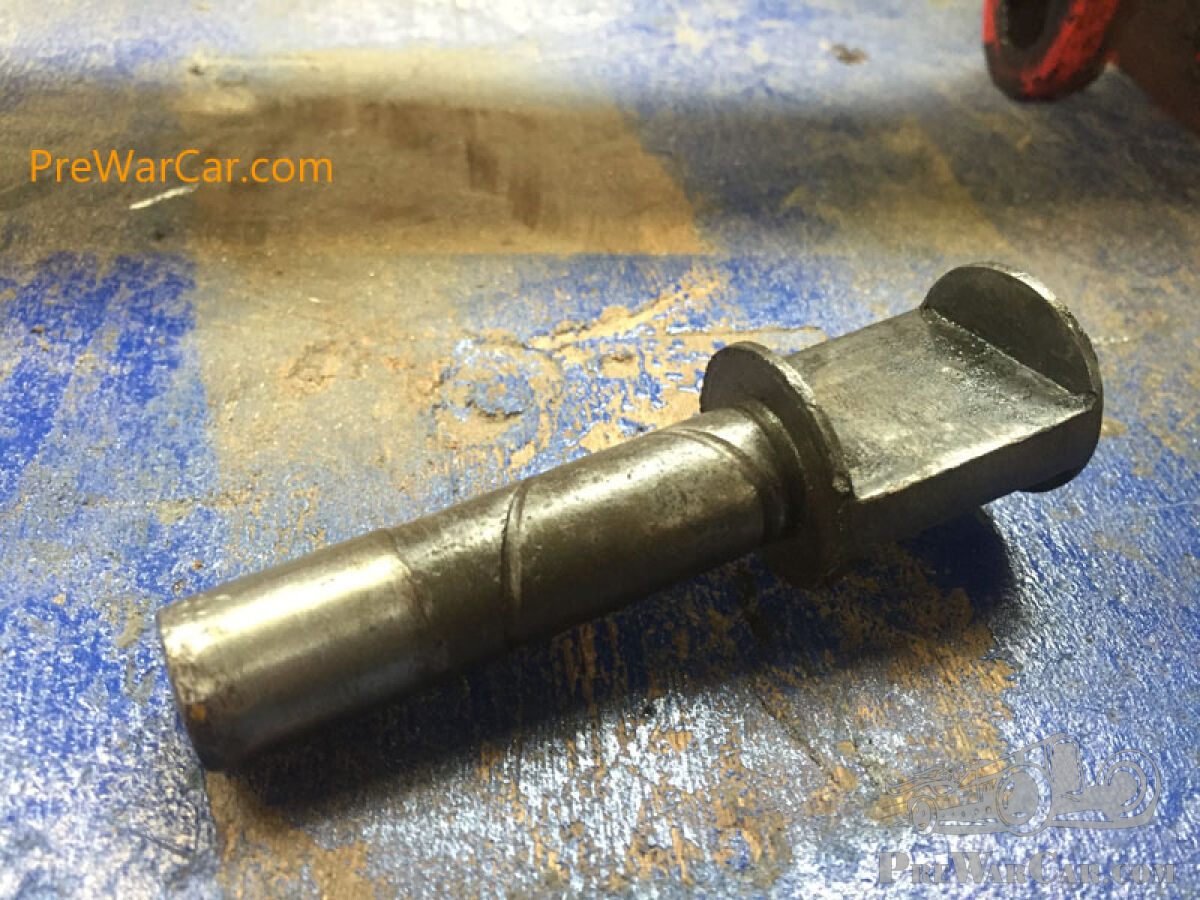




In this episode of the workshop series, we take a look at a fairly common issue seen at many old cars: worn out pins and bushings. In this case the play occurs at the arms that actuate the brake shoes. The same principle counts for leaf spring pins though, for which the same repair method can be used.
The pins are worn on one side because they always rub on that same side while being used. This causes the hole to become oval and the pins diameter to be reduced.
Originally, there is no bushing. Repairing this, the hole in the steel axle part needs to be reamed oversize to be round again and to be able to receive a bushing. For durability, I choose a bronze bushing to be installed. Of course it is also possible to use a steel bushing if desired.
After boring the hole, a bushing can be made to size, but remember to keep the hole in this bushing slightly undersize before pressing it in, as it can shrink a little from pressing and we want to ensure that the hole is round and accurate.
Now we can add new material to the pin itself making use of welding. Or a new one can be made. I choose welding if the pins are still decent enough, which in this case they were. You can use any type of weld you want, I choose mig welding since it's the fastest way in my workshop.
After welding, chuck it in the 4-jaw and check the end of the pin to run concentric with the front, since it can distort a little from welding, it needs to be checked front and rear. Recut the center if needed to accept a live center and start cutting the weld to original size.
Then measure the final size, ream the bushing installed in the axle some 0,05mm to 0,10mm oversize to avoid binding and accept grease and the part is done.
Photos of this operation can be viewed in my photo album here (click).
Work, photos and text by Jos van Genugten.
Gepubliceerd:
dinsdag september 27th, 2016
Facebook
LinkedIn
Twitter
WhatsApp
Email
Copy
Reacties
Onbekend
29 September 2016, 19:42
The pins would have been easier to remanufacture than to repair.
Lees verder
Onbekend
29 September 2016, 05:07
I have repaired not too badly worn Bugatti pins by copper plating and then machining them. No embrittlement and no detectable wear after 8 years of hard use - always carefully greased John Barton.
Lees verder
Onbekend
28 September 2016, 20:03
Hello mr Crofton. Good advice, I have the axle still in my workshop, i'll dye check it before delivering, although i've checked it after turning and there are no cracks or irragularities visible. But it's good practice to recheck after a while.
Mr Bates, yes if there is no grease fitting I like to add one. Pins like this need little grease but should not run dry.
Lees verder
Mr Bates, yes if there is no grease fitting I like to add one. Pins like this need little grease but should not run dry.
Onbekend
28 September 2016, 15:48
If no lubrication nipple is fitted, would you drill and fit one? A squirt of grease at intervals should ensure long life for your job.
Lees verder
Onbekend
28 September 2016, 06:49
Brake parts are critical to the safety of your car and other road users. Therefore if you want or need to weld on brake parts please check that the parts are made from low carbon steel to ensure that the steel is weldable without special conditions. My advice to anyone welding steel brake parts is to check the parts after welding for cracking using either dye penetrant or magnetic particle techniques. If no indications then machine away and then check again after 24 hours. Cracks in welds grow with loads and in brake parts we have plenty of loading so better to have no cracks! - retired engineering metallurgist!
Lees verder