Het wereldwijde magazine en verkoopplatform voor liefhebbers van klassieke auto’s, door liefhebbers.
Het wereldwijde magazine en verkoopplatform voor liefhebbers van klassieke auto’s, door liefhebbers.


Filter
Maak een keuze
- Auto's
-
Merk >>
-
Bouwjaar >>
-
-
Categorie >>
- Motorfietsen
- Onderdelen
-
Automerk >>
-
Fabrikant >>
-
Categorie >>
- Fietsen
-
Bouwjaar >>
-
Landen


Speedy Vauxhall turns 100
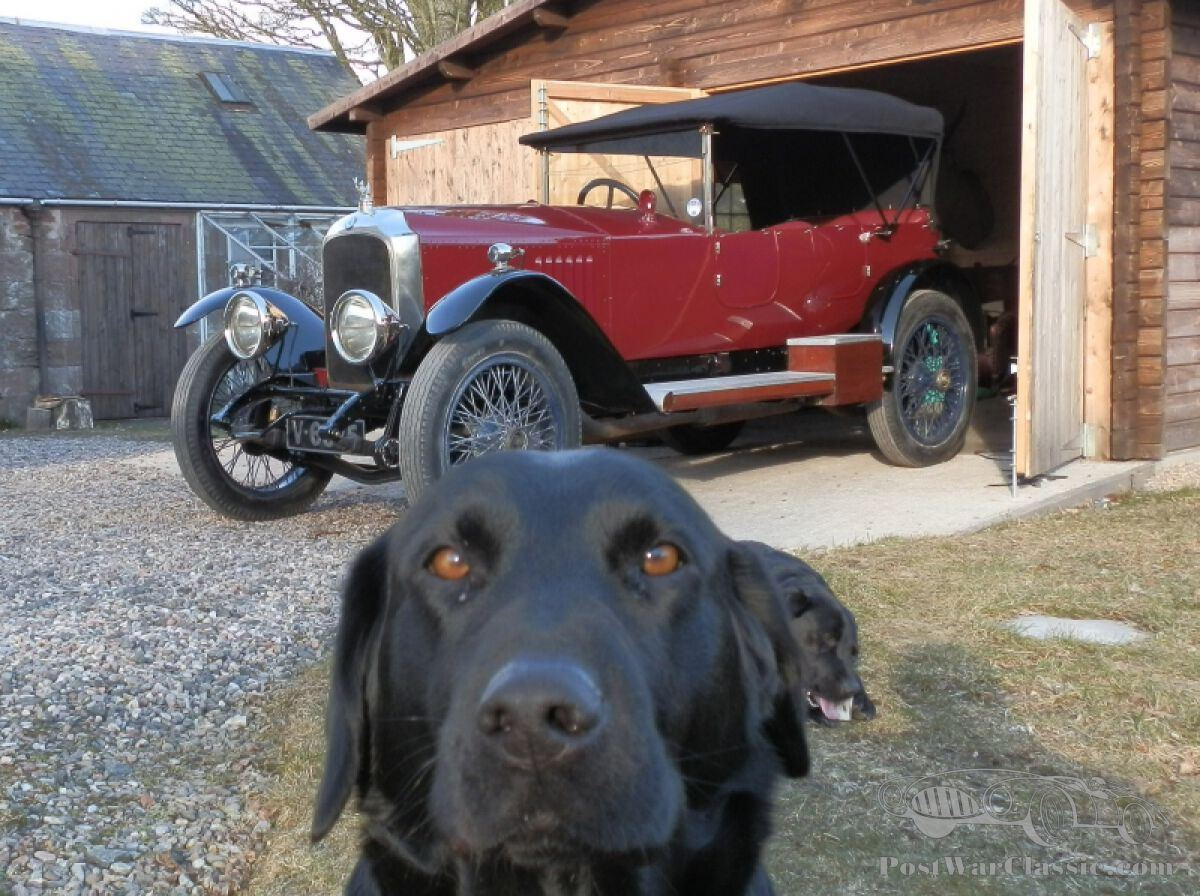
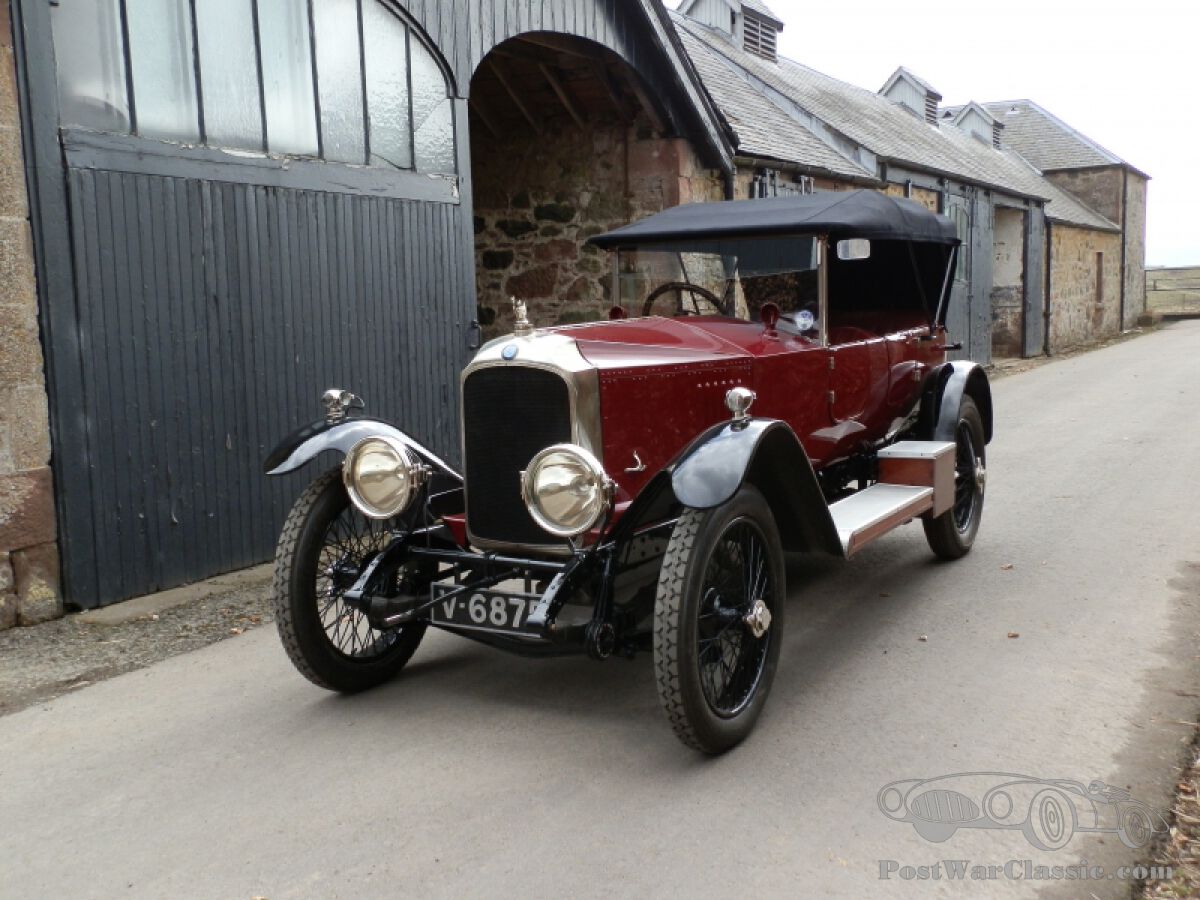
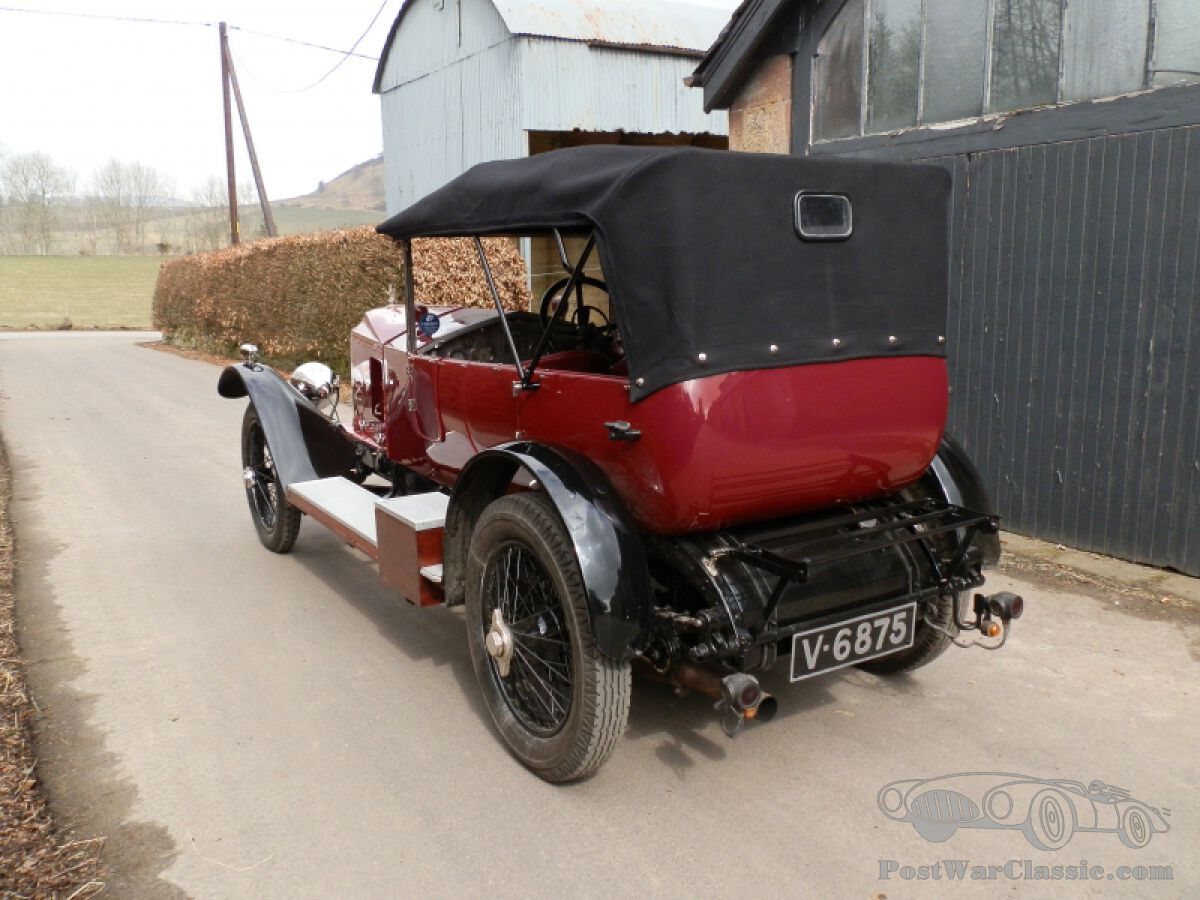


Ian Murray reports: "....desperately trying to take a serious photograph of my pride and joy, and guess who feels left out!" and then continues:
Long before Vauxhall became a part of the General Motors Empire and a producer of sensible family cars, it was building one of the greatest ever sports cars. This year marks the centenary of the 30/98. While the first car to exceed 100 mph was Louis Rigolly’s 15-litre Gobron-Brillie which ran at 103.56 mph in 1913, it was the Vauxhall 30/98 that became the original production sports car to top 100mph. Described in the advertising of the time as “The car of grace that sets the pace”, the 30/98 was derived from Vauxhall’s C10 “Prince Henry” which is generally acknowledged as the British car industries first real sports car.
The first 30-98 was constructed at the behest of car dealer and motor sport competitor, Joseph Higginson, inventor of the Autovac, who won the Shelsley Walsh hill-climb competition on 7th June 1913 in his new Vauxhall. 30/98s made a further public appearance as a team of three entries in the Grand Prix de l'Automobile Club de France on 4 July 1914 led by Ralph DePalma. These were never racing machines but fast touring cars guaranteed by their makers to do 100mph stripped down to the bare essentials.
The 30-98s used the Prince Henry chassis but had flat rather than the distinguished V-shaped radiator.
Before WW1 only thirteen 30/98s were produced for selected drivers, the last in 1915 for Percy Kidner a joint managing director. Several of these went to Australia, where one was used by the Vauxhall importer Boyd Edkins to break the Sydney to Melbourne and Brisbane to Sydney records. Actual production began in 1919.
Between December 1919 and October 1922 there were approximately 275 E Type 30/98s produced, of which 36 still exist (22 in the UK, 10 in Australia & NZ, 4 in USA). Laurence Pomeroy took the Prince Henry L-head side-valve engine and enlarged to 4,525 cc. He cold-stretched the crankshaft throws 5 mm using a steam power hammer and lengthened the stroke to 150 mm. The camshaft was given a new chain drive at the front of the engine, high lift cams and new tappet clearances. The crankshaft ran in five bearings with pressure fed lubrication. It was fitted with a single Zenith 48RA carburettor, as fitted to the DeHaviland 4 Aircraft. The engine's power output was 90 bhp at 3,000 rpm.
Between 1923 and 1927 there were approximately 312 OE 30/98s produced, of which 138 still exist. The engine was updated and fitted with overhead valves and a detachable cylinder head. The stroke was returned to its original length which gave a slightly smaller capacity of 4,224 cc but power output was up nearly 30% from the original to 115 bhp at 3,300 rpm. Low speed torque was also improved. The car and its wheelbase were lengthened four inches and widened three inches making more room for passengers and more comfortable seating.
There is in addition a further 65 or so RE and ROE 30/98s built up on replica chassis or using “other” Vauxhall variants.
Various centenary celebrations have been planned by the 30/98 Register, details of which can be found at www.30-98thecentenary.com
Gepubliceerd:
woensdag april 24th, 2013
Facebook
LinkedIn
Twitter
WhatsApp
Email
Copy
Reacties
Onbekend
28 Juni 2015, 20:41
I believe this car was raced by higginson in July 1913 at Saltburn sands against Hancock and lambert and the Horsley car driven by Thomas Horsley.
Lees verder
Onbekend
25 April 2013, 21:12
In the "Popeye" comic strip in about 1955, there was a character named Sir Pomeroy Vauxhall. The cartoonist, Bud Sagendorf must have been a Vauxhall fan!
Lees verder
Onbekend
25 April 2013, 15:41
The Stanley Brothers certainly did produce an unusual car by our standards. On November 6 1909 the speed record passed to Victor Hemery at the Brooklands track with a speed of 125.94MPH in a Benz.
Lees verder
Onbekend
25 April 2013, 12:48
Sorry! I hadn't included steam powered vehicles only internal combustion..!
Lees verder
Onbekend
25 April 2013, 01:15
Who did the fact check on this article? Stanley did 107 MPH in 1906.
editor: you did !
Layden, PWC is no ecyclopedia, not even a magazine, it is a platform for you AND by you. We are in the happy position that people like Ian Murray and also like yourselves bother to spend some time here.
Lees verder
editor: you did !
Layden, PWC is no ecyclopedia, not even a magazine, it is a platform for you AND by you. We are in the happy position that people like Ian Murray and also like yourselves bother to spend some time here.