Het wereldwijde magazine en verkoopplatform voor liefhebbers van klassieke auto’s, door liefhebbers.
Het wereldwijde magazine en verkoopplatform voor liefhebbers van klassieke auto’s, door liefhebbers.


Filter
Maak een keuze
- Auto's
-
Merk >>
-
Bouwjaar >>
-
-
Categorie >>
- Motorfietsen
- Onderdelen
-
Automerk >>
-
Fabrikant >>
-
Categorie >>
- Fietsen
-
Bouwjaar >>
-
Landen


The Race from Paris to Amsterdam in 1898 - Part 4
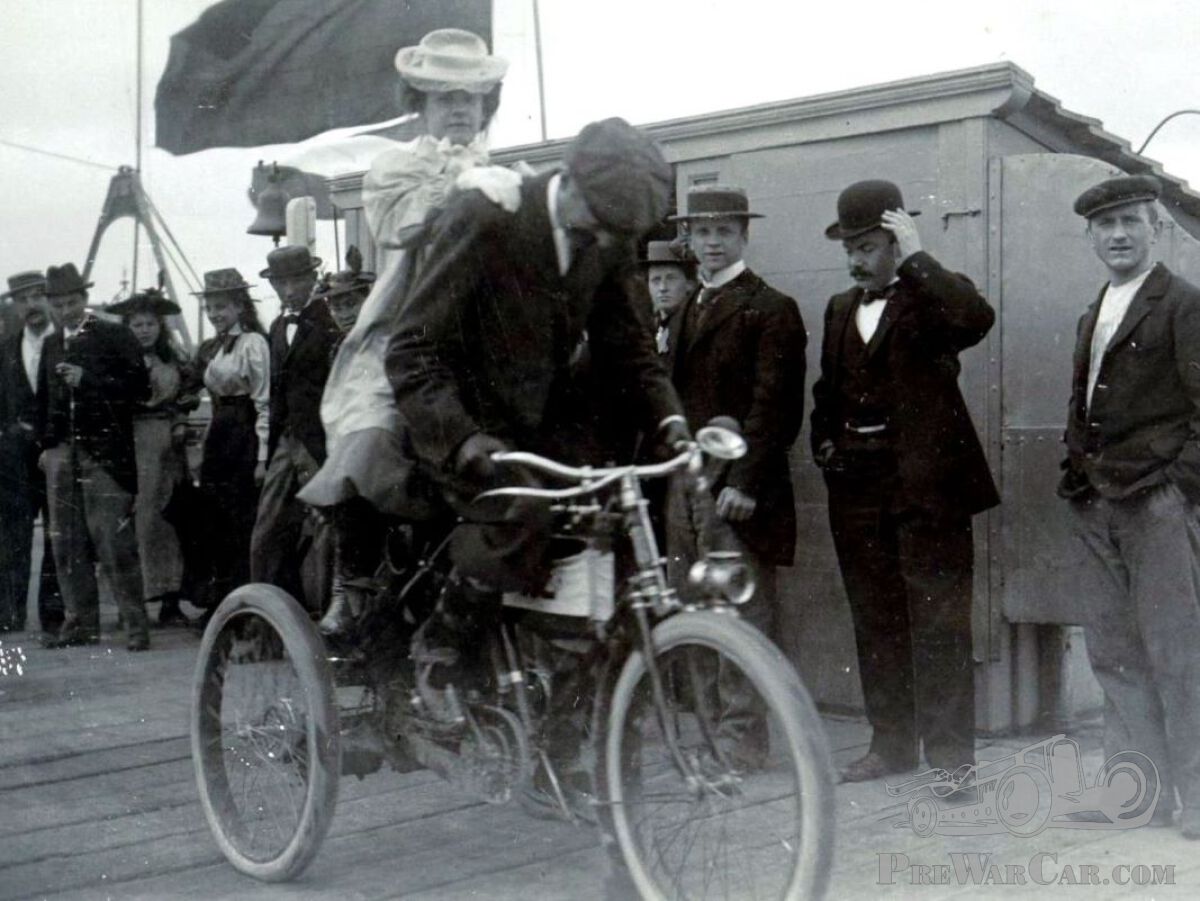
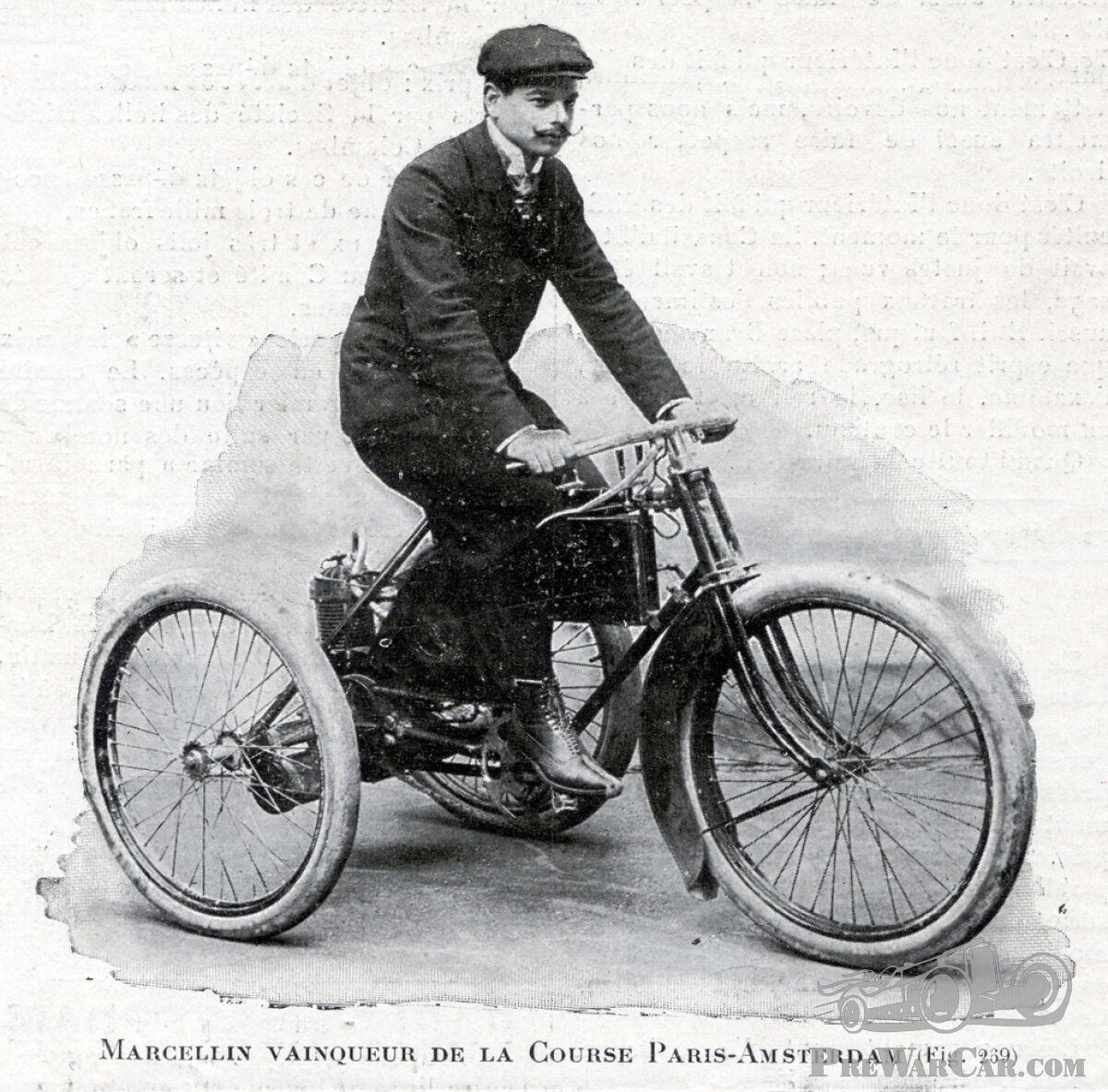


During the previous posts, I only described the main category of the racing event, Class A for cars carrying 2 or 3 persons. In Class A there were two other sections, one for cars carrying 4 or 5, the other for 6 persons. However, none of these entrants reached the finish. Then there was a category for tricycles (Class B), which were De Dion-Bouton except one, the Phébus of Marcellin. Remarkably enough he was the winner. And finally, Class C, a voiturette category with two Léon Bollée voiturettes and two Decauville voiturelles, won by Corbière on a Decauville. In the tourist section, the same categories existed, but these had only participants in the Classes A and B. The most stunning participant was a tricycle driver having a female passenger standing all the way from Paris on the back axle. A feat which would be easily have been considered fiction if the lead photo hadn't proven otherwise. Unbelievable and still true!
Of all vehicles having started in Villiers a mere 50% returned to Paris. According to La France Automobile, this disappointing result was caused by insufficient preparation: “C'est toujours la même histoire”. Indeed, several cars abandoned because of technical problems, but an important other cause were the pneumatic tyres, used officially for the first time. These were supplied by Michelin in all cases but one, but development was still in its infancy. Max Richard suffered 14 punctures during the first stage and tired (!) of repairing he switched cars with his brother Georges. Only De Bertier still used massive tyres, but his Bollée was loaded with 6 persons.
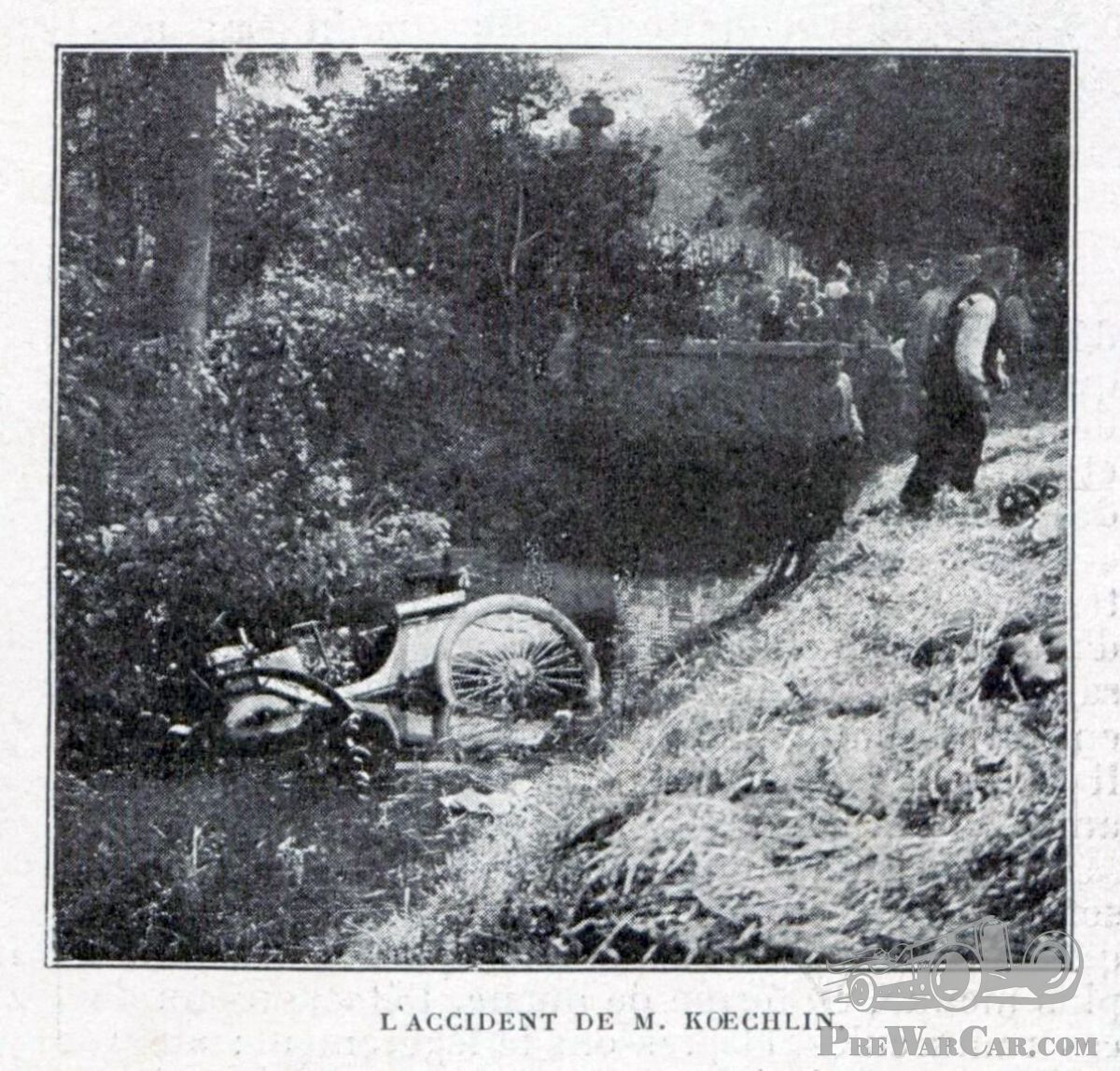
And then there was a number of incidents, which were called minor because no fatalities occurred. De la Combe's Panhard burnt out near Montmirail. Balvay's Mors ran into a ditch in the hills of the Belgian Ardennes and burnt out too, hurting Balvay severely. In Arnhem, the De Dietrich of De Türckheim suffered from a fire caused by a leaking fuel line, but after a repair, he could continue. Returning from Amsterdam however almost at the same spot it happened again and that was the end for him too. On the way back from Amsterdam Amédée Bollée drove into a hedge near Nijmegen when trying to avoid some pedestrians. The most hilarious accident, however, happened, when Koechlin missed a turn just after Maastricht and ran into a canal. All wet he was given dry clothes by some bystanders, but the only clothes available were boys' clothes. Thus, dressed he entered the special train, which happened to pass very near the accident. It will not be surprising that his outfit caused a lot of laughter among the passengers!
Looking back at the event a point of criticism was that the race was difficult to follow. Eleven days with participants in many categories in both racing and tourist sections combined with the many neutralized speed zones made it difficult to have an overview. Besides, it lasted weeks before the winner became officially known. Also, the role of the authorities during the start of the race had raised much criticism, which would have to be resolved before a future event.
In general, however, reactions were enthusiastic. The race had shown a number of positive developments. The pneumatic tyre, though still unreliable, was a definite improvement making speeds of over 60 km per hour easily feasible. The steering wheel appeared to be a great improvement and would take over in few years completely. And finally, the design of the Panhard proved to be the way to go.
Finally, we want to know of course what the effect had been on the development in The Netherlands. There were lots of enthusiastic spectators, there were several official parties in Nijmegen and Amsterdam and many people had seen the vehicles, often for the first time. But the way to acceptation was a long one still: in 1900 our country counted only around 150 cars and car industry started to develop very slowly with Eysink and Spyker. After the race, an important issue for politicians was that the participants had driven with excessive and intolerable speeds on our roads. The main concern for them, however, seemed to be in what way the authorities thought to regain the lost toll income because the toll bars had been up everywhere during the race. A typical Dutch habit: in the end, it is only about the money...
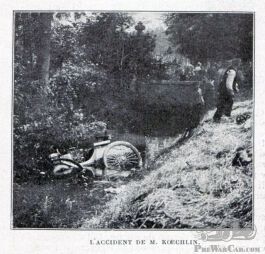
The lead photo shows the Parisian beauty balancing on the back of her courteous driver, leaving the ferry in Nijmegen (Album Délizy, courtesy coll Rijksmuseum). On the second photo Marcellin with his Phébus, winner of the racing class B. And finally, the Peugeot of Koechlin lying in the canal after having missed a turn.
You can read more about the 2018 run and its participants on www.parijsamsterdam.nl.
Words by Ariejan Bos.
Gepubliceerd:
dinsdag april 24th, 2018
Facebook
LinkedIn
Twitter
WhatsApp
Email
Copy