Het wereldwijde magazine en verkoopplatform voor liefhebbers van klassieke auto’s, door liefhebbers.
Het wereldwijde magazine en verkoopplatform voor liefhebbers van klassieke auto’s, door liefhebbers.


Filter
Maak een keuze
- Auto's
-
Merk >>
-
Bouwjaar >>
-
-
Categorie >>
- Motorfietsen
- Onderdelen
-
Automerk >>
-
Fabrikant >>
-
Categorie >>
- Fietsen
-
Bouwjaar >>
-
Landen


Drie mysteries uit drie periodes, geen ervan een Imperia
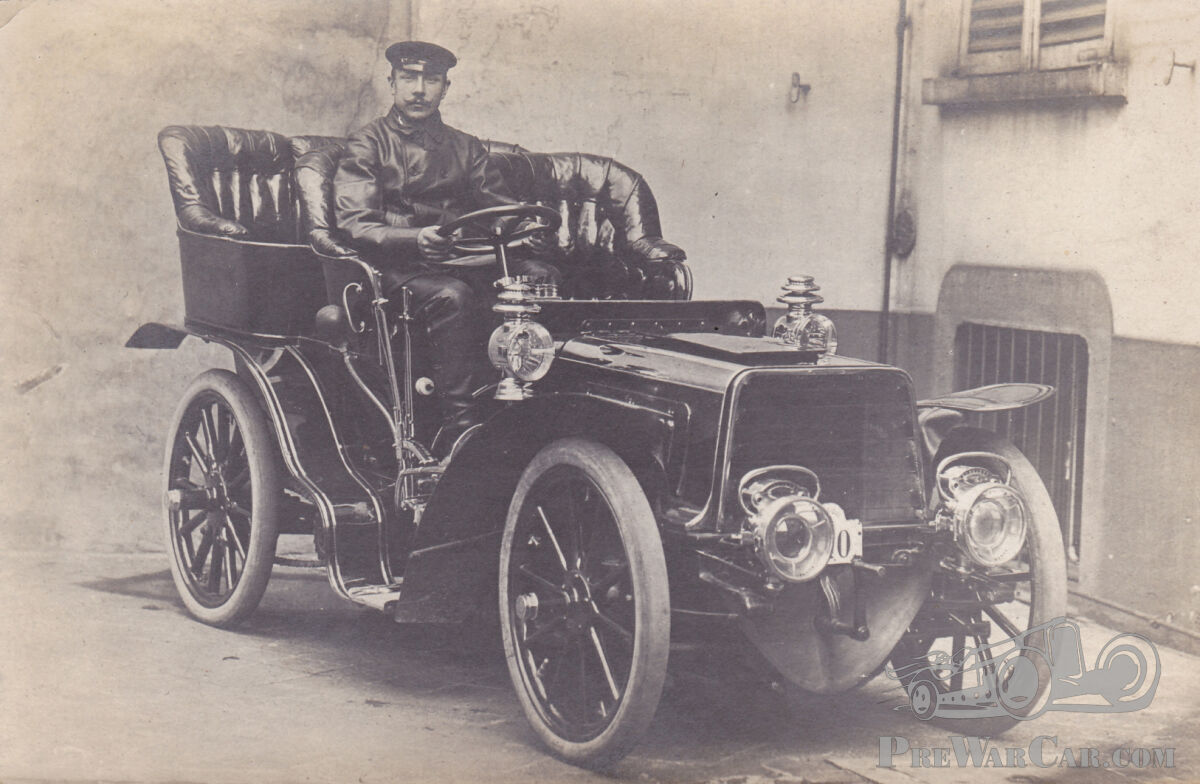
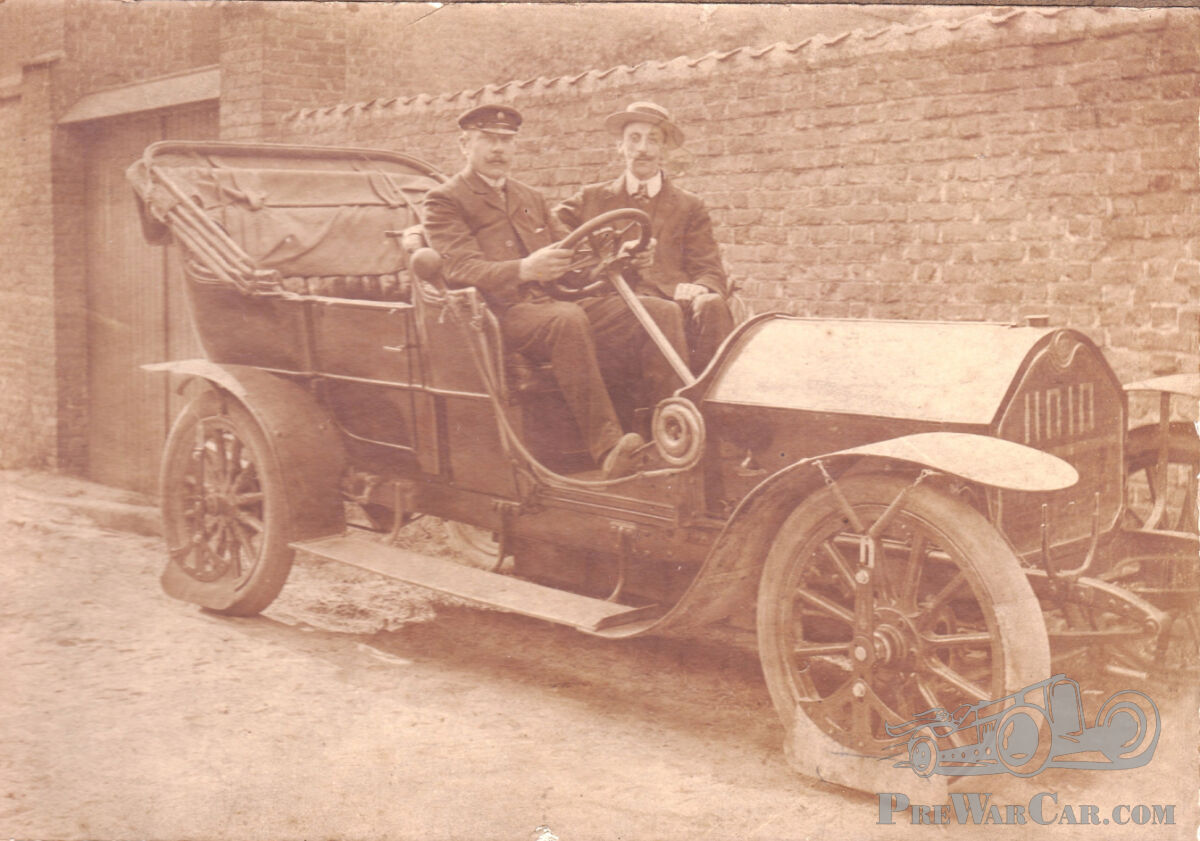
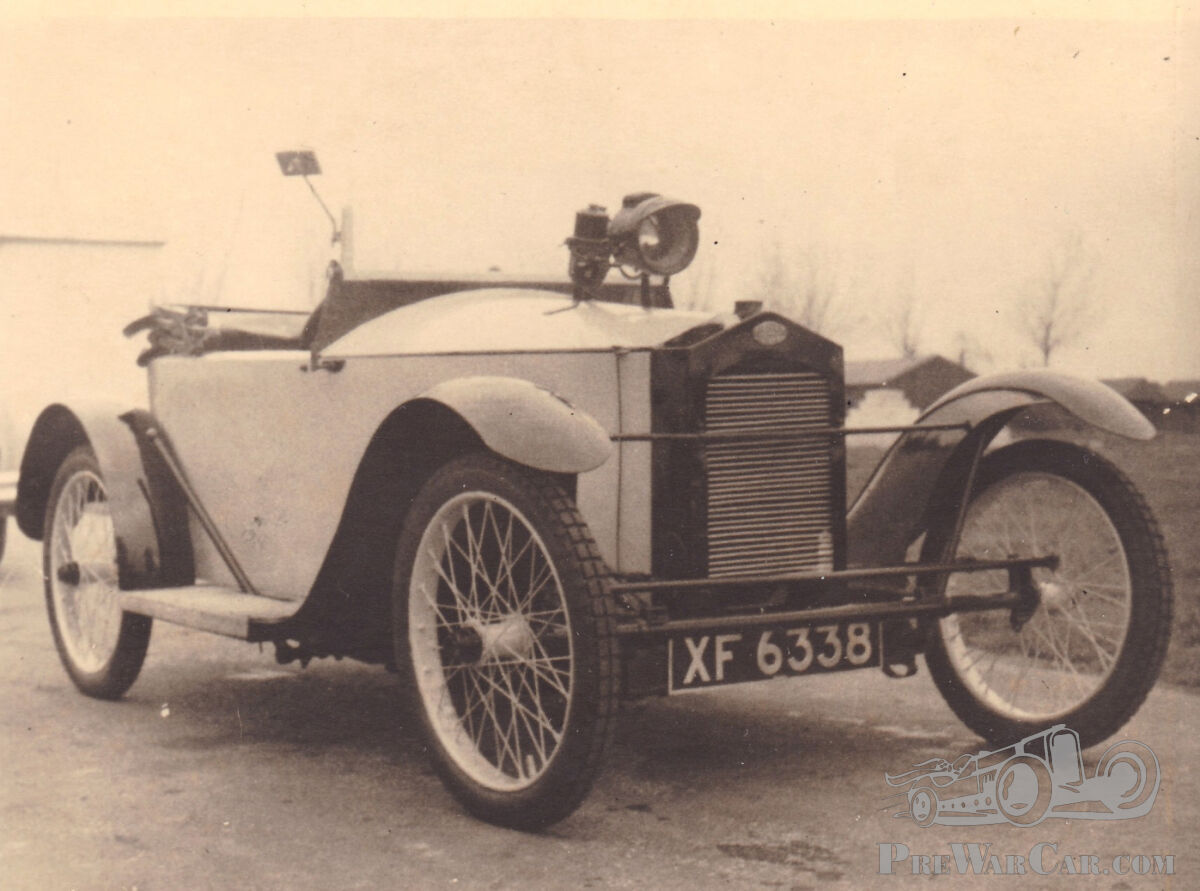


Als zelfs specialisten het niet meer weten, dan komen ze bij ons uit. En wanneer ook wij moeten erkennen dat onze kennis haar grenzen bereikt, doen wij wat liefhebbers al meer dan een eeuw doen: we richten ons tot elkaar. Zo blijft kennis circuleren, worden raadsels gedeeld en opgelost.
Met die gedachte van elkaar helpen in het achterhoofd – en passend bij de geest van de komende feestdagen – presenteren wij vandaag drie foto’s die ons werden toegestuurd door Josef de Baets. Josef is een erkend kenner van het merk Imperia en beschikt over een bijzonder uitgebreide documentatie. De beelden die hij met ons deelde zijn van hoge kwaliteit, maar helaas slechts spaarzaam gedocumenteerd. Dat maakt ze des te interessanter.
Op de achterzijde van de eerste foto staat geschreven: Theo Verdonck + 1913. Theo Verdonck was in die periode werkzaam in de garage Auto-Palace van de heer De Schaapmeester, gelegen aan de Tentoonstellingslaan in Gent. Volgens de ons bekende gegevens betrof dit geen merkgebonden garage, maar een verkoop- en herstellingsbedrijf dat verschillende merken voerde, waaronder Minerva, FN en Delaunay-Belleville.
Op basis van het silhouet en de constructieve details lijkt de afgebeelde auto echter ouder dan 1913. Wij houden het voorlopig op een bouwjaar rond 1904, al ontbreekt sluitend bewijsmateriaal om dit met zekerheid te kunnen stellen.
De tweede foto roept meteen vragen op door een opvallend accessoire dat aan de wielen is bevestigd. Josef vroeg ons waarvoor dit diende. Onze eerste gedachte ging uit naar een praktisch hulpmiddel om straatvuil – en in die tijd niet zelden paardenmest – van de wielen te verwijderen. Zekerheid hierover hebben wij echter niet.
Wat wel duidelijk is, is dat de auto intensief gebruikt werd. De voorband is zichtbaar hersteld en de koplampen ontbreken. De registratie 11010 stond op naam van Le Blanc Gaston, woonachtig aan de rue Solferino 23 te Lille, Frankrijk. Op basis van de algemene proporties en technische kenmerken vermoeden wij dat het hier om een 20 hp van Crossley zou kunnen gaan, al blijft ook dit vooralsnog een hypothese.
De derde foto is van latere datum en laat zich gemakkelijker plaatsen. Dankzij het karakteristieke uiterlijk van de wagen en de duidelijk zichtbare Britse kentekenplaat konden wij in ons archief een vergelijkbare opname terugvinden. Alles wijst erop dat hier een Blériot-Whippet uit 1921 is afgebeeld, een typische cyclecar gebouwd door de Britse firma Air Navigation & Engineering Co. Ltd..
Kenteken XF6338 wordt vaak genoemd als het enige bewaard gebleven exemplaar. Of deze auto vandaag de dag nog daadwerkelijk op de weg is, is ons niet bekend.
Hopelijk kunt u ons verder helpen.
Woorden: Laurens Klein
Foto’s: Josef de Baets
Gepubliceerd:
maandag december 22nd, 2025
Facebook
LinkedIn
Twitter
WhatsApp
Email
Copy
Reacties
Christoph Röhrs
28 December 2025, 13:23
Ariejan Bos
27 December 2025, 21:14
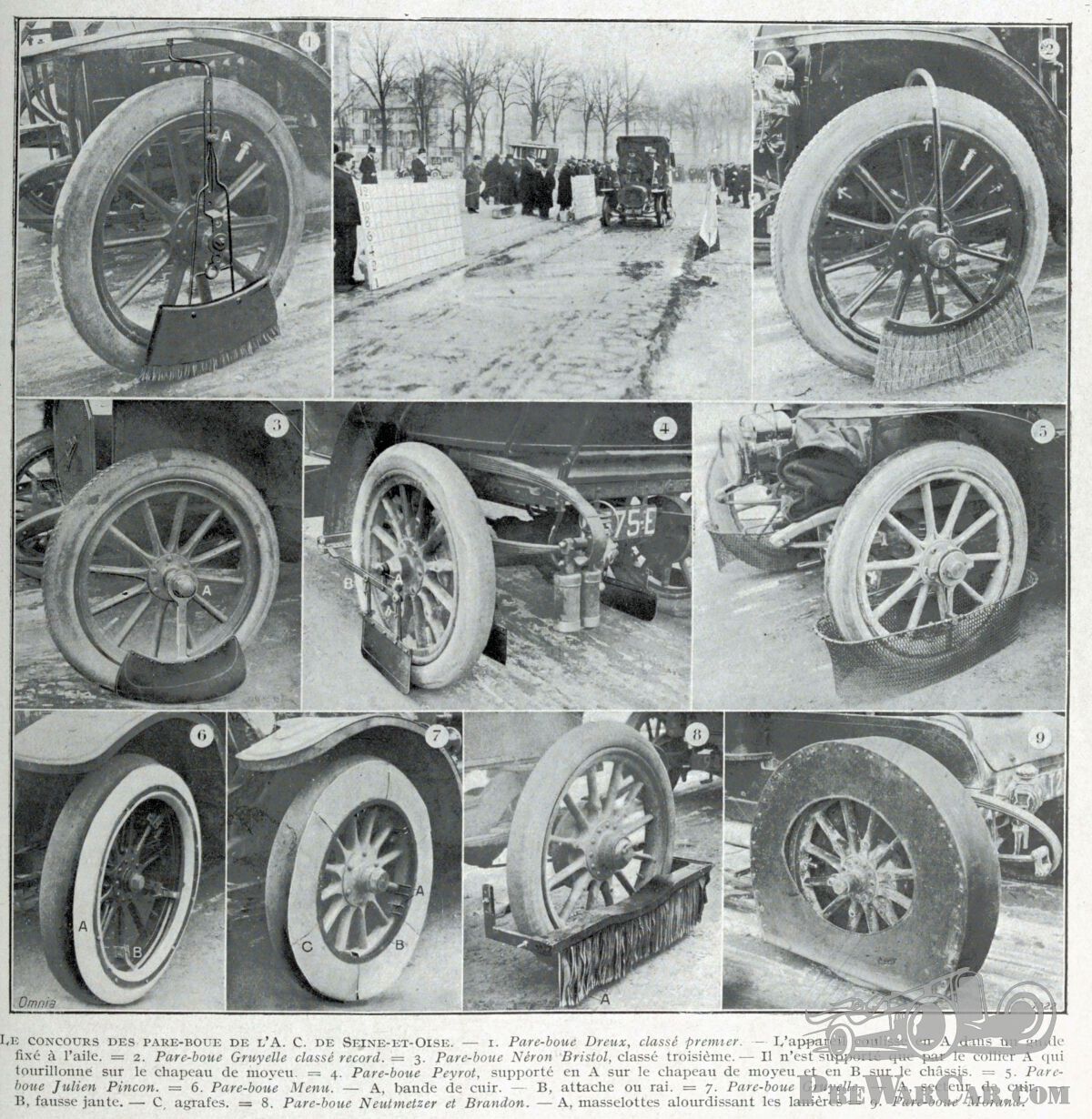
There is little doubt in my opinion that the Darracq carries an anti-mud device. Uploaded a page from the Omnia issue of February 10th, 1912, showing a number of anti-mud devices during the Concours de Pare-Boue (anti-mud trials) in France of that year. In 1913 also a trial was held. The device on the Darracq is very similar to some of the devices shown here.
Lees verder
Robert Kubart
27 December 2025, 12:51
I believe... it's a trial run for an invention. In the event of a tyre puncture, the vehicle rests on the skid plate and does not damage the tyre or the rim... there is a large repair area on the front wheel.
——
Ich glaube..es ist der Probelauf einer Erfindung, im Falle eines Reifenschadens sitzt das Fahrzeug auf der Kufe auf, und macht nicht den Mantel oder die Felge kaputt..am Vorderrad fällt eine grosse Reparaturstelle auf
Lees verder
——
Ich glaube..es ist der Probelauf einer Erfindung, im Falle eines Reifenschadens sitzt das Fahrzeug auf der Kufe auf, und macht nicht den Mantel oder die Felge kaputt..am Vorderrad fällt eine grosse Reparaturstelle auf


De Baets Josef
27 December 2025, 12:36
I would like to thank everyone for their spontaneous responses.
Photo no. 1 is still a mystery.
After further investigation, photo no. 2 is a Darracq from 1907 or earlier. Registration number 11010 was issued to Le Blanc Gaston, residing at 23 Rue Solferino in Lille, France. Source: Annuaire général l'automobilisme Belge 1907, page 285. The photo of the blue Darracq is from 1907. The purpose of those peculiar devices on the wheels remains a mystery.
Photo no. 3 is indeed a Blériot-Whippet 8/9 hp (1921) with a 1L V-twin engine. For more information, see: https://de.wikipedia.org/wiki/Bl%C3%A9riot-Whippet
Documented with a photo of the same car as the one in my photo, recognisable by the same number plate, XF6338.
Kind regards, Josef
——
Ik bedank iedereen voor de spontane reacties.
Foto n°1 is nog een raadsel.
Foto n° 2 is na nog verder onderzoek een Darracq van 1907 of daar voor. Kenteken 11010 is uitgegeven aan Le Blanc Gaston , woonachtig aan de Rue Solferino 23 in Lille, Frankrijk . Bron; Annuaire général l'automobilisme Belge 1907 op blz 285. Foto blauwe Darracq is van 1907. Wat voor doel die eigenaardige apparaten op de wielen hadden is nog een raadsel.
Foto n° 3 is inderdaad een Blériot-Whippet 8/9 pk (1921) met 1L V-twin-motor. Zie voor meer info; https://de.wikipedia.org/wiki/Bl%C3%A9riot-Whippet
Gedocumenteerd met een foto van dezelfde auto als die van mijn foto te herkennen aan dezelfde n° plaat XF6338.
Vriendelijke groeten, Josef
Lees verder
Photo no. 1 is still a mystery.
After further investigation, photo no. 2 is a Darracq from 1907 or earlier. Registration number 11010 was issued to Le Blanc Gaston, residing at 23 Rue Solferino in Lille, France. Source: Annuaire général l'automobilisme Belge 1907, page 285. The photo of the blue Darracq is from 1907. The purpose of those peculiar devices on the wheels remains a mystery.
Photo no. 3 is indeed a Blériot-Whippet 8/9 hp (1921) with a 1L V-twin engine. For more information, see: https://de.wikipedia.org/wiki/Bl%C3%A9riot-Whippet
Documented with a photo of the same car as the one in my photo, recognisable by the same number plate, XF6338.
Kind regards, Josef
——
Ik bedank iedereen voor de spontane reacties.
Foto n°1 is nog een raadsel.
Foto n° 2 is na nog verder onderzoek een Darracq van 1907 of daar voor. Kenteken 11010 is uitgegeven aan Le Blanc Gaston , woonachtig aan de Rue Solferino 23 in Lille, Frankrijk . Bron; Annuaire général l'automobilisme Belge 1907 op blz 285. Foto blauwe Darracq is van 1907. Wat voor doel die eigenaardige apparaten op de wielen hadden is nog een raadsel.
Foto n° 3 is inderdaad een Blériot-Whippet 8/9 pk (1921) met 1L V-twin-motor. Zie voor meer info; https://de.wikipedia.org/wiki/Bl%C3%A9riot-Whippet
Gedocumenteerd met een foto van dezelfde auto als die van mijn foto te herkennen aan dezelfde n° plaat XF6338.
Vriendelijke groeten, Josef
Ariejan Bos
24 December 2025, 20:22
My first impression was Minerva indeed too. But careful observation showed too many deviations from the early Minerva models to accept this as true.
An important deviation is the absence of the centre circle in the steering wheel, a characteristic Minerva feature during the early years (see uploaded image of a 1903 Minerva steering wheel). In some promotional material this centre circle is absent, but in actual models I’ve never seen them without. Other differences a.o. are the presence of a top lid on the bonnet as well as a side lid with louvres; and the curiously curved crank support. Besides the steering column angle is too steep.
At the moment I’m considering the car to be a late La Minerve, just before or just after Minerva took over. We know these firms had an intimate connection and the early Minerva’s had engines identical to La Minerve. However the exact nature of this relation is still not fully clear.
In my archive I have some photos of a car, which is similar to the mystery car here and which I initially called Minerva. Later I changed my view about this. Important is that the car clearly carried a French license plate and was photographed in France, which supports the La Minerve origin.
This would explain the resemblance with the early (1904) Minerva, but the point here is that the number of images of La Minerve models from that year are very scarce and a positive id of the car on the above mentioned photo is still lacking.
Lees verder
An important deviation is the absence of the centre circle in the steering wheel, a characteristic Minerva feature during the early years (see uploaded image of a 1903 Minerva steering wheel). In some promotional material this centre circle is absent, but in actual models I’ve never seen them without. Other differences a.o. are the presence of a top lid on the bonnet as well as a side lid with louvres; and the curiously curved crank support. Besides the steering column angle is too steep.
At the moment I’m considering the car to be a late La Minerve, just before or just after Minerva took over. We know these firms had an intimate connection and the early Minerva’s had engines identical to La Minerve. However the exact nature of this relation is still not fully clear.
In my archive I have some photos of a car, which is similar to the mystery car here and which I initially called Minerva. Later I changed my view about this. Important is that the car clearly carried a French license plate and was photographed in France, which supports the La Minerve origin.
This would explain the resemblance with the early (1904) Minerva, but the point here is that the number of images of La Minerve models from that year are very scarce and a positive id of the car on the above mentioned photo is still lacking.
Christoph Röhrs
22 December 2025, 18:28
The rather peculiar devices on the wheels of the car in the second picture seem to me to be more of a splash guard, designed to prevent dirt and water from splashing onto people, animals or anything else when driving past.
Lees verder
Ariejan Bos
22 December 2025, 16:32
The last car is a 1921 Bleriot-Whippet. The first car is still under investigation.
Lees verder
Tyrone Hopes
22 December 2025, 12:18
In regard to the last car - the DVLA does have the car on record - but it's not currently taxed for the road. So probably in somebody's garage or car collection.
Lees verder
Tyrone Hopes
22 December 2025, 12:14
Sorry - no information about the cars themselves! The notation '+1913' would most probably indicate year of death of the driver. This was probably the photo they had to remember him by.
Lees verder
Stanislav Kirilets
22 December 2025, 12:08
The second picture shows Darracq. The device could be used to combat ice and snow if it's made of metal. If not, then it could be used to remove dirt.
Lees verder
Paul Hicks
22 December 2025, 02:55
I am certain the second picture is a large Darracq about 1908
Lees verder
An interesting selection of similar devices to protect against splashing water/dirt to the detriment of other road users. Thank you very much, that confirms my assumption, which was based solely on common sense.