Het wereldwijde magazine en verkoopplatform voor liefhebbers van klassieke auto’s, door liefhebbers.
Het wereldwijde magazine en verkoopplatform voor liefhebbers van klassieke auto’s, door liefhebbers.


Filter
Maak een keuze
- Auto's
-
Merk >>
-
Bouwjaar >>
-
-
Categorie >>
- Motorfietsen
- Onderdelen
-
Automerk >>
-
Fabrikant >>
-
Categorie >>
- Fietsen
-
Bouwjaar >>
-
Landen


What is it? Quiz #369
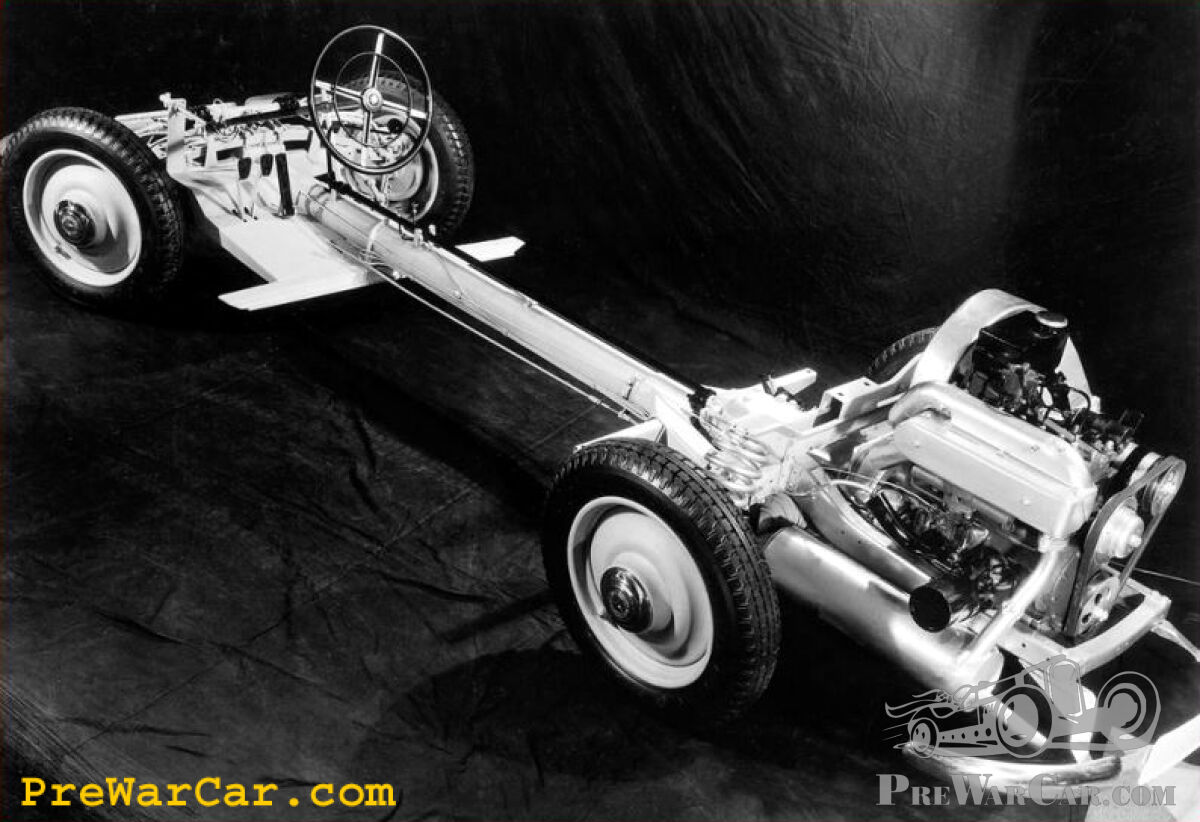

It's a rear engined car based on a relatively well known chassis. Much less known is the unconventional streamlined coachwork with superlow drag factor which caused a sensation at the Berlin car show of 1939. Due to the outbreak of WWII little was heard of the car except that possibly it was brought to England after the war. Since then nothing (or?) was heard of the car. As the chassis for most of you will be easy to recognise we ask you to tell us about the streamliner as presented in 1939. Who designed it? Who built it? What was the name of the car? What more can you add to the history? All information not readily available with a simple google search is appreciated highly.
In order to have a fair chance of winning the infamous PreWarCar T-shirt first check The Rules under Read More and post your answer under 'Comments' before Monday, May 6. Results will be published next Saturday, 10 May.
Gepubliceerd:
vrijdag mei 2nd, 2014
Facebook
LinkedIn
Twitter
WhatsApp
Email
Copy
Reacties
Onbekend
06 Mei 2014, 18:46
Onbekend
04 Mei 2014, 20:00
Quiz #369. Schlörwagen 1939.
During the 1930's aerodynamics became a serious issue for car designers. The Schlörwagen by engineers Dr. Karl Schlör and Hans Becker, both from 'Aerodynamischen Versuchs-Anstalt Göttingen' on a modified Mercedes 170H chassis, with a low Cd of 0.186 and nicknamed Göttinger Ei or, less flattering, pill bug, was a remarkable result. Body was by Gebrüder Ludewig from Essen. Fuel consumption was 20 to 40% less compared to a 170H sedan. Though of technical importance, the public disliked the design.
A contemporary Dutch car magazine does not even mention it in its 1939 Berlin show report.
1943 saw tests with the car, propellor-driven by a radial Russian M11 aircraft engine.
John Elema. 2-time quiz winner.
Lees verder
During the 1930's aerodynamics became a serious issue for car designers. The Schlörwagen by engineers Dr. Karl Schlör and Hans Becker, both from 'Aerodynamischen Versuchs-Anstalt Göttingen' on a modified Mercedes 170H chassis, with a low Cd of 0.186 and nicknamed Göttinger Ei or, less flattering, pill bug, was a remarkable result. Body was by Gebrüder Ludewig from Essen. Fuel consumption was 20 to 40% less compared to a 170H sedan. Though of technical importance, the public disliked the design.
A contemporary Dutch car magazine does not even mention it in its 1939 Berlin show report.
1943 saw tests with the car, propellor-driven by a radial Russian M11 aircraft engine.
John Elema. 2-time quiz winner.
Onbekend
04 Mei 2014, 18:42
The car was called "Göttinger Ei" ("an egg from Göttingen") or the Schlörwagen, built on a Mercedes-Benz 170H chassis. Its designer, Karl Schlör, worked for Krauss-Maffei.
The first prototype built at the Aerodynamic Testing Institute in Göttingen (AVA) was called "tortoise" and had an incredible Cd value of 0.113. The final "Göttinger Ei" was slightly worse, but still remarkable - 0.18. It was presented in Berlin in 1939. During the war, the project was mothballed, but Schlör succeeded in testing his car in the aeromobile role, with a propeller and a Soviet M-11 135hp engine. Its fate is unknown.
Lees verder
The first prototype built at the Aerodynamic Testing Institute in Göttingen (AVA) was called "tortoise" and had an incredible Cd value of 0.113. The final "Göttinger Ei" was slightly worse, but still remarkable - 0.18. It was presented in Berlin in 1939. During the war, the project was mothballed, but Schlör succeeded in testing his car in the aeromobile role, with a propeller and a Soviet M-11 135hp engine. Its fate is unknown.
Onbekend
04 Mei 2014, 09:21
In addition to my earlier comment.
Schlörr used the Mercedes 170H chassis because he didn't want to develop one by himself.
In an article about this vehicle are several pictures, a profil-drawing, a construction drawing and a scalemodel in the windtunnel to be seen. Also a picture of the car in 1942 fitted with a large propellor in the back thus becomming propellor-driven.
Article is at hand, but not scanned for this website.
In the same articel also more background information.
Lees verder
Schlörr used the Mercedes 170H chassis because he didn't want to develop one by himself.
In an article about this vehicle are several pictures, a profil-drawing, a construction drawing and a scalemodel in the windtunnel to be seen. Also a picture of the car in 1942 fitted with a large propellor in the back thus becomming propellor-driven.
Article is at hand, but not scanned for this website.
In the same articel also more background information.
Onbekend
04 Mei 2014, 02:40
This is the Schlorwagen or Gottingen Ei designed by Karl Schlor. It is called "the egg" and the real car prototype was based on a Mercedes-Benz 170H chassis with rear engine. The car was produced by Ludewig Brothers in Essen. It has a CD of .186, consumption of 8-10 liters fuel in 100km. It had a wide track of 2.10 meters. The design was based on a wing cross section. Schlor worked for AVA during the war and was stationed in Latvia and Norway working on deicing snowmobiles and equipment until 1944. The car was lost after the war with rumor of it brought to Britain. More likely it was destroyed.
Lees verder
Onbekend
03 Mei 2014, 21:24
Mercedes-Benz 170H W28 Stromlinien-Versuchswagen Prototype. The "Pillbug" or "Göttinger Ei". It was called the "Schlör-Wagen" after German engineer Karl Schlör who designed it 1937 at the Technical University of Gottingen and was famous for its low drag coefficient of only 0,15. The body was made by Ludewig. It was lost during WWII.
Lees verder
Onbekend
03 Mei 2014, 17:00
Mercedes Typ 170H (= Heckmotor: rear engined), aerodynamic prototyp from 'der Aerodynamischen Versuchsanstalt' Göttingen and designed by Ing. Karl Schlörr, built in 1938 by Ludewig, Essen Germany. Also known as the Schlörrmobile. Capable of 140km/h with only 38 PS and a CW-Coëfficiënt of 0,19
Lees verder
Onbekend
03 Mei 2014, 10:12
Mercedes Benz 170 H with body by Gebrüder Ludewig in Essen. It was called Schlörwagen as it was the brainchild of Karl Schlör at the Aerodynamic research Institute in Göttingen. The design was devoloped on behalf of the Reich Ministry of Transport. The driver's seat was centrally positioned. The car achived a top speed of 146 km/h on the Frankfurt-Darmstadt Autobahn.
I have won twice.
Lees verder
I have won twice.
Onbekend
03 Mei 2014, 07:38
The car is a Schlörwagen, designed by Karl Schlör, a Krauss Maffei engineer. It was nicknamed the Göttinger Ei ("an egg from Göttingen")
A model built at AVA (Aerodynamic testing Institute, Göttingen) was dubbed "tortoise". During the wind tunnel tests, it showed a remarkable Cd: 0.113. The real full-scale car was built on the rear-engine Mercedes-Benz 170H chassis with a body built by Ludewig Bros., Essen.
It too was tested in the windtunnel and achieved a Cd of about 0.18.
Lees verder
A model built at AVA (Aerodynamic testing Institute, Göttingen) was dubbed "tortoise". During the wind tunnel tests, it showed a remarkable Cd: 0.113. The real full-scale car was built on the rear-engine Mercedes-Benz 170H chassis with a body built by Ludewig Bros., Essen.
It too was tested in the windtunnel and achieved a Cd of about 0.18.
Onbekend
03 Mei 2014, 06:29
The W-28 170 H chassis ( late model, by the two rear bumpers) was used under the streamliner built by Professor Karl Schlor. This was run on the Autobahn in 1939 at 146 Km/Hr. Not bad for a 1.7 liter side valve engine, with 38 BHP. The streamliner had central steering, so the chassis in the photo I presume to be standard, and not the one modified for central driving position.
Lees verder
Onbekend
03 Mei 2014, 06:20
Quiz #369
The mystery chassis is from a 1936 Mercedes Benz 170H
Lees verder
The mystery chassis is from a 1936 Mercedes Benz 170H
Onbekend
03 Mei 2014, 04:16
Quiz #369
Schlörwagen 1939 Pillbug
Karl Schlör, an engineer at Krauss Maffei in Munich, developed the design for an ultra-low drag coefficient body around 1936. It has been called both “Pillbug†and “Eggâ€. The body of the car was aluminum built by the Ludewigs of Essen. Wind tunnel tests done on the body in Göttingen AVA revealed a drag coefficient of 0.113. After the body was placed on a rear engine Mercedes-Benz 170H chassis and it tested with a drag coefficient of 0.186.Presented to the public at the Berlin Auto Show in 1939 it was a star. Although some think the English were later involved, the Russians had the car in 1943, modified to propeller driven, now its whereabouts are unknown.
I was a previous winner one time.
Lees verder
Schlörwagen 1939 Pillbug
Karl Schlör, an engineer at Krauss Maffei in Munich, developed the design for an ultra-low drag coefficient body around 1936. It has been called both “Pillbug†and “Eggâ€. The body of the car was aluminum built by the Ludewigs of Essen. Wind tunnel tests done on the body in Göttingen AVA revealed a drag coefficient of 0.113. After the body was placed on a rear engine Mercedes-Benz 170H chassis and it tested with a drag coefficient of 0.186.Presented to the public at the Berlin Auto Show in 1939 it was a star. Although some think the English were later involved, the Russians had the car in 1943, modified to propeller driven, now its whereabouts are unknown.
I was a previous winner one time.
Onbekend
03 Mei 2014, 01:11
Designed by Karl Schlor, the "Schlorwagen" was based on a 170H Mercedes Benz.
Body by Ludewig Bros. of Essen.
Lees verder
Body by Ludewig Bros. of Essen.
Onbekend
03 Mei 2014, 01:09
The car you're referring to was known as the Göttinger Ei, the Schlörwagen, and the Pillbug. It was based on an aerodynamic model developed by Karl Schlör, an engineer with Krauss-Maffei. The model was tested at a drag coefficient of just 0.113 at the German Aerospace Center in Göttingen. The full-sized car, which used a Mercedes 170H chassis and an aluminum body built by Ludewig Bros of Essen, tested at 0.186. Photographs exist showing the car fitted in about 1943 with a Russian Shvetsov M-11 aircraft propeller engine. If the car still exists, its whereabouts today are unknown.
Lees verder
Mercedes-Benz
1939
170 Göttingen