Het wereldwijde magazine en verkoopplatform voor liefhebbers van klassieke auto’s, door liefhebbers.
Het wereldwijde magazine en verkoopplatform voor liefhebbers van klassieke auto’s, door liefhebbers.


Filter
Maak een keuze
- Auto's
-
Merk >>
-
Bouwjaar >>
-
-
Categorie >>
- Motorfietsen
- Onderdelen
-
Automerk >>
-
Fabrikant >>
-
Categorie >>
- Fietsen
-
Bouwjaar >>
-
Landen


What is it? Quiz #475
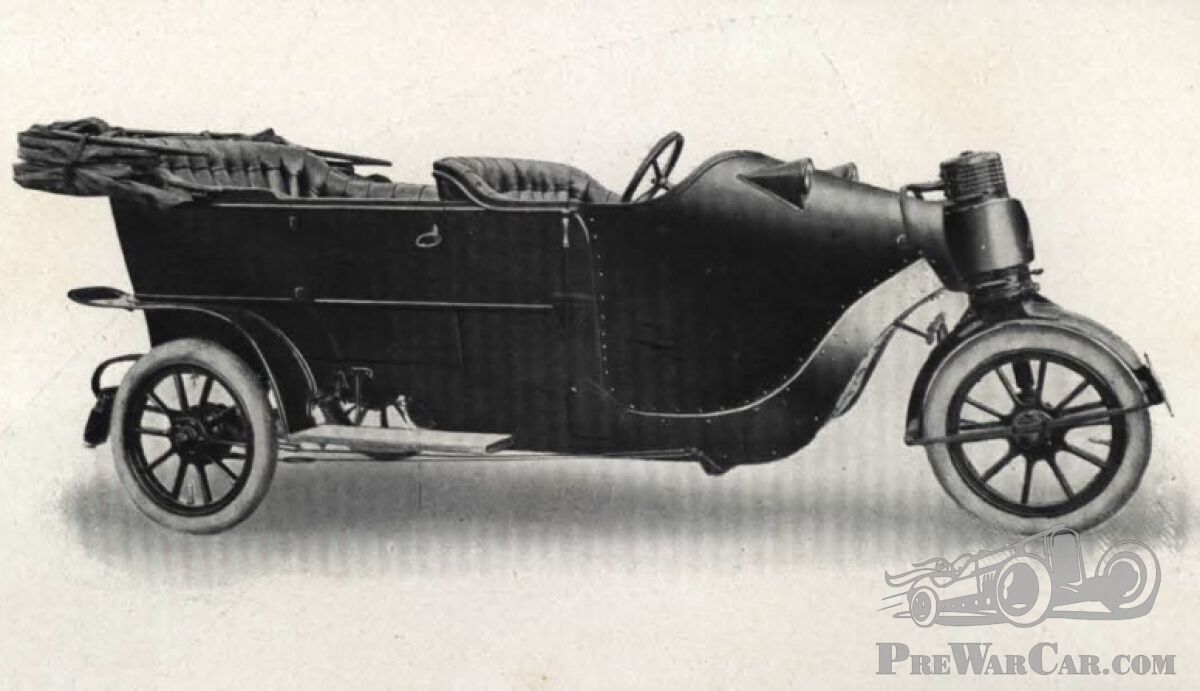

This week´s Quiz-car would be a real head turner nowadays! It´s not a classy beauty, but it looks really unique. This car is a nice passenger car version of the lorry, which was sold in much higher numbers. The company, building this car was founded in one of Europe´s capitals in 1900, starting to build small commercial vehicles. The Quiz-car was not the only “non-commercial” vehicle built by this company, as a two-seater three-wheeler was also available. What more can I tell you? The slogan promoting this car in Germany was “Im Gebrauch billigst, leichteste Handhabung, größte Betriebssicherheit und Sauberkeit!“ („In use cheapest, easiest handling, greatest reliability and cleanliness!“). If you still have no clue, what this car may be, have a closer look at the engine, mounted above the front wheel! OK, one more hint: in 1922, the company was bought by a very elitist automobile manufacturer.
Please tell us as much as you can in a comment below. And remember our rules: don´t use more than 100 words and send your answer before Monday. Then you compete in the six-month competition, sponsored by Hans Compter Rare cars.
Words and photograph by Hubertus Hansmann.
Gepubliceerd:
zaterdag juli 28th, 2018
Facebook
LinkedIn
Twitter
WhatsApp
Email
Copy
Reacties
Verner Johnsen
29 Juli 2018, 22:44
Thomas Ulrich
29 Juli 2018, 18:30
I am quite sure , its a BEF (Berliner Elektromobilfabrik GmbH) This firm built cars and light commercial vehicles between 1908 - 1913. The electric motor sat above the single frontwheel and the power was transmitted via a cardan shaft. The engineer behind BEF was Victor Harborn, who left BEF in 1910 and founded together with a man called Gebardt the firm GEHA (Gebhardt & Harborn). They built electric cars very similar to the BEF cars until 1923.
You could buy BEF cars with two and four seats. The commercial vehicles where quite successful in Berlin. The Berlin (Charlottenburg) Postoffice used some of them for emtying mailboxes. The adverts stated that the BEF had a range of about 80 km.
Thomas Ulrich
Lees verder
You could buy BEF cars with two and four seats. The commercial vehicles where quite successful in Berlin. The Berlin (Charlottenburg) Postoffice used some of them for emtying mailboxes. The adverts stated that the BEF had a range of about 80 km.
Thomas Ulrich
Robert RUDOLF
29 Juli 2018, 15:01
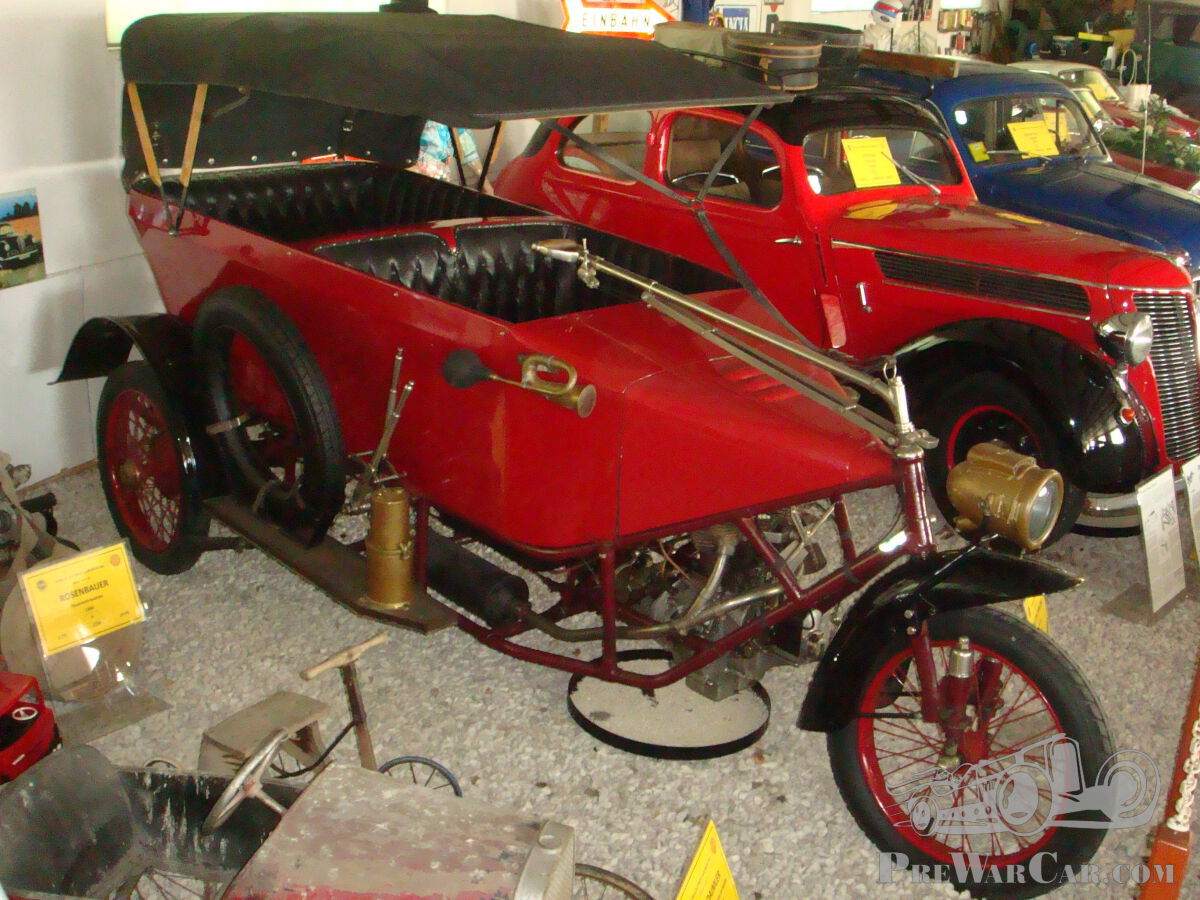
Tatra Museum Steinabrückl / Austria.
Walter Trimobil Cabriolet, built in 1912, 2 cylinders, 1250 cc, 14hp.
Picture from the other side.
Robert RUDOLF
Lees verder
Walter Trimobil Cabriolet, built in 1912, 2 cylinders, 1250 cc, 14hp.
Picture from the other side.
Robert RUDOLF
Robert RUDOLF
29 Juli 2018, 14:56
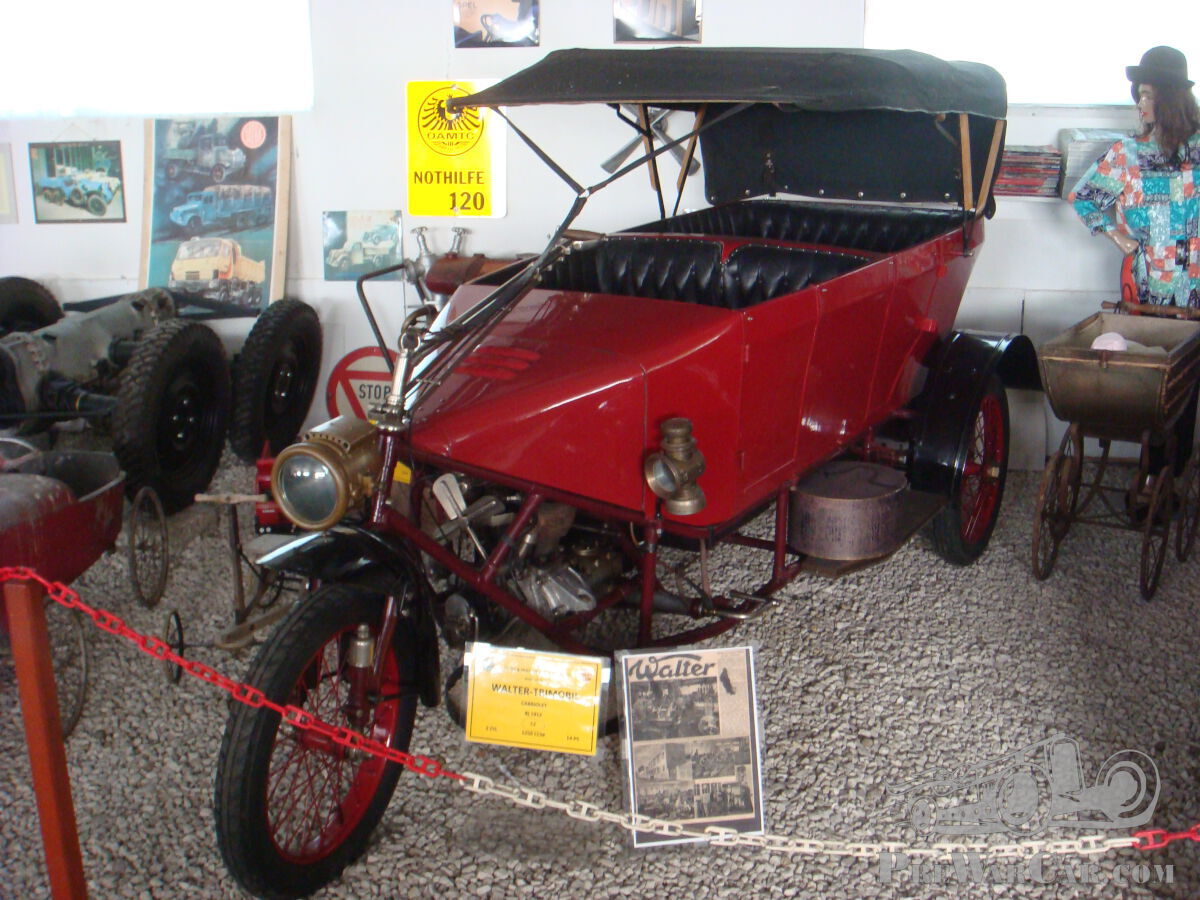
Similar vehicle exhibited in the Tatra Museum Steinabrückl / Austria.
Walter-Trimobil Cabriolet, built in 1912, 2 cylinders, 1250 cc, 14hp.
Although there are some differences to the Prewarcar image, there are also many similarities.
Robert RUDOLF
Ähnliches Fahrzeug im Tatra Museum Steinabrückl / Österreich ausgestellt.
Walter-Trimobil Cabriolet, Baujahr 1912, 2 Zylinder, 1250 ccm, 14PS.
Ob wohl einige Unterschiede zum Prewarcar Bild, gibt es auch viele Übereinstimmungen.
Robert RUDOLF
Lees verder
Walter-Trimobil Cabriolet, built in 1912, 2 cylinders, 1250 cc, 14hp.
Although there are some differences to the Prewarcar image, there are also many similarities.
Robert RUDOLF
Ähnliches Fahrzeug im Tatra Museum Steinabrückl / Österreich ausgestellt.
Walter-Trimobil Cabriolet, Baujahr 1912, 2 Zylinder, 1250 ccm, 14PS.
Ob wohl einige Unterschiede zum Prewarcar Bild, gibt es auch viele Übereinstimmungen.
Robert RUDOLF
Gerd Klioba
29 Juli 2018, 11:23
This is a 1913 BEF (Berliner Elektromobil-Fabrik), the brainchild of engineer Victor Harhorn who started building this electric three-wheeler under his own name in 1906. In 1907 he went to BEF, where it was mainly built as a van for the Prussian and the Bavarian post offices, but also e.g. as a taxi landaulet. In 1910 Harborn left BEF and founded Geha (Gebhardt & Harhorn) to build a new version of his electric car. In 1917 Geha closed down and Harborn went to Elite who carried on building these cars. Meanwhile BEF continued building the Harborn car until 1913.
Lees verder
Fritz Hegemann
29 Juli 2018, 10:59
The Berliner Electromobil- und Akkumulatorenfabrik Fiedler und Co. KG, later Berliner Electromobil-Fabrik (BEF) existed between 1900 and 1922.
From 1907 until 1913 they built three-wheeled electric cars.
They had a stable chassis made of steel profiles, available as two and four-seater.
The front single-wheel was powered by a 2.5 kw-engine, propelling by a vertical shaft. Conducting by a steering column.
Rear-wheels provided with semi-elliptical leaf-springs.
This 1912 four-seater's (should we call it Phaeton?) topspeed was 25 km/h, the range with a charge 80 km.
BEF was taken over by the saxonian Elitewagen AG.
Lees verder
From 1907 until 1913 they built three-wheeled electric cars.
They had a stable chassis made of steel profiles, available as two and four-seater.
The front single-wheel was powered by a 2.5 kw-engine, propelling by a vertical shaft. Conducting by a steering column.
Rear-wheels provided with semi-elliptical leaf-springs.
This 1912 four-seater's (should we call it Phaeton?) topspeed was 25 km/h, the range with a charge 80 km.
BEF was taken over by the saxonian Elitewagen AG.
Fried Stol
29 Juli 2018, 01:18
1909 B.E.F. Victor Harhorn was responsible for this product of the Berliner Elektromobil Fabrik an Electro vertical shaft-driven 4 hp Berliner. Harhorn started his company in 1907 and merged in 1910 with Gebhardt to create the GEHA which was a bit more sophisticated three wheeler which had its electro motor mounted in the hub, also by Harhorn. In 1917 the company was reorganised and the Elite group took over, the GEHA however was still produced till 1923. In 1922 Elite started to built 4 wheeled cars untill 1927 than merged with Diamant and became part of Opel in 1928
Lees verder
Michael Schlenger
28 Juli 2018, 09:52
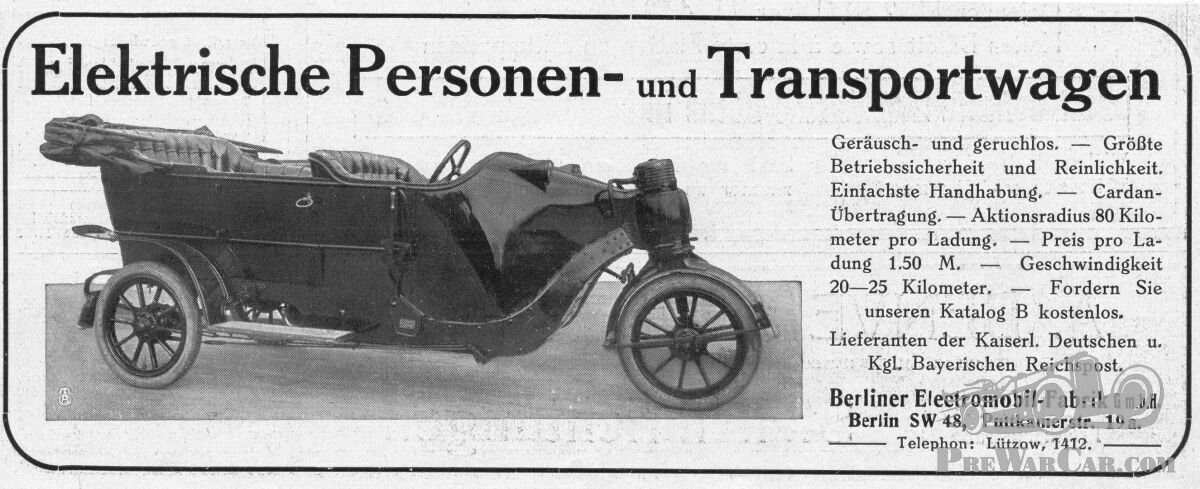
The car was built by the Berliner Electromobil-Fabrik (BEF) from 1907 until 1913. BEF was a subsidiary of the Accumulatoren-Fabrik AG (AFA) located in Berlin. The BEF vehicles featured an electric engine with an initial output of 2.5 kw (1914: 3.7 kw). Max. speed was 25 km/h and max. range was 80 km. BEF engineer Victor Harborn left in 1910 and founded GEHA where he continued to build electric cars. GEHA was taken over by the Elitewerke AG in 1917, as was BEF in 1922. The attached advertisement from my collection also mentions the price per charge: 1.50 Mark.
Lees verder
Anders Svenfelt
28 Juli 2018, 08:35
Berliner Elektromobil-Fabrik built three-wheelers 1907-13 in the German capital wich also was the centre of the eletroindustry. B.E.F. was the brainchild of Victor Harhorn, he went on an produced a similar car for GEHA. The electric engine placed above the single front-wheel, a van is featured very briefly in the 1927 documentary movie Berlin Symphonie ein Grosstadts
Lees verder
Robbie Marenzi
28 Juli 2018, 02:19
"Ein elektrisches Klein-Auto der Berliner Elektromobil-Fabrik, Puttkammerstraße 19a."
This is a three-wheel electric B.E.F. made by the Berliner Elektromobilfabrik G. m. b. H. in Berlin-Charlottenburg between 1907 and 1913
The front independent wheel was powered by a 2.5 kilowatt electric motor built in with a vertical shaft.
A van version was very popular with the Deutsche Reichspost.
A series of stamps can be seen here: https://www.youtube.com/watch?v=cSkpx_zK9Iw
Lees verder
This is a three-wheel electric B.E.F. made by the Berliner Elektromobilfabrik G. m. b. H. in Berlin-Charlottenburg between 1907 and 1913
The front independent wheel was powered by a 2.5 kilowatt electric motor built in with a vertical shaft.
A van version was very popular with the Deutsche Reichspost.
A series of stamps can be seen here: https://www.youtube.com/watch?v=cSkpx_zK9Iw
Elite continued to produce the Geha car until 1923. In 1920 Elite started to produce 4-wheeled cars with gasolin engines.
The special front-wheel-drive transmission was originally designed by Victor Harborn for another Berliner company "Berliner Electromobilfabrik GmbH" BEF.
Thanks to Georgano.