Het wereldwijde magazine en verkoopplatform voor liefhebbers van klassieke auto’s, door liefhebbers.
Het wereldwijde magazine en verkoopplatform voor liefhebbers van klassieke auto’s, door liefhebbers.


Filter
Maak een keuze
- Auto's
-
Merk >>
-
Bouwjaar >>
-
-
Categorie >>
- Motorfietsen
- Onderdelen
-
Automerk >>
-
Fabrikant >>
-
Categorie >>
- Fietsen
-
Bouwjaar >>
-
Landen


What is it? Quiz #484




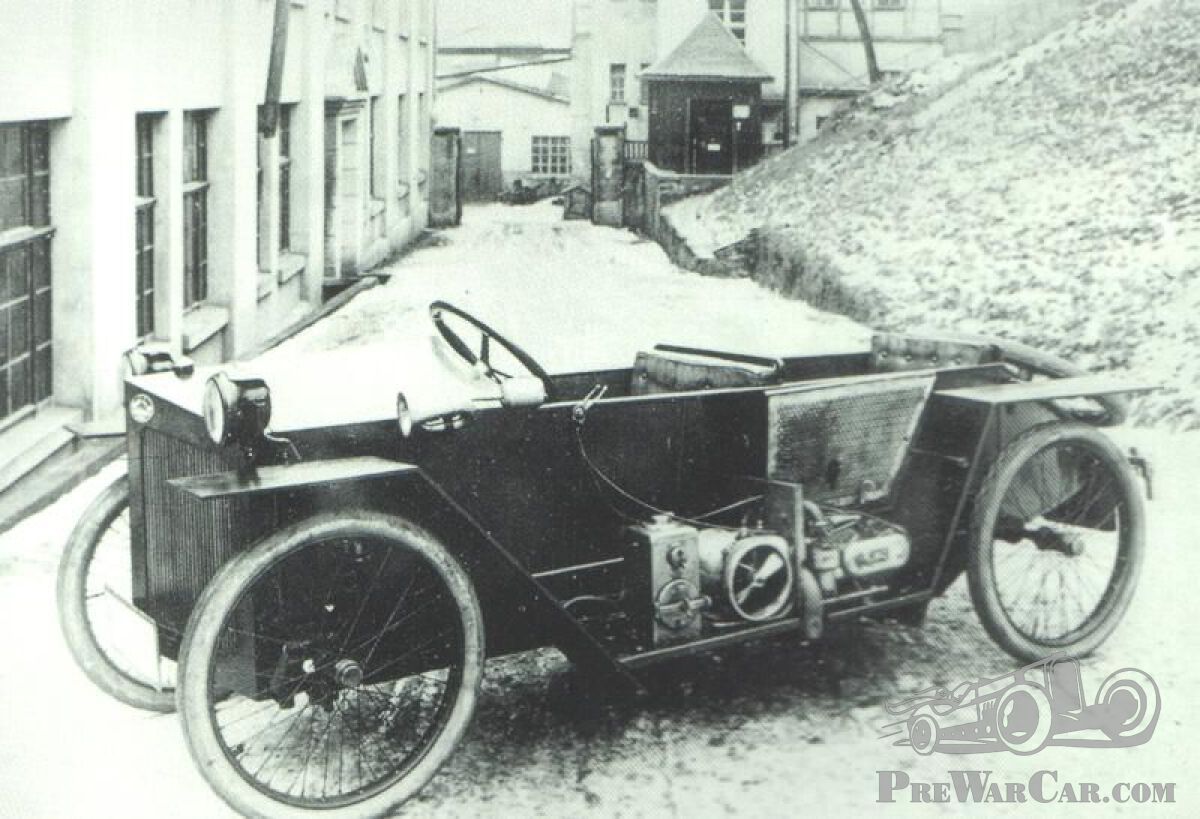
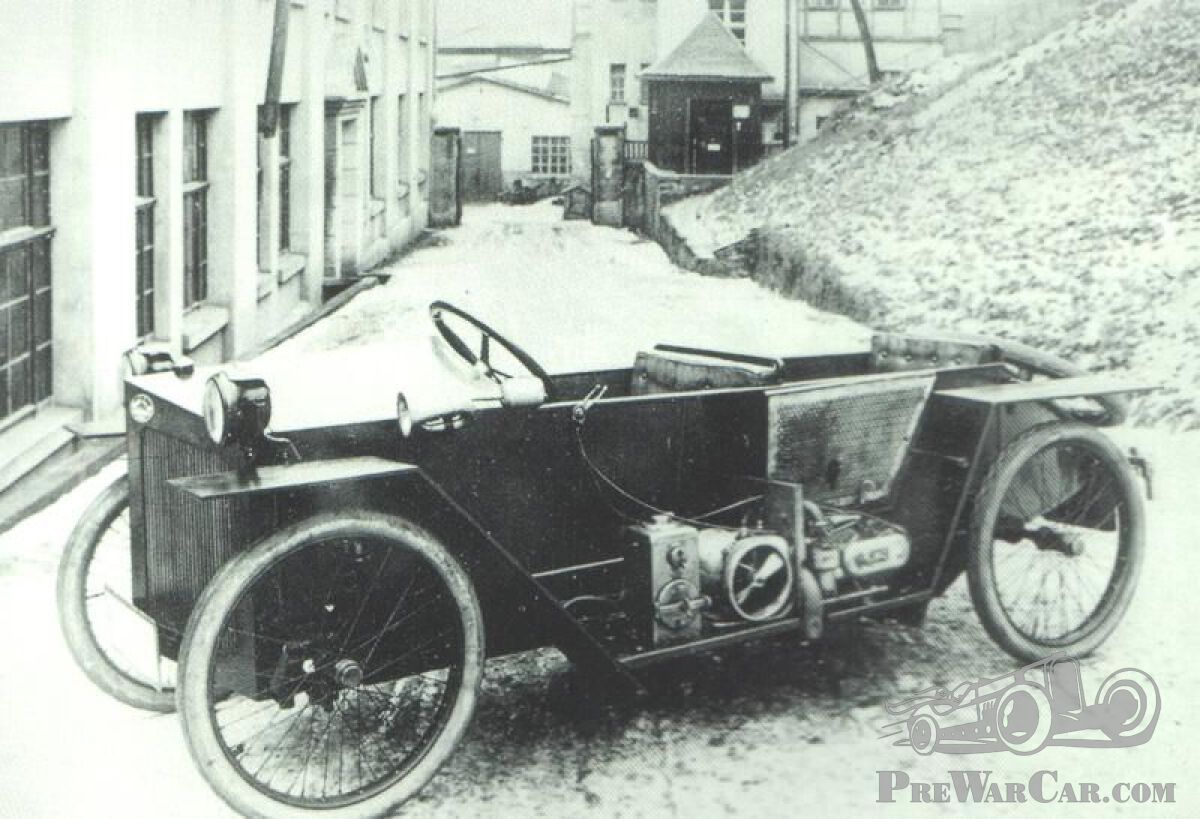
Shall we call it the pre-war Land Rover? The body is just as pointy and the car probably has the same possibilities to reach every mountain. But it is a little smaller one.
If you are looking for a hint, read the first sentences again and you might be able to find the nickname of the car.
Tell us everything you know about this lovely little car before Monday evening in 100 words or less, tell us your sources and see next week if you are the winner of this quiz and if you get the 5 points in the six-month competition, sponsored by Hans Compter Rare Cars.
Good luck!
Gepubliceerd:
zaterdag december 1st, 2018
Facebook
LinkedIn
Twitter
WhatsApp
Email
Copy
Reacties
Thomas Ulrich
03 December 2018, 18:36
Hallo this "Der kleine Bergmeister" is a very early DKW. This car was engineered by Rudolph Slaby in 1919 and was shown by him in spring 1919 to Jörgen Skafte Rasmussen. Rasmussen ordered 100 of them Slaby partnered with Behringer and they built the similar electric Slaby Behringer. But this car was aprototype for DKW. On the right side on the runningboard was a small twostroke engine with 4-5 Hp with chain drive to the rear wheels. This car was shown at the Leipziger Herbsmesse 1920. But there was only this one built, even if there was advertising for this car.
Source: DKW Automobile fr4om Thomas Erdmann
Lees verder
Source: DKW Automobile fr4om Thomas Erdmann
Robert Hafner
03 December 2018, 10:40
A Slaby-Behringer ("SB-Wagen") from Berlin-Charlottenburg. Made towards 1924, fitted with a water-cooled DKW 3 PS two-stoke engine in a plywood body (therefore the pointy shape).
266 have been made.
Earlier, from 1921-24, some 1750 of a small Electric car were produced and even exported to Japan. A heavy earthquake there in 1923 led to loss of a greater number of cars and stopped this business. In 1924 the Company was closed, the remainders taken over by Rasmussen for early DKW production, Berlin branch.
source: Wikipedia, Werner Oswald: Deutsche Autos 1920-1945
Lees verder
266 have been made.
Earlier, from 1921-24, some 1750 of a small Electric car were produced and even exported to Japan. A heavy earthquake there in 1923 led to loss of a greater number of cars and stopped this business. In 1924 the Company was closed, the remainders taken over by Rasmussen for early DKW production, Berlin branch.
source: Wikipedia, Werner Oswald: Deutsche Autos 1920-1945
Jeroen Albada Jelgersma
03 December 2018, 09:15
DKW's first experiment in automobiles was the 'little hill climber.' (+/- 1923)
The car was powered by a single cylinder stationary engine mounted on the left hand running board. The pre-Schneurle patent engine wasn't powerful enough and was vulnerable to overheating so the project was discontinued.
Lees verder
The car was powered by a single cylinder stationary engine mounted on the left hand running board. The pre-Schneurle patent engine wasn't powerful enough and was vulnerable to overheating so the project was discontinued.

Robbie Marenzi
03 December 2018, 00:21
DKW Dampf-Kraft-Wagen, "steam-powered car", Deutsche Kinder-Wagen "German kids' car". Das-Kleine-Wunder, "the little wonder" or Des-Knaben-Wunsch "the boy's wish"
1920 D.K.W.’s first automobile “Der Kleine Bergsteiger” (The Little Mountain Climber), it looked a lot like the Slaby-Beringer cyclecar, Dr Jørgen Skafte Rasmussen had taken control of the company, but was in fact an independent design. The tandem cyclecar was powered by a single cylinder 40cc two-stroke stationary engine mounted on the left hand running board, not powerful enough and vulnerable to overheating, the project was abandoned. Though they did advertise the 250 kg car capable of reaching 60kph.
sources:
http://hartmut-wosch.de/DKW-Auto/Werksfoto_s/werksfoto_s.html
https://en.wikipedia.org/wiki/DKW
https://de.wikipedia.org/wiki/Slaby-Beringer
https://www.autopuzzles.com/forum/2014-43/solved-wendax-1313-dkw-der-kleine-bergsteiger/
Lees verder
1920 D.K.W.’s first automobile “Der Kleine Bergsteiger” (The Little Mountain Climber), it looked a lot like the Slaby-Beringer cyclecar, Dr Jørgen Skafte Rasmussen had taken control of the company, but was in fact an independent design. The tandem cyclecar was powered by a single cylinder 40cc two-stroke stationary engine mounted on the left hand running board, not powerful enough and vulnerable to overheating, the project was abandoned. Though they did advertise the 250 kg car capable of reaching 60kph.
sources:
http://hartmut-wosch.de/DKW-Auto/Werksfoto_s/werksfoto_s.html
https://en.wikipedia.org/wiki/DKW
https://de.wikipedia.org/wiki/Slaby-Beringer
https://www.autopuzzles.com/forum/2014-43/solved-wendax-1313-dkw-der-kleine-bergsteiger/
Michael Schlenger
02 December 2018, 22:09
The car is a DKW said to have been developed in 1919/20. It was advertised as “Der kleine Bergsteiger” and a maximum speed of 60 km/h was claimed for the vehicle weighing only 250 kg. It never managed it into production, though. The engine – a single cylinder two-stroke from the pre-Schnuerle era - proved to be too weak. It was mounted onto the left running board and was operated with motorcycle-like levers. The car is wrongly addressed as a Slaby-Beringer in the older literature (Werner Oswald), but DKW only used a body of a 2-seater of that manufacturer from Berlin.
Sources:
https://www.autopuzzles.com/forum/2014-43/solved-wendax-1313-dkw-der-kleine-bergsteiger
https://dkwautounionproject.blogspot.com/2017/07/dkw-germanys-wonder-car.html
Lees verder
Sources:
https://www.autopuzzles.com/forum/2014-43/solved-wendax-1313-dkw-der-kleine-bergsteiger
https://dkwautounionproject.blogspot.com/2017/07/dkw-germanys-wonder-car.html
Jaap ter Linden
02 December 2018, 21:14
Slaby-Beringer
Electric 1 person car. Made in Berlind by Dr.Rudolf Slaby and Hermann Beringer.
1 battery of 24 volt.
Quite succesfull, 1000 cars were exported to Japan.
Different models, even a twoseater with three axles
Source: Ulrich Kubisch: Automobile aus Berlin, von Tropfenwagen zum Amphicar.
Museum für Verkehr und Technik Berlin.
Lees verder
Electric 1 person car. Made in Berlind by Dr.Rudolf Slaby and Hermann Beringer.
1 battery of 24 volt.
Quite succesfull, 1000 cars were exported to Japan.
Different models, even a twoseater with three axles
Source: Ulrich Kubisch: Automobile aus Berlin, von Tropfenwagen zum Amphicar.
Museum für Verkehr und Technik Berlin.
Neil Beadle
02 December 2018, 13:41
This is a 'Der Kleine Bergsteiger', which translates to 'The Little Climber' one of two prototype cars built in Zschopau, Germany by Jørgen Skafte Rasmussen (the founder of DKW and Framo) in 1920. Using a Slaby-Beringer-Elektrowagen electric car as a starting point, engineers from DKW installed one of its two stroke auxiliary engines, developed from a Hugo Ruppe (founder of MAF cars) design, on the left running board. The car was the first petrol engined DKW car, with a weight of 250 KGs and one horsepower from its 118cc it had a top speed of 39 mph.
Sources:
The Auto Union DKW Guide By Keith Ayling
https://de.wikipedia.org/wiki/DKW
https://www.autopuzzles.com/forum/2014-43/solved-wendax-1313-dkw-der-kleine-bergsteiger/
https://en.wikipedia.org/wiki/J%C3%B8rgen_Skafte_Rasmussen
Lees verder
Sources:
The Auto Union DKW Guide By Keith Ayling
https://de.wikipedia.org/wiki/DKW
https://www.autopuzzles.com/forum/2014-43/solved-wendax-1313-dkw-der-kleine-bergsteiger/
https://en.wikipedia.org/wiki/J%C3%B8rgen_Skafte_Rasmussen
Gerd Klioba
02 December 2018, 13:29
This is one of the first DKW cars called „Der kleine Bergsteiger“ (the little mountaineer). Two of them were built in 1918/19. This cyclecar was a design of Emil Fischer, who met DKW owner Jorgen Skafte Rasmussen in a café by chance and presented his construction plans to him. The car was supposed to be built with a wooden unit-body and a two-stroke boxer engine. The finished cars had a Ruppe two-stroke engine on the righthand running board though, and the body followed the Slaby-Beringer design. Fischer had left DKW in spring of 1919 already.
Source: Immo Sievers: Jorgen Skafte Rasmussen – Leben und Werk des DKW-Gründers
Lees verder
Source: Immo Sievers: Jorgen Skafte Rasmussen – Leben und Werk des DKW-Gründers

Erler Thomas
02 December 2018, 12:52
On the first view it looks a lot like the Slaby Beringer electric car, probably to the fact that a Mr. Rasmussen was one of the first customers (or the first) for such a vehicle. The little car is a predecessor to the DKW. Build at the Zschopauer Maschinenfabrik belongig to Mr. Rasmussen. 1924 Slaby Beringer went bankrupt and was bought by DKW. Mr. Slaby got a job there. So the little car is likely from 1925, it weights only 250kgs, but could manage a speed (on paper) of 60kmh. It was called "der kleine Bergsteiger"
The engine I would assume would have been two stroke motorcycle engine close to the DKW Lomos Sesselrad. You can also find same pictures in the web typing Wendax 1313 , I doubt any connection with the the company of Rasmussen.
Lees verder
The engine I would assume would have been two stroke motorcycle engine close to the DKW Lomos Sesselrad. You can also find same pictures in the web typing Wendax 1313 , I doubt any connection with the the company of Rasmussen.
Fritz Hegemann
01 December 2018, 17:00
Dear prewarcar-team,
finfd here my solution…
Like many other German aircraft-specialists, Rudolf Slaby found a new field of activity after the first World Cup: together with Hermann Beringer in Berlin Charlottenburg, he founded the SB-Automobil-Gesellschaft in 1919.
We see a Slaby-Beringer 2-seater (also available as a single-seater), built as an EV ( 0,5 hp, 1749 cars) and with a DKW 2-stroke-engine (266 cars). Self-supporting body made of triplex plastic. After a failed engagement in Japan (an earthquake destroyed there many imported cars) Slaby-Beringer was-taken over in 1924 by DKW and became the nucleus of the DKW car-production. The dispensable AWS Shopper was a later successor …
Sources:
wikipedia
http://www.solarmobil.net/Aktionen/EVS18/evs18-slaby.htm
https://www.museumsportal-berlin.de/de/magazin/blickfange/seifenkiste-mit-elektroantrieb/
Best regards from the Nahe-valley!
Fritz
Lees verder
finfd here my solution…
Like many other German aircraft-specialists, Rudolf Slaby found a new field of activity after the first World Cup: together with Hermann Beringer in Berlin Charlottenburg, he founded the SB-Automobil-Gesellschaft in 1919.
We see a Slaby-Beringer 2-seater (also available as a single-seater), built as an EV ( 0,5 hp, 1749 cars) and with a DKW 2-stroke-engine (266 cars). Self-supporting body made of triplex plastic. After a failed engagement in Japan (an earthquake destroyed there many imported cars) Slaby-Beringer was-taken over in 1924 by DKW and became the nucleus of the DKW car-production. The dispensable AWS Shopper was a later successor …
Sources:
wikipedia
http://www.solarmobil.net/Aktionen/EVS18/evs18-slaby.htm
https://www.museumsportal-berlin.de/de/magazin/blickfange/seifenkiste-mit-elektroantrieb/
Best regards from the Nahe-valley!
Fritz

Joop Terpstra
01 December 2018, 15:03
Free translation from the book: ''DKW - Die Geschichte einer Weltmarke'' by Siegfried Rauch - Motorbuch Verlag Stuttgart (1981).
What we see here is a so called 'Bergsteiger' or hillclimber model from DKW. It's built in 1919 so in the very early days of production by Rasmussen at the Zschopau ''Kaisersaal'' depot so it was rather exaggerating to speak of a Karosserie Fabrik where this car saw the first light.
The small roadster is a twoseater with two in tandem position. It's powered by a5 hp ventilator cooled stationary one cylinder twostroke engine placed on the footboard with a chain driven to the right backwheel. This was a experimental car and not made by Dr. Slaby from Berlin. Hereby a photo with the young son Arne of J.S. Rasmussen behind the wheel.
Best regards,
Joop Terpstra
Lees verder
What we see here is a so called 'Bergsteiger' or hillclimber model from DKW. It's built in 1919 so in the very early days of production by Rasmussen at the Zschopau ''Kaisersaal'' depot so it was rather exaggerating to speak of a Karosserie Fabrik where this car saw the first light.
The small roadster is a twoseater with two in tandem position. It's powered by a5 hp ventilator cooled stationary one cylinder twostroke engine placed on the footboard with a chain driven to the right backwheel. This was a experimental car and not made by Dr. Slaby from Berlin. Hereby a photo with the young son Arne of J.S. Rasmussen behind the wheel.
Best regards,
Joop Terpstra
Uwe Bauer
01 December 2018, 08:16
DKW, der kleine Bergsteiger, gebaut 1919 in Zschopau als Versuchsfahrzeug , 5 PS Motor mit Gebläsekühlung und Kettenantrieb auf die Hinterräder. Die Karosserie ist selbsttragend aus Sperrholz, ohne Fahrgestellrahmen. Der Motor mit liegendem Zylinder ist auf dem linken Trittbrett montiert. Es ist wohl das erste bei DKW gebaute Automobil.
Grüße
Bauer
Lees verder
Grüße
Bauer

Kevin Atkinson
01 December 2018, 02:31
This is a Berlin built Slaby and Beringer from 1919/20 . The nickname was der kleine Bergsteiger "The Little Climber".
Although many of their products used electric propulsion, it used a single cylinder stationary DKW engine mounted on the left hand running board.
It looked much like their earlier electric cyclecars but was an all-new design which proved prone to overheating and was quickly discontinued after just 2 prototypes were built.
Both Slaby-Beringer and DKW were controlled by industrialist J. S. Rasmussen.
http://heinkelscooter.blogspot.com/2011/02/dkw-germanys-wonder-car.html
http://hartmut-wosch.de/DKW-Auto/Werksfoto_s/werksfoto_s.html
Lees verder
Although many of their products used electric propulsion, it used a single cylinder stationary DKW engine mounted on the left hand running board.
It looked much like their earlier electric cyclecars but was an all-new design which proved prone to overheating and was quickly discontinued after just 2 prototypes were built.
Both Slaby-Beringer and DKW were controlled by industrialist J. S. Rasmussen.
http://heinkelscooter.blogspot.com/2011/02/dkw-germanys-wonder-car.html
http://hartmut-wosch.de/DKW-Auto/Werksfoto_s/werksfoto_s.html
Rasmussen let it develop after he was inspired by the Slaby Beringer electro cars.
It was not much more than a wooden two seater (behind each other) and a little 1 cylinder 2-stroke engine with 4-5 hp (build by Hugo Rupe). The car was presented on the fall fair of Leipzig in 1920. It never went into production. Its last outing was on 29 July 1922 when it was shown covered in flowers to celebrate the 20.000 DKW engine built.
Source: Von Dampfkraftwagen zur Meisterklasse – Die geschichte der DKW Automobile 1907-1945 (Thomas Erdmann)