Het wereldwijde magazine en verkoopplatform voor liefhebbers van klassieke auto’s, door liefhebbers.
Het wereldwijde magazine en verkoopplatform voor liefhebbers van klassieke auto’s, door liefhebbers.


Maak een keuze
- Auto's
-
Merk >>
-
Categorie >>


Lucenti Graham Special Indy 500 : A triple Indianapolis 500 contender with a fascinating history and road registration.


Lucenti Graham Special Indy 500 : A triple Indianapolis 500 contender with a fascinating history and road registration.
We are proud to present this exceptional pre-war racing car : the Lucenti Graham Indianapolis Special. The history of this car starts in 1932 when three Pittsburgh racing enthusiasts Angelo Lucenti, Roy W. Painter and John C. Saunders decide to build their own Indianapolis racer. They call it the LuPaSa from the opening letters of their surnames. The car was based on a Graham Blue Streak Eight for several reasons : the Blue Streak has an unusually low chassis, with openings in the side rails through which the rear axle passes : the so-called ‘banjo frame’. The leaf springs sit alongside the chassis rails, allowing the car to sit even lower. It is an attractive construction for anyone wishing to build a low and stable racing car. The engine is extensively modified too. The 4.3-litre side-valve straight-eight receives larger valves, a high-lift camshaft and a special inlet manifold carrying four Winfield Model SR carburettors. This approach suits the Indianapolis regulations of the early thirties, which became known as the ‘Junk Formula’. They left room for specials using production-car components. The unflattering nickname hardly does justice to the ingenuity such projects demanded. Turning a road car into a machine capable of surviving 500 miles at racing speed required considerably more than simply removing the wings and lights. Unfortunately, their first attempt was not an unqualified success, as the car failed to qualify for the 1932 Indianapolis 500.
The saga of the sleek Graham open-wheel racing car wasn't finished yet: in 1934 Angelo Lucenti returned to Indy with an improved car now carrying his own name. The Lucenti Special was born. Driver Herb Ardinger with Eddie Shearn serving as riding mechanic qualify at an average speed of almost 112 mph (180 kph). During the race, Herb Ardinger together with team mate Danny Day cover the full 500 miles distance to finish tenth. Their average race speed is more than 96 mph (154 kph), including stops. Behind that modest-looking result lie more than five hours of racing and 800 kilometres of mechanical punishment ! The Lucenti Graham did two more races that same year, finishing eight at both the Springfield, Illinois and Syracuse racetracks.
In 1935, the Lucenti Graham competed in the Indy 500 once more with Roy W. Painter and Herschell McKee at the wheel, but ended with a DNF following a minor accident. Afterwards, the car has been raced at regional events until the early fifties. About that time, it was donated to an orphanage where it became a playground diversion for the children. In 1953, it was found by Ed Trager, a pioneering colllector who saved a great number of these Indy cars. He painted it white and put in the family showroom of Lawndale Oldsmobile. More than fifty years later, the Lucenti was discovered and put into auction. It was bought by a collector in a remarkably intact condition : its aluminium body, wire wheels and powertrain were original, and only a missing part of the exhaust and the deteriorated upholstery were recreated. The engine could not be saved anymore and was replaced by a period correct one using the ID plate from the old one, as the Graham engines did not have a stamped number. The custom made four-carb set-up was restored and fitted on the new engine. Resplendent in the livery of its 1934 Indy race configuration, the Lucenti Graham made a class winning debut at the 2010 Amelia Island Concours. Very important to know is that during the restoration the original metallic blue colour was found back on several spots of the chassis. This original colour was painstakingly reproduced and still looks awesome.
In 2011 the Lucenti was imported in Europe by a Swiss collector. He could register the car for the road and kept it until 2018 when the car was purchased by the actual owner in Holland. He registered the car on a Dutch numberplate, and entered the car in the 2019 edition of Mille Miglia. The Lucenti was accepted and finished the 1000 mile road race successfully. This makes it eligible again for future events of this famous event, as in the early thirties a Graham 8 cilinder car participated as well.
This unique Lucenti comes with a spare engine block and additional fully revised gearbox. Among the very small number of thirties Indy cars only a few survive, and this wonderfully authentic and beautifully restored Lucenti is truly an extraordinary member of this elite group. On top of that, it has a proper road registration and is Mille Miglia eligible.
Driving this Indy 500 racer is a real adventure. The large straight eight engine produces a magnificent sound and delivers plenty of torque. The three-speed gearbox operates smoothly, whilst the low seating position and large steering wheel ensure a fantastic driving experience. It is a genuine racing car that offers a thrill that only a pre-war competition car can provide.
So if you’re looking for a unique and exceptional pre-war racing car, this is a definitely a great opportunity. The car is very well documented, has a fascinating history and is ready for any top-tier event. As well as the Mille Miglia, this Lucenti Graham is also suitable for the Goodwood Revival. Furthermore, the car is so unique and beautiful that it is a welcome participant at any prestigious concours d’élégance anywhere in the world.
The Lucenti Graham will be present on our stand at the Prewar Days show in Kortrijk (Belgium) from the 11th until the 13th of December 2026.
Meer advertenties van deze dealer
 Alphi T10 Grand Prix. Ex-Serge Pozzoli. This car will be on display on the Prewarcar stand at Auto e Moto d'Epoca in Bologna.
Vergelijkbare advertenties Lucenti Graham Indy 500 Special 1932 te koop
 Bentley 4 Litre Blower, 1931
 1932 Rolls-Royce Phantom II Continental Drophead Coupe by Carlton
 1937 Lagonda LG45 Team Car (Ex Hugh Howorth Bow Peep Hillclimb record car)
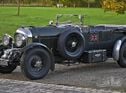 1935 Petersen Blower Bentley
Deel:
Facebook
LinkedIn
Twitter
WhatsApp
Email
Copy






Adverteerder Albion Motorcars
- Naam: Albion Motorcars
-
Adres:
Koningin 10
9140 Temse

Stuur bericht